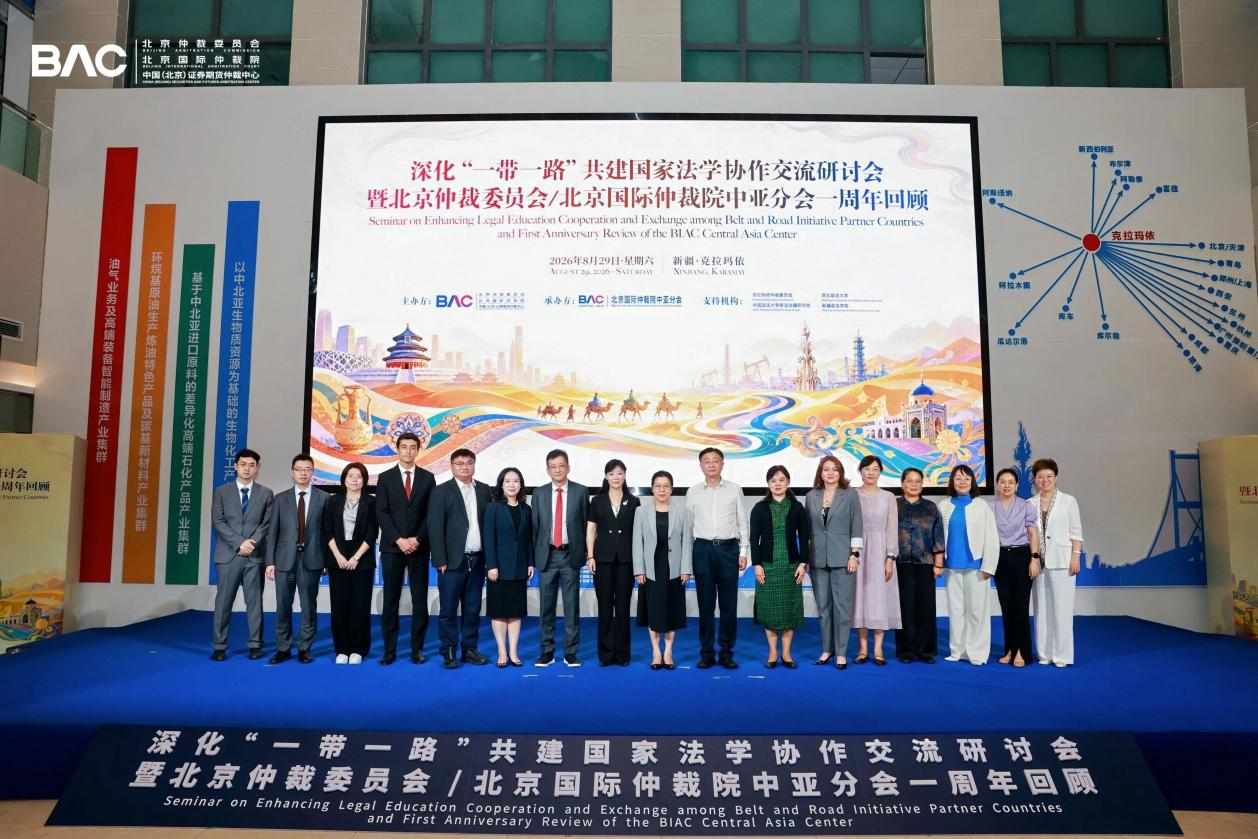
11月13日上午,副校长张荣刚在我校长安校区会见哈萨克斯坦阿里·法拉比国立大学国际关系学院院长努里丁·苏丹穆拉托夫一行,双方就继续推进两校合作展开深入会谈。国际交流与合作处相关负责人参加会见。

张荣刚代表学校对努里丁院长一行的来访表示欢迎,并系统介绍了我校近年来在学科建设、人才培养、国际化办学等方面的发展成效。他表示,我校始终积极响应“一带一路”倡议,将中亚地区作为推进国际化战略的核心板块,阿里・法拉比国立大学作为中亚地区顶尖高等学府,是我校重要的战略合作伙伴,两校已在长期交流中构建了深厚互信与坚实合作基础。张荣刚强调,希望双方以此次会谈为契机,进一步凝聚共识、细化举措,在学术研究、人才联合培养、平台共建等方面持续发力,推动合作向更深层次、更宽领域迈进。
努里丁・苏丹穆拉托夫对我校的热情接待表示衷心感谢,并详细介绍了阿里・法拉比国立大学国际关系学院的学科特色、师资力量,以及区域国别研究中心在中亚问题研究、国际政治分析等领域的最新成果。期待与我校在国际政治、区域国别学等重点领域建立常态化合作机制,开展联合科研、学术论坛、师生互访等系列活动。

会谈结束后,代表团一行应邀参加了由国家安全学院(反恐怖主义法学院)、中南亚研究中心(教育部区域国别研究中心)联合举办的专题研讨会。会上,双方专家学者围绕中亚地区安全局势、区域合作机遇、文明互鉴路径等议题展开深度研讨,交流观点、分享洞见,现场学术氛围浓厚。为进一步夯实合作基础、汇聚研究力量,我校中南亚研究中心向三位专家颁发了“特聘研究员”证书,标志着双方在人才交流与科研合作方面迈出实质性步伐。
(供稿:国际交流与合作处 撰稿:王英建 审核:陈梦琦)
Penal Execution Code of the Republic of Kazakhstan Unofficial translation Law of the Republic of Kazakhstan dated 5 July 2014 № 234-V. Unofficial translation Footnote. The table of contents is excluded by the Law of the Republic of Kazakhstan dated 24.11.2021 № 75-VII (shall be enforced ten calendar days after the day of its first official publication). GENERAL PART SECTION 1. GENERAL PROVISIONS Chapter 1. LEGISLATION OF THE REPUBLIC OF KAZAKHSTAN DETERMINING PROCEDURE FOR EXECUTING PENALTIES AND OTHER MEASURES OF CRIMINAL EFFECT Article 1. Penal execution legislation of the Republic of Kazakhstan 1. Penal execution legislation of the Republic of Kazakhstan is based on the Constitution of the Republic of Kazakhstan and generally accepted principles and rules of international law and consists of this Code, Laws and other regulatory legal acts establishing the procedure and conditions of executing and serving sentences and other measures of criminal effect. 2. Subordinate regulatory legal acts establishing the procedure and conditions of executing and serving sentences and other measures of criminal effect may not establish restriction of rights, freedoms and legal interests of convicted persons, if such are not provided by the Law. 3. International treaties ratified by the Republic of Kazakhstan shall have a priority over this Code and be applied directly, except for the cases when it follows from the international treaty that for its applying the issuance of the Law is required. Article 2. Force of the penal execution legislation of the Republic of Kazakhstan in space and time 1. Penal execution legislation of the Republic Kazakhstan shall be applied to convicted persons in respect of whom the punishments or other measures of criminal effect are executed in the territory of the Republic of Kazakhstan. 2. Execution and serving of sentences and other measures of criminal effect, using a cure to convicted persons, as well as rendering of assistance to released convicted persons shall be carried out in accordance with the legislation of the Republic of Kazakhstan being in force as from the date of their execution. Article 3. Explanation of several definitions contained in the Code Definitions contained in the Code shall be applied in the following meaning: 1) video surveillance system - a set of video surveillance cameras, data transmission lines, program and technical means and storage of video recordings, as well as program and (or) technical means of management, carrying out information exchange between each other; 1-1) Bodies executing punishments - bodies executing punishments in the form of arrest, punishments not connected with isolation of the convicted person from society, and other measures of criminal-legal influence; 2) sentence serving regime – procedure for execution and serving of sentences established by the Code and other regulatory legal acts; 3) authorized body in the scope of penal execution activity – central executive body carrying out management in the scope of penal execution activity; 4) correctional (penitentiary) system (hereinafter – correctional system) – a system of bodies and institutions carrying out executive and regulatory functions on ensuring the execution of criminal punishments, as well as organizations ensuring functioning of mentioned bodies and institutions; 5) institution of criminal-executive (penitentiary) system (hereinafter referred to as the institution) - a state institution intended for execution of punishments in the form of imprisonment; 6) authorized body of correctional (penitentiary) system (hereinafter – authorized body of correctional system) – department of authorized body in the scope of penal execution activity within the competence, carrying out control and (or) realization functions; 7) a probation is the system of activities and individually defined measures of control and social and legal manner directed to correction of behavior of persons whose categories are defined by the law, for prevention of criminal infranctions by them; 8) probation service is the body of correctional (penitentiary) system which is carrying out executive and administrative functions on ensuring execution of criminal penalties without isolation from society and also to the organization and functioning of a probation; 9) probational control is the activities of authorized bodies for control of execution by the persons staying on their registry, the duties assigned to them by the law and court; 10) correction of convicted person – formation of law abiding behavior, positive relation to a person, society, labor, regulations, rules and ethics of public behavior. 11) the isolated sites of pre-trial detention centers are rooms of pre-trial detention centers with cells for convicted to imprisonment and also convicted to arrest. Footnote. Article 3 with the changes made by laws of the Republic of Kazakhstan dated 30.12.2016 № 39-VІ (shall be enforced after ten calendar days after day of its first official publication); dated 18.04.2017 № 58-VI (shall be enforced after ten calendar days after day of its first official publication); dated 29.12.2021 № 89-VII (shall be enforced ten calendar days after the day of its first official publication); dated 16.05.2024 № 82-VIII (shall be enforced upon expiry of ten calendar days after its first official publication). Chapter 2. GENERAL QUESTIONS OF EXECUTING PUNISHMENTS AND OTHER MEASURES OF CRIMINAL EFFECT Article 4. Purposes and tasks of penal execution legislation of the Republic of Kazakhstan 1. The purposes of penal execution legislation of the Republic of Kazakhstan are rectification of social injustice, correction of convicted persons, prevention of committing new criminal infractions as by convicted persons and the other persons as well. 2. In accordance with mentioned purposes, the tasks of penal execution legislation of the Republic of Kazakhstan are: 1) regulation of procedure and conditions of executing and serving sentences and other measures of criminal effect; 2) determination of the cure of convicted persons; 3) protection of rights and freedoms and convicted persons; 4) rendering of assistance to convicted persons in a social adaptation. 3. Execution of punishments and other measures of criminal effect doesn’t aim to infliction of physical sufferings and abasement of human dignity. Article 5. Principles of penal execution legislation of the Republic of Kazakhstan Penal execution legislation of the Republic of Kazakhstan shall be based on the principles of: 1) compliance with rights, freedoms and legal interests of a human and citizen; 2) legality; 3) humanism; 4) differentiation of conditions of executing punishments; 5) individualization of executing the punishment and other measures of criminal effect; 6) rational appliance of the enforcement measures; 7) connection of punishment with correctional treatment; 8) stimulation of law abiding and active behavior of convicted persons valuable to community. Article 6. Ground for execution of punishment and other measures of criminal effect Ground for execution of punishment and other measures of criminal effect is a decision or regulation of the court that entered into a legal force, the act of amnesty and its applying, the act of pardon. Article 7. Basic cure of convicted persons 1. Basic cure of convicted persons are: 1) sentence serving regime; 2) educational impact; 3) maintenance of positive social relations; 4) labour being valuable to community; 5) receipt of basic, main secondary, general secondary, technical and professional education; 6) social influence. 2. Cure of convicted persons shall be applied in recognition of the type of punishment, nature, degree of social danger, form of guilty and motives of committed criminal infraction, personality of convicted person and his (her) behavior during serving a sentence. Article 8. Participation in community in correcting convicted persons 1. Guardian councils and public supervisory boards, committees of the parents of convicted persons, professional unions, labour collectives, public associations registered in the manner established by the legislation of the Republic of Kazakhstan, religious associations, public and welfare funds, political parties, other organizations, as well as citizens may participate in correction of convicted persons as follows: 1) conduct of sociological and other monitorings; 2) participation in development and public consultation of the draft regulatory legal acts in the scope of penal execution activity; 3) participation in investigation, provision, distribution and supervision of using humanitarian and beneficent help to convicted persons; 4) development and realization of programs and projects oriented to improvement of the activity of correctional system and social legal assistance to convicted persons; 5) rendering of other assistance to institutions and bodies executing punishments and other measures of criminal effect in forms that are not inconsistent with the legislation of the Republic of Kazakhstan. 2. Persons mentioned in part one of this Article shall not have the rights to divulgate details that became known to them about private life of convicted persons without his (her) agreement. Violation of mentioned requirement shall entail responsibility established by the Law. Chapter 3. LEGAL PROVISION OF CONVICTED PERSONS Article 9. Grounds of legal provision of convicted persons 1. The Republic of Kazakhstan respects and protects the rights, freedoms and legal interests of convicted persons, ensures legality of applying their cure, as well as legal protection and personal security. 2. Convicted persons shall have the rights, freedoms and incur obligations of the citizens of the Republic of Kazakhstan with restrictions established by the Constitution, Criminal Code and other Laws of the Republic of Kazakhstan. 3. Convicted foreign persons and stateless persons shall enjoy the rights and freedoms, as well as incur obligations established for citizens in the Republic of Kazakhstan, unless otherwise provided by the Constitution, Laws of the Republic of Kazakhstan and international treaties. 4. Rights and obligations of convicted persons, as well as restriction of their rights shall be determined by this Code proceeding from procedure and conditions for execution of particular type of punishments and other measures of criminal effect. 5. Convicted persons may not be subject to any discrimination based on origin, social, official and property situation, gender, race, nationality, language, confession, convictions, residence place or any other circumstances. 6. Upon admission of a convicted person into institution or body executing the punishment, the administration shall be obliged to provide in written form and explain information about his (her) rights, obligations and legal restrictions, as well as internal regulations of institutions or bodies executing punishments against signature. Article 10. Basic rights of convicted persons 1. Convicted persons shall have the right to: 1) receipt of information on procedure, conditions of serving a sentence and their changes from institutions or bodies executing punishment; 2) application with petition on clemency in the name of the President of the Republic of Kazakhstan in accordance with the legislation of the Republic of Kazakhstan; 3) application with oral and written suggestions, applications and complaints to administration of the institution or body executing the punishment, to their superior bodies, court, prosecution bodies, other state bodies and to civil servants, in public associations, as well as international organizations on protection of human rights and freedoms in accordance with the legislation of the Republic of Kazakhstan; 4) recognition of their human dignity, protection from tortures, violence, other cruel treatment or punishment or treatment or punishment degrading human dignity; 5) personal security during serving a sentence; 6) giving of explanations and carrying on correspondence, as well as applying with suggestions, applications and complaints in the first language or any other language that they may speak, use of the services of an interpreter in cases provided by the Law; 7) receiving qualified legal assistance, including within the framework of the provision of state-guaranteed legal assistance, in the form of consultations, certificates, drafting documents of a legal nature, as well as in the preparation of documents submitted during the execution of sentences and court decisions in cases provided for in the first paragraph of part third article 475 and paragraphs 4), 5), 5-1), 11), 13), 15), 17), 19) and 22) of article 476 of the Criminal Procedure Code of the Republic of Kazakhstan, as well as in another form in the manner prescribed laws of the Republic of Kazakhstan; 8) protection of health and receipt of competent medical treatment in accordance with the legislation of the Republic of Kazakhstan in the field of health care service; 9) psychological aid rendered by servants of psychological service of the institution and by other persons having the right to rendering of such aid; 10) social and pension provision in accordance with the legislation of the Republic of Kazakhstan on social protection; 11) safe working conditions, rest, vacation, as well as payment for labour in accordance with the labour legislation of the Republic of Kazakhstan. Convicted persons shall have the other rights in accordance with this Code, regulatory legal acts establishing the procedure and conditions for execution and serving of sentences and other measures of criminal effect. 2. Convicted foreign persons and stateless persons shall have the right to communicate with diplomatic representations and consular institutions of own states accredited in the Republic of Kazakhstan, and citizens of countries that do not have diplomatic and consular institutions accredited in the Republic of Kazakhstan shall have the right to communicate with diplomatic representations of the states that took upon protection of their interests or with international organizations carrying out their protection. 3. Convicted persons with disabilities who have speech or hearing or vision disorders have the right to use the services of specialists who speak dactylic-sign language or Braille. 4. Convicted persons may not be subject to clinical examinations. Footnote. Article 10 as amended by the Law of the Republic of Kazakhstan dated 09.06.2021 № 49-VII (shall be enforced ten calendar days after the day of its first official publication); dated 27.06.2022 № 129-VII (shall be enforced ten calendar days after the date of its first official publication); dated 20.04.2023 № 226-VII (shall be enforced from 01.07.2023). Article 11. Main obligations of convicted persons 1. Convicted persons shall be obliged to: 1) perform requirements established by this Code, other regulatory legal acts, as well as court verdicts; 2) comply with the internal regulation of institutions and bodies executing the punishment; 3) perform legal requirements of the servants of institutions or bodies executing the punishments, as well as persons being authorized to carry out control and supervision of behavior of convicted persons; 4) attend on call of administration of institutions or bodies executing the punishments and give explanations on the issues of executing the punishment and other measures of criminal effect; 5) not to leave beyond the territory of the Republic of Kazakhstan until full service of basic sentence, expiration of probation control term, expiration of the term of deferral of executing the punishment; 6) treat politely with staff, other convicted persons, as well as persons visiting institutions and bodies executing the punishments; 7) be in a good faith in respect of labour and education; 8) pass mandatory and preventive medical inspections for the purpose of well-timed detection of infectious diseases, as well as certification for detecting the facts of consumption of psychoactive substance and intoxication, receipt of bodily damages in cases provided by the Law. 9) undergo genomic registration in accordance with the legislation of the Republic of Kazakhstan. 2.Non-performance of obligations imposed on them shall entail responsibility established by the Law. Footnote. Article 11 as amended by the Law of the Republic of Kazakhstan dated 30.12.2016 № 41-VІ (shall be enforced from 01.01.2021). Article 12. Ensuring of personal security 1. Upon occurrence of a threat to life, health or dignity of convicted person from the side of convicted persons and other persons, he (she) shall have the right to apply to any servant of the institution or body executing the punishment in written or verbally requesting elimination of the treat. Servant of the institution or body executing the punishment shall be obliged to take immediate measures on elimination of threat, as well as by transferring and accompaniment of a convicted person to the safe place. Upon establishment of occurrence of a threat to life, health or dignity of convicted person by administration of the institution or body executing punishment, they shall take immediate measures on its elimination, as well as by transferring a convicted person to the safe place, independently from his (her) agreement. 2. In case of establishment of occurrence of a threat to two and more convicted persons, administration of the institution or body executing punishment shall take immediate measures on transferring a source of threat to the safe place independently from his (her) agreement. 3. The transfer of the convicted person to a safe place shall be carried out by order of the head of the institution or body executing the sentence, for a period of up to thirty days. A copy of the resolution on the transfer of the convicted person to a safe place shall be sent to the prosecutor no later than the next working day. In case of absence of a head, the decision on transferring a convicted person to the safe place shall be taken by associate director of duty of the institution or body executing the punishment up to his (her) arrival, but no more than for twenty four hours. 4. Prolongation of stay of convicted person in a safe place shall be carried out under regulation of a head of the institution or body executing the punishment coordinated with a prosecutor for the term up to thirty days. 5. Upon preservation of a threat mentioned in parts one and two of this Article, administration of the institution or body executing the punishment shall be obliged to take measures on sending a convicted person to other institution or body executing the punishment for the further service of his (her) sentence. 6. Convicted person transferred to the safe place shall serve a sentence in conditions of maintenance determined for him (her) before his (her) transfer to the safe place. 7. Head of institution or body executing the punishment shall be obliged to render assistance to bodies taking decision on applying safety measures and carrying out them in respect of convicted person being a participant of criminal proceeding. 8. As a safe place in institutions, disciplinary isolation cells, temporary isolation rooms, and solitary confinement cells can be used in places of arrest. Footnote. Article 12 as amended by Law of the Republic of Kazakhstan № 292-VІ dated December 27, 2019 (see Art. 2 for the enactment procedure). Article 13. Ensuring of a right of convicted persons to liberty of conscience and confession 1. Convicted persons shall be guaranteed by the right to liberty of conscience and confession. 2. Religious worship shall be voluntary. 3. Upon religious worship, the internal regulations of the institution or body executing the punishment shall be complied. Actions linked with inducement of convicted persons to refuse from execution of their obligations provided by this Code and other breaches of the legislation of the Republic of Kazakhstan shall not be allowed. 4. Upon request of convicted persons or their relatives in case of ritual necessity, the seculars of religious associations registered in the manner established by the legislation of the Republic of Kazakhstan shall be invited. 5. Administration of institution or body executing the punishment shall create conditions for religious worship, as well as ensure personal security of seculars. 6. Construction of cultic buildings (structures) in the territory of institutions and bodies executing the punishment shall be prohibited. Article 14. Applications of convicted persons 1. The appeals of convicts to arrest, deprivation of liberty addressed to higher management bodies of institutions or bodies performing punishments, court, prosecution authorities, other state bodies, public associations, as well as international organizations for protection of human rights and freedoms, are sent through the administration of institutions or authorities executing punishments. Convicts can submit applications addressed to the court, prosecutor's office and other state bodies in the form of an electronic document. Administrations of institutions shall ensure the submission of such appeals in places of direct residence of convicts to imprisonment, with the exception of institutions with cell conditions of detention, where the administration of such appeals is provided in places accessible to convicts in the manner established by the internal regulations of institutions. Those sentenced to other types of punishments and measures of criminal law shall send appeals on their own. 2. In institutions and bodies executing punishment, the operation of special mailboxes shall be ensured for the submission by convicts of appeals to the illegal actions of their officials. With a frequency of once a week, applications submitted to the mailboxes shall be withdrawn by the prosecutor with the participation of representatives of the administration of the institution or the body executing the sentence, about which an act is drawn up. Special mailboxes shall be installed on the territory and in the premises of institutions and bodies executing punishment, in places accessible to convicts. 3. The appeals of convicts to arrest, deprivation of liberty addressed to state bodies exercising control and supervision of the activities of institutions and bodies performing punishments, as well as the Commissioner for Human Rights in the Republic of Kazakhstan, are not subject to control and are sent to the addressee no later than one day. 4. Correspondence of the person convicted for deprivation of liberty or arrest with a lawyer is not subject to control. 5. Convicts to arrest, deprivation of freedom may direct appeals about the use of torture and other cruel, inhuman treatment or punishment, humiliating the dignity, through participants in the national preventive mechanism. 6. Application in the name of convicted person may not be represented by anyone without his (her) agreement. 7. Application of convicted persons about decisions or actions of administration of the institutions and bodies executing the punishments shall not suspend their execution except for the cases provided by the Law. 8. Convicted person that made a complaint shall be notified about decision taken on the complaint. Refusal in satisfying the complaint shall be substantiated. 9. Application of complaint to the damage of convicted person that filed the complaint shall not be allowed. Footnote. Article 14 as amended by Law of the Republic of Kazakhstan № 292-VІ dated December 27, 2019 (see Art. 2 for the enactment procedure); dated 29.12.2021 № 89-VII (shall be enforced ten calendar days after the day of its first official publication). Chapter 4. COMPETENCE OF STATE BODIES IN THE SCOPE OF EXECUTION OF PUNISHMENTS AND OTHER MEASURES OF CRIMINAL EFFECT Article 15. Competence of the Government of the Republic of Kazakhstan 1. Government of the Republic of Kazakhstan shall approve: 1) excluded by the Law of the Republic of Kazakhstan dated 19.04.2023 № 223-VII (shall be enforced ten calendar days after the date of its first official publication); 2) rules of recording, keeping, assessment and following use of property being converted (subject to conversation) into the ownership of the state on separate grounds; 3) excluded by the Law of the Republic of Kazakhstan dated 19.04.2023 № 223-VII (shall be enforced ten calendar days after the date of its first official publication); 4) excluded by the Law of the Republic of Kazakhstan dated 19.04.2023 № 223-VII (shall be enforced ten calendar days after the date of its first official publication); 5) excluded by the Law of the Republic of Kazakhstan dated 24.11. 2021 № 75-VII (shall be enforced ten calendar days after the day of its first official publication); 6) is excluded by the Law of the Republic of Kazakhstan dated 29.09.2014 № 239-V (shall be enforced from 01.01.2015); 7) excluded by the Law of the Republic of Kazakhstan dated 19.04.2023 № 223-VII (shall be enforced ten calendar days after the date of its first official publication); 8) is excluded by the Law of the Republic of Kazakhstan dated 29.09.2014 № 239-V (shall be enforced from 01.01.2015); 9) is excluded by the Law of the Republic of Kazakhstan dated 29.09.2014 № 239-V (shall be enforced from 01.01.2015). 2. Government of the Republic of Kazakhstan shall carry out other functions imposed on it by the Constitution, this Code, Laws of the Republic of Kazakhstan and acts of the President of the Republic of Kazakhstan. Footnote. Article 15 as amended by the Law of the Republic of Kazakhstan dated 29.09.2014 № 239-V (shall be enforced from 01.01.2015); dated 24.11. 2021 № 75-VII (shall be enforced ten calendar days after the day of its first official publication); dated 30.12.2021 № 95-VII (shall be enforced sixty calendar days after the day of its first official publication); dated 19.04.2023 № 223-VII (shall be enforced ten calendar days after the date of its first official publication). Article 16. Competence of the authorized body in the scope of penal execution activity 1. Authorized body in the scope of penal execution activity shall approve: 1) the rules of visiting the institutions of correctional system; 1-1) in agreement with the authorized body in the field of social protection of the population, the rules for providing social and legal assistance to persons in respect of whom probation is applied; 1-2) list of electronic tracking devices used by the probation service; 1-3) list of engineering and technical means of supervision, control and protection of institutions of the penal system; 2) the rules of organizing the activity on carrying out the control and supervision of behavior of persons detained in institutions of the correctional system and performing of examinations and searches; 3) the rules of organizing the activity of probation service; 4) the rules of directing the convicted persons to the institutions of correctional system for serving the sentence; 5) the rules of transferring persons convicted to deprivation of freedom during serving the sentence; 6) the rules of using engineered technical means of supervision, control and protection of the institutions of correctional system; 7) the rules of imposing the regime of special conditions in the institutions of correctional system; 8) the rules of organizing receipt of basic, main secondary, general secondary, technical and professional education of persons convicted to deprivation of freedom – in concurrence with the authorized body in the field of education; 9) the rules of conduct of educational work with persons convicted to deprivation of freedom; 10) instruction on creation of conditions for religious worship by persons convicted to deprivation of freedom; 11) excluded by the Law of the Republic of Kazakhstan dated 30.12.2021 № 95-VII (shall be enforced: from July 1, 2022 - in relation to persons contained in the pre-trial facilities of the criminal-executive (penitentiary) system; from January 1, 2023 - in relation to persons, contained in institutions of the criminal-executive (penitentiary) system). 12) the rules for organizing sanitary and epidemiological supervision in institutions of the penal system - in agreement with the authorized body in the field of healthcare; Footnote. Subparagraph 12) as amended by the Law of the Republic of Kazakhstan dated 30.12.2021 № 95-VII (shall be enforced: from July 1, 2022 - in relation to persons contained in the pre-trial facilities of the criminal-executive (penitentiary) system; from January 1, 2023 - in relation to persons contained in institutions of the criminal-executive (penitentiary) system). 13) instruction on carrying out the protection of bodies and institutions of correctional system intended for service of sentence of convicted women, minor children and institutions of the regime of complete safety; 14) the rules of organizing the activity and internal regulation of special institutions carrying out the execution of punishment in the form of arrest; 15) provision on guardian council under the institutions of correctional system; 16) the rules of internal regulation of the institutions of correctional system; 17) standard type provision on advisory body under local executive bodies on assistance of the activity of institutions and bodies executive the criminal punishments and other measures of criminal effect, as well as organization of social and other assistance to persons that served criminal sentences. 18) rules for provision of technical auxiliary (compensatory) means and special means of transportation to convicts with disabilities serving sentences in institutions and in custody – in coordination with the authorized body in the field of social protection of the population; 19) rules for organizing theological rehabilitation work with convicted persons in institutions of the penal system; 20) rules for providing free travel, as well as food or money on the route of persons released from serving a sentence of arrest or imprisonment to their chosen place of residence or work. 2. Authorized body in the scope of penal execution activity shall carry out other functions provided by this Code, other Laws, acts of the President of the Republic of Kazakhstan and Government of the Republic of Kazakhstan. Footnote. Article 16 as amended by the Law of the Republic of Kazakhstan dated 29.09.2014 № 239-V (shall be enforced from 01.01.2015); dated 03.12.2015 № 433-V (shall be enforced dated 01.01.2016); № 292-VІ dated December 27, 2019 (see Art. 2 for the enactment procedure); dated 24.11. 2021 № 75-VII (shall be enforced upon the expiration of ten calendar days after the day of its first official publication); dated 30.12.2021 № 95-VII (shall be enforced: from July 1, 2022 - in relation to persons contained in the pre-trial facilities of the criminal-executive (penitentiary) system; from January 1, 2023 - in relation to persons contained in the institutions of criminal-executive (penitentiary) system); dated 27.06.2022 № 129-VII (shall be enforced ten calendar days after the date of its first official publication); dated 19.04.2023 № 223-VII (shall be enforced ten calendar days after the date of its first official publication). Article 17. Competence of bodies of correctional system and institutions 1. Authorized body of correctional system shall: 1) carry out distribution of persons convicted to deprivation of freedom to the institutions in accordance with the verdict or regulation of court; 2) direct convicted persons to institutions for service of sentences; 3) settle institutions on medical preventive institutions; 4) carry out other functions provided by this Code, other Laws, acts of the President of the Republic of Kazakhstan and the Government of the Republic of Kazakhstan. 2. Territorial body of correctional system shall: 1) carry out distribution of persons convicted to deprivation of freedom to the institutions settled by the authorized body of correctional system on territorial body in accordance with the verdict or regulation of court; 2) direct convicted persons to the institutions settled by the authorized body of correctional system on territorial body; 3) consider and provide materials for convicted persons in court being recommended to release from serving the sentence due to disease; 4) monitors sanitary and epidemiological measures in subordinate institutions; Footnote. Subparagraph 4) as amended by the Law of the Republic of Kazakhstan dated 30.12.2021 № 95-VII (shall be enforced: from July 1, 2022 - in relation to persons contained in the pre-trial facilities of the criminal-executive (penitentiary) system; from January 1, 2023 - in relation to persons contained in institutions of the criminal-executive (penitentiary) system;). 5) create commissions and approve the rules of their work; 6) carry out other functions provided by this Code, other Laws, acts of the President of the Republic of Kazakhstan and the Government of the Republic of Kazakhstan. 3. Institution shall create commissions upon carrying out the activity on execution of punishments and approve the rules of their work, as well as realize works and services that do not relate to main activity. The list of works and services that do not relate to main activity of institutions shall include the works and services provided by them on ensuring of rights and legal interests of convicted persons to: 1) additional purchase of food, essentials, writing tools, literature, periodicals; Footnote. Subparagraph 1) as amended by the Law of the Republic of Kazakhstan dated 30.12.2021 № 95-VII (shall be enforced: from July 1, 2022 - in relation to persons contained in the pre-trial facilities of the criminal-executive (penitentiary) system; from January 1, 2023 - in relation to persons contained in institutions of the criminal-executive (penitentiary) system;). 2) long appointments; 3) additional services determined by this Code and the internal regulations of institutions. Footnote. Subparagraph 3) as amended by the Law of the Republic of Kazakhstan dated 30.12.2021 № 95-VII (shall be enforced: from July 1, 2022 - in relation to persons contained in the pre-trial facilities of the criminal-executive (penitentiary) system; from January 1, 2023 - in relation to persons contained in institutions of the criminal-executive (penitentiary) system;). 4. Excluded by the Law of the Republic of Kazakhstan dated 30.12.2021 № 95-VII (shall be enforced: from July 1, 2022 - in relation to persons contained in the pre-trial facilities of the criminal-executive (penitentiary) system; from January 1, 2023 - in relation to persons, contained in institutions of the criminal-executive (penitentiary) system;). 5. Commissions of institutions shall: 1) excluded by the Law of the Republic of Kazakhstan dated 30.12.2021 № 95-VII (shall be enforced: from July 1, 2022 - in relation to persons contained in the pre-trial facilities of the criminal-executive (penitentiary) system; from January 1, 2023 - in relation to persons, contained in institutions of the criminal-executive (penitentiary) system;). 2) consider an issue on sending the materials in court for establishment of administrative supervision in respect of convicted persons; 3) consider an issue on preventive recording of a psychologist of convicted persons and removal from it; 4) consider an issue on transfer of convicted persons in different conditions of serving a sentence. 6. Commissions of territorial body and institution shall carry out other functions established by the legislation of the Republic of Kazakhstan. Footnote. Article 17, as amended by the Law of the Republic of Kazakhstan dated 30.12.2021 № 95-VII (shall be enforced: from July 1, 2022 - in relation to persons contained in the pre-trial facilities of the criminal-executive (penitentiary) system; from January 1, 2023 - in relation to persons contained in institutions of the criminal-executive (penitentiary) system;). Article 18. Competence of local executive bodies 1. Local executive bodies of oblast, city of republican significance, the capital, district, city of oblast significance of the Republic of Kazakhstan shall: 1) form advisory bodies for assistance to the activity of institutes and bodies executive the criminal punishments and other measures of criminal effect, as well as organizations of social and other assistance to persons that served the criminal sentences; 2) establish quotas of work positions for persons being recorded in probation service, as well as persons released from the institutions; 3) organize a process related to the provision of social and legal assistance to persons in respect of whom the probation is applied, in accordance with the legislation of the Republic of Kazakhstan; 4) ensure the provision of special social services to persons in respect of whom the probation is applied, recognized as persons in difficult situations, in accordance with the legislation of the Republic of Kazakhstan on special social services; 5) ensure measures for promotion of employment to persons released from the institutions, as well as being recorded in probation service; 5-1) promote employment of the convicted serving sentence in institutions of a correctional system according to the legislation of the Republic of Kazakhstan; 5-2) organize medical care to persons held in institutions; 5-3) organize medical organizations (somatic, psychiatric and anti-Tuberculosis hospitals (departments), organizations providing outpatient assistance) to provide medical care to the convicts at the criminal-executive system; 6) ensure directing of disabled minor children under agreement of parents or other legal representatives being recorded in probation service to psychological, medical and educational consultations; 7) use other powers in the scope of rendering of social assistance and other assistance to persons released from the institutions, as well as being recorded in probation service in accordance with the legislation of the Republic of Kazakhstan; 8) carry out other powers imposed on local executive bodies by the legislation of the Republic of Kazakhstan in behalf of local state management. 2. Akim of the district in the city, town of district significance, village, settlement, rural districts ensures the provision of social and legal assistance to persons in respect of whom the probation is applied, in accordance with the legislation of the Republic of Kazakhstan. Footnote. Article 18 with the change made by the Law of the Republic of Kazakhstan dated 03.07.2017 № 84-VI (shall be enforced after ten calendar days after day of its first official publication); dated 30.12.2021 № 95-VII (the procedure for enactment, see Article 2). Chapter 5. CARRYING OUT OF PROBATION CONTROL Article 19. Probation control 1. Probation control shall be carried out in respect of persons: 1) being convicted to punishment in the form of restriction of freedom; 2) convicted conditionally; 3) released on probation-on parole from serving a sentence in the form of deprivation of freedom. 2. Duration of probation control shall be determined by the verdict or regulation of court. Article 20. Special aspects of carrying out probation control in respect of minor children 1. The probation serviceexercises probatsional control towards the minors: 1) convicted to punishment in the form of restriction of freedom; 2) convicted conditionally. The police exercises probatsional control towards the minors: 1) convicted on parole from serving sentence in the form of imprisonment; 2) in respect of which the court appointed a forced measure of educational influence. 2. The registration of a minor at the probation service or police is carried out in the presence of parents or other legal representatives, and, if necessary, a teacher or psychologist. 3. In respect of minor children, together with measures mentioned in part two of this Article, the probation service shall: 1) call parents or other legal representatives immediately for interrogation and establishment of the reasons and conditions promoting evasion of service of sentences upon detention of a minor child being in search; 2) conduct housing survey of minor children on a quarterly basis together with representatives of the body of trusteeship and guardianship with the drawing up of the act. Footnote. Article 20 with the changes made by the Law of the Republic of Kazakhstan dated 30.12.2016 № 39-VІ (shall be enforced after ten calendar days after day of its first official publication); dated 30.12.2021 № 95-VII (shall be enforced sixty calendar days after the day of its first official publication); dated 30.12.2021 № 95-VII (shall be enforced sixty calendar days after the day of its first official publication). Article 21. Conditions for probation control 1. The person in respect of whom the probation control is established is obliged: 1) to appear within ten days from the date of the enforcement of the sentence or enforcement of the court decision, and persons released from institutions - within five working days from the date of release to the authorized state body, who will monitor his behavior, for registration; 2) to comply with the conditions and procedure for serving the sentence and other measures established by this Code; 3) to come to an authorized state body that monitors his behavior, to report on his behavior and participation in a preventive conversation; 4) in writing, to inform the authorized state body that controls its behavior, on changing permanent residence, place of work or study. 2. In order to achieve the goals of punishment and other measures of criminal law, the authorized state body that monitors the behavior of the convicted person interacts with state bodies in accordance with the legislation of the Republic of Kazakhstan. Footnote. Article 21 - as amended by the Law of the Republic of Kazakhstan dated 30.12.2021 № 95 -VII (shall be enforced sixty calendar days after the day of its first official publication). Article 22. Powers of probation service 1. Probation service shall: 1) keep record of persons in respect of whom the probation control is established; 2) explain procedure for fulfilling the obligations imposed by court and bringing to responsibility for their non-fulfillment; 3) explain procedure and conditions for carrying out and termination of probation control and bringing to responsibility for violation of the procedure for probation control; 4) explains the procedure for obtaining social and legal assistance; 5) establishes the place of residence of the person, the state of his health, the level of education and employment; 6) carry out other functions provided by the legislation of the Republic of Kazakhstan. Footnote. Article 22 with the changes made by the Law of the Republic of Kazakhstan dated 30.12.2016 № 39-VІ (shall be enforced after ten calendar days after day of its first official publication); dated 30.12.2021 № 95-VII (shall be enforced sixty calendar days after the day of its first official publication). Article 23. Consequences of non -compliance with conditions of probation control In case of non-compliance with conditions of probation control, the Probation Service sends materials to the court in accordance with part two of Article 68, part two of Article 176 of this Code. Footnote. Article 23 - as amended by the Law of the Republic of Kazakhstan dated 30.12.2021 № 95 -VII (shall be enforced sixty calendar days after the day of its first official publication). CHAPTER 2. INSTITUTIONS AND BODIES EXECUTING THE PUNISHMENT AND OTHER MEASURES OF CRIMINAL EFFECT. CONTROL AND SUPERVISION OF THEIR ACTIVITY Chapter 6. INSTITUTIONS AND BODIES EXECUTING THE PUNISHMENTS AND OTHER MEASURES OF CRIMINAL EFFECT. APPLYING COMPULSORY MEASURES OF MEDICAL NATURE TO CONVICTED PERSONS Article 24. Institutions and bodies executing punishments and other measures of criminal effect 1. Punishments in the form of penalty, as well as confiscation of property shall be executed by bodies of justice at the location of property and place of work of convicted person. 2. Execution of punishment in the form of deprivation of the right to hold particular position or be engaged in particular activity shall be carried out by the probation service at the place of residence of convicted person or institution upon execution of the punishment in the form of deprivation of freedom. Court verdict on deprivation of right to hold particular positions or be engaged in particular activity shall be executed by the administration of organization at the place of work of convicted person, as well as bodies being legally qualified in accordance with the legislation of the Republic of Kazakhstan to revoke permission to engage in particular activity. 3. Execution of court verdict on life deprivation of right to engage particular positions or be engaged in particular activity shall be controlled by authorized state bodies. 4. Punishment in the form of arrest shall be executed by internal affairs bodies and bodies of military police. 5. Punishment on deportation beyond the boundaries of the Republic of Kazakhstan of foreign person or stateless person shall be executed by national security bodies and internal affairs bodies of the Republic of Kazakhstan. 6. Court verdict in a part of deprivation of special, military or honorary title, class rank, diplomatic rank, qualification class shall be executed by a civil servant that awarded the rank, class rank, diplomatic rank qualification class. Withdrawal of state awards together with documents with them shall be performed by probation service at the place of their location. 7. Punishments in the form of corrective labour, as well as involvement to public works shall be executed by probation service at the place of residence of convicted person. 8. Excluded by the Law of the Republic of Kazakhstan dated 29.12.2021 № 89-VII (shall be enforced ten calendar days after the day of its first official publication). 9. Punishment in the form of deprivation of freedom shall be executed by the institutions, as well as detention facilities in respect of convicted persons left or directed for performance of works on economic service. 10. Control of behavior of persons released on probation-on parole from serving a sentence shall be carried out by internal affairs bodies at the place of their residence. 11. Persons convicted conditionally and convicted to restriction of freedom shall be under probation control of probation service. 12. Pregnant women and women having infant children, men singly nurturing infant children for whom the execution of punishment is deferred shall be under the control of probation service. 12-1. Persons released from punishment or who have been suspended from serving their sentence due to illness are under the control of the institution of the penal enforcement system from which he was released or to which he was assigned. 13. Minor children convicted conditionally and convicted to restriction of freedom shall be under probation control of probation service. 14. Interaction of probation services and subdivisions of police on control of behavior of persons being recorded in probation services shall be carried out in the manner determined by the authorized body in the scope of penal execution activity. Footnote. Article 24 as amended by the Law of the Republic of Kazakhstan dated 29.09.2014 № 239-V (shall be enforced from 01.01.2015); dated 29.12.2021 № 89-VII (shall be enforced ten calendar days after the day of its first official publication); dated 17.03.2023 № 212-VII (shall be enforced sixty calendar days after the date of its first official publication). Article 25. Notification on place of serving a sentence Administration of the institution or body executing the punishment shall be obliged to direct written notification within two business days on arrival of convicted person to the place of serving a sentence to his (her) husband (wife), one of relatives or legal representative at the choice of the convicted person. Notification of the arrival of a foreigner within the specified period shall be sent to the embassy, consulate or other representation of the state of which he/she is a citizen, through the Ministry of Foreign Affairs of the Republic of Kazakhstan. Footnote. Article 25 as amended by Law of the Republic of Kazakhstan № 292-VІ dated December 27, 2019 (see Art. 2 for the enactment procedure). Article 26. Applying of compulsory measures of medical nature to convicted persons 1. Persons sentenced to punishments not related to deprivation of liberty, with mental, behavioral disorders (diseases), including those associated with the use of psychoactive substances that do not exclude sanity, are subject to compulsory medical measures in accordance with the Criminal Code of the Republic of Kazakhstan. 2. To persons convicted of imprisonment recognized as those who need the treatment of mental, behavioral disorders (diseases) related to the use of psychoactive substances, the institutions by the court sentence apply compulsory medical measures, the execution of which is assigned to medical organizations located in institutions. Footnote. Part two as amended by the Law of the Republic of Kazakhstan dated 30.12.2021 № 95-VII (shall be enforced: from July 1, 2022 - in relation to persons contained in the pre-trial facilities of the criminal-executive (penitentiary) system; from January 1, 2023 - in relation to persons contained in institutions of the criminal-executive (penitentiary) system;). 3. If during serving the sentence it is established that convicted person suffers from diseases mentioned in part one of this Article, administration of the institution shall direct a submission on applying compulsory measures of medical nature to him (her) in court. 4. To persons convicted of imprisonment, patients with tuberculosis or an infectious disease who has not undergone a full course of treatment, the institution by decision of the medical commission applies compulsory treatment. Footnote. Part four as amended by the Law of the Republic of Kazakhstan dated 30.12.2021 № 95-VII (shall be enforced: from July 1, 2022 - in relation to persons contained in the pre-trial facilities of the criminal-executive (penitentiary) system; from January 1, 2023 - in relation to persons contained in institutions of the criminal-executive (penitentiary) system;). 5. Concerning the persons conficted to imprisonment for crime commission against sexual integrity of the minors, the administration of establishment not later than six months before the expiration of serving sentence shall send materials to court for purpose of forensic psychiatric expert examination for the solution of a question of existence (absence) at them mental deviations and tendencies to sexual violence. Provisions of the real part do not extend to the convicted to whom coercive measures of medical character in connection with the mental disorder revealed at them which is not excluding sanity are by a court decision applied. By results of forensic-psychiatric expert examination the administration of establishment shall send submission to court for the solution of a question of appointment, extension, change or the termination of coercive measures of medical character. The institution administration within three working days from the date of obtaining the resolution of court shall send him to the organization of health care for the chosen residence of the medical character condemned for execution of coercive measures. The notice on release from institutions of the person conficted to imprisonment for commission of crime against sexual integrity of the minors concerning which the judgment has established a coercive measure of medical character in five working days prior to release shall be sent to the organization of health care and law-enforcement body for the residence. Footnote. Article 26 with the change made by the Law of the Republic of Kazakhstan dated 18.04.2017 № 58-VI (shall be enforced dated 01.01.2018); dated 07.07.2020 № 361-VI (shall be enforced ten calendar days after the day of its first official publication); dated 30.12.2021 № 95-VII (shall be enforced: from July 1, 2022 - in relation to persons contained in the pre-trial facilities of the criminal-executive (penitentiary) system; from January 1, 2023 - in relation to persons contained in the institutions of criminal-executive (penitentiary) system;). Chapter 7. CONTROL OF ACTIVITY OF INSTITUTIONS AND BODIES EXECUTING THE PUNISHMENTS Article 27. Judicial control 1. Court shall control the execution of punishments upon resolution of issues on conditional early release from serving the sentence, upon substitution of unserved part of punishment by lenient punishment, upon release from punishment due to diseases of convicted person, deferral of serving the sentence of pregnant women and women having infant children, men singly nurturing infant children, as well as change of the type of the institution. 2. Court considers complaints of convicted and other persons to actions or omission of administration of the institutions and bodies executing the punishment. 3. Institutions and bodies executing punishments, within two working days, send a notification to the court that has passed the sentence, of the beginning and place of serving by convicts of public works, correctional labor, restrictions on freedom, arrest, imprisonment and on the execution of punishments in the form of deprivation of the right to occupy certain positions or engage in certain activities, deprivation of a special, military or honorary title, class rank, diplomatic rank, qualification class and state awards, confiscation of property. Footnote. Article 27 as amended by the Law of the Republic of Kazakhstan dated 29.12.2021 № 89-VII (shall be enforced ten calendar days after the day of its first official publication). Article 28. Departmental control Departmental control of activity of the institutions and bodies executing the punishments shall be carried out from the side of superior managing bodies and their civil servants. Procedure for carrying out departmental control shall be determined by the legislation of the Republic of Kazakhstan. Article 29. State control and supervision The state control and supervision of activity of the institutions and bodies executing punishments shall be carried out according to the Enterprise Code of the Republic of Kazakhstan. Footnote. Article 29 with the change made by the Law of the Republic of Kazakhstan dated 29.10.2015 № 376-V (shall be enforced dated 01.01.2016). Article 30. Supervision of respecting the rule of law of execution and serving of punishments and other measures of criminal influence The highest supervision of respecting the rule of law of execution and serving of punishments and other measures of criminalinfluence shall be carried out by bodies of prosecutor's office of the Republic of Kazakhstan. Footnote. Article 30 in edition of the Law 0f the Republic of Kazakhstan dated 11.07.2017 № 91-VI (shall be enforced after ten calendar days after day of his first official publication). Article 31. Public control 1. Public control in the form of activity of public supervisory committees and national preventive mechanism shall be carried out in accordance with chapters 8 and 9 of this Code. 2. Principles of public control are: 1) compliance with constitutional rights, freedoms and legal interests of human and citizen; 2) legality; 3) objectivity; 4) voluntariness of participation of citizens; 5) publicity and transparency of measures and results in recognition of conditions of executing the punishment; 6) periodicity and operational efficiency; 7) obligation of written documenting the results; 8) obligation of responsivity of the body of state power to represent written conclusion following the results of public control; 9) prohibition of pursuing a citizen due to his (her) participation in carrying out public control. 3. Tasks of public control are: 1) assistance in respect of public interests upon development of regulatory legal acts and law enforcement practice of executing and serving the sentences and other measures of criminal effect; 2) increase of transparency level of activity of the institutions and bodies executing the punishment for community; 3) increase of level of protecting the rights, freedoms and legal interests of convicted persons; 4) taking measures on elimination of the reasons and conditions promoting the violation of rights, freedoms and legal interests of convicted persons; 5) participation in assessment of effectiveness of activity of the institutions and bodies executing the punishment, as well as their superior bodies. Article 32. Visit of institutions 1. The following persons shall have the right to visit the institutions without special permission: 1) the President of the Republic of Kazakhstan, the Prime Minister of the Republic of Kazakhstan, deputies of the Parliament of the Republic of Kazakhstan, as well as Akims of regions, cities of republican significance and the capital within the relevant administrative and territorial units; 2) General Prosecutor of the Republic of Kazakhstan and prosecutors subordinated to him (her); 3) judges in the course of proceeding on particular cases; 4) servants of superior bodies of correctional system; 5) the Commissioner for Human Rights in the Republic of Kazakhstan and his representative in the region, the city of republican significance and the capital; 6) participants of the national preventive mechanism due to carrying out the powers by them provided by this Code; 7) Empowered of Children Rights. 2. Members of public supervisory committees shall visit the institutions due to carrying out of powers by them provided by this Code in the manner established by the legislation of the Republic of Kazakhstan. 3. Representatives of mass media, seculars of religious associations and other persons shall have the right to visit the institutions only under special permission of administration of these institutions or their superior bodies. 4. Making of cine filming, photo survey and camera recording ensuring safety and protection of suspected, accused and convicted persons shall be carried out with the agreement of administration of the institution. This requirement does not apply to the Commissioner for Human Rights in the Republic of Kazakhstan. 5. Making of cine filming, photo survey and camera recording of convicted persons, their interviewing, as well as with the use of the means of audio and video technology shall be carried out with their agreement. 6. Rules of visiting the institutions shall be established by the authorized body in the scope of penal execution activity. Footnote. Article 32 with the change made by the Law of the Republic of Kazakhstan dated 09.04.2016 № 501-V (shall be enforced after ten calendar days after day of its first official publication); № 210-VI dated 28.12.2018 (shall be enforced upon expiry of ten calendar days after its first official publication); dated 05.11.2022 № 157-VII (shall be enforced ten calendar days after the date of its first official publication); dated 17.03.2023 № 212-VII (shall be enforced sixty calendar days after the date of its first official publication). Chapter 8. PUBLIC SUPERVISORY COMMITTEE Article 33. Grounds of activity of public supervisory committee 1. Public supervisory committee of oblast, city of republican significance, the capital shall be formed for conduct of public monitoring of ensuring the rights, freedoms and legal interests of convicted persons detained in the institutions and bodies executing the punishment in a part of conditions of their detention, medical and sanitary ensuring, organization of labour, education and leisure time. 2. Public supervisory committee is not a legal entity. Article 34. Procedure for creation of public supervisory committee 1. Public supervisory committee shall be created at the initiative of citizens or public associations. Public associations shall have the right to represent one candidate to each public supervisory committee of oblast, city of republican significance, the capital. 2. In the territory of oblast, city of republican significance, the capital, the one public supervisory committee carrying out its activity within administrative territorial entity shall be created. 3. Public supervisory committee shall be created consisting from three up to nine people for the term of two calendar years. During the work of public supervisory committee, its members may be substituted that shall be stated in the protocol of a session. 4. In case of non-attendance of the institutions and bodies executing the punishments by public supervisory committee within six months, its activity shall be considered as terminated. 5. Public supervisory committee shall be headed by a chairman elected from its members by majority votes carrying out the administration of its activity. 6. Beginning of activity of public supervisory committee is provision of a protocol of its first session at which the personal composition of public supervisory committee is approved and its chairman is elected to superior bodies of the institutions and bodies executing the punishment. 7. In case of termination of powers of a member of public supervisory committee in advance, its chairman shall announce a competition for a vacant position within ten days specifying the terms and procedure for submission of the relevant documents. Article 35. Requirements to members of public supervisory committee 1. Member of public supervisory committee may be a citizen of the Republic of Kazakhstan attained twenty one years. 2. Members of public supervisory committee may not be the following persons: 1) having outstanding or unexpunged conviction in the manner established by the Law; 2) suspected or accused in commission of criminal infractions; 3) recognized incapable or partially capable by court; 4) judges, attorneys for defence, state servants and military servants, as well as employees of law enforcement and special state bodies; 5) being recorded at a psychiatrist and (or) narcologist. 3. Also, members of public supervisory committee may not be persons released from criminal responsibility on the basis of paragraphs 3), 4), 9) – 12) of part one of Article 35 and Article 36 of the Criminal Procedure Code of the Republic of Kazakhstan for commission of intended criminal infraction, dismissed from state or military service, from law enforcement and special state bodies, courts or expelled from bar association on negative motives, deprived of the license for engagement in advocacy. 4. One and the same person may not be a member of several public supervisory committees at the same time. Footnote. Article 35 as amended by the Law of the Republic of Kazakhstan dated 07.11.2014 № 248-V (shall be enforced from 01.01.2015). Article 36. Rights and obligations of a member of public supervisory committee 1. Member of public supervisory committee shall have the right to: 1) visit the institutions and bodies executing the punishments in the manner established by this Code in a composition of formed group; 2) meet with civil servants of the institutions and bodies executing the punishments, receive information from them on the issues related to activity of public supervisory committee; 3) conduct conversations with convicted persons detained in the institutions and bodies executing the punishments without witnesses, in person or when necessary through an interpreter, receive applications on the issues of violation of their rights, freedom and legal interests in recognition of provisions of part three of Article 38 of this Code; 4) with the written agreement of convicted person, to familiarize with materials linked with his (her) application; 5) apply with questions linked with ensuring of rights, freedoms and legal interests of convicted persons detained in the institutions and bodies executing the punishments to their administration, superior bodies, prosecution bodies; 6) participate in judicial proceedings upon considering the questions related to the scope of activity of public supervisory committees; 7) inform administration of the institution or body executing the punishment on results of its activity in written form. In case of non-elimination of detected deficiencies by the institution or body executing the punishment, he (she) shall have the right to report about them to their superior bodies and (or) prosecution bodies; 8) participate in inspections of activity of the institutions and bodies executing the punishment carried out by them in coordination with prosecution bodies. 2. Upon performance of own powers, members of public supervisory committees shall be obliged to comply with requirements of the regulatory legal acts ensuring activity of the institutions and bodies executing the punishment, to abide legal requirements of their administration. 3. In existence of circumstances that raise doubts in impartiality of a member of public supervisory committee included in the group on visiting the institution or body executing the punishment, he (she) shall be obliged to refuse from participation in it. Article 37. Termination of powers of a member of public supervisory committee 1. Powers of a member of public supervisory committee shall be terminated upon expiry of the term of its functioning, as well as upon: 1) written application on own resignation; 2) his (her) death or entering of court decision into legal force on declaring him (her) deceased; 3) liquidation of public association that nominated his (her) candidate; 4) revocation by public association that nominated his (her) candidate; 5) violation of provisions of this Code; 6) departure for permanent residence beyond the boundaries of the Republic of Kazakhstan; 7) loss of citizenship of the Republic of Kazakhstan; 8) entering of condemnatory court verdict into legal force; 9) non-participation in work of public supervisory committee within three months; 10) occurrence of other cases provided by the Law. 2. Chairman of committee shall inform superior territorial body of the institutions and bodies executing the punishment within three business days on termination of powers of a member of public supervisory committee. Article 38. Forms of activity of public supervisory committee 1. The forms of activity of public supervisory committee are: 1) visit of the institutions and bodies executing the punishment; 2) meetings with convicted persons detained in the institutions and bodies executing the punishment on complaints to conditions of their detention; 3) direction of applications to state bodies and local serf-government bodies on the issues included to their competence; 4) preparation and direction of complaints and statements of claim in court, oral pleadings in court by attorney for protection of rights, freedoms and legal interests of convicted persons detained in the institutions and bodies executing the punishment; 5) questionnaire, inquiries and interviewing of convicted persons detained in the institutions and bodies executing the punishment; 6) realization of projects and programs in coordination with the authorized body of correctional system; 7) informing community on results of public monitoring of ensuring the rights, freedoms and legal interests of convicted persons detained in the institutions and bodies executing the punishment in a part of conditions of their detention, medical and sanitary ensuring, organization of labour, education and leisure time. 2. Visits of the institutions and bodies executing the punishment by public supervisory committee shall be carried out by the groups composed of no less than two members. Public supervisory committee shall be obliged to notify a head of the institution or body executing the punishment no less than one day on a planned visit. 3. Safety ensuring of members of public supervisory committee upon visiting the institution and body executing the punishment shall be imposed on their administration. Refusal of a member of public supervisory committee from ensuring of his (her) safety during conversation in private with convicted person shall be drawn up in written. 4. Members of public supervisory committee shall not have the right to divulge details being known to him (her) of private life of a person in the course of visits without his (her) agreement. Violation of mentioned requirement shall entail responsibility established by the Law. 5. Interference of members of public supervisory commission in activity of institutions and bodies executing the punishment shall not be allowed. 6. For the period of imposing a regime of special conditions in the institution or body executing the punishment, the powers of public supervisory committee on their visit shall be suspended. Chapter 9. NATIONAL PREVENTIVE MECHANISM Footnote. In Chapter 9, the words "Commissioner for Human Rights", "Commissioner for Human Rights", "of Commissioner for Human Rights", "by Commissioner for Human Rights", "to Commissioner for Human Rights" are replaced, respectively, by the words "Commissioner for Human Rights in the Republic of Kazakhstan", "Commissioner for Human Rights in the Republic of Kazakhstan", "of Commissioner for Human Rights in the Republic of Kazakhstan", "by Commissioner for Human Rights in the Republic of Kazakhstan", "to Commissioner for Human Rights in the Republic of Kazakhstan" in accordance with the Law of the Republic of Kazakhstan dated 05.11.2022 № 157-VII (shall be enforced ten calendar days after the date of its first official publication). Article 39. National preventive mechanism 1. National preventive mechanism shall have an effect in the form of prevention system of tortures and other cruel, inhuman types of treatment and punishment or those degrading dignity, functioning in virtue of activity of participants of the national preventive mechanism. 2. Within the activity, participants of the national preventive mechanism shall visit the institutions and bodies executing the punishments. 3. Participants of the national preventive mechanism are the Commissioner for Human Rights in the Republic of Kazakhstan, as well as members of public supervisory committees and public associations elected by the Coordination council carrying out activity on protection of rights, freedoms and legal interests of citizens, lawyers, social employees, doctors. 4. Commissioner for Human Rights in the Republic of Kazakhstan shall coordinate the activity of participants of the national preventive mechanism, take measures in accordance with the legislation of the Republic of Kazakhstan for ensuring of necessary potential and professional knowledge of participants of the national preventive mechanism. 5. Compensation for expenses of participants of the national preventive mechanism on preventive visits shall be carried out from budget funds in the manner determined by the Government of the Republic of Kazakhstan. Article 40. Coordination council 1. For the purpose of ensuring effective coordination of activity of the national preventive mechanism, the Coordination council shall be created under the Commissioner for human rights in the Republic of Kazakhstan. Members of the Coordination council with the exception of the Commissioner for human rights in the Republic of Kazakhstan shall be elected by a committee created by the Commissioner for human rights from among the citizens of the Republic of Kazakhstan. 2. Commissioner for Human Rights in the Republic of Kazakhstan shall approve: 1) provision on Coordination council under the Commissioner for human rights in the Republic of Kazakhstan; 2) procedure for selecting participants of the national preventive mechanism; 3) procedure for formation of groups from among the participants of the national preventive mechanism for preventive visits; 4) methodical recommendations on preventive visits; 5) procedure for preparation of annual consolidated report on results of preventive visits. 3. Coordination council shall interact with subcommittee on prevention of tortures and other cruel, inhuman types of treatment and punishment or those degrading dignity of the United Nations Committee Against Torture. Article 41. Requirements to participants of the national preventive mechanism 1. Participants of the national preventive mechanism may not be the following persons: 1) having outstanding or unexpunged conviction in the manner established by the Law; 2) suspected or accused in commission of criminal infractions; 3) recognized incapable or partially capable by court; 4) judges, attorneys for defence, state servants and military servants, as well as employees of law enforcement and special state bodies; 5) being recorded at a psychiatrist and (or) narcologist. 2. Also, participants of the national preventive mechanism may not be persons released from criminal responsibility on the basis of paragraphs 3), 4), 9) – 12) of part one of Article 35 and Article 36 of the Criminal Procedure Code of the Republic of Kazakhstan for commission of intended criminal infraction, dismissed from state or military service, from law enforcement and special state bodies, courts or expelled from bar association on negative motives, deprived of the license for engagement in advocacy. Footnote. Article 41 as amended by the Law of the Republic of Kazakhstan dated 07.11.2014 № 248-V (shall be enforced from 01.01.2015). Article 42. Rights of participant of the national preventive mechanism 1. Participant of the national preventive mechanism shall have the right to: 1) receive information on quantity of convicted persons detained in the institutions and bodies executing the punishment being subject to preventive visit, quantity of such institutions and their location; 2) have an access to information concerning treatment with convicted persons detained in the institutions and bodies executing the punishment being subject to preventive visit, as well as conditions of their detention; 3) carry out preventive visits in established manner in a composition of formed groups; 4) conduct conversations with convicted persons detained in the institutions and bodies executing the punishment being subject to preventive visits, and (or) their legal representatives without witnesses, in person or when necessary through an interpreter, as well as with any other person that in opinion of a participant of the national preventive mechanism may provide the relevant information; 5) choose and visit the institutions and bodies executing the punishment being subject to preventive visit without encumbrance; 6) receive reports and complaints on applying tortures and other cruel inhuman types of treatment and punishment or those degrading dignity. 2. Participant of the national preventive mechanism is independent upon carrying out of legal activity. Article 43. Obligations of participants of the national preventive mechanism 1. Upon performance of own powers, participants of the national preventive mechanism, shall be obliged to comply with the legislation of the Republic of Kazakhstan. 2. Interference of participants of the national preventive mechanism in activity of the institutions and bodies executing the punishment being subject to preventive visit shall not be allowed. 3. In existence of circumstances that raise doubts in impartiality of a participant of the national preventive mechanism included in the group on preventive visit, he (she) shall be obliged to refuse from participation in the preventive visit. 4. Participants of the national preventive mechanism shall be obliged to register accepted reports and complaints on applying the tortures and other cruel, inhuman treatment and punishment or those degrading dignity, determined by the Commissioner for human rights in the Republic of Kazakhstan. Accepted reports and complaints shall be transferred for consideration of the Commissioner for human rights in the Republic of Kazakhstan in the manner provided by the legislation of the Republic of Kazakhstan. Information on accepted and transferred reports and complaints shall be included in the report on results of preventive visits. 5. Participants of the national preventive mechanism that violated the provisions of this Code shall bear responsibility established by the Law. Article 44. Termination of powers of participant of the national preventive mechanism Powers of participant of the national preventive mechanism shall be terminated upon: 1) violation of provisions of this Code; 2) written application on resignation; 3) his (her) death or entering of court decision into legal force on declaring him (her) as deceased; 4) departure for permanent residence beyond the boundaries of the Republic of Kazakhstan; 5) loss of citizenship of the Republic of Kazakhstan; 6) entering of condemnatory court verdict into legal force; 7) occurrence of other cases provided by the Law. Article 45. Types and periodicity of preventive visits 1. Preventive visits of participants of the national preventive mechanism shall be divided into: 1) periodical preventive visits conducted on a regular basis no less than once every four years; 2) midterm preventive visits conducted during a period between periodical preventive visits for the purpose of monitoring the realization of recommendations following the results of a previous periodical preventive visit, as well as prevention of pursuing convicted persons with which participants of the national preventive mechanism conducted conversations, from the side of administrations of the institutions and bodies executing the punishment being subject to preventive visit; 3) special preventive visits conducted on the basis of received reports on applying tortures and other cruel, inhuman types of treatment and punishment or those degrading dignity. 2. Coordination council shall determine terms and list of the institutions being subject to preventive visits within allocated budget funds. Article 46. Procedure for preventive visits 1. Preventive visits shall be conducted by groups formed by the Coordination council from among the participants of the national preventive mechanism in accordance with the rules approved by the Government of the Republic of Kazakhstan in coordination with the Commissioner for human rights in the Republic of Kazakhstan. 2. Upon formation of groups for preventive visits, no one from participants of the national preventive mechanism may not be subject to any discrimination based on origin, social, official and property situation, gender, race, nationality, language, confession, convictions, residence place or any other circumstances. 3. Ensuring of safety of participants of the national preventive mechanism shall be imposed on administration of the institutions and bodies executing the punishment being subject to preventive visit. In case of illegal actions of participants of the national preventive mechanism, a head of administration of the institutions and bodies executing the punishment being subject to preventive visit shall inform the Commissioner for human rights in written in the Republic of Kazakhstan. 4. Following the results of each preventive visit, the written report shall be drawn up in the name of group in the form approved by the Coordination council that shall be signed by all members of the group carried out preventive visit. Member of the group having special opinion shall draw it up in written and enclose to the report. Article 47. Annual consolidated report of participants of the national preventive mechanism 1. Consolidated council shall prepare annual consolidated report of participants of the national preventive mechanism in recognition of their reports on results of preventive visits. 2. Annual consolidated report of participants of the national preventive mechanism shall also include: 1) recommendations for authorized state bodies on improvement of conditions of treatment with convicted persons detained in the institutions and bodies executing the punishment being subject to preventive visit, and prevention of tortures and other cruel, inhuman types of treatment and punishment or those degrading dignity; 2) suggestions on development of the legislation of the Republic of Kazakhstan. Annual consolidated report of participants of the national preventive mechanism shall be enclosed by financial report on preventive visits for the previous year. 3. Annual consolidated report of participants of the national preventive mechanism shall be directed for consideration by the authorized state bodies and shall be placed on a web-site of the Commissioner for human rights in the Republic of Kazakhstan within the term no later than one month from the date of approval by the Coordination council. Article 48. Confidentiality Participants of the national preventive mechanism shall not have the rights to divulgate details that became known to them about private life of convicted persons without his (her) agreement. Violation of mentioned requirement shall entail responsibility established by the Law. Article 49. Interaction of authorized state bodies with participants of the national preventive mechanism 1. State bodies and their civil servants shall render assistance to participants of the national preventive mechanism in carrying out of legal activity by them. None of state bodies or civil servants shall not have the right to restrict rights, freedoms and legal interests of citizens for noting participants of the national preventive mechanism on the facts of applying the tortures and other cruel, inhuman types of treatment and punishment or those degrading dignity. Civil servants impeding the legal activity of participants of the national preventive mechanism shall bear responsibility established by the Law. 2. Authorized state bodies shall inform the Commissioner for human rights in the Republic of Kazakhstan in written form on measures taken on the results of considering the received reports within three months from the date of receiving the annual consolidated report of participants of the national preventive mechanism. 3. On the basis of reports of participants of the national preventive mechanism on the results of preventive visits, the Commissioner for Human Rights in the Republic of Kazakhstan shall have the right to apply to authorized state bodies or civil servants with petition on initiation of disciplinary or administrative proceeding or beginning of prejudicial investigation in respect of a civil servant that violated the rights and freedom of a human and citizen. Footnote. Article 49 as amended by the Law of the Republic of Kazakhstan dated 07.11.2014 № 248-V (shall be enforced from 01.01.2015). SPECIAL PART SECTION 3. EXECUTION OF PUNISHMENTS NOT LINKED WITH ISOLATION OF CONVICTED PERSON FROM SOCIETY Chapter 10. EXECUTION OF PUNISHMENT IN THE FORM OF PENALTY Article 50. The procedure and conditions for execution of punishment in the form a fine 1. A fine shall be paid by a convicted person within the term established by the sentence. The term for payment of the fine shall be calculated from the date the sentence enters into force and shall not include the time for which the court granted a deferral. If under sentence the convicted person shall be obliged to pay a fine within a period exceeding one month, a fine shall be paid in equal amounts on a monthly basis. 2. A convicted person shall have the right to petition the court on granting a deferral of payment of a fine in the event of deterioration of the property status. Footnote. Article 50 is in the wording of the Law of the Republic of Kazakhstan № 180-VI dated 12.07.2018 (shall be enforced upon expiry of ten calendar days after its first official publication). Article 51. Responsibility of a convicted person for violation of the procedure and conditions for execution of punishment in the form a fine In case when the convicted person did not pay or did not pay a fine in full in the period established by the court, the Agency executing the punishment (Enforcement Agent) shall take measures to enforce the fine. In cases when the convicted person’s income or property shall not sufficient to fully recover the fine or the convicted person’s concealment of his income or property from enforcement action shall be established, the Agency executing the punishment (Enforcement Agent) shall submit the concept to the court on replacing the fine with another type of punishment in accordance with the Criminal Code Republic of Kazakhstan. Footnote. Article 51 is in the wording of the Law of the Republic of Kazakhstan № 180-VI dated 12.07.2018 (shall be enforced upon expiry of ten calendar days after its first official publication). Chapter 11. EXECUTION OF PUNISHMENT IN THE FORM OF CORRECTIONAL WORKS Article 52. Procedure for execution of punishment in the form of correctional works 1. Correctional labor shall be performed at the convict's main place of work with a monthly transfer of ten to fifty percent of the wages (salary) to the Victims Compensation Fund until the full payment of the punishment in accordance with the court verdict. 2. Persons convicted to correctional works shall be brought to serving a sentence no later than the term of fifteen days from the date of admission to probation service of the relevant court order with a copy of court verdict. 3. Retentions shall be made from all the types of salary on the main place of work independently from existence of claims to convicted person on enforcement documents for each work completed during the month upon payment of salary. 4. Deductions shall be made from the monetary and in-kind part of salary of convicted persons.The withheld perquisite of the salary of convicted personsremains at the disposal of the employer, and its value shall be transferred to the Victims Compensation Fund on a monthly basis. 5. Retentions shall not be made from benefits obtained in the manner of social insurance and social security, from the lump sum payments. 6. Temporary disability benefits for persons convicted to correctional works shall be calculated from salary without deduction of retentions imposed by court verdict. 7. Convicted person, probation service or administration of organization where he (she) works shall have the right to present a petition in court on reduction of amount of retentions from his (her) salary in case of aggravation of his (her) financial condition. 8. Upon occurrence of pregnancy of convicted person during the period of serving a sentence, probation service shall make a submission in court on deferral of her service of sentence from the date of provision of pregnancy leave and maternity leave. 9. When a convicted person is found to have a disability of the first or second category, the probation service submits to the court a recommendation on his release from further serving the sentence. 10. In case of cancellation or change of the verdict with termination of case, convicted person shall be returned by sums deducted from his (her) salary in full or sums deducted in excess. Footnote. Article 52 as amended by the Law of the Republic of Kazakhstan № 132-VI dated 10.01.2018 (shall be enforced from 01.07.2018); № 292-VІ dated December 27, 2019 (see Art. 2 for the enactment procedure); dated 27.06.2022 № 129-VII (shall be enforced ten calendar days after the date of its first official publication). Article 53. Conditions of serving a sentence in a form of correctional works 1. Person convicted to correctional works shall be obliged to: 1) comply with procedure and conditions of serving a sentence established by this Code; 2) visit the probation service once a quarter to participate in a preventive conversation; 3) inform probation service in written on change of the place of work and (or) residence. 2. Untimely receipt of call, as well as disease and other documented circumstances of convicted person that deprives him (her) of possibility of well-timed attendance at call shall be recognized as justifiable reasons of non-attendance of convicted person to probation service in designated period. Footnote. Article 53 as amended by Law of the Republic of Kazakhstan № 292-VІ dated December 27, 2019 (see Art. 2 for the enactment procedure). Article 54. Responsibility of convicted person for violation of the procedure and conditions of serving a sentence in the form of correctional works 1. For violation of procedure and conditions of serving a sentence in the form of correctional works by convicted person, the probation service shall inform him (her) in written on responsibility provided by the Criminal Code of the Republic of Kazakhstan. 2. In respect of convicted person avoiding the service of sentence in the form of correctional works or being unemployed within three months from the date of loss of work or dissolution of labour agreement, the probation service shall make a submission in court on change of unserved part of punishment imposed for criminal infraction by involving to public works or arrest, and unserved part of punishment imposed for a crime by deprivation of freedom. 3. Convicted person shall be recognized as avoiding the service of sentence in the form of correctional works as follows: 1) that not fulfilled the obligations mentioned in a part one of Article 53 of this Code repeatedly within a year; 2) that hided for the purpose of avoiding the service of sentence; 3) leaved beyond the boundaries of the Republic of Kazakhstan. 4. Person avoiding the service of sentence shall be recognized as convicted person the location of whom is not established for more than fifteen days from the date of non-attendance for registration in probation service. Article 55. Powers of probation service upon execution of punishment in the form of correctional works Probation service shall: 1) record convicted persons; 2) explain procedure and conditions of serving a sentence to convicted person, as well as control of serving a sentence; 3) control the correctness and timeliness of deductions from the salaries of convicted persons and transfer of the withheld amounts to the Victims Compensation Fund; 4) conduct preventive conversation with convicted person once a month; 5) direct convicted persons to employment centers for arrangement of labour when necessity; 6) carry out initial search activities and make submission in court on putting on the wanted list in respect of convicted person hided for the purpose of avoiding the service of sentence. Footnote. Article 55 as amended by the Law of the Republic of Kazakhstan dated 10.01.2018 № 132-VI (shall be enforced from01.07.2018). Article 56. Obligations of administration of organization at the place of serving a sentence in the form of correctional works 1. Administration of organization at the place of serving a sentence in the form of correctional works shall be obliged to: 1) timely transfer deductions from the convict's salary to the Victim Compensation Fund, about which, once a quarter, submit supporting documents to the probation service; 2) notify probation service on avoiding of convicted person from service of sentence within three business days; 3) notify probation service in advance on transfer of convicted person to other positions or dismissal. 2. Non-fulfillment of obligations by administration of organization at the place of serving a sentence in the form of correctional works mentioned in a part one of this Article shall entail responsibility established by the Law. Footnote. Article 56 as amended by the Law of the Republic of Kazakhstan № 132-VIdated 10.01.2018 (shall be enforced from 01.07.2018); № 292-VІ dated December 27, 2019 (see Art. 2 for the enactment procedure). Chapter 12. EXECUTION OF PUNISHMENT IN THE FORM OF INVOLVEMENT TO PUBLIC WORKS Article 57. Procedure for execution of the punishment in the form of involvement to public works 1. Punishment in the form of involvement to public works consists of performance of unpaid works being valuable to the community by convicted person that do not require particular qualification organized by local executive bodies in public places located at the place of his (her) residence place. 2. Punishment in the form of involvement to public works shall be levied for execution not later than ten days term from the date of receipt of court order by probation service with a copy of court verdict entered into legal force. Control of performance of public works by convicted persons shall be carried out by probation service at the place of residence of the convicted person. 3. Provision of regular leave to convicted person at the main work place shall not suspend performance of public works. 4. Upon occurrence of pregnancy of convicted person during the period of serving a sentence, probation service shall make a submission in court on deferral of her service of sentence from the date of provision of pregnancy leave and maternity leave. 5. When a convicted person is found to have a disability of the first or second category, the probation service submits to the court a recommendation on his release from further serving the sentence. Footnote. Article 57 as amended by the Law of the Republic of Kazakhstan dated 27.06.2022 № 129-VII (shall be enforced ten calendar days after the date of its first official publication). Article 58. Calculation of term of punishment in the form of involvement to public works 1. Term of punishment in the form of involvement to public works shall be calculated in hours within which convicted person performed the public works. 2. Public works shall be performed with release of convicted person from employment duties at the place of main work for a period of their performance or in a time free from study not more than four hours per day. 3. Convicted persons that do not have permanent work place and that do not study in educational institutions shall perform public works for up to eight hours per day but not more than forty hours per week. Article 59. Conditions of serving a sentence in the form of involvement to public works Convicted person shall be obliged to: 1) comply with procedure and conditions of serving a sentence established by this Code; 2) perform works organized by local executive bodies in public places; 3) bring probation service in knowledge on a change of residence place; 4) attend in probation service for registration and participation in preventive conversation once a month. Reasonable cases of non-attendance are mentioned in a part two of Article 53 of this Code. Article 60. Responsibility of convicted person for violation of the procedure and conditions of serving a sentence in the form of involvement to public works 1. For violation of procedure and conditions of serving a sentence in the form of involvement to public works by convicted person, probation service shall prevent him (her) in written form on responsibility provided by the Criminal Code of the Republic of Kazakhstan. 2. In relation to a convicted person who evades serving a sentence in the form of involvement in community service, the probation service shall send a submission to the court to replace the unexecuted part of the punishment imposed for a criminal offense with arrest, and the unexecuted part of the punishment imposed for a crime - with restraint of liberty or deprivation freedom. 3. Convicted person shall be recognized as avoiding the service of sentence in the form of involvement to public works as follows: 1) that refused to begin execution of the punishment in the form of public works or that did not attend public works more than two times within month without justifiable reasons that include disease and other duly documented reasons impeding performance of public works; 2) that attended under the influence of alcoholism, drug intoxication or substance abuse confirmed by medical certification two times during the period of serving a sentence or in the absence of such possibility – by commission act of an employer; 3) that hided for the purpose of avoiding the service of sentence; 4) leaved beyond the boundaries of the Republic of Kazakhstan. 4. Person avoiding the service of sentence shall be recognized as convicted person the location of whom is not established for more than fifteen days from the date of non-attendance for registration in probation service. Footnote. Article 60 as amended by Law of the Republic of Kazakhstan № 292-VІ dated December 27, 2019 (see Art. 2 for the enactment procedure). Article 61. powers of probation service upon execution of the punishment in the form of involvement to public works Probation service shall: 1) record convicted persons; 2) explain procedure and conditions of serving a sentence to them, as well as control of serving a sentence; 3) control the execution of public works organized by local executive bodies; 4) conduct preventive conversation with convicted person once a month; 5) carry out initial search activities and make submission in court on putting on the wanted list in respect of convicted person hided for the purpose of avoiding the service of sentence. Article 62. Powers of local executive bodies upon the execution of punishment in the form of involvement to public works 1. Local executive bodies shall be obliged to: 1) notify probation service immediately on receipt of court verdict and its execution; 2) keep time sheet of worked hours, draw up the act of performed works and direct them to probation service not later than the last date of current month; 3) inform probation service on behavior of convicted person; 4) notify probation service on avoiding of convicted person from service of sentence. 2. Non-fulfillment of obligations mentioned in a part one of this Article by civil servants of local executive bodies upon the execution of punishment in the form of involvement to public works shall entail responsibility established by the Law. Chapter 13. EXECUTION OF PUNISHMENT IN THE FORM OF RESTRICTION OF FREEDOM Article 63. Procedure for execution of punishment in the form of restriction of freedom 1. Persons convicted to restriction of freedom shall serve a sentence at the residence place in conditions of probation control carried out in respect of them. 2. Involvement of persons convicted to restriction of freedom to the forced labour shall be organized by local executive bodies in accordance with Articles 57-59 of this Code. 3. Those convicted to restriction of freedom have the right to apply to local executive bodies, public associations and other organizations for obtaining social and legal assistance within the framework established by the legislation of the Republic of Kazakhstan. Footnote. Article 63 as amended by the Law of the Republic of Kazakhstan dated 30.12.2021 № 95-VII (shall be enforced sixty calendar days after the day of its first official publication). Article 64. Calculation of term of serving a sentence in the form of restriction of freedom Term of serving a sentence in the form of restriction of freedom shall be calculated from the date of the court verdict entered into legal force being received for execution by probation service. Article 65. Direction of person convicted to restriction of freedom to the place of serving a sentence 1. Convicted person to whom the unserved part of deprivation of freedom is substituted by the punishment in the form of restriction of freedom shall be released from custody and go to the place of serving a sentence on an independent basis at the expense of budget funds. Administration of the institution shall issue prescription to convicted person on departure to the place of serving a sentence specifying a route and time of arrival to probation service for recording, as well as direct the materials characterizing him (her) to the probation service. 2. Upon non-arrival of convicted person to the place of serving a sentence in established term, probation service shall conduct initial search activities and make submission in court on putting on the wanted list if the place of arrival of convicted person is not established. Article 66. Conditions of serving a sentence in the form of restriction of freedom 1. Convicted person serving a sentence in the form of restriction of freedom shall be obliged to: 1) fulfill the obligations imposed by court; 2) perform requirements of probation service; 3) not to visit places determined by court upon the recommendation of probation service; 4) not to change place of residence, work, study without notifying the probation service; 5) not to leave beyond the boundaries of the administrative territorial entity without notifying probation service; 6) attend in probation service in established days for registration and conduct of educational work with them. Justifiable cases of non-attendance are mentioned in a part two of Article 53 of this Code; 7) have a document certifying identity. 2. Convicted persons serving a sentence in the form of restriction of freedom shall have the right to study in educational institutions located within administrative territorial entity at the place of serving the sentence. With agreement of probation service, convicted person shall have the right to study in educational institutions located beyond the boundaries of administrative territorial entity with compulsory recording in probation service at location of educational institution. Article 67. Violation of procedure and conditions of serving a sentence in the form of restriction of freedom 1. Violation of procedure and conditions of serving a sentence in the form of restriction of freedom are: 1) non-fulfillment of obligations mentioned in a part one of Article 66 of this Code; 2) intended damage (waste) of electronic follower arrangement; 3) commission of administrative infractions infringing on rights of a person, rights of minor children, family relations, public order and morality for commission of which the administrative sanction is imposed on convicted person. 2. Gross violations of serving a sentence in the form of restriction of freedom are: 1) repeatedly commission of the violations mentioned in a part one of this Article within a year; 2) leave beyond the boundaries of the Republic of Kazakhstan; 3) commission of acriminal offence by convicted person, including a repeated crime, if the pre-trial proceedings shall be terminated on the basis of part one of Article 65, parts one and three of Article 68, parts two and four of Article 78 of the Criminal Code of the Republic of Kazakhstan; 4) refuse from performance of legal requirements, and equally insult or threat of using force in respect of a servant of probation service; 5) concealment from probation control; 6) avoiding from performance of forced labour without justifiable reasons mentioned in subparagraph 1) of a part three of Article 60 of this Code. 3. Convicted person the location of whom is not established for more than fifteen days from the date of non-attendance for registration in probation service shall be recognized as a person hiding from probation control. Footnote. Article 67 as amended by the Law of the Republic of Kazakhstan 21.01.2019 № 217-VI (shall be enforced upon expiry of ten calendar days after its first official publication). Article 68. Responsibility of convicted person for violation of procedure and conditions of serving a sentence in the form of restriction of freedom 1. For violation of procedure and conditions of serving a sentence in the form of restriction of freedom, the recovery in the form of written warning on substitution of restriction of freedom by deprivation of freedom shall be applied. 2. In respect of convicted person grossly violating procedure for serving a sentence, the probation service shall represent materials in court for resolution of issues on substitution of restriction of freedom by deprivation of freedom. Article 69. Probation control of convicted person serving a sentence in the form of restriction of freedom 1. Probation control of convicted person serving a sentence in the form of restriction of freedom shall be carried out by probation service at the place of his (her) residence. For ensuring of proper control and receipt of information on location of convicted person, the probation service shall have the right to use electronic follower arrangement, the list of which shall be determined by the Government of the Republic of Kazakhstan. 2. Upon recording of convicted person to restriction of freedom being under probation control, the probation service shall: 1) establishes the place of residence of the convict, his state of health, level of education and employment; 2) clarifies to the convict the procedure for obtaining social and legal assistance, implementation and termination of probation control against him, and also establishes the days of his appearance for the registration at the probation service; 3) explain procedure to convicted person for fulfillment of obligations and forced labour imposed by court, bringing to responsibility for their non-fulfillment, as well as violations of conditions and procedure for probation control. 3. When a convicted person is found to have a disability of the first or second category, the probation service sends to the court a recommendation on his release from forced labor, and in the case of pregnancy of the convicted person, a recommendation on postponement of her sentence. 4. Concerning the convicted who has disappeared for the purpose of evasion from serving sentence, the service of a probation shall carry out initial search actions and bring in court idea of the announcement him in search. Footnote. Article 69 with the change made by the Law of the Republic of Kazakhstan dated 18.04.2017 № 58-VI (shall be enforced after ten calendar days after day of its first official publication); dated 30.12.2021 № 95-VII (shall be enforced sixty calendar days after the day of its first official publication); dated 27.06.2022 № 129-VII (shall be enforced ten calendar days after the date of its first official publication). Chapter 14. EXECUTION OF ADDITIONAL TYPES OF PUNISHMENTS Article 70. Procedure for execution of the punishment in the form of deportation of foreign person or stateless person from the Republic of Kazakhstan 1. Execution of the court verdict which has taken legal effect on exclusion out of borders of the Republic of Kazakhstan of the foreigner or the person without citizenship shall be made forcibly. A foreigner or a stateless person who is being expelled on the basis of a decision of the internal affairs bodies on the preventive restriction of freedom of movement, sanctioned by the court, is placed in a special institution of the internal affairs bodies for the period necessary to organize his expulsion from the Republic of Kazakhstan, but not more than thirty days. Expulsion is carried out by escorting the deported foreigner or stateless person to the State Border of the Republic of Kazakhstan in the manner determined by the Government of the Republic of Kazakhstan, with the establishment of a ban on entry into the territory of the Republic of Kazakhstan for a period of five years. 2. Expenses on deportation of convicted person shall be incurred by himself (herself) or by individuals or legal entities that invited him (her) to the Republic of Kazakhstan. In the absence or deficiency of funds of mentioned persons for covering the expenses, the deportation shall be carried out at the expense of budget funds. Footnote. Article 70 with the change made by the Law of the Repubic of Kazakhstan dated 22.12.2016 № 28-VІ (shall be enforced after ten calendar days after day of its first official publication); № 385-VI dated 19.12.2020 (shall be enforced ten calendar days after the day of its first official publication). Article 71. Procedure for execution of punishment in the form of deprivation of special, military or honorary titles, class rank, diplomatic rank, qualification class and state awards 1. Court that delivered verdict in the form of deprivation of special, military or honorary titles, class rank, diplomatic rank, qualification class of convicted person shall direct its copy after entering of the verdict into legal force to a civil servant that awarded the title, class rank, diplomatic rank, qualification class to convicted person. 2. Civil servant shall make an entry into the relevant documents on deprivation of special, military or honorary title, class rank, diplomatic rank, qualification class of convicted person in established manner, as well as shall take measures on deprivation of his (her) rights and benefits provided for persons having the relevant title, grade, rank, class. 3. Copy of court verdict in respect of a military servant in stock shall be directed to local body of military administration at the place of his (her) military registration. 4. Civil servant shall report to the court that delivered the verdict on its execution within one month from the date of receiving a copy of verdict. 5. Upon adoption of decision by the President of the Republic of Kazakhstan on deprivation of special, military or honorary titles, class rank, diplomatic rank, qualification class and state award of convicted person in accordance with the Criminal Code of the Republic of Kazakhstan, the relevant state body shall take measures mentioned in a part two of this Article. Seizure of state awards together with their documents shall be carried out by probation service at their location in the manner determined by the authorized body in the scope of penal execution activity. Article 71-1. An execution order of the punishment in the form of citizenship deprivationof the Republic of Kazakhstan 1. The court which has pronounced a sentence about citizenship deprivationof the Republic of Kazakhstan after the introduction him in validity shall send the copy of a sentence to authorized body according to the Law of the Republic of Kazakhstan of December 20, 1991 "On citizenship of the Republic of Kazakhstan". 2. Registration of citizenship deprivation of the Republic of Kazakhstan shall carriy out in the order established by regulations of the Ministry of Internal Affairs of the Republic of Kazakhstan and the Ministry of Foreign Affairs of the Republic of Kazakhstan. 3. At registration of citizenship deprivation ofthe Republic of Kazakhstan the document confirming citizenship of the Republic of Kazakhstan shall be withdrawn. 4. To the person deprived of citizenship of the Republic of Kazakhstan the certificate of the person without citizenship shall be issued if other is not provided by international treaties of the Republic of Kazakhstan. Footnote. Chapter 14 is supplemented with article 71-1 according to the Law of the Republic of Kazakhstan from 11.07.2017 № 91-VI (shall be enforced after ten calendar days after day of its first official publication). Article 72. Procedure for execution of punishment in the form of deprivation of right to hold particular position or engage in particular activity 1. Court verdict on life prohibition to hold pedagogical positions and positions linked with work with minor children shall be executed by organizations independently from the forms of ownership in the manner approved by the authorized body in the scope of education. 2. Court verdict on life prohibition to hold particular positions shall be executed by administrations of state institutions and organizations mentioned in the Criminal Code of the Republic of Kazakhstan. 3. Organization of executing the punishment in the form of deprivation of right to hold particular positions or engage in particular activity imposed as additional to arrest or deprivation of freedom shall be carried out by the institution or body executing the main punishment, and after serving the main punishments – by probation service at the place of residence of convicted person. 4. Organization of executing the punishment imposed as additional to other types of punishments, as well as upon deferral of serving the sentence or conditional sentence shall be carried out by probation service at the place of residence of convicted person. 5. Probation service shall: 1) record convicted persons; 2) control compliance of the prohibition by convicted person provided by court verdict to hold particular positions or engage in particular activity; 3) inspect the execution of court verdict by administration of the institution at the place of work of convicted person, as well as by bodies being legally qualified to revoke a permission to engage in the relevant type of activity prohibited for convicted person; 4) carry out initial search activities and make a submission in court on putting on the wanted list in respect of convicted persons hided for the purpose of avoiding the service of sentence. 6. Person avoiding the service of sentence shall be recognized as convicted person the location of whom is not established for more than fifteen days from the date of non-attendance for registration in probation service. 7. Administration of the institution or body executing the punishment in which a person convicted to additional punishment in the form of deprivation of right to hold particular positions or engage in particular activity serves the main type of punishment, shall not have the right to bring him (her) to works the performance of which is prohibited to him (her). Article 73. Calculation of terms of executing the punishments in the form of deprivation of right to engage particular position or engage in particular activity 1. Upon imposition of punishment in the form of deprivation of freedom to hold particular positions or engage in particular activity as additional punishment to arrest or deprivation of freedom, it shall apply to all the time of serving main types of punishments, but by this his (her) term shall be calculated from the date of serving arrest, deprivation of freedom and recording in probation service. 2. In case of imposition of this type of punishment as additional to other main types of punishment, as well as deferral of serving a sentence or conditional sentence, its term shall be calculated from the date of entering of verdict into legal force. Article 74. Conditions of serving a sentence in the form of deprivation of right to hold particular position or engage in particular activity 1. Person convicted to the punishment in the form of deprivation of right to hold particular positions or engage in particular activity shall be obliged to: 1) report on place of work and residence and their change, on dismissal to probation service; 2) attend at call in probation service. 2. In case of non-attendance without justifiable reasons mentioned in a part two of Article 53 of this Code, convicted person may be subject to bringing. 3. Person convicted to punishment in the form of deprivation of right to hold particular positions or engage in particular activity avoiding from execution of the punishment shall bear responsibility established by the Law. Article 75. Obligations of administration of organizations on execution of court verdict on punishment in the form of deprivation of right to hold particular position 1. Independently from the forms of ownership, organizations shall check candidates for particular position with respect to life prohibition to hold pedagogical positions and positions linked with work with minor children, as well as at state service and in local self-government bodies. 2. Court verdict on deprivation of right to hold particular positions is mandatory for administration of state institutions and local self-government bodies. Court verdict on deprivation of right to engage in particular activity is mandatory for administration of organization at the work place of convicted person. 3. Administration of organization at the work place of convicted person shall be obliged to: 1) release convicted person from position or such type of activity for the right to engage in which he (she) is deprived, not later than three business days after receipt of a copy of court verdict entered into legal force or notification of probation service, and send up a report to probation service on execution of the court verdict; 2) represent documents at the request of probation service linked with execution of the punishment; 3) report to probation service in cases of change or termination of employment agreement with convicted person within three business days. 4. Civil servants of organizations on which the obligations on execution of the court verdict on execution of the punishment in the form of deprivation of right to hold particular position are imposed, the persons guilty in its non-execution shall bear responsibility established by the Law. Article 76. Obligations of bodies legally qualified to revoke permission for engagement in particular activity 1. Court verdict on deprivation of right to hold particular activity by convicted person shall be mandatory for bodies being legally qualified to revoke permission for engagement in the relevant type of activity. 2. Mentioned bodies shall be obliged to revoke permission for engagement in the type of activity that is prohibited for convicted person, to seizure the relevant document affording the right to this person to engage in the mentioned type of activity and to send up a report about this to probation service not later than three business days after receipt of a copy of the court verdict entered into legal force, notification of probation service. 3. Civil servants of bodies being legally qualified to revoke permission for engagement in particular activity, the persons guilty in non-execution of the court verdict on deprivation of right to engage in particular activity shall bear responsibility established by the Law. Article 77. Procedure for execution of court verdict on confiscation of property 1. Court that delivered a verdict on confiscation of property of convicted person after its entering into force shall direct order of enforcement, copy of property inventory and copy of the verdict to officer of justice for execution, on which he (she) shall notify the authorized state body. In the absence of property inventory of convicted person in the case, the note that property inventory was not made shall be directed. 2. Execution of the punishment in the form of confiscation of property shall be carried out by officer of justice at location of property. Article 78. Property being subject to confiscation 1. Money and other property as follows shall be subject to confiscations under the court verdict: 1) received in a result of commission of criminal infraction, and other incomes from this property with the exception of property and incomes from it subject to resumption to a legal owner; 2) in which the property received in a result of commission of criminal infraction and incomes from this property were partially or fully transformed or converted; 3) used or intended for financing or other ensuring of extremist or terrorist activity or criminal group; 4) being a weapon or mean of committing a criminal infraction. 2. If property received in a result of commission of criminal infraction, and (or) the incomes from this property were turned to the property acquired in a lawful way, the part of this property that corresponds the cost of turned property and incomes from it shall be subject to confiscation. 3. Property mentioned in parts one and two of this Article transferred by convicted person to other individual or legal entity shall be subject to confiscation, if the person that acquired the property designedly knew that it is received in a result of criminal actions. 4. If the confiscation of particular subject included to the property mentioned in parts one, two and three of this Article is impossible from the date of taking decision by court on confiscation of this subject due to its use, sale or by the other reason, the amount of money that corresponds the cost of this subject shall be subject to confiscation. 5. Property of convicted person shall not be subject to confiscation in accordance with the list established by the annex to this Code. 6. Disputes on belonging of property being subject to confiscation under the court verdict shall be resolved in the manner of civil proceeding. Article 79. Actions of officer of justice on execution of court verdict on confiscation of property 1. An Enforcement Agent not later than three days after receipt of an executive document to him, shall initiate enforcement proceedings, decide, checks the availability of the property specified in the executive document, and make an inventory of the property subject to confiscation. 2. Inventory shall include full and precise name of each subject, its distinguishing marks as well as color, size, extent of use and individual characteristics. Declared subjects shall be sealed, stamped and transferred for keeping on which a note in inventory shall be made. 3. Officer of justice shall take necessary measures for preservation of property being subject to confiscation and subjected to inventory. 4. Share of convicted person in common and joint ownership shall be determined upon the recommendation of officer of justice by court in the manner of civil proceeding. Footnote. Article 79 as amended by the Law of the Republic of Kazakhstan № 217-VI dated 21.01.2019 (shall be enforced upon expiry of ten calendar days after its first official publication). Article 80. Transfer of confiscated property to authorized state body 1. A confiscated property of a convicted person shall be transferred to the authorized state agency after satisfaction of all requirements in accordance with the legislation of the Republic of Kazakhstan imposed on him, including at the expense of confiscated property. 2. Procedure for transfer of confiscated property to authorized state body shall be determined by the Government of the Republic of Kazakhstan. Footnote. Article 80 as amended by the Law of the Republic of Kazakhstan № 217-VI dated 21.01.2019 (shall be enforced upon expiry of ten calendar days after its first official publication). Article 81. Obligations of third parties in respect of property being subject to confiscation 1. Individuals and legal entities that came to knowledge on existence of the property being subject to confiscation under court verdict shall be obliged to notify the court or authorized state body about this. 2. For concealment, waste or stealing of mentioned property, guilty persons shall be brought to responsibility in accordance with the Law. Article 82. Confiscation of property detected after execution of court verdict In cases after the execution of court verdict in a part of confiscation of all the property, but before expiry of the limitation periods of executing the condemnatory sentence established by the Law, a non-confiscated property of convicted person acquired by him (her) before or after delivery of court verdict, but for funds being subject to confiscation, court that delivered a verdict, or court at the place of execution of the court shall issue regulation on conversion of confiscation of detected property to execution, if it may be confiscated according to the Law. SECTION 4. EXECUTION OF PUNISHMENTS LINKED WITH ISOLATION OF CONVICTED PERSONS FROM SOCIETY Chapter 15. EXECUTION OF PUNISHMENT IN THE FORM OF ARREST Article 83. Places of serving a sentence in the form of arrest 1. Convicts shall serve the sentence in the form of arrest in the place of condemnation in special receivers, the isolated sites of pre-trial detention centers. 2. Military servants shall serve a sentence in the form of arrest in detention room. Internal regulation and procedure for maintenance of convicted persons in detention room shall be determined by authorized bodies in the scopes of penal execution activity, national security, defence of the Republic of Kazakhstan. Footnote. Article 83 with the change made by the Law of the Republic of Kazakhstan from 18.04.2017 № 58-VI (shall be enforced after ten calendar days after day of its first official publication). Article 84. Direction of persons convicted to arrest for serving a sentence 1. Convicted persons shall be directed for serving a sentence from the date of entering of the court verdict into legal force. 2. Convicted military servants shall be directed to detention room for serving a sentence within three days from the date of receiving the regulation of court on the execution of verdict entered into legal force. Article 85. Procedure for execution of punishment in the form of arrest 1. Persons convicted to arrest shall be detained in conditions of strict isolation in prison cells. Men and women, as well as persons previously served the punishment in the institutions and having a record of conviction shall be detained separately. Convicted persons suffered from different infectious diseases shall be detained separately and severally from healthy convicted persons. Convicted persons – previous employees of courts, law enforcement and special state bodies, the persons authorized for carrying out of control and supervision of behavior of convicted persons shall be detained isolated from other convicted persons. In case of direction of convicted person for hospitalizing in medical institutions of public health organizations, convoy shall be provided for his (her) safety ensuring. 2. Convicts to arrest shall be provided with food on the norms established for convicts to imprisonment. Military personnel during maintenance on a guardroom shall be provided with food on the norms established by authorized bodies in spheres of criminal and executive activity, national security, defense of the Republic of Kazakhstan in coordination with the central authorized body on budget planning. 3. Convicted officers, military servants of non-commissioned, senior and private personnel shall be detained separately and severally during serving of sentence in the form of arrest from military servants detained in detention room by other grounds. Footnote. Article 85 with the change made by the Law of the Republic of Kazakhstan dated 18.04.2017 № 58-VI (shall be enforced after ten calendar days after day of its first official publication). Article 86. Conditions of serving a sentence in the form of arrest 1. Convicted persons shall have the rights mentioned in Article 10 and obligations mentioned in Article 11 of this Code. 2. Convicted persons shall have the right to: 1) receive and send letters at their own expense once a month; 2) receive money orders; 3) spend funds placed on controlled cash accounts of temporary money allocation on a monthly basis for acquisition of food products and prime necessities in amount up to one monthly calculation index; 4) receive parcels, packages, letter packets containing prime necessities and seasonable clothes once a month. Ill convicts, convicts with disabilities have the right to receive parcels and deliveries with medicines and medical products in the quantity and assortment determined by the medical report; 5) appointments with an attorney for the defence without restriction of their quantity, length and in conditions ensuring their confidentially; 6) daily walk with a length no less than one and half hours; 7) telephone conversation with a husband (wife), close relatives at the expense of personal funds in cases of death or serious disease of the husband (wife), close relative threatening life of diseased person; natural disaster inflicted significant material damage to his (her) family and other exceptional circumstances of personal character; 8) short-term departures for a term of no more than seven days without consideration of time required for travel at both ends (no more than five days) due to death or serious disease of a husband (wife), close relative, threatening life of diseased person, natural disaster inflicted significant material damage to his (her) family. Footnote. Article 86 as amended by Law of the Republic of Kazakhstan № 292-VІ dated December 27, 2019 (see Art. 2 for the enactment procedure); dated 27.06.2022 № 129-VII (shall be enforced ten calendar days after the date of its first official publication). Article 87. Special aspects of legal provision of convicted military servants serving a sentence in the form of arrest 1. Period of serving a sentence in the form of arrest shall not be reckoned in general term of military service and years of service for awarding of a regular military rank. 2. During serving a sentence, convicted person may not be recommended for awarding of a regular military rank, appointed to senior position, transferred to a new place of service and dismissed from military service with the exception of condemning as unserviceable according to health condition. 3. Monetary allowance shall not be paid to convicted military servants for the period of serving a sentence in the form of arrest. Chapter 16. GENERAL PROVISIONS OF EXECUTING THE PUNISHMENT IN THE FORM OF DEPRIVATION OF FREEDOM Article 88. Places of executing the punishment in the form of deprivation of freedom 1. Persons convicted to deprivation of freedom shall serve a sentence in the institutions. Person convicted to deprivation of freedom shall serve a sentence in one of the institutions with the exception of cases provided by this Code. 2. Persons convicted to deprivation of freedom shall be directed to the institution in recognition of conditions required for their correction, maintenance of social useful relations, safety ensuring and prevention of commission of new infractions by them. 3. Direction of convicted person to the institution of the relevant type of regime of other oblast for serving a sentence shall be allowed under decision of the authorized body of correctional system in cases of: 1) absence of the relevant type of institution at the residence place of convicted person; 2) excess of a limit of the places for serving the sentences provided by part two of Article 115 of this Code. 4. The transferring of the convicted for further serving sentence from one institution in another of the same kindor institution of the mixed safety is allowed according to the decision of authorized body of a penal system in cases: 1) safety ensuring of convicted person in accordance with part five of Article 12 of this Code; 2) reorganization or liquidation of the institution; 3) production necessity with the agreement of convicted person; 4) necessity of maintaining the order in the institution. A decision of the authorized body of the penal system to transfer a convicted person to an institution of another region (capital, city of republican significance) on the grounds provided for in subparagraphs 1) and 4) of paragraph one of this part is made taking into account the conclusion of the district or equivalent prosecutor at the place of serving the sentence. The authorized body of the penal system must notify the prosecutor in writing about the decision to transfer the convicted person on the grounds provided for in subparagraphs 1) and 4) of this part. 4-1. A convicted person sent or transferred to another institution in accordance with parts three and four of this article, in the absence of further grounds for his/her detention, upon his/her request or with his/her consent in order to maintain socially useful ties, shall be subject to transfer to another institution of the corresponding type if there is a place in it. The prerequisites for the transfer of a convicted person shall be the absence of a negative degree of behavior for a convicted person, directed or transferred in accordance with part three, subparagraphs 1), 2) and 3) of part four of this article, and for a convict transferred on the basis of subparagraph 4) of part four of this article, - the presence of a positive degree of behavior. At the same time, the socially useful connections of the convict shall be documented. The transfer of a convicted person to maintain socially useful ties shall be carried out in accordance with the rules approved by the authorized body in the field of criminal executive activity in agreement with the General Prosecutor's Office of the Republic of Kazakhstan. 5. In a dangerous repetition of crimes, those convicted to a life imprisonment, to serving a sentence in the institution of complete security, those convicted whose punishment in the form of a death penalty was replaced by a deprivation of liberty in the manner of a pardon or in connection with the application of the law canceling a death penalty, convicted women, convicted minors are sent to serving a sentence at the location of the relevant institutions. 6. Foreign persons convicted to deprivation of freedom serving a sentence in the institutions of the Republic of Kazakhstan may be directed for the further service of sentence to the states, the citizens (nationals) of which they are, in the manner established by the international treaties ratified by the Republic of Kazakhstan or under written agreements on the terms of mutuality of the General Prosecutor of the Republic of Kazakhstan with competent bodies and civil servants of foreign state in the manner provided by the Criminal Procedure Code of the Republic of Kazakhstan. Footnote. Article 88 with the changes made by laws of the Republic of Kazakhstan from 18.04.2017 № 58-VI (shall be enforced after ten calendar days after day of its first official publication); dated 03.07.2017 № 84-VI (shall be enforced after ten calendar days after day of its first official publication); № 292-VІ dated December 27, 2019 (see Art. 2 for the enactment procedure); dated 29.12.2021 № 89-VII (shall be enforced ten calendar days after the day of its first official publication); dated 05.11.2022 № 157-VII (shall be enforced ten calendar days after the date of its first official publication). Article 89. Types of institutions 1. Institutions shall be divided into: 1) institutions of minimum safety; 2) institutions of medium safety; 3) institutions of medium safety for detention of minor children; 4) institutions of maximum safety; 5) institutions of emergency safety; 6) institutions of full safety; 7) institutions of mixed safety. 2. Institutions of mixed safety shall include: 1) institutions for detention of convicted persons with different types of regimes; 2) the pre-trial detention centers used for keeping of the persons conficted to arrest, imprisonment or the convicts to imprisonment left or directed for performance of work on economic service, or who have arrived from institutions according to the subparagraph 4) of a part of the fourth article 88 of the present Code. 3. In the minimum security institutions shall be serving a sentence bydeprivation of freedom: 1) convicted personsspecifiedin Paragraph 1) of part five of Article 46 of the Criminal Code of the Republic of Kazakhstan; 2)convicted persons transferred from medium and maximum security institutions in accordance with part one of Article 96 of this Code. 4. In medium security institutions, convicted personsserving a sentence bydeprivation of freedom: 1) convicted personsspecifiedin Paragraph 2) of part five of Article 46 of the Criminal Code of the Republic of Kazakhstan; 2) convicted persons transferred from institutions in accordance with Subparagraph 1) of part one, Subparagraphs 1) and 2) of part three of Article 96 of this Code; 3) convicted personstransferred from medium security institutions for minors detention in accordance with Article 156 of this Code. 5. In maximum security institutions shallbe serving sentences by deprivation of freedom: 1) convicted personsspecifiedin Paragraph 3) of part five of Article 46 of the Criminal Code of the Republic of Kazakhstan; 2) convicted persons transferred in accordance with Subparagraph 1) of part one, Subparagraph 1) of part three of Article 96 of this Code. 6. In institutions of emergency security, they serve a sentence of imprisonment: 1) convicted persons specified in paragraph 4) of part five of Article 46 of the Criminal Code of the Republic of Kazakhstan; 2) convicted persons to whom the death penalty has been commuted to life imprisonment by way of pardon or in connection with the application of the law abolishing the death penalty; 3) convicted persons sent in accordance with part one of Article 92 of this Code. 7. In complete security institutions shall be serving a sentence deprivation of freedom: 1) convicted persons specified in part six of Article 46 of the Criminal Code of the Republic of Kazakhstan; 2) excluded by the Law of the Republic of Kazakhstan dated 29.12.2021 № 89-VII (shall be enforced ten calendar days after the day of its first official publication). 3) convicted persons transferred in accordance with Subparagraph 4) of part four of Article 88 of this Code; 4) convicts sent in accordance with part one of Article 92 and part 3-1 of Article 96 of this Code. 8. Minor children convicted to deprivation of freedom, as well as convicted persons left in the institutions of medium safety for detention of minor children until their reaching of twenty one year, upon condition of stay in the institution no less than one year shall serve a sentence in the institutions of medium safety. 9. Convicted persons serving a sentence in the institutions upon suspicion or accusation in commission of other crime by them in coordination with its administration shall be detained in these institutions, but in isolation from other convicted persons serving a sentence. 10. In one institution where convicts live in cells, isolated areas with different types of regimes can be created. The requirement of this part on detention in cell rooms does not apply to the persons specified in part three of Article 94 of this Code. Footnote. Article 89 with the changes made by laws of the Republic of Kazakhstan from 18.04.2017 № 58-VI (shall be enforced after ten calendar days after day of his first official publication); dated 03.07.2017 № 84-VI (shall be enforced after ten calendar days after day of its first official publication); № 180-VI dated 12.07.2018 (shall be enforced upon expiry of ten calendar days after its first official publication); № 292-VІ dated December 27, 2019 (see Art. 2 for the enactment procedure); dated 29.12.2021 № 89-VII (shall be enforced ten calendar days after the day of its first official publication); dated 17.03.2023 № 212-VII (shall be enforced sixty calendar days after the date of its first official publication). Article 90. Direction of convicted persons for service of sentence 1. Convicted person shall be directed for service of sentence not later than ten days from the date of receiving regulation of court by administration of the institution of mixed safety on execution of sentence entered into legal force. Within this term convicted person shall have the right to: 1) appointments with an attorney for the defence without restriction of their quantity, length and in conditions ensuring their confidentiality; 2) short-term appointment with a husband (wife), close relatives or other persons; 3) phone conversation with a length of fifteen minutes that shall be paid from his (her) own funds or funds of other persons. 2. Administration of the institution of mixed safety shall be obliged to direct written notification to a husband (wife) or to one of the relatives, or other person at the choice of convicted person within two business days on where he (she) is directed for service of sentence. 3. In the event of the onset of the right to submit a petition to the court to consider the issue of parole from serving a sentence or replacing the unserved part of the sentence with a milder type of punishment, the administration of a mixed security institution shall be obliged to take the measures provided for in parts one and nine of Article 162 of this Code. Footnote. Article 90 as amended by Law of the Republic of Kazakhstan № 292-VІ dated December 27, 2019 (see Art. 2 for the enactment procedure). Article 91. Transfer of convicted persons 1. Persons convicted to deprivation of freedom shall be directed to the place of serving a sentence and transported from one place of serving a sentence to another under convoy. 2. Movement of convicts under escort is carried out in compliance with the rules of detention: men separately from women, minors - from adults; convicted-under investigation passing in one criminal case, separately; those infected with tuberculosis or those who have not undergone a full course of treatment from sexually transmitted infections, patients with mental deviations separately from each other and separately from healthy ones, if necessary, under conclusion of a doctor, accompanied by medical workers. 3. Upon transfer of convicted persons under convoy, necessary living and sanitary hygienic conditions shall be provided for him (her). 4. When moving convicts, they shall be provided with clothing, footwear for the season, as well as food according to the norms established for convicts in accordance with the rules for moving convicts to imprisonment during the period of serving their sentence. 5. Transfer of convicted persons shall be carried out at the expense of budget funds. 6. Upon directing to the place of serving a sentence or transfer of convicted person to other institution, money placed on controlled cash accounts of temporary money allocation shall be transferred on controlled cash account of temporary money allocation to which the convicted person is directed or transferred. 7. Authorized civil servants shall take measures on provision of confidentiality and safety upon transfer of convicted persons. 8. In case of the announcement in accordance with the established procedure of emergency situations of social, natural or technogenic character or introduction of the mode of the special conditions excluding a possibility of finding of the convicts in insttitution on the decision of authorized body of a penal system they move to other institutions before elimination of consequences of emergency situation or the expiration of the mode of special conditions. At the impossibility of elimination of consequences of emergency situation or situations which have formed the basis for input of the mode of special conditions, the convicts go to institutions of the corresponding format of this or other oblast. Footnote. Article 91 with the change made by the Law of the Republic of Kazakhstan dated 18.04.2017 № 58-VI (shall be enforced after ten calendar days after day of its first official publication); № 292-VІ dated December 27, 2019 (see Art. 2 for the enactment procedure); dated 29.12.2021 № 89-VII (shall be enforced ten calendar days after the day of its first official publication). Article 92. Leaving convicts in a mixed security facility and transfer to an emergency or complete security facility 1. In order to perform maintenance work in institutions of mixed, emergency or complete security, the persons are involved convicted for the first time for deprivation of liberty who have been sentenced to serve their sentences in an institution of medium security. The decision to leave and involve in work is carried out with their consent by the decision of the head of the institution of mixed security on the basis of the materials of the commission of the institution. The transfer of a convicted person to an institution of emergency or complete security is carried out in coordination with their superiors. A copy of the resolution on leaving the convicted person in a mixed security institution or transferring him to an emergency or complete security institution is sent to the prosecutor no later than the next working day. 2. Convicted persons who have been left in a mixed security institution or transferred to emergency or complete security institutions to perform maintenance work shall be kept in isolation from other persons under the conditions provided for by this Code for medium security institutions. 3. If it is necessary to carry out investigative actions in the case of a crime committed by another person, a person sentenced to imprisonment with serving a sentence in institutions may be left in a mixed security institution, as well as transferred from another institution with the approval of the prosecutor for a period established by the Criminal Procedure Code of the Republic of Kazakhstan. 4. If it is necessary to participate in the judicial proceedings in the case of a crime committed by another person, the convicted person may, by court order, be left in a mixed security institution for the duration of the case in court under the conditions provided for by this Code for medium security institutions. 5. If a convicted person is brought to criminal responsibility in another case and a preventive measure in the form of detention is chosen against him, the terms of his detention in a mixed security institution are determined in accordance with the Criminal Procedure Code of the Republic of Kazakhstan. 6. A convicted person may be transferred to a mixed security institution on the grounds specified in parts three, four and five of this article, as well as to maintain law and order. Convicted persons sent to institutions of mixed security, on the grounds provided for in parts three and four of this article, are kept in cells isolated from other persons, and they are subject to the conditions established by this Code for the institution of the type that was appointed by the court. 7. Convicted persons transferred to a mixed security institution to ensure law and order in institutions have the right: 1) to spend monthly for the purchase of food and basic necessities the funds available on the control cash accounts of temporary placement of money in the amount of up to two monthly calculation indices; 2) to have two short-term and two long-term dates during the year; 3) to enjoy a daily walk lasting an hour and a half. Convicts are kept in cells and isolated from all categories of persons held in a mixed security facility. Footnote. Article 92 - as amended by the Law of the Republic of Kazakhstan dated 17.03.2023 № 212-VII (shall be enforced sixty calendar days after the date of its first official publication); as amended by the Laws of the Republic of Kazakhstan dated 27.03.2023 № 216-VII (upon expiration of sixty calendar days after the date of its first official publication). Article 93. Admission of convicted persons to the institutions 1. Admission of convicted persons to the institutions shall be carried out by administration in the manner established by the rules of internal regulation of the institutions. By this it shall be stated: 1) data on identity of convicted person and grounds of his (her) direction to the institution; 2) the list of property belonged to convicted person accepted by the institution for safe storage; 3) any bodily damage and detailed on a health of convicted person having relation to his (her) physical or mental condition; 4) complaints of convicted person. 1-1. A personal file shall be set up for each convicted person. At the same time, the accounts of personal files shall not be subject to disclosure and shall be presented only to those persons whose professional duties require access to such credentials. 2. Convicted persons arrived to the institutions shall be placed in probationary ward for a term up to fifteen days. During the period of stay in probationary ward, convicted persons shall be in usual conditions of serving a sentence. 3. Purposes of stay in probationary ward are: 1) examination of the details on identity of convicted person by administration of the institution that is important for determination of the procedure and conditions of serving a sentence; 2) familiarization of convicted persons with procedure and conditions of serving a sentence; 3) detection and prevention of dissemination of infectious diseases of convicted persons. Footnote. Article 93 as amended by Law of the Republic of Kazakhstan № 292-VІ dated December 27, 2019 (see Art. 2 for the enactment procedure). Article 94. Separate detention of convicted persons in the institutions 1. Separate detention of convicted men and women, minor children and adults shall be established in the institutions. 2. Persons convicted to deprivation of freedom for the first time shall be detained separately from convicted persons previously served deprivation of freedom with the exception of persons mentioned in a part five of this Article. The action of this part shall not apply to minimum security institutions. Women who have been sentenced to imprisonment for the first time and previously served this sentence, including former employees of courts, law enforcement and special state bodies, persons authorized to monitor and supervise the behavior of convicts, may be held separately in one institution. The following are contained in isolation from other convicts, as well as separately: convicts with a dangerous repetition of crimes; convicted of life imprisonment; convicts whose life imprisonment is replaced in the manner of a pardon by a deprivation of liberty for a certain period; convicts whose death penalty is replaced in the manner of pardon by imprisonment or in connection with the application of a law canceling the death penalty. 3. Convicts – former employees of courts, law enforcement and special state bodies, persons authorized to exercise control and supervision over the behavior of convicts - are held in separate institutions, regardless of the number of convictions. In case of impossibility of separate detention of convicted women – former employees of courts, law enforcement and special state bodies, persons authorized to exercise control and supervision over the behavior of convicts, they may be held in institutions separately from other convicts. This part does not apply to minimal security institutions. 4. Requirements of separate detention of convicted persons established by this Article shall not apply to the institutions under which there are children's homes. 5. Convicted persons suffering from different infectious diseases shall be detained separately and severally from healthy convicted persons. In medical and preventive treatment facilities (hospitals, special mental health and antituberculous facilities) convicted persons shall be detained together independently from the type of regime determined by court. In antituberculous facilities separate detention of convicted persons shall be determined by medical evidences. Footnote. Article 94 as amended by the Law of the Republic of Kazakhstan № 180-VI dated 12.07.2018 (shall be enforced upon expiry of ten calendar days after its first official publication); № 292-VІ dated December 27, 2019 (see Art. 2 for the enactment procedure); dated 29.12.2021 № 89-VII (shall be enforced ten calendar days after the day of its first official publication); dated 17.03.2023 № 212-VII (shall be enforced sixty calendar days after the date of its first official publication). Article 95. Assessment of behavior of convicted person for the purpose of individualization of his (her) punishment 1. During the period of executing the punishment for the purpose of its individualization, the assessment of behavior of convicted person shall be carried out by determination of the grade of his (her) behavior. 2. Grade of behavior of convicted person is a ground for: 1) change of type of the institution in which he (she) serves a sentence in accordance with Article 96 of this Law; 2) change of conditions of serving a sentence by him (her) in accordance with Articles 135, 137, 139, 142, 144, 150 of this Code; 3) extension of his (her) rights or establishment of the right of restrictions in accordance with Articles 128, 130, 152, 154 of this Code. 3. The degree of the convict's behavior shall be determined by the decision of the head of the institution on the basis of the materials provided by the commission of the institution characterizing his/her behavior (compliance with the internal regulations of institutions; attitude to work and study; participation in educational activities; participation in programs aimed at providing social and legal assistance to convicts; acceptance measures to compensate for the harm caused by the crime). 4. Behavior assessment of the convicted for the purpose of behavior degree shall be carried out from the date of arrival of the convicted to the institution. Conficted, not having encouragement and penalties or penalties which are extinguished in the order established by the present Code shall be admitted of not having definite behavior degree. In case of the transferfrom othet institution of the same format of earlier put down markremains until consideration of his behavior by the commission of institution in the terms provided by the present Code. Behavior degrees of the convicts are defined on the basis of the following criteria: for positively characterized convicts: 1) the first positive degree of behavior – in the presence of not less than one encouragement and lack of penalties within three months and more from the date of receiving the last encouragement; 2) the second positive degree of behavior - in the presence of the first positive degree of behavior, at least one encouragement and the absence of penalties for six months or more from the date of obtaining the first positive degree of behavior; 3) the third positive degree of behavior - in the presence of a second positive degree of behavior, at least one encouragement and the absence of penalties for one year or more from the date of obtaining the second positive degree of behavior; for negatively characterized convicts: 1) the first negative degree of behavior – at recognition by the violator of an established order of serving sentence; 2) the second negative degree of behavior – at recognition by the systematic violator of an established order of serving sentence; 3) the third negative degree of behavior – at recognition by the malicious violator of an established order of serving sentence. Recognition of the convict by the violator, systematic violator or malicious violator of an established order of serving sentence is carried out according to a part of the third article 130 and a part of the fourth article 154 of the present Code. Footnote. Article 95 with the changes made by the Law of the Republic of Kazakhstan dated 18.04.2017 № 58-VI (shall be enforced after ten calendar days after day of its first official publication); № 292-VІ dated December 27, 2019 (see Art. 2 for the enactment procedure). Article 96. Change of the type of the institution 1. Convicted persons having the second or third positive grade of behavior shall have the right to petition the court for changing the type of: 1) of complete security institution to maximum or medium security institution – after the convicted persons have served at least half of the term appointed by the verdict, court order in a complete security institution; 2) the institutions of medium or maximum safety to the institution of minimum safety – upon serving no less than one fourth of the term of punishment for crimes of non-grave and average gravity, no less than one third of the term of punishment for grave crimes by convicted persons being in light and preferential conditions of serving a sentence, and no less than two thirds of part of the punishment by those previously released from service of deprivation of freedom on probation-on parole and committed new crimes during the period of the rest unserved part of the punishment. 2. The following convicted persons shall not be subject to transfer to the institutions of minimum safety: 1) convicted upon dangerous repetition of crimes; 1-1) for the commission of crimes provided by Chapter 15 of the Criminal Code of the Republic of Kazakhstan, that did not compensate for the damage caused by the crime; 2) convicted for commission of especially grave crimes, as well as terroristic or extremist crimes; 3) convicted to life deprivation of freedom, as well as convicted persons to which life deprivation of freedom is substituted by deprivation of freedom for particular term in the manner of the act of oblivion; 4) whose punishment in the form of a death penalty was replaced in the manner of pardon by deprivation of liberty or in connection with the application of the law canceling the death penalty; 5) that did not undergo compulsory treatment, as well as requiring special treatment in medical preventive institutions; 6) having negative grade of behavior. 3. Concerning the convicts having the third negative degree of behavior and who have made malicious violation of an established order of serving sentence ideas of the transfer from institution are brought in the court: 1) of minimum safety – to the institution the type of which was previously determined by court verdict; 2) of minimum safety to which they were directed under the court verdict; 3) is excluded by Law of the Republic of Kazakhstan № 292-VІ dated December 27, 2019 (see Art. 2 for the enactment procedure). 3-1. In relation to convicts who have a third negative degree of behavior and have committed a malicious violation of the established procedure for serving a sentence provided for in sub-paragraphs 1), 2), 7), 9), 11) and 12) of part two of Article 130 of this Code, a recommendation is submitted to the court about the transfer from an institution of medium, maximum security to an institution of complete security for a period not exceeding three years with serving the remaining sentence in the institution of the type of security from where they were transferred to the institution of complete security. In this case, a submission to the court shall be made on the condition that a malicious violation of the established procedure for serving a sentence is committed by the convicted person after the application of a penalty in the form of transfer to a solitary confinement cell for a previous malicious violation of the established order of serving the sentence. The change of the type to a full security facility is not allowed in relation to convicted pregnant women and convicted women who have young children with them, as well as convicts with disabilities. 3-2. If the administration of the institution applies to the court with a submission to change the type of institution provided for in parts three and 3-1 of this article, copies of such submission and materials shall be sent to the prosecutor no later than the next working day. 4. At departure conficted the parts of term of the punishment established by part one of the present article, the administration of the institution is obliged to notify in writing in five-day time the convict having the second or third positive degree of behavior on approach of the right of submission of the petition in court for consideration of a question of change of a type of institution. 5. In case of application of convicted person with a petition on change of the type of the institution, administration shall be obliged to direct it to the court within ten days with attachment of materials characterizing identity of convicted person, his (her) behavior, relation to labour and study for a time of serving a sentence, and personal case of the convicted person, as well as notify a prosecutor in written form on directing the mentioned petition. 6. In case of refusal of the court in change of the type of the institution, the repeated making of petition may have place no sooner than upon expiry of six months from the date of issuance of the court regulation. 7. Convicted person in respect of whom the court issued a regulation on return from the institution of minimum safety to the institution the type of which was previously determined by the court verdict, or institution of medium safety shall be detained in the institution of mixed safety until entering of the court regulation into legal force. 8. If the disciplinary sanction, which serves as the basis for the transfer of the convicted person from the institution in the order of parts three and 3-1 of this article, shall be canceled by the prosecutor or the court, the administration of the institution shall be obliged, and the convicted person shall have the right to apply to the court to consider the issue of changing the type of institution to an institution of the type of security from where he/she is transferred. Footnote. Article 96 with the changes made by the Law of the Republic of Kazakhstan dated 18.04.2017 № 58-VI (shall be enforced after ten calendar days after day of its first official publication); № 180-VI dated 12.07.2018 (shall be enforced upon expiry of ten calendar days after its first official publication); № 292-VІ dated December 27, 2019 (see Art. 2 for the enactment procedure); dated 29.12.2021 № 89-VII (shall be enforced ten calendar days after the day of its first official publication); dated 27.06.2022 № 129-VII (shall be enforced ten calendar days after the date of its first official publication); dated 17.03.2023 № 212-VII (shall be enforced sixty calendar days after the date of its first official publication). Chapter 17. SENTENCE SERVING REGIME IN THE INSTITUTIONS AND MEANS OF ITS ENSURING Article 97. Main requirements of sentence serving regime 1. A regime for serving a sentence in institutions is the procedure for execution and serving of a sentence established by the criminal legislation of the Republic of Kazakhstan, ensuring the protection and isolation of convicts, constant supervision over them; the performance of duties assigned to them, the execution of their rights and legitimate interests; safety of convicts, personnel and medical workers; separate holding of certain categories of convicts, various conditions of detention, depending on the type of institution; changing the conditions for serving a sentence. Footnote. Part one as amended by the Law of the Republic of Kazakhstan dated 30.12.2021 № 95-VII (shall be enforced: from July 1, 2022 - in relation to persons contained in the pre-trial facilities of the criminal-executive (penitentiary) system; from January 1, 2023 - in relation to persons contained in institutions of the criminal-executive (penitentiary) system;). 2. Sentence serving regime shall create conditions ensuring reaching of purposes of executing the punishments. 3. Internal regulations of the institutions shall be in force in the institutions. 4. In all institutions, with the exception of minimum security institutions, convicts wear clothes of the prescribed form. 5. The list and quantity of things and subjects allowed to be carried by convicted persons shall be established by internal regulations of the institutions. 6. Convicted persons shall be prohibited to keep and use money and securities, as well as other subjects, documents, things, products, substances, food products not provided by the internal regulations of the institutions. In case of their detection, they shall be withdrawn by administration of the institution. 7. Keeping of money, securities, as well as subjects, documents, things, products, substances and food products acquired by convicted persons in the manner established by the Law shall be ensured by administration of the institution. 8. Border of a territory adjoining the institution, as well as regime of its use shall be established by local executive bodies of oblast, city of republican significance, the capital in coordination with its administration. 9. In the manner established by the legislation of the Republic of Kazakhstan, communications providers and networks owners shall be obliged to ensure: 1) consultative and technical assistance to internal affairs bodies upon installation of special technical equipment in the territory of institutions for blocking radio signals or detection and (or) suppression of unauthorized use of user terminals; 2) optimization of own communication networks including well-timed responsivity and taking measures for the purpose of reduction of signal propagation in the territory of the institutions. 10. Compliance with sentence serving regime and maintenance of legal order shall be ensured by servants of correctional system and forces and means being in their possession. Footnote. Article 97 as amended by the Law of the Republic of Kazakhstan dated 30.12.2021 № 95-VII (shall be enforced: from July 1, 2022 - in relation to persons contained in the pre-trial facilities of the criminal-executive (penitentiary) system; from January 1, 2023 - in relation to persons contained in institutions of the criminal-executive (penitentiary) system;); dated 19.04.2023 № 223-VII (shall be enforced ten calendar days after the date of its first official publication). Article 98. Performance of surveys and searches 1. Servants of the institution, persons authorized for carrying out of control and supervision of behavior of convicted persons shall perform survey of persons, their things, transport vehicles being in the territory of the institution and in territories adjoining to it, on which regime requirements are established, and shall withdraw subjects, documents, things, products, substances, food products not provided by the internal regulations of the institutions. 2. According to statement of operative servants, the servants of the institutions and persons authorized for carrying out of control and supervision of behavior of convicted persons, shall perform search of persons that came to this institution. Things of persons that came to convicted persons for a long appointment shall be subject to search. 3. In case of confirmation of the fact of an attempt for carrying the subjects, documents, things, products, substances, food products not provided by internal regulations of the institutions, the persons provided by the right of long appointment shall be removed, the appointment shall be terminated and considered used. 4. Persons that committed infractions mentioned in a part three of this Article entailing administrative responsibility shall be deprived of appointments with convicted persons for one year from the date of entering of court regulation into legal force. Persons committed infractions mentioned in a part three of this Article entailing criminal responsibility shall not be provided by appointments with convicted persons from the date of entering of the court verdict into legal force. 5. Convicted persons, their things and clothes, as well as premises of the institution shall be subject to survey and search. Personal search of convicted persons shall be conducted by persons of the same gender with convicted persons. General search of convicted persons at a temperature of more than +10 C shall be conducted at the places of conducting inspections, and in their absence – at local fields in special separable cabins. At a temperature lower than +10 C, general search shall be conducted in the premises of the institution. Search of housing units in existence of convicted persons in them shall be allowed in exigent cases. 6. Money, securities and other values detected at convicted persons, as well as in the territory of the institution the belonging of which is not possible to be established shall be withdrawn by administration in accordance with internal regulations of the institutions and shall be subject to conversion to the state revenue under the court regulation. Subjects, documents, things, products, substances, food products as well as those detected in the territory of the institution and territories adjoining to it, in which regime requirements are established not provided by internal regulations of the institutions, shall be transferred to close relatives or for keeping under commission decision of administration of the institution or shall be destroyed under the regulation of a head of the institution about which the act shall be drawn up. 7. In cases provided by parts one, two, three and four of this Article, surveys and searches shall be conducted in the manner provided by the rules of organization of activity on carrying out of control and supervision of behavior of persons detained in the institutions, and performance of surveys and searches. 8. Upon detection of signs of a crime in progress or committed crime or administrative infraction in a result of conducting survey and search, the following survey and search shall be performed in the manner provided by the Code of the Republic of Kazakhstan on administrative infractions or the Criminal Procedure Code of the Republic of Kazakhstan respectively. Article 99. Engineered technical means of supervision, control and protection 1. The administration of the institution shall use video surveillance systems, electronic and other engineering and technical means to prevent escapes, offenses, violations of the established order of serving the sentence, and to obtain the necessary information on the behavior of convicts. 2. Administration of the institution shall be obliged to notify convicted persons in written on applying engineered technical means of supervision, control and protection performing the function of protection at the same time, the violation of which may entail danger to life and health of convicted persons. Footnote. Article 99 as amended by the Law of the Republic of Kazakhstan dated 16.05.2024 № 82-VIII (shall be enforced upon expiry of ten calendar days after its first official publication). Article 100. Operational search, investigative activities and secret investigative actions in institutions 1. According to the legislation of the Republic of Kazakhstan in institutions operational search, investigative activities and secret investigative actions which problemsare carried out: 1) providing order and conditions of execution of punishments, safety of convicts, personnel of institutions and other individuals ; 2) prevention, identification, suppression of the criminal offenses and violations of an order of serving sentence preparing and committed in institutions; 3) search of the convicts who have made escape from institutions and also the convicts evading from serving sentence in the form of imprisonment; 4) assistance in identification and disclosure of the crimes committed by convicts before arrival in establishment; 5) prevention, opening and suppression of prospecting and (or) blasting actions. 2. Operational search, investigative activities and secret investigative actions are carried out by authorized services of institutions and also other authorized public authorities within their competence. Footnote. Article 100 in edition of the Law of the Republic of Kazakhstan dated 28.12.2016 № 36-VІ (shall be enforced after two months after day of its first official publication). Article 101. Regime of special conditions 1. In cases of natural disaster, imposition of emergency, special or military situation in a district of dislocation of the institution, upon mass disorders, as well as group insubordination of convicted persons, the regime of special conditions may be imposed in the institution. 2. Regime of special conditions shall be imposed under decision of the chief executive officer of the authorized body in the scope of penal execution activity coordinated with the General Prosecutor of the Republic of Kazakhstan for a term up to thirty days. In case of non-reaching the purposes of imposition of the regime of special conditions in established terms, time of its validation shall be extended by mentioned civil servants additionally for thirty days. 3. In case of occurrence of immediate threat to life and health of convicted persons, staff or other persons, a head of territorial body of correctional system shall have the right to impose measures provided by a part four of this Article in coordination with a head of the territorial internal affairs body and prosecutor of oblast or equated to it, on an independent basis with immediate notification of the chief executive officer of the authorized body in the scope of penal execution activity. In this case, the chief executive officer of the authorized body in the scope of penal execution activity shall take decision within a day from the date of receiving the notification on imposition of regime of special conditions or on cancellation of imposed measures. 4. During the period of validation of the regime of special conditions and in case mentioned in a part three of this article, the exercise of rights of convicted persons provided by Articles 105-113 of this Code may be suspended in the institution, intense version of protection and supervision, special order for admission to objects may be imposed, the order of the day may be changed, the activity of productive, domestic, cultural and educational, medical and sanitary and other services may be restricted. Article 102. Security measures and grounds for their applying 1. Physical force, special means and weapon shall be applied to convicted persons maintaining resistance to the staff of the institutions and persons authorized for carrying out of control and supervision of behavior of convicted persons, gross insubordination of their legal requirements, participating in mass disorders, taking of hostages, attack to other persons or committing other socially dangerous acts, as well as in case of breaking or detention of those escaped from the institutions for the purpose of suppression of mentioned unlawful acts and prevention of inflicting harm by them to surrounding or themselves. The administration of the institution, no later than the next working day, shall notify the prosecutor of the application of security measures in writing. 2. Procedure for applying safety measures mentioned in a part one of this Article shall be determined by the Law. Footnote. Article 102 as amended by Law of the Republic of Kazakhstan № 292-VІ dated December 27, 2019 (see Art. 2 for the enactment procedure). Chapter 18. CONDITIONS OF SERVING A SENTENCE IN THE INSTITUTIONS. RIGHTS AND OBLIGATIONS OF CONVICTED PERSONS Article 103. Conditions for service of sentence 1. Within the limits of one medium or maximum security institution, as well as in a medium security institution for the detention of minors, the convicted persons may be in normal, strict, facilitated and preferential conditions of serving their sentence. 2. In institutions of complete, emergency and minimal security, the convicted persons may be in normal, strict and facilitated conditions of serving their sentence. 3. Transfer of convicted persons from one condition to other shall be carried out under decision of commission of the institution, in a work of which participation may be taken by representatives of local executive bodies of oblast, city of republican significance, the capital, as well as community. Footnote. Article 103 as amended by the Law of the Republic of Kazakhstan dated 17.03.2023 № 212-VII (shall be enforced sixty calendar days after the date of its first official publication). Article 104. Rights and obligations of convicted persons 1. Together with rights established by Article 10 of this Code, in the manner provided by this Code and internal regulations of the institutions, the persons convicted to deprivation of freedom shall have the right to: 1) acquire, keep and use food products, subjects and things; 2) use a library, table games, musical instruments, periodical publications and literature made out at the expense of the funds being on controlled cash accounts of temporary money allocation in a time determined by the order of the day, as well as religious literature received a positive opinion of theological expertise; 3) enter into voluntary organizations of convicted persons; 4) maintain relations with a husband (wife), close relatives; 5) dispose of free time provided by order of the day; 6) access to related accounts, as well as to obtain official copies of such accounts. Convicted persons shall have the other rights realization of which shall not be inconsistent with the purposes of punishment, procedure and conditions of executing and serving a sentence. 2. Together with obligations established by Article 11 of this Code, in the manner provided by this Code and internal regulations of the institutions, the persons convicted to deprivation of freedom shall be obliged to: 1) work at places and works determined by administration of the institution; 2) comply with uniform a sample of which shall be established by the Government of the Republic of Kazakhstan; 3) have tidy appearance; 4) take part in the events held in institutions, with the exception of persons held in the disciplinary isolator, in strict conditions of serving the sentence, in medical organizations located in institutions, as well as at work and study; Footnote. Subparagraph 4) as amended by the Law of the Republic of Kazakhstan dated 30.12.2021 № 95-VII (shall be enforced: from July 1, 2022 - in relation to persons contained in the pre-trial facilities of the criminal-executive (penitentiary) system; from January 1, 2023 - in relation to persons contained in institutions of the criminal-executive (penitentiary) system;). 5) perform works on provision of amenities of the institution and improvement of living conditions; 6) to visit the dining room for eating, except for those convicted of life imprisonment, the convicts, whose punishment in the form of a death penalty is replaced in the manner of a pardon or in connection with the application of a law canceling the death penalty, the convicts held in cells located in medical organizations at the institutions; Footnote. Subparagraph 6) as amended by the Law of the Republic of Kazakhstan dated 30.12.2021 № 95-VII (shall be enforced: from July 1, 2022 - in relation to persons contained in the pre-trial facilities of the criminal-executive (penitentiary) system; from January 1, 2023 - in relation to persons contained in institutions of the criminal-executive (penitentiary) system;). 7) pull duty on prison cells, in probationary wards, disciplinary isolation wards, sections; 8) comply with sanitary hygiene standards; 9) comply with requirements of fire security and workplace safety. 3. In accordance with this Code and internal regulations of the institutions, convicted persons shall not have the right to: 1) maintain resistance to legal actions of stuff of the institutions, to impede the execution of employment duties by them; 2) inflict harm to property of the institutions, other individuals or legal entities, including convicted persons, to create a threat of inflicting the harm to them; 3) inflict bodily damages to themselves, as well as with the aid of other person, to inflict harm to own health for the purpose of avoiding of serving a sentence or execution of established obligations; 4) refusal from food acceptance for the purpose of avoiding of serving a sentence or execution of established obligations; 5) elect and be elected in state bodies and local self-government bodies, to participate in republican referendum; 6) leave the territory of the institutions willfully, to violate a line of protection of the objects or borders of the territory of the institution, to go outside the limits of isolated fields of living and production areas without permission of administration of the institution, to go up to the roofs of buildings, production units, structures and other constructions in the territory of the institution, to come up to the fence of interior forbidden area; 7) move in the territory of the institutions, to be in premises and production objects in where they do not live and work; 8) leave work places, as well as premises designed for stay without notifying administration of the institution; 9) use equipment not for production needs, as well as by grinding, instruments, electric power, mechanisms and materials; 10) use Internet except for educational and cultural measures conducted under control of the administration; 11) to conduct telephone conversations with convicts held in institutions, with the exception of the spouse and close relatives, as well as persons who are not married to the convicted person who also have joint children with him/her; 12) transfer subjects, products and things being in personal use to other convicted person; 13) use alcohol, narcotic drugs, psychotropic or other doping substances; 14) play cards, as well as other games for the purpose of receiving material or other profit; 15) use expletives in communication, including specific lexis for informal community of convicted persons, assign nicknames, make tattoos to themselves and to other persons; 16) keep animals and be engaged in gardening without permission of commission of the institution; 17) change sleeping accommodations, as well as make sleeping accommodations at production objects, in domestic and other service and utility premises; 18) build up constructions at production and other objects of the institution, establish wardrobes and safes willfully; 19) close sight hole at the door of prison cell; 20) establish illegal relation with convicted persons being outside prison cell; 21) incite other convicted persons to violations of conditions and procedure for service of sentence. 4. Non-performance of requirements of this Article by convicted persons shall entail responsibility established by the Law. Footnote. Article 104 as amended by Law of the Republic of Kazakhstan № 292-VІ dated December 27, 2019 (see Art. 2 for the enactment procedure); dated 29.12.2021 № 89-VII (shall be enforced ten calendar days after the day of its first official publication); dated 30.12.2021 № 95-VII (the procedure for enactment, see Article 2). Article 105. Acquisition of food products and prime necessities 1. Convicted persons shall have the right to acquire food products and prime necessities by bank transfer without restriction to money earned during the period of serving a sentence, or in account of received pensions and social benefits. In case of absence of such convicted persons, with the exception of persons mentioned on a part three of this Article, the acquisition of food products and prime necessities shall be carried out in the manner established by this Code. Convicted persons serving sentences on preferential terms shall have the right to purchase food and basic necessities by bank transfer without restriction at the expense of the funds available on the control accounts of cash for temporary placement of money or bank payment cards. 2. In case when acceptable sum of money is not disbursed in current month, convicted persons shall have the right to acquire food products and prime necessities for unexpended sum in the following months. 3. Pregnant women, women with children, as well as persons with disabilities and convicts held in medical and preventive institutions, have the right to purchase food and basic necessities at the expense of funds available in cash control accounts for temporary placement of money, without restriction. 4. List and quantity of food products, as well as prime necessities permitted for sale to convicted persons shall be established by internal regulations of the institutions. Footnote. Article 105 as amended by Law of the Republic of Kazakhstan № 292-VІ dated December 27, 2019 (see Art. 2 for the enactment procedure); dated 27.06.2022 № 129-VII (shall be enforced ten calendar days after the date of its first official publication). Article 106. Appointments 1. Convicted persons shall be provided by appointments: short-term with a length of two hours, long-term with a length of two days in the territory of the institution. Long-term appointments with accommodation outside the institution with a length up to five days shall be provided in the institutions of medium safety for detention of minor children. Upon written applying of convicted person or person arrived at appointment, the length of appointment may be reduced. 2. Short-term appointments shall be provided with a husband (wife), close relatives or other persons in the presence of a representative of administration of the institution with a right to receive packages. 3. Long-term appointments shall be provided to convicted persons with a right of joint residing with a husband (wife), close relatives, with persons that are not married with convicted persons having common children with them and the right of receiving the packages, with the exception of those convicted persons suffering from infectious form of tuberculosis. 4. The first appointment shall be provided to convicted persons arrived at the institution after withdrawal from probationary ward. The following appointments shall be provided in accordance with this Code and internal regulations of the institutions. 5. Upon request of convicted persons, they shall be allowed to substitute a long-term appointment by short-term appointment, and in the institutions of medium safety for detention of minor children, long-term appointment with accommodation outside the institution by short-term appointment with access to go outside the institution. It shall not be allowed to join or divide appointments. 6. For receipt of qualification legal assistance, convicted persons shall be provided by appointments with their attorneys for a defence upon their written or oral application, without limitation of their quantity, length and in conditions ensuring their confidentiality. Article 107. Receipt and sending of parcels, packages and letter packets 1. Convicted persons shall have the right to receive parcels, packages and letter packets in the manner provided by this Code. 2. The convicted person has the right to receive medicines and medical devices in accordance with the medical opinion. After inspection, they are sent to a medical organization located in the institution for use in the treatment of the convict. Footnote. Part two as amended by the Law of the Republic of Kazakhstan dated 30.12.2021 № 95-VII (shall be enforced: from July 1, 2022 - in relation to persons contained in the pre-trial facilities of the criminal-executive (penitentiary) system; from January 1, 2023 - in relation to persons contained in institutions of the criminal-executive (penitentiary) system;). 3. Convicted persons shall have the right to send parcels and letter packets upon authorization of administration of the institution. Footnote. Article 107 as amended by the Law of the Republic of Kazakhstan dated 30.12.2021 № 95-VII (shall be enforced: from July 1, 2022 - in relation to persons contained in the pre-trial facilities of the criminal-executive (penitentiary) system; from January 1, 2023 - in relation to persons contained in institutions of the criminal-executive (penitentiary) system;). Article 108. Correspondence, sending and receipt of money transfers 1. Convicted persons shall have the right to receive and send letters without limiting their number at the expense of the funds available on the control accounts of cash for temporary placement of money. 2. Correspondence sent and received by convicted persons shall be subject to control in the manner determined by the authorized body in the scope of penal execution activity. 3. Correspondence between convicted persons detained in the institutions that are not spouses or relatives shall be allowed upon authorization of administration of the institution. 4. Convicted persons held in institutions of full, emergency, maximum, average and mixed security shall have the right to receive money transfers no more than twice a month, while their total amount shall not exceed twenty monthly calculation indices. Convicted persons shall have the right to send money transfers to a husband (wife), close relatives without restrictions at the expense of personal funds earned during the period of serving a sentence. 5. Convicted persons detained in the institutions of minimum safety shall have the right to receive and send money transfers without restrictions. 6. Additional services linked with applying all the non-cash methods of payment shall be reimbursed at the expense of personal funds of convicted person. 7. Letters received in the name of the convicted person after his/her leave from the institution, no later than three working days, shall be sent to the place of his/her sentence. Footnote. Article 108 as amended by Law of the Republic of Kazakhstan № 292-VІ dated December 27, 2019 (see Art. 2 for the enactment procedure). Article 109. Phone conversations 1. Convicted person shall have the right to phone conversations with a length of fifteen minutes for each in accordance with the internal regulations of the institutions. Phone conversations shall be paid from personal funds of convicted persons or their husband (wife), close relatives. Administration of the institution shall use available telecommunication facilities for maintenance of social relation of convicted person. 2. Convicted persons being in strict conditions of serving a sentence, as well as detained in disciplinary isolation ward or one-man prison cell in the manner of recovery shall have the right to phone conversation in cases of: death or serious disease of a husband (wife), close relative threatening the life of diseased person; natural disaster inflicted significant material damage to his (her) family, or other exceptional personal circumstances. Article 110. Acquisition and keep of writing materials, literature, periodical publications 1. Convicted person shall have the right to receive writing materials in letter packets, to acquire literature through trade network, as well as subscribe to newspapers and magazines without restriction at the expense of funds placed on controlled cash accounts of temporary money allocation. 2. Convicted persons shall be prohibited to receive, acquire, subscribe, keep and distribute publications containing propaganda or agitation of forcible change of constitutional order, violation of integrity of the Republic of Kazakhstan, erosion of state security, war, social, racial, national, religious, class and generic superiority, cult of cruelty and violence, as well as pornographic content. 3. Letter packets with literature acquired through the trade market shall not be included in quantity of parcels and letter packets which the convicted person shall have the right to receive. 4. Keep of writing materials, literature as well as newspapers and magazines shall be carried out in accordance with the internal regulations of the institutions. Article 111. Walks 1. Convicted persons serving a sentence in prison cells, as well as placed in disciplinary isolation ward and transferred to one-man prison cells in the manner of recovery shall have the right to daily walk in the manner established by this Code. 2. Walk of convicted persons shall be carried out in the daytime in a special equipped part of the territory of the institution. 3. In case of violation of internal regulations of the institutions by convicted persons, walk shall be terminated in advance. Article 112. Listening of radio broadcast and viewing of television broadcast 1. Convicted persons shall have the right to listening of radio broadcast in a time free from work and compulsory mass measures, except for the time provided by order of the day of the institution for sleeping. 2. Convicted persons with the exception of those placed in disciplinary isolation wards and transferred to one-man prison cells in the manner of recovery shall have the right to review television broadcast in a time free from work and compulsory mass measures, except for the time provided by order of the day for the institution for sleeping. Article 113. Departure beyond the borders of the institution 1. Convicted persons detained in the institutions, as well as those left in the institution of mixed safety and directed to the institution of full safety for performance of works on economic service shall have the rights to departures beyond the borders of institutions: 1) short-term – for a term of no more than seven days without considering a time required for a travel in both ways (no more than five days) due to death or serious diseases of a husband (wife), close relative, threatening life of diseased person, natural disaster inflicted significant material damage to his (her) family; 2) long-term – for a period of annual paid leave in the institution of minimum safety. 2. Convicted women having children in children’s hoses of the institutions shall have the right to short-term departure beyond the borders of the institution for arrangement of children at husband, close relatives or children's home. Convicted women who have minor children with disabilities outside the institution have the right to one short-term visit per year to see them. 3. Departures on the grounds mentioned in pars one and two of this Article shall not be provided to convicted persons: 1) committed crimes upon dangerous repetition; 2) whose punishment in the form of a death penalty was replaced in the manner of pardon by deprivation of liberty or in connection with the application of the law canceling the death penalty; 3) to life deprivation of freedom; 4) a recognized person with a mental, behavioral disorder (disease) that does not exclude sanity, as well as who has not completed treatment for tuberculosis, infection, mental, behavioral disorder (disease) associated with the use of psychoactive substances; 5) for terrorist, extremist crimes or for crimes committed in a composition of criminal group, as well as for crimes against sexual immunity of infants; 6) having the second or third negative grade of behavior. 4. Convicts with disabilities of the first or second category who need constant care for health reasons, as well as minor convicts, are allowed to leave the institution accompanied by a spouse, relative or other accompanying person. 5. Application of convicted person on departure shall be considered in a daily term. Permission for departure shall be given by a head of the institution or a person substituting him (her) considering the requirements provided by a part three of this Article and behavior of convicted person. 6. Time for being of convicted person outside the borders of the institution shall be reckoned in the term of serving a sentence. 7. Expenses of convicted person for departure beyond the borders of the institution shall be paid by him (her) from the funds placed on the controlled cash account of temporary money allocation or by other persons. 8. In case of occurrence of unforeseen circumstances impeding reverse travel of convicted person in established term under substantiated resolution of a head of internal affairs body at the place of stay of convicted person, the term of return to the institution shall be prolonged up to five days with immediate notification of administration of the institution. 9. Upon non-return of convicted person in term, administration of the institution shall carry out search in the manner established by the legislation of the Republic of Kazakhstan. Footnote. Article 113 as amended by the Law of the Republic of Kazakhstan dated 07.07.2020 № 361-VI (shall be enforced six months after the date of entry into force of this Law); dated 29.12.2021 № 89-VII (shall be enforced ten calendar days after the day of its first official publication); dated 27.06.2022 № 129-VII (shall be enforced ten calendar days after the date of its first official publication). Article 114. Compulsory social insurance, social, pension benefits 1. Convicted persons engaged in labour shall be subject to compulsory social insurance in accordance with the legislation of the Republic of Kazakhstan. 2. Convicted women are provided with social benefits in case of loss of income due to pregnancy and childbirth in accordance with the Social Code of the Republic of Kazakhstan. 3. Convicted persons have the right to social and pension provision in accordance with the legislation of the Republic of Kazakhstan on social protection. 4. In respect of convicted persons serving deprivation of freedom in the institutions, the validity of voluntary medical insurance shall be suspended until the end of term for serving. Footnote. Article 114 as amended by Law of the Republic of Kazakhstan dated 26.12.2019 № 287-VІ (shall be enforced from 01.01.2020); dated 20.04.2023 № 226-VII (shall be enforced from 01.07.2023). Article 115. Material support 1. Norm of dwelling space in calculation for one convicted person in the institutions may not be less than two and half square metres, than three square metres in the institutions designed for detention of women, and three and half square metres for minor children. 2. Proceeding from factual existence of dwelling place in common housing units, rooms and prison cells designed for permanent residence of convicted persons, in accordance with norms established by part one of this Article, a limit of the places for serving a sentence shall be determined. Limit of the places for serving a sentence for each institution shall be established by the authorized body in the scope of penal execution activity and shall be changed upon putting into operation of new and reconstruction of existing housing units designed for permanent residence of convicted persons. 3. Convicted persons shall be provided by individual sleeping accommodation and bedding items. Convicted persons shall be provided by food, prime necessities, seasonable clothes, underwear and footwear considering gender and climatic conditions at the expense of budget funds. 4. At the expense of funds of enterprises involving convicted persons to labour, they may be provided by subsidiary feed over established norms. Convicted persons shall have the right to acquire additionally footwear and clothes including sport footwear and clothes permitted for use in the institutions; receive necessary dietic food according to medical evidence; pay medical preventive and other additional services determined by regulatory legal acts provided at their will from the funds placed on controlled cash accounts of temporary money allocation over the sum of money established by this Code, permissible for expenditure of food products and prime necessities. 5. Pregnant women, nursing mothers, minors, as well as patients and persons with disabilities are provided with improved living conditions and the increased nutrition standards are established. 6. Buildings and premises where convicts with disabilities are held are equipped with special technical means and devices. Footnote. Article 115 as amended by the Law of the Republic of Kazakhstan dated 27.06.2022 № 129-VII (shall be enforced ten calendar days after the date of its first official publication). Article 116. Special aspects of material support of convicted pregnant women, nursing mothers and women having children 1. Children’s houses may be organized in the institutions in which convicted women having children serve a sentence. In the children's homes of institutions, the conditions necessary for the normal living and development of children are provided in accordance with the State mandatory standard of education for preschool education and training. The organization of preschool education and training is provided by the local executive body. Convicted women shall place their children at the age up to three years to the children’s houses of the institutions and shall communicate with them in time free from work without limitation. They shall be allowed to joint residence with children. 2. With the written consent of the convicted women, the child (children) is transferred (are transferred) to their spouses, relatives or, by court decision, to other persons, or when the child (children) reaches the age of three, they are sent (transferred) to the appropriate children's institutions. At the request of the convicted woman to the administration of the institution, the child (children) may (may) stay with the convicted woman until they reach the age of four in cases where there is less than one year left before: release after serving the sentence; the onset of the convicted person's right to file a petition for parole, replacement of the unserved part of the sentence with a milder type of punishment. 3. Convicted pregnant women and nursing mothers may receive food parcels and packages in a quantity and in assortment determined by medical certificate. Convicted pregnant women, women during childbirth and puerperal period shall have the right to specialized medical care. 4. In children’s houses of the institutions, children shall be provided by food, prime necessities, individual sleeping accommodation, bedding items, seasonable clothes, underwear and footwear considering gender and climatic conditions at the expense of budget funds. Footnote. Article 116 as amended by the Law of the Republic of Kazakhstan dated 17.03.2023 № 212-VII (shall be enforced sixty calendar days after the date of its first official publication). Article 117. Medical sanitary ensuring 1. Medical aid to convicted persons shall be provided in accordance with the legislation of the Republic of Kazakhstan in the field of public health service. 2. In the criminal-executive system for provision of medical care in outpatient, hospital-replacing, and inpatient conditions, medical organizations (somatic, psychiatric and anti-Tuberculosis hospitals (departments), an organization providing outpatient assistance) are organized for the convicts. Forced treatment of convicts with mental, behavioral disorders (diseases) associated with the use of psychoactive substances is carried out by a medical organization located in the institution. Footnote. Part two as amended by the Law of the Republic of Kazakhstan dated 30.12.2021 № 95-VII (shall be enforced: from July 1, 2022 - in relation to persons contained in the pre-trial facilities of the criminal-executive (penitentiary) system; from January 1, 2023 - in relation to persons contained in institutions of the criminal-executive (penitentiary) system;). 3. Administration of the institution shall bear responsibility for performance of sanitary hygiene and antiepidemic requirements established by the legislation of the Republic of Kazakhstan. 3-1. The administration of the institution provides premises for medical care for convicts and provides the proper functioning of these premises. Footnote. Article 117 is supplemented by paragraph 3-1 in accordance with the Law of the Republic of Kazakhstan dated 30.12.2021 № 95-VII (shall be enforced: from July 1, 2022 - in relation to persons contained in the pre-trial facilities of the criminal-executive (penitentiary) system; from January 1, from January 1 2023 - in relation to persons contained in institutions of the criminal -executive (penitentiary) system;). 4. Organization of anti-TB assistance, state control and supervision in the field of sanitary and epidemiological well-being of the population in institutions and a medical examination of convicts recommended for release from serving a sentence in connection with the disease, are carried out in accordance with the legislation of the Republic of Kazakhstan. Footnote. Part four as amended by the Law of the Republic of Kazakhstan dated 30.12.2021 № 95-VII (shall be enforced: from July 1, 2022 - in relation to persons contained in the pre-trial facilities of the criminal-executive (penitentiary) system; from January 1, 2023 - in relation to persons contained in institutions of the criminal-executive (penitentiary) system;). 5. In case of death of a person serving a sentence, administration of the institution shall inform a prosecutor, husband (wife) or close relatives in written form about this without delay, and in case of death of foreign person or stateless person – additionally to the Ministry of Foreign Affairs of the Republic of Kazakhstan. Footnote. Article 117 as amended by the Law of the Republic of Kazakhstan dated 07.07.2020 № 361-VI (shall be enforced ten calendar days after the day of its first official publication); dated 30.12.2021 № 95-VII (shall be enforced: from July 1, 2022 - in relation to persons contained in the pre-trial facilities of the criminal-executive (penitentiary) system; from January 1, 2023 - in relation to persons contained in the institutions of criminal-executive (penitentiary) system;). Article 118. Material responsibility 1. In case of infliction of material damage to the state, institution, individuals or legal entities during service of sentence, convicted persons shall bear material responsibility in the manner established by the Law. 2. Convicted person shall compensate for damage inflicted to the state, institution, additional expenses linked with suppression of his (her) breaking, as well as his (her) treatment in case of intentional infliction of damage to his (her) health in cases provided by subparagraph 2) of a part two of Article 130 of this Code. Chapter 19. LABOUR, TECHNICAL AND PROFESSIONAL EDUCATION OF PERSONS CONVICTED TO DEPRIVATION OF FREEDOM Article 119. Involvement to labour 1. Administration of the institutions shall employ convicted persons in enterprises of correctional system, provide assistance in employment in organizations located in the territory of the institutions or beyond their borders upon ensuring of protection and isolation for them. Administration of the institutions shall take measures on creation of work positions for involvement of all ablebodied convicted persons to paid works. 2. Upon employment of convicted persons administration shall be obliged to consider their gender, age, health condition, earning capacity, as far as possible – specialty and its obtainment during service of sentence. 3. Involvement of convicted persons to labour at objects of organizations not included to correctional system shall be carried out on the basis of agreements between administration of the institutions, organization and convicted person. 4. Convicted persons shall have the right to engage in individual labour activity in the territory of the institutions. 5. Involvement of convicted persons to labour in conditions of prison cell detention shall be carried out in accordance with Article 149 of this Code. 6. List of works and positions in which use of convicted persons is prohibited shall be established by internal regulations of the institutions. 7. Use of labour of freelance engineered and technical employees and qualified workers within up to fifteen percent from among working convicted persons shall be allowed in organizations of the institutions. 8. Convicted persons shall be prohibited to terminate work for the purpose of resolution of labour conflict. Individual labour disputes shall be resolved in the manner established by labour legislation of the Republic of Kazakhstan. 9. Transfer of production objects located in the territory of the institutions, organizations of other forms of ownership for organization of work positions of convicted persons shall be carried out in accordance with the legislation of the Republic of Kazakhstan on state property. 10. In the event of collective labor disputes, emergency situations and incidents at work facilities, the administration of the institution shall notify the territorial division of the authorized state body for labor and the prosecutor in writing no later than the next working day. The territorial division of the authorized state body for labor and the prosecutor, having received such notification, shall take measures in accordance with the legislation of the Republic of Kazakhstan. Footnote. Article 119 as amended by Law of the Republic of Kazakhstan № 292-VІ dated December 27, 2019; dated 08.07.2024 № 116-VIII (comes into force ten calendar days after the date of its first official publication). Article 120. Labour conditions and its payment 1. Labour conditions of convicted persons shall be determined by labour legislation of the Republic of Kazakhstan. 2. Payment for labour of convicted persons shall be carried out in accordance with the legislation of the Republic of Kazakhstan and may not be less than established minimal amount of salary. Article 121. Involvement to works on provision of public amenities of the institution and improvement of living conditions 1. Persons convicted in order of priority shall be involved to unpaid works out of hours with a length no more than two hours per week: 1) on provision of public amenities of prison cells, rooms and premises of common use; 2) on provision of public amenities of territory of the institution and adjoining to it, with the exception of objects of engineered technical means of supervision, control and protection located on main fence and outside internal forbidden zone; 3) on improvement of cultural and sanitary hygiene living conditions. 2. Refusal of convicts, with the exception of those located in medical organizations located in institutions, to receive medical care in stationary conditions, from performance of work specified in part one of this article, entails the application of the penalty provided for by this Code. Footnote. Part two as amended by the Law of the Republic of Kazakhstan dated 30.12.2021 № 95-VII (shall be enforced: from July 1, 2022 - in relation to persons contained in the pre-trial facilities of the criminal-executive (penitentiary) system; from January 1, 2023 - in relation to persons contained in institutions of the criminal-executive (penitentiary) system;). Footnote. Article 121 as amended by the Law of the Republic of Kazakhstan dated 30.12.2021 № 95-VII (shall be enforced: from July 1, 2022 - in relation to persons contained in the pre-trial facilities of the criminal-executive (penitentiary) system; from January 1, 2023 - in relation to persons contained in institutions of the criminal-executive (penitentiary) system;). Article 122. Retentions from salary, pension, benefits and other incomes Retentions from salary, pension, benefits and other incomes of convicted persons, sums on orders of enforcement or other enforcement documents shall be made in the manner provided by the legislation of the Republic of Kazakhstan, but no more than fifty percent from total sum of mentioned incomes. The sum remained after retentions shall be enlisted on controlled cash account of temporary money allocation. Article 123. Technical and professional education 1. Technical and professional education of convicted persons shall be carried out in the institutions. 2. The list of professions and specialties for organization of technical and professional education of convicted persons shall be formed by administration of the institution in coordination with local executive bodies in recognition of monitoring of labour market. 3. Organization of technical and professional education shall be carried out in accordance with the rules approved by authorized body in the scope of penal execution activity in coordination with authorized body in the field of education. Chapter 20. EDUCATIONAL IMPACT ON PERSONS CONVICTED TO DEPRIVATION OF FREEDOM Article 124. Educational work 1. Educational work with convicted persons is oriented to their correction, formation and strengthening of tendency to complying with requirements of the Laws, labour and engagement in other socially useful activity, increase of educational and cultural level, participation in programs oriented to social legal assistance to convicted persons. 2. Moral, social legal, labour, physical and other types of education shall be carried out in the institutions in accordance with rules approved by the authorized body in the scope of penal execution activity. 3. Educational work with convicted persons shall be organized on a case-by-case basis considering the type of correctional institution, term of punishment, conditions of detention. It shall be carried out in individual, group and mass forms with applying pedagogical and pedagogical methods. Educational work with each convicted person shall be conducted in recognition of individual special aspects of his (her) identity and circumstances of the crime committed by him (her). 4. Participation of convicted persons in educational measures shall be considered upon applying incentives and recovery measures to them, as well as assessment of their behavior. Article 125. Work on social adaptation and psychological assistance 1. Administration of the institutions shall conduct work on social adaptation and psychological work with convicted persons on an individual basis in accordance with their needs. 2. Work on social adaptation of convicted persons shall be carried out in the following forms: 1) development of individual programs on work with convicted persons; 2) development, organization and realization of programs oriented to social legal assistance to convicted persons; 3) involvement of state bodies, local executive bodies and community to social legal assistance to convicted persons; 4) assistance for strengthening of positive social relations of convicted persons; 5) rendering of assistance to released persons in accordance with chapter 27 of this Code. 3. For the purpose of correction of convicted persons, administration of the institution shall assist in his (her) restoration in a social status of full member of society, his (her) return to independent life in society on the basis of the rules of law and generally accepted norms of behavior (resocialization). 4. A psychologist that conducts a diagnostic of individual and psychological special aspects of personality of each convicted person and assists psychological aid to convicted persons in adaptation for conditions of isolation, social environment and regime of detention, optimization of interpersonal relations, as well as in preparation to release shall be involved for conduct of educational work with convicted persons. Article 126. Voluntary organizations of convicted persons 1. For the purpose of assistance in correction of convicted persons in the institutions, the organizations of convicted persons working under control of administration of the institution shall be created on a voluntary basis. Boards of the groups of the institutions and sections shall be created from among the convicted persons that positively recommended themselves. 2. Main tasks of voluntary organizations of convicted persons are: 1) formation of positive moral and psychological climate in the institution; 2) development of positive social relations of convicted persons; 3) maintenance of initiative of convicted persons that is valuable to the community; 4) rendering of assistance to convicted persons in a moral, professional and physical development; 5) assistance in organization of labour, life and leisure time of convicted persons. 3. Participation in work of voluntary organizations shall be considered upon determination of a degree of behavior and drawing up the characteristics of convicted persons. 4. Members of voluntary organizations of convicted persons shall not enjoy additional benefits, privileges and may not have the powers of administration of the institution. Article 127. Organization of obtaining basic, basic secondary, general secondary education 1. Compulsory obtainment of basic, basic secondary, general secondary education shall be organized in the institutions for convicted persons that did not attain thirty years. 2. Convicts over thirty years of age and convicts with disabilities receive primary, basic secondary, general secondary education at their request. 3. Studying persons shall be released from work for passing exams in accordance with labour legislation of the Republic of Kazakhstan. 4. To ensure law and order, for convicts serving life imprisonment, who are in medical and preventive institutions, disciplinary isolation wards, solitary confinement cells, temporary isolation rooms, as well as those transferred to mixed security institutions, conditions shall be provided by the institutions for independent obtaining of primary, basic secondary, general secondary education. 5. The desire to obtain primary, basic secondary, general secondary, post-secondary, higher and postgraduate education shall be encouraged and taken into account in determining the degree of behavior and drawing up characteristics of convicts. Footnote. Article 127 as amended by Law of the Republic of Kazakhstan № 292-VІ dated December 27, 2019; dated 27.06.2022 № 129-VII (shall be enforced ten calendar days after the date of its first official publication). Chapter 21. APPLICATION OF INCENTIVES AND RECOVERY MEASURES TO PERSONS CONVICTED TO DEPRIVATION OF FREEDOM Article 128. Incentives 1. For good behavior, fair relation to labour, study, active participation in work of voluntary organizations and educational events, taking measures on compensation for damage, inflicted by the crime, the following incentives shall be applied to convicted persons: 1) expression of gratitude; 2) awarding by gift; 3) bonus payment; 4) provision of additional short-term appointment; 5) permission for additional expenditure of money in a sum of up to one monthly calculation index for purchase of food products and prime necessities in public holidays; 6) advanced remove of previously imposed recovery. 2. Spending non-working days and public holidays beyond the borders of the institution from nine to eighteen hours shall be allowed to convicted persons serving a sentence in the institution of minimum safety besides the incentives mentioned in a part one of this Article. Article 129. Procedure for applying incentives 1. The encouragement provided by subparagraphs 1) – 5) part one of article 128 of the present Code, is applied to the convicts who do not have assessment of behavior or having the first, second or third positive degrees of behavior, and subparagraph 6) – to the convicts having the first or second negative degrees of behavior in the order determined by a part of the third present article. 2. Receipt of up to four additional short-term appointments per year in the manner of incentives shall be allowed to convicted persons having the second or third positive grades of behavior. 3. Advanced removal of previously imposed recovery shall be allowed no earlier than three months from the date if its imposition for violation of established order of serving a sentence. Advanced removal of recovery for gross violation of established order of serving a sentence shall not be allowed. 4. Incentive shall be applied by substantiated resolution of a civil servant of the institution. Footnote. Article 129 with the change made by the Law of the Republic of Kazakhstan dated18.04.2017 № 58-VI (shall be enforced after ten calendar days after day of its first official publication). Article 130. Violation of established order of serving a sentence 1. Violation of established order of serving a sentence is non-performance of requirements established by this Code and internal regulations of the institutions. 2. Gross violations of established order of serving a sentence are: 1) refusal from works on provision of public amenities of the institution and improvement of living conditions; 2) threat to representatives of administration of the institution, their insult, insubordination, as well as linked with intentional infliction of any damage to themselves for the purpose of violation of regime of serving a sentence; 3) transfer (receipt), production, storage of subjects, documents, things, products, substances, food products not provided by internal regulations of the institutions; 4) avoidance from mandatory and compulsory treatment imposed by court; 5) refusal from the paid work provided by administration of the institution in accordance with Article 119 of this Code; 6) unauthorized leaving of territories of the institution of minimum safety and work object; 7) non-return of convicted person to the institution in established term to whom the short-term departure beyond its borders is allowed, with the exception of cases provided by a part eight of Article 113 of this Code; 8) consumption of alcohol, narcotic drugs, psychotropic or other doping substances; 9) playing cards, as well as other games for the purpose of material or other profit; 10) commission of sexual actions; 11) petty crime; 12) organization or active participation of convicted persons in groups oriented to commission of crimes mentioned in subparagraphs 1) – 11) of this part; 13) repeated kindred violation of established order of serving a sentence for which convicted person was subject to recovery within six months in the form of placement in disciplinary isolation ward or transfer to one-man prison cell. 3. Convicted person to whom recovery measure is applied shall be recognized as a violator of established order of serving a sentence. Convicted person to whom recovery measures are applied within six months two times and more shall be recognized as systematic violator of established order of serving a sentence with the exception of placement into disciplinary isolation ward or transfer to one-man prison cell. Convicted person committed the violations mentioned in a part two of this Article, in condition of imposition of recovery on him (her) in the form of placement into disciplinary isolation ward or transfer to one-man prison cell shall be recognized as a gross violator of the established order of serving a sentence. 4. Recovery shall be imposed by a substantiated regulation of a civil servant of the institution. Article 131. Recovery measures 1. The following recovery measures shall be applied for violation of established order of serving a sentence to convicted persons: 1) admonition; 2) reprimand; 3) is excluded by Law of the Republic of Kazakhstan № 292-VІ dated December 27, 2019 (see Art. 2 for the enactment procedure); 4) placement into disciplinary isolation ward for the term of up to fifteen days; 5) transfer to solitary confinement for up to four months. 2. Recoveries in the form of revocation of the right of residing outside a hall of residence and prohibition of leaving beyond the territory of the institution in a time free from work shall be applied to convicted persons serving a sentence in the institution of minimum safety for the term of up to thirty days. 3. A copy of the decision on the application of a penalty against the convicted person shall be sent to the prosecutor not later than the next working day. Footnote. Article 131 as amended by Law of the Republic of Kazakhstan № 292-VІ dated December 27, 2019 (see Art. 2 for the enactment procedure). Article 132. Procedure for applying recovery measures 1. Upon applying the recovery measures to convicted persons, the circumstances of committing the violation, personality and previous behavior shall be considered. 2. Recovery being subject to imposition shall correspond to gravity and nature of offence. 3. Recovery that is imposed by substantiated regulation of a civil servant of the institution no later than ten days from the date of detection of offence, and if inspection was conducted – from the date of its termination, but no later than three months from the date of commission of offence. The term of detention in a disciplinary isolation ward and solitary confinement cell shall be calculated from the date of actual placement in the indicated premises. 4. Recovery shall be executed immediately, and in cases of disease of convicted person, his (her) prison transfer or absence of conditions for its execution – no later than one month from the date of imposition. 5. Imposition of several recoveries for one violation shall be prohibited. 6. Is excluded by Law of the Republic of Kazakhstan № 292-VІ dated December 27, 2019 (see Art. 2 for the enactment procedure). 7. Transfer of convicted person to one-man prison cell, his (her) placement into disciplinary isolation ward shall be carried out after medical certification in order to possibility of detention in there with specification of term of recovery. The application of a penalty in the form of transfer to a solitary confinement cell shall be allowed only in relation to a convicted person who has a penalty in the form of placement in a disciplinary cell for a previous violation of the established procedure for serving a sentence. 8. Women having nursing infants in children’s houses of the institution, as well as women released from work due to pregnancy and childbirth, and minor children shall not be transferred to one-man prison cell and be placed into disciplinary isolation ward. 9. All the recovery measures provided by this Code shall be applied to convicted persons placed into disciplinary isolation ward and transferred to one-man prison cells. 10. If convicted person is not subject to new recovery within six months from the date of serving disciplinary recovery, he (she) shall be considered as not having the recovery, and the person recognized as gross violator of established order of serving a sentence – as not as thereof. Footnote. Article 132 as amended by Law of the Republic of Kazakhstan № 292-VІ dated December 27, 2019 (see Art. 2 for the enactment procedure). Article 133. Civil servants of the institutions applying the incentives and recovery measures 1. Heads of the institutions or persons fulfilling their obligations shall have the right to apply incentives and recovery measures provided by this Code to the full extent. 2. Deputies of a head of the institution shall have the right to apply the following incentives: 1) express gratitude; 2) allow additional spending of money for a purchase of food products and prime necessities; 3) remove recoveries in advance, previously imposed by a deputy of a head of the institution on a minor child. 3. Deputies of a head of the institution shall have the right to impose the following recovery measures: 1) admonition; 2) reprimand. Article 134. Conditions of detention in disciplinary isolation wards and one-cell prison cells 1. Convicted persons placed into disciplinary isolation ward shall be: 1) allowed to daily walk with a length of one hour; 2) prohibited for appointments, phone conversations, acquisition of food products and prime necessities, smoking in a prison cell, as well as use of sleeping accommodation in daily time. 2. Convicted persons transferred to one-man prison cells in the manner of recovery shall have the right to: 1) spend funds for acquisition of food products and prime necessities on a monthly basis earned during the period of serving a sentence in amount of four monthly calculation indices; 2) enjoy daily walk with a length of one and half hours. 3. Convicted persons placed into disciplinary isolation wards or transferred to one-man prison cells shall work separately from other convicted persons. 4. In the event of a transfer of convicts from disciplinary insulators or single cells to a medical organization located in institutions, as well as a different medical healthcare organization, the period of their stay in them is included in the term of serving the punishment. Footnote. Part four as worded by the Law of the Republic of Kazakhstan dated 30.12.2021 № 95-VII (shall be enforced: from July 1, 2022 - in relation to persons contained in the pre-trial facilities of the criminal-executive (penitentiary) system; from January 1, 2023 - in relation to persons contained in institutions of the criminal-executive (penitentiary) system;). 5. Cells in disciplinary isolators and solitary cells intended for detention of convicts with disabilities shall be equipped with special technical means. Footnote. Article 134 as amended by the Law of the Republic of Kazakhstan dated 30.12.2021 № 95-VII (shall be enforced: from July 1, 2022 - in relation to persons contained in the pre-trial facilities of the criminal-executive (penitentiary) system; from January 1, 2023 - in relation to persons contained in institutions of the criminal-executive (penitentiary) system;); dated 27.06.2022 № 129-VII (shall be enforced ten calendar days after the date of its first official publication). Chapter 22. SPECIAL ASPECTS OF THE EXECUTION OF PUNISHMENT IN THE INSTITUTIONS OF DIFFERENT TYPES Article 135. Institutions of medium safety 1. Convicted persons newly arrived at the institution of medium safety, as well as convicted persons transferred from strict and light conditions of serving a sentence shall serve the sentence in usual conditions in the institution of medium safety. 2. Upon serving no less than six months of the term of punishment, convicted persons having the first positive grade of behavior shall be transferred from usual to light conditions of serving a sentence upon faith relation to labour. 3. Convicted persons having the third positive grade of behavior being no less than three months in light conditions shall be transferred to preferential conditions the year before release on serving the term. 4. Convicted persons serving a sentence in usual, light and preferential conditions recognized as gross violators of established order of serving a sentence shall be transferred to the strict conditions. Convicted persons serving a sentence in light or preferential conditions, recognized as violators of established order of serving a sentence shall be transferred to usual conditions. 5. Transfer from strict conditions of serving a sentence to usual shall be carried out no earlier than after six months in the absence of recoveries for violations of established order of serving a sentence. 6. Repeated transfer from strict conditions of serving a sentence to usual conditions or from usual conditions to light and preferential conditions shall be carried out in the manner determined by parts two, three and five of this Article. 7. Convicted persons transferred from other institution of medium safety shall serve a sentence in the same conditions that were determined for them before the transfer. Article 136. Conditions of serving a sentence in the institutions of medium safety 1. Convicted persons serving a sentence in usual conditions shall reside in halls of residence or prison cells. They shall have the right to: 1) spend funds placed on controlled cash accounts of temporary money allocation on a monthly basis for acquisition of food products and prime necessities in amount up to six monthly calculation indices; 2) receive six parcels or packages and six letter packets within year; 3) have six short-term and two long-term appointments within year. 2. Convicted persons serving a sentence in light conditions shall reside in halls of residence or prison cells. They shall have the right to: 1) spend funds placed on controlled cash accounts of temporary money allocation on a monthly basis for acquisition of food products and prime necessities in amount up to twenty monthly calculation indices; 2) receive twelve parcels or packages and twelve letter packets within year; 3) have six short-term and six long-term appointments within year. 3. Convicted persons serving a sentence in preferential conditions shall be allowed to reside and move beyond the borders of protected perimeter without restraint but within the borders of territory adjoining to the institution under twenty-four-hour control and supervision under the regulation of a head of the institution. They shall have the right to: 1) six long-term appointments within year; 2) short-term appointments without limitation of their quantity. 4. Convicted persons serving a sentence in strict conditions shall reside in prison cells. They shall have the right to: 1) spend funds placed on controlled cash accounts of temporary money allocation on a monthly basis for acquisition of food products and prime necessities in amount up to two monthly calculation indices; 2) receive three parcels or packages and three letter packets within year; 3) three short-term appointments within year. 4) to use of daily walk by duration of an hour and a half. Footnote. Article 136 with the change made by the Law of the Republic of Kazakhstan from 03.07.2017 № 84-VI (shall be enforced after ten calendar days after day of its first official publication). Article 137. Institutions of maximum safety 1. Convicted persons newly arrived at the institution of maximum safety, as well as convicted persons transferred from strict and light conditions of serving a sentence shall serve the sentence in usual conditions in the institutions of maximum safety. 2. Upon serving no less than nine months of the term of punishment in usual conditions upon faith relation to labour, convicted persons having the first positive grade of behavior shall be transferred to light conditions. 3. Convicted persons having the third positive grade of behavior being no less than three months in light conditions shall be transferred to preferential conditions the nine months before release on serving the term. 4. Convicted persons serving a sentence in usual, light and preferential conditions, recognized as gross violators of established order of serving a sentence shall be transferred to strict conditions.Convicted persons serving a sentence in light and preferential conditions, recognized as violators of established order of serving a sentence shall be transferred to usual conditions. 5. Transfer from strict conditions of serving a sentence to usual shall be carried out no earlier than nine months in the absence of recoveries for violations of established order of serving a sentence. 6. Repeated transfer from strict conditions of serving a sentence to usual conditions or from usual conditions to light and preferential conditions shall be carried out in the manner determined by parts two, three and five of this Article. 7. Convicted persons transferred from other institution of maximum safety shall serve a sentence in the same conditions that were determined for them before the transfer. Article 138. Conditions of serving a sentence in the institutions of maximum safety 1. Convicted persons serving a sentence in usual conditions shall reside in halls of residence or prison cells. They shall have the right to: 1) spend funds placed on controlled cash accounts of temporary money allocation on a monthly basis for acquisition of food products and prime necessities in amount up to five monthly calculation indices; 2) receive four parcels or packages and four letter packets within year; 3) have four short-term and one long-term appointment within year. 2. Convicted persons serving a sentence in light conditions shall reside in halls of residence or prison cells. They shall have the right to: 1) spend funds placed on the controlled cash accounts of temporary money allocation on a monthly basis for acquisition of food products and prime necessities in amount up to ten monthly calculation indices; 2) receive six parcels or packages and six letter packets within year; 3) have four short-term and four long-term appointments within year. 3. Convicted persons serving a sentence in preferential conditions shall have the right to reside and move beyond the borders of protected perimeter without restraint but within the borders of territory adjoining to the institution under twenty-four-hour control and supervision under the regulation of a head of the institution. They shall have the right to have: 1) four long-term appointments within year; 2) short-term appointments without limitation of their quantity. 4. Convicted persons serving a sentence in strict conditions shall reside in prison cells. They shall have the right to: 1) spend funds placed on controlled cash accounts of temporary money allocation on a monthly basis for acquisition of food products and prime necessities in amount up to two monthly calculation indices; 2) receive two parcels or packages and two letter packets within year; 3) have three short-term appointments within year; 4) enjoy daily walk with a length of one and half hours. Article 139. Emergency security institutions 1. Persons sentenced to life imprisonment, as well as convicts to whom the death penalty has been commuted to life imprisonment by way of pardon or in connection with the application of the law abolishing the death penalty, shall be placed in cells. Educational work with convicts is organized taking into account the requirements of detention in cells. 2. Upon arrival at the institutions of emergency security for the detention of persons sentenced to life imprisonment, all convicted persons shall be placed in the usual conditions of serving their sentence. 3. Convicted persons who are recognized as malicious violators of the established procedure for serving a sentence and serving a sentence in normal and facilitated conditions are transferred to strict conditions of serving a sentence. Convicted persons serving sentences in facilitated conditions, recognized as violators of the established procedure for serving sentences, are transferred to normal conditions. 4. The transfer from strict conditions of serving a sentence to normal ones is carried out no earlier than five years in the absence of punishments for violations of the established procedure for serving a sentence. The transfer from the normal conditions of serving a sentence to the facilitated ones is carried out no earlier than five years after the presence of the first positive degree of behavior. 5. Re-transfer from strict conditions of serving a sentence to normal, from normal to facilitated, is carried out in the manner determined by part four of this article. Footnote. Article 139 - as amended by the Law of the Republic of Kazakhstan dated 17.03.2023 № 212-VII (shall be enforced sixty calendar days after the date of its first official publication). Article 140. Conditions for serving sentences in emergency security institutions 1. Convicts have the right to a daily walk for a duration of: 1) in strict conditions of serving a sentence – one hour; 2) in normal conditions of serving a sentence – an hour and a half; 3) in facilitated conditions of serving a sentence – two hours. 2. Convicts serving their sentences under normal conditions live in cells. They have the right to: 1) spend monthly for the purchase of food and basic necessities the funds available on the control cash accounts of temporary placement of money in the amount of up to five monthly calculation indices; 2) receive three deliveries or transfers and three parcels during the year; 3) have three short-term dates and one long-term date during the year. 3. Convicts serving sentences in facilitated conditions live in cells. They have the right to: 1) spend monthly for the purchase of food and basic necessities the funds available on the control cash accounts of temporary placement of money in the amount of up to seven monthly calculation indices; 2) receive four deliveries or transfers and four parcels during the year; 3) have three short-term and two long-term dates during the year. 4. Convicts serving sentences in strict conditions live in cells. They have the right to: 1) spend monthly for the purchase of food and basic necessities the funds available on the control cash accounts of temporary placement of money in the amount of up to two monthly calculation indices; 2) receive one delivery or transfer and one parcel within a year; 3) have two short-term dates during the year. Footnote. Article 140 - as amended by the Law of the Republic of Kazakhstan dated 17.03.2023 № 212-VII (shall be enforced sixty calendar days after the date of its first official publication). Article 141. Conditions of serving a sentence in the institutions of emergency safety for convicted persons serving life deprivation of freedom Footnote. Article 141 is excluded by the Law of the Republic of Kazakhstan dated 17.03.2023 № 212-VII (shall be enforced sixty calendar days after the date of its first official publication). Article 142. Institutions of minimum safety 1. Institutions of minimum safety shall be divided into the institutions for detention of: 1) convicted persons specified in paragraph 1) of part five of Article 46 of the Criminal Code of the Republic of Kazakhstan, with the exception of persons who previously served imprisonment for committing intentional crimes; 2) convicted persons transferred in accordance with the procedure provided for in subparagraph 2) of part one of Article 96 of this Code; convicted persons specified in paragraph 1) of part five of Article 46 of the Criminal Code of the Republic of Kazakhstan who previously served imprisonment for committing intentional crimes. 2. Persons convicted to deprivation of freedom shall serve a sentence in strict, usual and light conditions in the institutions of minimum safety. 3. Convicted persons newly arrived at the institution of minimum safety, as well as convicted persons transferred from strict and light conditions shall serve the sentence in usual conditions in the institutions of minimum safety. 4. In a conscientious attitude towards labor, convicted persons with a first positive degree of behavior shall be transferred to facilitated conditions. In this case, the transfer shall be carried out only after serving not less than three months of the term of punishment under normal conditions from the date of receipt of the first positive degree of behavior, and for those convicted of crimes provided by Chapters 7, 8, 9, 12, 13 and 15 of the Criminal Code of the Republic of Kazakhstan, - one year. 5. Convicted persons serving a sentence in usual or light conditions, recognized as gross violators of established order of serving a sentence shall be transferred to strict conditions. Convicted persons serving a sentence in light conditions having more than two active recoveries for violation of established order of serving a sentence shall be transferred to usual conditions. 6. Transfer from strict conditions of serving a sentence to usual conditions shall be carried out after six months in the absence of recoveries for violation of established order of serving a sentence. 7. Repeated transfer from strict conditions of serving a sentence to usual conditions or from usual to light conditions shall be carried out in the manner determined by this Article. 8. Convicted persons transferred from other institution of minimum safety shall serve a sentence in the same conditions that were determined for them before the transfer. 9. Convicted men and women may be detained in one and the same institution of minimum safety. 10. Is excluded by the Law of the Republic of Kazakhstan № 180-VI dated 12.07.2018 (shall be enforced upon expiry of ten calendar days after its first official publication). Footnote. Article 142 as amended by the Law of the Republic of Kazakhstan № 180-VI dated 12.07.2018 (shall be enforced upon expiry of ten calendar days after its first official publication); dated 17.03.2023 № 212-VII (shall be enforced sixty calendar days after the date of its first official publication). Article 143. Conditions of serving a sentence in the institutions of minimum safety 1. Convicted persons serving a sentence in the institutions of minimum safety shall be detained without custody, but under control and supervision of administration of the institution. 2. Administration of the institution shall issue standard type document to convicted person confirming his (her) identity. Documents certifying identity of convicted person shall be kept in their personal records. 3. Convicted persons shall be allowed to bring into the territory of the institution, use and store objects and substances, with the exception of: 1) mobile communications; 2) computer equipment, facilities with audio, photo and video recording functions; 3) firearms and edged weapons; 4) explosive and explosive substances; 5) narcotic drugs or psychotropic substances; 6) military clothing; 7) all types of alcoholic beverages; 8) drugs with narcotic content without the permission of a doctor. 4. Convicted persons serving a sentence in usual conditions in the institutions of minimum safety shall reside in the halls of residence or prison cells. They shall have the right to: 1) move without restraint within territory of the institution except for time provided for sleeping by internal regulations; 2) move within the borders of territory adjoining to the institution without supervision upon authorization of administration of the institution, if it is necessary due to a nature of work performed by them, due to education, for acquisition of prime necessities, visits of baths or hairdressing saloon, four times per month from nine to eighteen hours; 3) wear civilian clothes; 4) carry money and valuable things; 5) use money without limitation; 6) have one short-term and one long-term appointments every month. 5. Convicted persons serving a sentence in light conditions in the institutions of minimum safety shall reside in the halls of residence or prison cells. Together with rights provided by a part four of this Article, convicted persons shall have the right to: 1) have one short-term and one-long-term appointment on a weekly basis; 2) reside with their families in a leased or own dwelling place within inhabited locality where the institution is located. Permission or refusal to live with their families in a rented or their own living space within the settlement where the institution is located, as well as the extension or cancellation of this right, shall be formalized by a resolution of the head of the institution or the person replacing him/her, in accordance with the internal regulations of the institution. A copy of the decision shall be sent to the prosecutor no later than the next working day. 6. Convicted persons serving a sentence in strict conditions shall reside in the halls of residence or prison cells. They shall have the right to: 1) move within territory of the institution upon authorization of administration of the institution except for a time provided for sleeping by internal regulations of the institution; 2) wear civilian clothes; 3) use money without limitation; 4) move within borders of territory adjoining to the institution without supervision upon authorization of administration of the institution, if it is necessary for acquisition of prime necessities, once per month from nine to eighteen hours; 5) have one short-term appointment on a quarterly basis and one long-term appointment per six months. 7. Labour of convicted persons shall be regulated by the labour legislation of the Republic of Kazakhstan with the exception of conclusion and termination of labour agreement and transfer to another work. Conclusion, termination of labour agreement and transfer of convicted person to another work shall be carried out by an employer with notifying administration of the institution. 8. Administration of the institution shall employ convicted persons to enterprises of the institution or, in the absence of such opportunity to state institutions of correctional system located beyond the borders of the institution, but within the relevant oblast, city of republican significance, the capital, where it is located, on the basis of contracts between administration of the institution and an employer with a right of convicted persons of residence upon condition of ensuring their proper control and supervision. Convicted persons may be employed in other organizations within the relevant oblast, city of republican significance, the capital where it is located on the basis of contracts between administration of the institution and an employer without the right of residence. Right of residence in state institutions of correctional system shall not be provided to convicted persons having negative grade of behavior. 9. Administration of the institution shall be obliged to revoke convicted person from the organization in which he (she) is employed: 1) upon written instruction of superior bodies of correctional system; 2) upon his (her) release; 3) upon imposition of emergency or military situation; 4) in case of violation of the order of serving a sentence by convicted person; 5) in case of non-fulfillment of obligations under the contract by an employer; 6) upon imposition of regime of special conditions in the institution. 10. Convicted persons shall be allowed to correspondence study in organizations of higher and postsecondary education located within territory of the relevant oblast, city of republican significance, the capital where the institutions is located in existence of the relevant technical conditions in the institution. Footnote. Article 143 as amended by the Law of the Republic of Kazakhstan № 180-VI dated 12.07.2018 (shall be enforced upon expiry of ten calendar days after its first official publication); № 292-VІ dated December 27, 2019 (see Art. 2 for the enactment procedure). Article 144. Institutions of full safety 1. Convicted persons for a term of more than five years with serving part of the sentence in a complete security institution, as well as convicted persons transferred to a complete security institution for up to three years for violating the established procedure for serving sentences in medium, maximum security institutions, are held in complete security institutions. Convicted persons may also be held in complete security institutions on the grounds specified in article 89 of this Code. 2. Strict, usual and light conditions shall be established in the institutions of full safety. 3. In usual conditions the convicts to imprisonment for the term of over five years with serving of a part of term of punishment in establishment of full safety, and the convicts transferred from the strict and facilitated conditions are serving sentence. 4. Convicted persons transferred to a complete security institution for up to three years for violating the established procedure for serving sentences in medium and maximum security institutions, convicted from normal and facilitated conditions, recognized as malicious violators, serve their sentences in strict conditions. At the same time, the term of serving in strict conditions of serving is calculated from the date of the actual arrival of the convicted person in an institution of complete security. 5. Convicted pregnant women and convicted women who have young children with them, as well as convicted persons with disabilities, may not be held in strict conditions. 6. Upon serving no less than one year of the term of punishment, convicted persons having the first positive grade of behavior shall be transferred from usual to light conditions or from strict to usual conditions of serving a sentence. Footnote. Article 144 with the changes made by the Law of the Republic of Kazakhstan dated 03.07.2017 № 84-VI (shall be enforced after ten calendar days after day of its first official publication); dated 29.12.2021 № 89-VII (shall be enforced ten calendar days after the day of its first official publication); dated 27.06.2022 № 129-VII (shall be enforced ten calendar days after the date of its first official publication); dated 17.03.2023 № 212-VII (shall be enforced sixty calendar days after the date of its first official publication). Article 145. Conditions of serving a sentence in the institutions of full safety 1. Persons convicted to deprivation of freedom in the institutions of full safety shall be detained in prison cells. Upon written application of convicted person, as well as in cases of occurrence of a threat of personal security of convicted person or necessity of isolation of convicted person threatening a threat to life and health of other convicted persons or personnel of the institution, such convicted persons shall be detained in one-man prison cells under substantiated regulation of a head of the institution and upon agreement of a prosecutor. Prison cells with more places occupied may be used for detention of convicted persons creating a threat, as well as convicted persons in respect of whom a threat of personal security is occurred. Transfer to one-man prison cells upon the application of convicted persons shall be carried out in existence of free one-man prison cells. 2. Placement of convicted persons in prison cells shall be carried out in compliance with requirements provided by Article 94 of this Code. Convicted persons being in strict, usual and light conditions of serving a sentence shall be detained separately. Convicted persons oriented to the institutions of full safety for performance of works on economic service shall be detained in isolation from other convicted persons. 3. Walks of convicted persons shall be carried out on a cell basis in daily time in a specially equipped outdoor part of territory. 4. Convicted persons serving a sentence in strict conditions shall have the right to: 1) spend funds placed on controlled cash accounts of temporary money allocation on a monthly basis for acquisition of food products and prime necessities in amount up to two monthly calculation indices; 2) receive one parcel or package and one letter packet within year; 3) have two short-time appointments within year; 4) enjoy daily walk with a length of one hour. 5. Convicted persons serving a sentence in usual conditions shall have the right to; 1) spend funds placed on controlled cash accounts of temporary money allocation on a monthly basis for acquisition of food products and prime necessities in amount up to five monthly calculation indices; 2) receive two parcels or packages and two letter packets within year; 3) have two short-term and one long-term appointment within year; 4) enjoy daily walk with a length of one and half hours. 6. Convicted persons serving a sentence in light conditions shall have the right to: 1) spend funds placed on controlled cash accounts of temporary money allocation on a monthly basis for acquisition of food products and prime necessities in amount up to seven monthly calculation indices; 2) receive three parcels or packages and three letter packets within year; 3) have three short-term and three long-term appointments within year; 4) enjoy daily walk with a length of two hours. Footnote. Article 145 as amended by the Law of the Republic of Kazakhstan dated 29.12.2021 № 89-VII (shall be enforced ten calendar days after the day of its first official publication). Chapter 23. SPECIAL ASPECTS OF SERVING A SENTENCE IN THE FORM OF DEPRIVATION OF FREEDOM WITH CELL CONDITIONS OF DETENTION Article 146. Institution with cell condition of detention of convicted persons 1. Admission of convicted persons to deprivation of freedom to the institutions shall be carried out by administration in the manner established by internal regulations of the institution. 2. Convicted persons arrived at the institutions shall be placed in probationary ward for the term up to fifteen days. During the period of stay in probationary ward, the identity of convicted person shall be researched, his (her) profile shall be drawn up, as well as methods of work with him (her) shall be developed and compatibility of his (her) detention with other convicted persons shall be determined. 3. Prison cells shall be equipped by individual sleeping accommodation, wardrobes for clothes, underwear and dishware, sanitary conveniences and washing stands. 4. Convicted persons being in prison cells shall be provided by walks with a length as follows: 1) in strict conditions of detention – one and half hours; 2) in usual conditions of detention – up to four hours. During taking convicted persons for a walk, searches and technical inspections shall be made in prison cells. During the stay of convicted persons on a walk, prison cells shall be locked, and stay of convicted persons in there shall be excluded. Walks of convicted persons being in light and preferential conditions shall be carried out by blocks (floor by floor) in separate walking courts of local fields. Walks of convicted persons being in usual and strict conditions shall be carried out in exercise yards on a cell basis. 5. Convicted persons being in light and preferential conditions of detention may be outside a prison cell from nine to twenty hours. 6. Food acceptance by convicted persons shall be carried out on a cell basis, as well as in a dining room. Convicted persons taken for work to production area, as well as detained in light and preferential conditions shall accept food in dining rooms of production areas and residential area. 7. Opening the doors of prison cells shall be prohibited with the exception of cases provided by parts five and six of this Article, as well as by rules of organizing activity on carrying out the control and supervision of behavior of persons detained in the institutions and performance of surveys and searches. 8. Supervision of convicted persons detained in the institutions with detention on a cell basis shall be carried out in accordance with the rules of organizing activity on carrying out the supervision of convicted persons in the institutions and production of surveys and searches. Article 147. Main conditions of prison cell detention 1. Convicted persons shall be placed in prison cells according to the norms of dwelling place established by a part one of Article 115 of this Code. Each section shall be equipped by shower cubicles. Cells for holding convicts shall be equipped in accordance with sanitary requirements. 2. Inspections of convicted persons shall be made in bodies of prison cells according to checking cards. 3. Convicted persons shall be allowed to smoke only in places specially designated for these purposes. 4. Tobacco products and matches, lighters belonging to convicted persons shall be also kept in specially equipped locker (box) in a storage room. 5. Pre-registration of convicts for an appointment with a medical worker (medical examination) is carried out at the request of the convicts when transferring the duty by the control service and conducting reconciliation checks of convicts. During hospitalization, the convict is transferred to a medical organization located in the institution to receive medical care in a hospital. If it is impossible to provide medical care due to the lack of medical devices and (or) specialists of appropriate qualifications in a medical organization located in an institution, the convict is hospitalized in another appropriate medical organization. Footnote. Part five as amended by the Law of the Republic of Kazakhstan dated 30.12.2021 № 95-VII (shall be enforced: from July 1, 2022 - in relation to persons held in pre-trial detention centers of the penitentiary (penal) system; from January 1, 2023 - in relation to persons held in institutions of the penitentiary (penal) system). Footnote. Article 147 as amended by Law of the Republic of Kazakhstan № 292-VІ dated December 27, 2019 (see Art. 2 for the enactment procedure); dated 30.12.2021 № 95-VII (shall be enforced: from July 1, 2022 - in relation to persons held in pre-trial detention centers of the penitentiary (penal) system; from January 1, 2023 - in relation to persons held in institutions of criminal-executive (penitentiary) system;). Article 148. Educational work with convicted persons in the institutions with prison cell detention 1. Educational work with convicted persons in the institutions with prison cell detention shall be carried out in accordance with requirements established by this Code. 2. Individual educational work shall be performed in prison cells where convicted persons are detained. 3. Upon performance of educational work in group and mass forms, convicted persons detained in prison cells shall be united in small and large groups in the premises designated for this. 4. Organization of obtaining basic, basic secondary, general secondary education by persons convicted to deprivation of freedom shall be carried out in accordance with requirements established by this Code. Article 149. Labour of convicted persons in conditions of prison cell detention 1. Labour of convicted persons shall be organized in specially equipped work prison cells. 2. Labour of convicted persons outside prison cells shall be carried out in accordance with internal regulations of the institutions. 3. Convicted persons, their things and clothes, as well as work prison cells shall be subject to survey and search before beginning and after end of works. 4. In the absence of work prison cells, the labour shall be organized in the territory of isolated local fields of production area. Chapter 24. SPECIAL ASPECTS OF SERVING A SENTENCE IN THE FORM OF DEPRIVATION OF FREEDOM BY MINOR CONVICTED PERSONS Article 150. Procedure for serving a sentence in the institutions of medium safety for detention of minor children 1. Strict, usual, light and preferential conditions of serving a sentence shall be established in the institutions of medium safety for detention of minor children. 2. Newly arrived convicted persons, as well as convicted persons transferred from strict, light or preferential conditions of serving a sentence shall serve a sentence in usual conditions in the institutions of medium safety for detention of minor children. 3. Upon serving no less than six months in usual conditions in the absence of recoveries for violation of established order of serving a sentence and fair relation to labour and study, convicted persons having the first positive grade of behavior shall be transferred to light conditions. 4. Convicted persons serving a sentence in light conditions being the violators of established order of serving a sentence shall be transferred to light conditions. Repeated transfer in light conditions shall be carried out in the manner determined by a part three of this Article. 5. Upon fair relation to labour and study, convicted persons having the third positive grade of behavior being in light conditions no less than three months shall be transferred to preferential conditions the year before release on serving the term. 6. Convicted persons serving a sentence in preferential conditions being the violators of established order of serving a sentence shall be transferred to light conditions. Repeated transfer to preferential conditions shall be carried out no earlier than six months after return to light conditions. 7. Convicted persons recognized as gross violators of established order of serving a sentence shall be transferred from usual, light and preferential conditions to strict conditions for the term from three to six months. 8. transfer of convicted persons from one conditions to another shall be carried out under decision of commission of the institution on the basis of submission of educational board. Representatives of local executive bodies of oblast, city of republican significance, the capital, as well as communities may take participation in the work of commission of the institution. 9. Head of the institution shall take decision on transfer of convicted person to a premise of temporary isolation for elimination of a possibility of committing the violation of the order of serving a sentence. In case of absence of a head of the institution, decision on transfer of convicted person to the premise of temporary isolation shall be taken by associate director of duty of the institution. Regulation on transfer of convicted person to the premise of temporary isolation shall be issued after medical certification of convicted person for possibility of detention in there. Convicted person placed into the premise of temporary isolation shall serve a sentence in conditions of detention determined to him (her) before transfer with a provision of right of two-hour walk. A copy of the decision shall be sent to the prosecutor no later than the next working day. Footnote. Article 150 as amended by Law of the Republic of Kazakhstan № 292-VІ dated December 27, 2019 (see Art. 2 for the enactment procedure). Article 151. Conditions of serving a sentence in the institutions of medium safety for detention of minor children 1. Convicted persons serving a sentence in usual conditions shall reside in the halls of residence or prison cells. They shall have the right to: 1) spend funds placed on controlled cash accounts of temporary money allocation on a monthly basis for acquisition of food products and prime necessities in amount up to ten monthly calculation indices; 2) have eight short-term and four long-term appointments within year; 3) receive ten parcels or packages and ten letter packets within year. 2. Convicted persons serving a sentence in light conditions shall reside in the halls of residence or prison cells. They shall have the right to: 1) spend funds placed on controlled cash accounts of temporary money allocation on a monthly basis for acquisition of food products and prime necessities in amount up to fifteen monthly calculation indices; 2) have twenty four short-term and six long-term appointments within year; 3) receive fourteen parcels or packages and fourteen letter packets within year. Upon authorization of administration of the institution, long-term appointments shall be held beyond its borders. 3. Convicted persons serving a sentence in preferential conditions shall reside beyond the institution in improved dwelling places without custody, but under control and supervision. They shall have the right to: 1) spend funds placed on controlled cash accounts of temporary money allocation for acquisition of food products and prime necessities without limitation; 2) use money; 3) have short-term and long-term appointments without limitation; 4) receive parcels or packages and letter packets without limitation of their quantity; 5) use civilian clothes and footwear. 4. Convicted persons serving a sentence in strict conditions shall reside in prison cells locked in time free from study or work. They shall have the right to: 1) spend funds placed on controlled cash accounts of temporary money allocation on a monthly basis for acquisition of food products and prime necessities in amount up to eight monthly calculation indices; 2) have six short-term and two long-term appointments within year; 3) receive six parcels or packages and six letter packets within year. 5. besides the prohibitions provided by a part three of Article 104 of this Code, minor children shall be prohibited as follows: 1) to consume and keep tobacco products; 2) miss classes conducted in general educational organizations, as well as organizations of technical and professional education without justifiable reasons; 3) miss obligatory events without justifiable reasons. Article 152. Incentives applied in the institutions of medium safety for detention of minor children For good behavior, fair relation to labour and study, active participation in work of voluntary organizations and educational measures to convicted persons together with those provided by Article 128 of this Code, the following incentives may be applied: 1) provision of right to visiting cultural entertainment and sport events beyond the borders of the institution being accompanied by servants; 2) provision of right to go out beyond the borders of the institution being accompanied by parents or close relatives. Article 153. Special aspects of applying the incentives in the institutions of medium safety for detention of minor children 1. Convicted persons to whom incentives are applied provided by Article 152 of this Code shall be issued by civilian clothes belonging to them. 2. Visit of cultural entertainment, sport events and other measures in night time shall not be allowed. 3. Length of going out beyond the borders of the institution shall be established by a head of the institution but no more than eight hours. Article 154. Procedure for applying measures of recovery in the institutions of medium safety for detention of minor children 1. Violation of order of serving a sentence by convicted minor persons is non-performance of requirements established by this Code and internal regulations of the institutions. 2. Gross violations of the order of serving a sentence by persons convicted to deprivation of freedom are: 1) refusal from works without justifiable reasons on provision of amenities of the institution and improvement of living conditions; 2) consumption of alcohol, narcotic drugs, psychotropic or other doping substances; 3) threat for representatives of administration of the institution, their insult linked with intentional infliction of any damage to themselves, for the purpose of violation of a regime of serving a sentence; 4) transfer (receipt), production, keeping of subjects, documents, things, products, substances, food products not provided by internal regulations of the institutions; 5) playing cards, as well as participation in gambling for the purpose of material or other profit; 5) avoidance from mandatory and compulsory treatment imposed by the court; 7) commission of sexual actions; 8) organization or active participation in groups of convicted persons oriented to commission of violations mentioned in subparagraphs 1) – 7) of this part. 3. The following recovery measures shall be applied for violation of the order of serving a sentence: 1) admonition; 2) reprimand; 3) severe reprimand; 4) placement into premise of temporary isolation for the term up to seventy two hours. A copy of the decision on the application of penalties against the convicted person shall be sent to the prosecutor no later than the next working day. 4. Convicted person committed the violations mentioned in a part two of this Article shall be recognized as gross violator of established order of serving a sentence under the regulation of a head of the institution upon condition of imposing recovery for him (her) in the form of severe reprimand two times and more. 5. For violations of order and conditions of serving a sentence to convicted persons attained the majority age the recovery measures shall be applied in the manner provided by Articles 131-134 of this Code. 6. In the event that convicts are transferred from temporary isolation to medical institutions, as well as medical healthcare organizations, the period of their stay in these medical institutions shall be counted in the period of serving the penalty. Footnote. Article 154 as amended by Law of the Republic of Kazakhstan № 292-VІ dated December 27, 2019 (see Art. 2 for the enactment procedure). Article 155. Leaving of convicted persons in the institutions of medium safety for detention of minor children convicted to deprivation of freedom that attained the majority age 1. Persons convicted to deprivation of freedom that attained the age of eighteen years may be left in the institution upon their agreement but no more than until their attainment of twenty one years. 2. Conditions of serving a sentence, food standards and material support for minor convicted persons shall be applied to convicted persons left in the institution. 3. Decision on leaving of convicted persons attained the age of eighteen years in the institution shall be taken by court on the basis of submission of a head of the institution. Article 156. Transfer of convicted persons from the institution of medium safety for detention of minor children to other institutions Convicted persons attained the age of eighteen years upon their agreement, as well as convicted persons attained the age of twenty one years shall be transferred for the further serving a sentence to the institution of medium safety under court decision in the manner established by the Criminal Procedure Code of the Republic of Kazakhstan. Article 157. Organization of educational process 1. For the purpose of correction of convicted persons and their social adaptation, a unified educational process oriented to formation of law abiding behavior, faith relation to labour and study, obtaining basic, basic secondary, general secondary, technical and professional education, increase of cultural level by convicted persons shall be organized in the institutions in accordance with the rules approved by the authorized body in the scope of penal execution activity. 2. Educational work with convicted persons shall be conducted considering psychophysiological special aspects typical for age of adolescence, in individual, group and mass forms on the basis of methods of psychology and pedagogical effect. 3. Convicts receive primary, basic secondary, general secondary, technical, vocational and additional education in accordance with the legislation of the Republic of Kazakhstan in the field of education. 4. Guardian councils and parents' committees shall take participation in educational work with convicted persons. Footnote. Article 157 as amended by the Law of the Republic of Kazakhstan dated 17.03.2023 № 212-VII (shall be enforced sixty calendar days after the date of its first official publication). SECTION 5. EXECUTION OF PUNISHMENT IN THE FORM OF DEATH PENALTY Footnote. Section 5 is excluded by the Law of the Republic of Kazakhstan dated 29.12.2021 № 89-VII (shall be enforced ten calendar days after the day of its first official publication). SECTION 6. RELEASE FROM SERVING A SENTENCE, ASSISTANCE TO CONVICTED PERSONS RELEASED FROM SERVING A SENTENCE AND THEIR CONTROL. PROBATION CONTROL OF PERSONS CONVICTED CONDITIONALLY Chapter 26. RELEASE FROM SERVING A SENTENCE Article 161. Grounds for release from serving a sentence 1. Grounds for release from serving a sentence are: 1) serving the term of punishment imposed under court verdict; 2) remission of court verdict with delivering of acquitting judgement or termination of proceeding on a case; 3) conditional early release from serving a sentence; 4) substitution of unserved part of punishment by lenient type of punishment; 5) act of amnesty; 6) act of pardon; 7) disease of a convict, specified in the list approved by the authorized body in the field of healthcare in agreement with the authorized body in the field of penitentiary activities; Footnote. Subparagraph 7) as amended by the Law of the Republic of Kazakhstan dated 30.12.2021 № 95-VII (shall be enforced: from July 1, 2022 - in relation to persons held in pre-trial detention centers of the penitentiary (penal) system; from January 1, 2023 - in relation to persons held in institutions of the penitentiary (penal) system;). 8) other grounds provided by the Law. 2. For a month before being released on completion of their sentence, and on other grounds within two working days after the release of the administration of the institution will send the probation service on the chosen place of residence of the convicted person a copy of the verdict to further the execution of the penalty of deprivation of the right to hold certain posts or engage in certain activities. After receipt of the copy of court verdict, the probation service shall direct notification to the relevant institution, as well as to the court that delivered the verdict for the further execution of punishment in the form of deprivation of the right to hold particular position or engage in particular activity. 3. A signed testimony on compulsory appearance in probation service at elected place of residence within five days shall be collected from person released from serving a sentence in the form of deprivation of freedom with unserved term of additional type of punishment in the form of deprivation of right to hold particular position or engage in particular activity by administration of the institution from the date of his (her) arrival. 4. Convicted person shall go to elected place of residence on an independent basis at the expense of budget funds in the manner determined by the legislation of the Republic of Kazakhstan. Footnote. Article 161 with the changes made by the law of the Republic of Kazakhstan dated 03.07.2017 № 84-VI (shall be enforced after ten calendar days after the day off its first official publication); dated 30.12.2021 № 95-VII (shall be enforced: from July 1, 2022 - in relation to persons held in pre-trial detention centers of the penitentiary (penal) system; from January 1, 2023 - in relation to persons held in institutions of criminal-executive (penitentiary) system;). Article 162. Presentation to the early release from punishment, unserved part of a sentence more lenient punishment Footnote. Article 162 heading in edition of the Law of the Republic of Kazakhstan dated 03.07.2017 № 84-VI (shall be enforced after ten calendar days after day of its first official publication). 1. Upon service of a part of the term of punishment established by the Law by convicted person, the institution or body executing the punishments shall be obliged to notify the convicted person within five days term in written form on occurrence of the right to file a petition in court for considering the question on conditional early release from serving a sentence or substitution of unserved part of punishment by more lenient type of punishment. 2. Petition on clemency shall be brought in by the institution or body executing the punishment in the manner determined by the legislation of the Republic of Kazakhstan. 3. Petition of convicted person on conditional early release from serving a sentence, substitution of unserved part of punishment by lenient type of punishment and clemency by the institution or body executing the punishment shall be enclosed with data characterizing his (her) identity, behavior, relation to labour and study for a time of serving a sentence. 4. Procedure for applying amnesty shall be determined by the body that issued the act of amnesty. 5. Submission on release from serving a sentence due to mental disease shall be made in court by a head of the institution or body executing the punishment. Conclusion of medical examining board and personal record of convicted person shall be directed at the same time with a submission. 6. Submission for exemption from sentence, part of unserved punishment more lenient punishment because of a serious illness is brought to court by the head of the institution or body carrying out the sentence. Concurrently with the Court shall be sent to the Medical Commission and the personal file of the prisoner. In the view should contain data describing the behaviour of the convicted person during the time of serving the sentence. 7. When a disability of the first or second category is established, the body executing the punishment makes a recommendation to the court about the early release from serving the sentence of a convicted person sentenced to punishment in the form of community service, correctional labor or restriction of freedom. 8. In case of pregnancy of a women convicted to punishment in the form of involving to public works, correctional works or restriction of freedom, the body executing the punishment shall make a submission in court on her deferral of serving a sentence from the date of provision of pregnancy leave and maternity leave. 9. Within ten days after applying with a petition on conditional early release from serving a sentence or substitution of unserved part of the punishment by lenient type of punishment, administration of the institution or body executing the punishments shall be obliged to direct it in court accompanied by materials mentioned in a part three of this Article and personal record of convicted person, as well as notify a prosecutor in written form in compliance with provisions provided by a part ten of this Article. Materials to the court and notification to the prosecutor may be sent in the form of an electronic document. 10. Upon consideration of petition on conditional early release from punishment, court shall have the right to release convicted person on probation-on parole or substitute his (her) unserved part of punishment by other lenient punishment in existence of conditions provided by the Criminal Code of the Republic of Kazakhstan or refuse. In the event of the court’s refusal, the repeated submission of an application on any of the above grounds may take place no earlier than upon expiry of six months after the date of the refusal order. At the same time, the court’s refusal to replace the unserved part of the punishment with a lesser sentenceshall not prevent the submission of an application for release on parole before the expiration of the six-month period, as well as the court’s refusal to release it on parole for a lesser sentence. Footnote. Article 162 with the changes made by the Law of the Republic of Kazakhstan from 03.07.2017 № 84-VI (shall be enforced after ten calendar days after day of its first official publication); № 180-VI dated 12.07.2018 (shall be enforced upon expiry of ten calendar days after its first official publication); dated 27.06.2022 № 129-VII (shall be enforced ten calendar days after the date of its first official publication). Article 163. Deferral of executing the punishment to pregnant women and women having infant children, men singly nurturing infant children 1. Pregnant women and women having infant children, men singly nurturing infant children serving a sentence in the institution may be provided by deferral of executing the punishment by court for the term up to five years but no more than upon attainment of fourteen years by a child. 2. Deferral of executing the punishment shall not be applied to persons convicted for the term more than five years for commission of grave and especially grave crimes against person. 3. Deferral of executing the punishment of convicted persons serving a sentence in the form of correctional works, public works, restriction of freedom shall be carried out in accordance with a part eight of Article 52, part four of Article 57 and part three of Article 69 of this Code. 4. Administration of the institution shall direct a submission in court on applying deferral of executing the punishment to convicted person or his (her) petition. They shall be accompanied by: characteristics of convicted person; act of checking living conditions of convicted person, his (her) husband (wife) or relatives who agreed to receive convicted person and child, provide dwelling place to them and create necessary conditions for living; medical opinion on pregnancy or certificate on existence of a child, as well as personal record of convicted person. 5. Upon receiving the court regulation on deferral of executing the punishment in respect of convicted person, administration of the institution shall release him (her). Signed testimony on appearance in probation service at the place of residence shall be taken from convicted person within five business days from the date of arrival. 6. Convicted person shall go to the place of residence on an independent basis at the expense of budget funds. 7. Copy of the court regulation on deferral of executing the punishment with specification of the date of release shall be directed to the probation service at the place of residence of convicted person on a date of release. 8. After appearance of convicted person, the probation service shall be obliged record him (her), request materials characterizing him (her) in the institution at the place of release and carry out control of his (her) behavior in the following within three business days. 9. In case of non-appearance of convicted person mentioned in a part one of this Article, within two week term from the date of release, probation service shall conduct initial search activities and direct materials in court for putting him (her) on wanted list in the manner established by the Law. Article 164. Consequences of non-compliance with conditions of deferral of executing the punishment 1. Probation service shall issue a warning in respect of convicted person to whom deferral of executing the punishment is applied, who allowed violation of public order, if in respect of him (her) the measures of administrative recovery or disciplinary recovery were applied, or if he (she) avoided from nurturing of a child or his (her) care. 2. In cases if convicted person refused from a child or continues to avoid from nurturing of a child, or avoided from control or continues to violate public order after two-fold written warning, probation service shall make a submission in court at the place of residence of convicted person on cancellation of deferral of executing the punishment and directing of convicted person for service of sentence imposed by the court verdict. Submission shall be accompanied by copy of court decision on deferral of executing the punishment. 3. Upon expiry of the term of deferral of executing the punishment or in cases of death of a child or termination of pregnancy, probation service at the place of residence of convicted person in recognition of his (her) behavior shall make a submission in court on release from serving of unserved part of punishment or substitution of unserved part of punishment by lenient sentence, or his (her) directing to the institution. Article 165. Termination of serving a sentence and procedure for release 1. Service of sentence in the form of deprivation of right to hold particular positions or engage in particular activity, involvement to public works, correctional works, restriction of freedom, arrest, deprivation of freedom shall be terminated in the last date of the term of punishment considering those changes that may be included to the term of punishment in accordance with the Law. 2. Persons convicted to arrest and deprivation of freedom shall be released in the first half of the last date of the term of punishment. The last date of the term of serving a sentence is a date preceding the date of calculation of beginning of the term of punishment. If the term of punishment terminates in non-working day or public holiday, convicted person shall be released from serving a sentence on a date preceding non-working day or public holiday. Upon calculation of the term of punishment in months, it shall be expired in a relevant number of the last month, and if this month doesn’t have the relevant number then in the last date of this month. 3. Upon release, convicted person shall be issued by things belonging to him (her), values, money kept on controlled cash account of temporary money allocation and personal documents, as well as document on serving a sentence or release from the punishment. 4. Documents certifying identity of the person released from punishment in the form of arrest or released on serving of the term of deprivation of freedom without establishment of administrative supervision, his (her) labour book and pension certificate, as well as other personal documents keeping in a personal record of convicted person shall be handed to him (her) upon release. In the absence of documents certifying identity, labour book and pension certificate in a personal record of convicted person, administration of the institution shall take measures on their drawing up within six months before release. Documents certifying identity of a person released on probation-on parole from punishment in the form of deprivation of freedom, upon substitution of deprivation of freedom to lenient type of punishment, deferral of serving a sentence and additional punishment of the person released from the institution, as well as released on serving the term in respect of whom administration supervision is established, shall be directed to the internal affairs bodies on elected place of residence and shall be issued after relevant recording in internal affairs bodies and probation service. 5. Early release from serving a sentence shall be performed on a date of receipt of the relevant documents, and in the morning of the next date if documents are received after the end of business date. 6. On a date of termination of the term of punishment in the form of correctional works, and by other grounds upon release from this punishment no later than the next business date after receipt of the relevant documents, probation service shall be obliged to notify administration of the enterprise, institution or organization in written where convicted person shall serve a sentence on termination of retentions from his (her) salary. Convicted person shall be issued by the document on serving a sentence. 7. The rights to restoration of property, labour, housing and other lost rights shall be explained to a person released from serving a sentence in consequence of remission of verdict due to termination of the criminal case on the basis of paragraphs 1), 2), 5), 6), 7) and 8) of a part one of Article 35 of the Criminal Procedure Code of the Republic of Kazakhstan, delivery of acquitting judgement by a head of the institution or body executing the punishment. 8. One month before the release, administration of the institution shall direct copy of the court verdict to probation service on elected place of residence of convicted person for the following execution of punishment in the form of deprivation of right to hold particular position or engage in particular activity. Probation service shall direct notification to the relevant institution, as well as court that delivered the verdict after receipt of copy of the court verdict for the following execution of punishment in the form of deprivation of right to hold particular position or engage in particular activity. 9. Signed testimony on compulsory appearance to probation service within five days term on elected place of residence shall be taken from the person released from serving a sentence in the form of deprivation of freedom with unserved term of additional form of punishment in the form of deprivation of right to hold particular position or engage in particular activity by administration of the institution from the date of his (her) arrival. 10. The convict follows to the place of residence or work chosen by him independently at the expense of budgetary funds in accordance with the rules approved by the authorized body in the field of penitentiary activities. Footnote. Article 165 as amended by the Law of the Republic of Kazakhstan dated 07.11.2014 № 248-V (shall be enforced from 01.01.2015); dated 24.11.2021 № 75-VII (shall be enforced upon the expiration of ten calendar days after the day of its first official publication). Chapter 27. ASSISTANCE TO CONVICTED PERSONS RELEASED FROM SERVING A SENTENCE AND THEIR CONTROL Article 166. Obligations of administration of the institution on assistance in employment and living conditions of released convicted persons 1. Not later than one year before the expiration of the term of deprivation of liberty, the administration of the institution notifies local executive bodies, internal affairs bodies of the region, city of republican significance, the capital, district, town of regional significance at the chosen place of residence of the convicted person about his upcoming release, the availability of housing, his ability to work and available specialties. At the same time, the administration of the institution draws up an individual program for the convict on the amount of social and legal assistance necessary for social adaptation after release, which is sent to the local executive body at the place of residence chosen by the convict. 2. Organizational and educational measures shall be conducted with convicted person for the purpose of his (her) preparation to release, his (her) rights and obligations shall be explained. 3. Persons with disabilities of the first or second category, as well as men over sixty-three years old and women over fifty-eight years old, upon their written application and recommendation of the institution, are sent by social protection bodies to medical and social institutions (organizations) for the elderly and persons with disabilities. Other persons being in need of social assistance shall be directed to the social adaptation centres upon their written application and upon submission of the institution. Footnote. Article 166 with the changes made by the Law of the Republic of Kazakhstan dated 30.12.2016 № 39-VІ (shall be enforced after ten calendar days after day of its first official publication); dated 30.12.2021 № 95-VII (shall be enforced sixty calendar days after the day of its first official publication); dated 27.06.2022 № 129-VII (shall be enforced ten calendar days after the date of its first official publication). Article 167. Rendering of assistance to persons released from serving a sentence 1. Persons released from serving a sentence in the form of arrest, deprivation of freedom shall be ensured by gratuitous travel to the residence place or work place elected by them, as well as food products or money for the path of travel within the territory of the Republic of Kazakhstan. 2. In case of absence of necessary seasonable clothes, footwear and funds for their acquisition of a person released from the institution, he (she) shall be provided by clothes and footwear at the expense of budget funds. 3. Provision of food, clothes, footwear, as well as payment for travel of persons released from the punishment shall be performed by the institution executing the punishment. 4. Upon release from serving a sentence in the form of imprisonment of persons with disabilities of the first or second category, pregnant women and women with young children, as well as minors, six months in advance, the administration of the institution notifies their spouse (spouse), relatives or other persons specified in the statement of the convicted person, as well as the probation service at the place of residence chosen by the convicted. 5. The individuals released from institutions, needing for health reasons permanent care and also minors aged up to sixteen years go to the residence accompanied by the spouse (spouse), relatives or other persons or the employee of institution or service of a probation who have arrived behind them from the residence elected by the convict. Footnote. Article 167 with the changes made by the Law of the Republic of Kazakhstan dated 30.12.2016 № 39-VІ (shall be enforced after ten calendar days after day of its first official publication); dated 27.06.2022 № 129-VII (shall be enforced ten calendar days after the date of its first official publication). Article 168. Assistance in employment and household arrangements, provision of other types of social assistance to persons released from serving a sentence 1. Akimat of the region, city of republican significance, capital, district, town of regional significance: 1) assists in employment and household arrangements, as well as in the provision of other types of social assistance to persons released from serving a sentence; 2) annually allocates job quotas for persons released from institutions, and also encourages individuals and legal entities who employ them. 2. A person who has been released from an institution has the right to apply to local executive bodies, public associations and other organizations for assistance in employment and household arrangements and other types of social assistance. Footnote. Article 168 - as amended by the Law of the Republic of Kazakhstan dated 30.12.2021 № 95-VII (shall be enforced sixty calendar days after the day of its first official publication). Article 169. Probation control of behavior of a person released on probation-on parole 1. Control of behavior of a person released on probation-on parole from serving a sentence shall be carried out by police officers of internal affairs bodies at the place of his (her) residence in the manner determined by the authorized body in the scope of penal execution activity. For ensuring proper control and receipt of information on location of a person released on probation-on parole, police officers of internal affairs bodies shall have the right to apply electronic follower arrangement, the list of which shall be approved by the Government of the Republic of Kazakhstan. Procedure for applying electronic following arrangement shall be determined by authorized body in the scope of penal execution activity. 2. Internal affairs bodies shall carry out personal records of persons released on probation-on parole within the rest unserved part of punishment, shall control execution of obligations imposed on them. 3. If within the rest unserved part of punishment, a person who was released on probation-on parole committed administrative infraction repeatedly, for which he (she) was imposed by administrative recovery, or grossly avoided the fulfillment of obligations imposed on him (her) upon applying conditional early release, the internal affairs body shall make a submission in court on cancellation of conditional early release and execution of the rest unserved part of punishment. 4. After recording of a person released on probation-on parole, internal affairs bodies shall: 1) ensure his appearance at the local executive bodies to provide him with social and legal assistance; 2) send a copy of the court decision to local executive bodies. 5. Excluded by the Law of the Republic of Kazakhstan dated 30.12.2021 № 95-VII (shall be enforced sixty calendar days after the day of its first official publication). 6. Excluded by the Law of the Republic of Kazakhstan dated 30.12.2021 № 95-VII (shall be enforced calendar days after the day of its first official publication). 7. A person released on parole has the right to apply to local executive bodies, public associations and other organizations for provision of social and legal assistance to him. Local executive bodies, public associations and other organizations provide social and legal assistance to a person released on parole in accordance with the legislation of the Republic of Kazakhstan. 8. Person released on probation-on parole shall be obliged to: 1) pass registration in internal affairs bodies at the place of residence within five business days from the date of release from the institution; 2) at least once a month to appear in the internal affairs body, where he is registered, for a report on his behavior; 3) not to leave place of residence in a time determined by internal affairs bodies; 4) not to change permanent place of residence, work and study without written notification of internal affairs bodies; 5) not to visit places determined by internal affairs bodies in a time free from work and study; 6) not to leave to other areas without written permission of law-enforcement bodies; 6-1) not to leave the territory of the Republic of Kazakhstan before full serving of the main punishment and the expiration of probatsional control; 6-2) not to consume alcoholic beverages, as well as narcotic drugs and psychotropic substances, their analogues for non-medical purposes; 7) take measures on compensation for damage inflicted to health, property of injured person, or material damage to the state; 8) represent explanations and other documents required for carrying out the control of behavior of a person released on probation-on parole upon requirement of internal affairs bodies; 9) excluded by the Law of the Republic of Kazakhstan dated 18.11.2015 № 412-V (shall be enforced from 01.01.2021). By this, mentioned persons shall represent certificate of the body of government revenues on receipt of declaration to internal affairs body. 9. In case of avoidance of a person released on probation-on parole from probation control, internal affairs bodies shall conduct initial measures on establishment of his (her) location and reasons of avoidance. In case of non-establishment of location of a person released on probation-on parole, internal affairs bodies shall make a submission in court on putting him (her) on wanted list and choosing of measure of restraint. Footnote. Article 169 as amended by the Law of the Republic of Kazakhstan dated 28.11.2014 № 257 (the order of enforcement see subparagraph 12) of Article 10); dated 18.11.2015 № 412-V (shall be enforced from 01.01.2021); dated 18.04.2017 № 58-VI (shall be enforced after ten calendar days after day of its first official publication); № 180-VI dated 12.07.2018 (shall be enforced upon expiry of ten calendar days after its first official publication); dated 30.12.2021 № 95-VII (shall be enforced sixty calendar days after the day of its first official publication). Article 170. Control over the state of health of a person released from punishment or to whom a delay in serving a sentence has been applied due to illness Footnote. The title of Article 170 as amended by the Law of the Republic of Kazakhstan dated 17.03.2023 № 212-VII (shall be enforced sixty calendar days after the date of its first official publication). 1. Control over the state of health of a person released from punishment or to whom a delay in serving a sentence has been applied due to a mental disorder or other serious illness is carried out by the administration of the institution from which he was released or to which he was assigned. 2. The healthcare organization where a person released from punishment or a person to whom a suspended sentence has been applied is being treated provides quarterly information to the administration of the institution about his health status, and in cases of recovery or death informs it and the prosecutor immediately. 3. In case of recovery of a person, the resumption of execution of punishment is carried out by a court order at the request of the convicted person or on the recommendation of the administration of the institution. Footnote. Article 170 as amended by Law of the Republic of Kazakhstan № 292-VІ dated December 27, 2019 (see Art. 2 for the enactment procedure); dated 17.03.2023 № 212-VII (shall be enforced sixty calendar days after the date of its first official publication). Article 171. Administrative supervision of persons served a sentence Administrative supervision is established for the persons who have served sentence for: 1) the crimes committed in case of dangerous recidivism, as well as for terrorist or extremist crimes, crimes against the sexual integrity of minors; 2) grave and (or) especially grave crimes or were convicted two or more times to imprisonment for intentional crimes and who at the time of termination of the sentence had the third negative degree of behavior. Footnote. Article 171 with the changes made by laws of the Republic of Kazakhstan date 09.04.2016 № 501-V (shall be enforced after ten calendar days after day of its first official publication); dated 11.07.2017 № 91-VI (shall be enforced after ten calendar days after day of its first official publication); № 180-VI dated 12.07.2018 (shall be enforced upon expiry of ten calendar days after its first official publication). Article 172. Preparation and drawing up of materials for persons in respect of whom it is required to establish administrative supervision of internal affairs bodies 1. Administration of the institution shall determine circle of persons in respect of whom it is required to establish administrative supervision of internal affairs bodies, and shall direct a submission in court on establishment of administrative supervision in respect of these persons no later than month until the expiration of term of punishment. 2. Before release from the institution of a person in respect of whom administrative supervision is established, administration of the institution shall direct the court regulation, characterizing materials and notification on time of his (her) arrival to internal affairs body on the place of residence elected by him (her). 3. In case of non-appearance of a person on elected place of residence in respect of whom administrative supervision is established, internal affairs body shall conduct initial measures on establishment of his (her) location and reasons of his (her) non-appearance. In case of non-establishment of location of mentioned person, internal affairs body shall make a submission in court on putting him (her) on wanted list and choosing of measure of restraint. 4. Internal affairs bodies shall have the right to use electronic follower arrangement, list of which shall be approved by the Government of the Republic of Kazakhstan for carrying out proper administrative supervision and receipt of information on location of a person in respect of whom the administrative supervision is established by the court. Procedure for their applying and organization of activity of internal affairs bodies on carrying out of supervision shall be determined by the authorized body in the scope of penal execution activity. 5. After recording of the person in respect of whom the administrative supervision is established by court, internal affairs bodies shall: 1) ensure his appearance at the local executive bodies for provision of social and legal assistance; 2) send a copy of the court decision to local executive bodies. 6. Excluded by the Law of the Republic of Kazakhstan dated 30.12.2021 № 95-VII (shall be enforced sixty calendar days after the day of its first official publication). 7. Excluded by the Law of the Republic of Kazakhstan dated 30.12.2021 № 95-VII (shall be enforced sixty calendar days after the day of its first official publication). 8. A person in respect of whom administrative supervision has been established by a court has the right to apply to local executive bodies, public associations and other organizations for provision of social and legal assistance to him. Local executive bodies, public associations and other organizations provide social and legal assistance to a person in respect of whom administrative supervision has been established by the court, in accordance with the legislation of the Republic of Kazakhstan. 9. A person in respect of whom administrative supervision has been established by the court is obliged to appear at least once a month at the internal affairs body, where he is registered, for registration, reporting and participation in a preventive conversation with him. Footnote. Article 172 as amended by the Law of the Republic of Kazakhstan dated 30.12.2021 № 95-VII (shall be enforced sixty calendar days after the day of its first official publication). Article 173.Order of involuntary treatment for persons suffering from tuberculosis, freed from punishment Footnote. Article 173, the title with the changes of the Law of the Republic of Kazakhstan dated April 6, 2015 № 299-V (comes into force after ten calendar days from the date of its first official publication). 1. The tuberculosis patients released from the institution who are constituting danger to people around haven't completed a full course of treatment during serving sentence after release by a court decision are subject to compulsory treatment in the specialized antitubercular organizations for the place of release. 2. Administration of the institution shall direct a submission in court at location of the institution in respect of persons mentioned in a part one of this Article on imposition of compulsory treatment to them no later than month before termination of the term of punishment. 3. Notices on release from institutions of persons, tuberculosispatients concerning which the judgment has established compulsory treatment are sent to the specialized antitubercular organizations for the place of release and law-enforcement bodies. Footnote. Article 173 with the change made by the Law of the Republic of Kazakhstan dated 06.04.2015 № 299-V (shall be enforced after ten calendar days after day of its first official publication). Chapter 28. CARRYING OUT OF PROBATION CONTROL OF PERSONS CONVICTED CONDITIONALLY Article 174. procedure for carrying out probation control of persons convicted conditionally and rendering of social legal assistance to them 1. Upon recording of a person released conditionally being under probation control, probation service shall: 1) conducts a study of a personality of the convict with the establishment of the state of health, the level of his education, employment, the presence of a place of residence; 2) explains the procedure for receiving social and legal assistance, exercising and terminating probation control in relation to him, and also establishes the days for appearing at the probation service for registration; 3) explain procedure for fulfillment of obligations imposed by court, bringing to responsibility for their non-fulfillment, as well as violation of the procedure for probation control. 2. Excluded by the Law of the Republic of Kazakhstan dated 30.12.2021 № 95-VII (shall be enforced sixty calendar days after the day of its first official publication). 3. A probationer has the right to apply to local executive bodies, public associations and other organizations for provision of social and legal assistance to him. Local executive bodies, public associations and other organizations provide social and legal assistance to a probationer, in accordance with the legislation of the Republic of Kazakhstan. 4. Persons convicted conditionally shall be obliged to report to probation service on own behavior, fulfill the obligations imposed by court, appear two times per month (once for those residing in rural settlement) for registration, as well as at call in probation service. Upon non-appearance without justifiable reasons, a person convicted conditionally shall be subject to bringing. 5. For ensuring proper probation control and receipt of information on location of convicted persons, probation service shall have the right to use electronic follower arrangement the list of which shall be determined by the Government of the Republic of Kazakhstan. 6. In case of avoidance of a person convicted conditionally from probation control, probation service shall conduct initial measures on establishment of his (her) location and reasons for avoidance. In case of non-establishment of his (her) location, probation service shall make a submission in court on putting him (her) on wanted list and choosing of measure of restraint. Footnote. Article 174 as amended by the Law of the Republic of Kazakhstan dated 30.12.2021 № 95-VII (shall be enforced sixty calendar days after the day of its first official publication). Article 175. Calculation of the term of probation control 1. Term of probation control shall be calculated from the date of recording of a person convicted conditionally in probation service. 2. Probation control shall be carried out within the entire term established by the court verdict. Upon expiry of the term of probation control probation service shall remove a person convicted conditionally from own register. 3. Termination of probation control shall be suspended from the date of beginning of conducting initial search measures on the basis the court regulation on putting of a person convicted conditionally on wanted list, and shall be renewed under the court regulation. Article 176. Responsibility of a person convicted conditionally 1. In case if a person convicted conditionally committed: 1) administrative infraction encroaching on public order and morality, rights of minor children, personality and in the scope of family relations for which the administration recovery was imposed on him (her); 2) intentional damage (waste) of electronic follower arrangement or did not appear for registration without justifiable reason or changed place of residence without notifying probation service; 2-1) avoidance of genomic registration ; 3) criminal offence, probation service shall make a submission in court on prolongation of the term of probation control but no more than for one year, and in respect of minor children no more than six months, as well as shall issue a warning in written form on possibility of cancellation of conditional conviction. 2. In case of non-fulfillment of obligations by a person convicted conditionally imposed on him (her) by court or of repeated commission of violations by him (her) mentioned in a part one of this Article, as well as if it avoided from probation control, probation service shall make a submission in court on cancellation of conditional conviction and fulfillment of imposed punishment by the court verdict, and in respect of minor convicted person – on prolongation of probation control but no more than for one year. 3. A person convicted conditionally, the location of whom is not established within more than fifteen days from the date of non-appearance for registration in probation service shall be recognized as the person avoiding from probation control. 4. In case of damage (waste) of electronic follower arrangement by a person convicted conditionally, probation service shall draw up the act. Upon intentional damage (waste) of electronic follower arrangement, the persons convicted conditionally shall bear material responsibility in the manner established by the Law. Footnote. Article 176 as amended by the Law of the Republic of Kazakhstan dated 30.12.2016 № 41-VІ (shall be enforced from 01.01.2021). FINAL PROVISIONS Article 177. Procedure for entering of this Code into legal force 1. This Code enters into legal force from 1 January 2015 with the exception of chapter 15 that enters into legal force from 1 January 2017, as well as Article 78 and subparagraph 1) of the Annex to the Criminal Execution Code that enters into force from 1 January 2018. 2. Shall be deemed to have lost force from the date of entering of this Code into legal force: 1) Criminal Execution Code of the Republic of Kazakhstan dated 13 December 1997 (The Bulletin of the Parliament of the Republic of Kazakhstan, 1997 № 24, Article 337; 2000, № 6, Article 141; № 8, Article 189; № 18, Article 339; 2001, № 8, Article 53; № 17-18, Article 245; № 24, Article 338; 2002, № 23-24, Article 192; 2004; № 5, Article 22; № 23, Article 139, 142; № 24, Article 154; 2005, № 13, Article 53; 2006, № 11, Article 55; 2007, № 2, Article 18; № 5-6, Article 40; № 9, Article 67; № 10, Article 69; № 17, Article 140; № 20, Article 152; 2008, № 23, Article 114; 2009, № 15-16, Article 73; № 24, Article 128, 130; 2010, № 7, Article 28; 2011, № 2, Article 19; № 19, Article 145; № 20, Article 158; 2012, № 3, Article 26; № 4, Article 32; № 5, Article 35; 2013, № 1, Article 2; № 13, Article 62; № 14, Article 72; 2014, № 1, Article 9), with the exception of Article 58 and paragraph 1 of the Annex to the Criminal Execution Code, ceasing to be in force from 1 January 2018; 2) the Law of the Republic of Kazakhstan dated 13 December 1997 “On entering of the Criminal Execution Code of the Republic of Kazakhstan into force” (The Bulletin of the Parliament of the Republic of Kazakhstan, 1997, № 24, Article 338; 2000, № 6, Article 141; 2003 № 24, Article 180; 2009, № 24, Article 128); 3) the Law of the Republic of Kazakhstan dated 13 November 2000 “On entering of provisions of the Criminal Execution Code of the Republic of Kazakhstan into legal force on preferential conditions of detention of convicted persons serving a sentence in correctional colonies of general and strict regimes, as well as in juvenile correctional facilities” (The Bulleting of the Parliament of the Republic of Kazakhstan, 2000, № 18, Article 339). The President of the Republic of Kazakhstan N. NAZARBAYEV Annex to the Criminal Execution Code of the Republic of Kazakhstan The list of property that is not subject to confiscation under the court verdict Footnote. Annex as amended by the Law of the Republic of Kazakhstan № 433-V dated 03.12.2015 (shall be enforced from 01.01.2016); dated 27.06.2022 № 129-VII (shall be enforced ten calendar days after the date of its first official publication). The following types of property and subjects necessary for convicted persons and persons being on his (her) dependence belonging to him (her) on the basis of right of private ownership or being its share in joint property shall not be subject to confiscation: 1) single dwelling place of convicted person and his (her) family, the floor space of which doesn’t exceed the standards established by housing legislation for each family member; 2) land fields on which there are house and household outbuildings not subject to confiscation, as well as land fields required for management of personal subsidiary economy; 3) from persons the main occupation of whom is farm economy, household outbuildings and livestock in a quantity required for satisfying the needs of his (her) family, as well as stock feed; 4) seeds required for regular sowing of agricultural plants; 5) subjects of household furnishing, stuff, clothes; clothes, footwear, underwear, bedding items, kitchenware and eating utensils being in use. Other fur valuable clothes, dinner service, subjects made from precious metals, as well as having artistic value may be confiscated; furniture minimally required for convicted person and his (her) family members; all the children accessories; 6) food products in a quantity required for convicted person and his (her) family until new harvest, if the main occupation of convicted person is farm economy, and in other cases – food products and money for an overall sum in amount established by the Government of the Republic of Kazakhstan; 7) fuel intended for food preparation and heating of housing unit of a family; 8) inventory (including manuals and books) required for continuation of professional knowledge of convicted persons with the exception of cases when convicted person is deprived of the right to engage in the relevant activity by the court verdict or when inventory was used by him (her) for commission of a crime; 9) vehicles specially designed for the movement of persons with disabilities, technical auxiliary (compensatory) means and special means of movement of persons with disabilities; 10) international, state and other prizes awarded to convicted person. © 2012. «Institute of legislation and legal information of the Republic of Kazakhstan» of the Ministry of Justice of the Republic of Kazakhstan
2026-10-09Land Code of the Republic of Kazakhstan Unofficial translation Code of the Republic of Kazakhstan dated 20 June, 2003 № 442. Unofficial translation Footnote. Throughout the whole text of the Code: the words “returnees (oralmans)” are substituted by the word “oralmans” by the Law of the Republic of Kazakhstan dated 06.07.2007 № 276; the words “necessity”, “peasant (farm) enterprise” are respectively substituted by the words “needs”, “peasant or farm enterprise” by the Law of the Republic of Kazakhstan dated 06.07.2007 № 279; the words “documents of title”, “document of title” are respectively substituted by the words “identification documents”, “identification document” by the Law of the Republic of Kazakhstan dated 26.07.2007 № 311 (shall be enforced upon expiry of ten calendar days after its first official publication); the words “(city of republican significance, the capital), districts (cities of oblast subordinance)”, “(city of republican significance, the capital), district (city of oblast subordinance”, “oblast (city of republican significance, the capital)”, “oblasts (city of republican significance, the capital)”, “(cities of oblast subordinance”, “(city of oblast subordinance)” are respectively substituted by the words “cities of republican significance, the capital, districts, cities of oblast subordinance”, “city of republican significance, the capital, district, city of oblast subordinance”, “oblast, city of republican significance, the capital”, “oblasts, cities of republican significance, the capital”, “cities of oblast subordinance”, “city of oblast subordinance” by the Law of the Republic of Kazakhstan dated 20.07.2011 № 464-IV (shall be enforced upon expiry of ten calendar days after its first official publication). Footnote. Throughout the whole text the words “aul (village)”, “auls (villages)”, auls, villages” are respectively substituted by the words “village”, “villages” by the Constitutional Law of the Republic of Kazakhstan dated 03.07.2013 № 121-V (shall be enforced upon expiry of ten calendar days after its first official publication); the words “commercial agricultural production” have been replaced with the words “agricultural production”; the word “commission” has been replaced with the words “land commission” in accordance with Law of the Republic of Kazakhstan № 151-VI as of 04.05.2018 (shall take effect ten calendar days after its first official publication); the words “to oralmans” and “oralmans” are respectively substituted with the words “to kandas” and “kandas”, in accordance with the Law of the Republic of Kazakhstan dated 13.05.2020 № 327-VI (shall come into effect after the day the relevant amendments and additions to the Code of the Republic of Kazakhstan “On Taxes and Other Obligatory Payments to the Budget” (Tax Code)); the words “bidding (tenders, auctions)”, “Bidding (tenders, auctions)” shall be respectively substituted with the words “bidding (auctions)”, “Bidding (auctions)”, by the Law of the Republic of Kazakhstan dated June 30, 2021 № 59-VII (shall come into effect from 01.01. 2022). Section I. Basic provisions Chapter 1. General provisions Article 1. Land fund of the Republic of Kazakhstan 1. In accordance with the designation, the land fund of the Republic of Kazakhstan shall be divided into the following categories: 1) agricultural lands; 2) lands of inhabited localities (cities, rural settlements and rural-type settlements); 3) lands of industry, transport, communications, for the needs of space activities, defense, national security, nuclear safety zones and other non-agricultural purposes; 4) specially protected natural areas, lands of health-improving, recreative and historical-cultural destination; 5) forest fund lands; 6) water fund lands; 7) reserved lands; 2. The lands, mentioned in paragraph 1 of this Article shall be used in accordance with established designation. Legal regime of lands shall be determined proceeding from their belongings to one or another category and permitted use in accordance with zoning of lands (territory). 3.The following zones shall be distinguished on natural environments in the territory of the Republic of Kazakhstan: 1) forest-steppe; 2) steppe; 3) dry-steppe; 4) semi-desert; 5) desert; 6) submontane and desert and steppe; 7) subtropical and desert; 8) subtropical and submontane and desert; 9) central Asian mountainous; 10) South-Siberian mountainous. Footnote. Article 1 as amended by the Law of the Republic of Kazakhstan dated 06.01.2012 № 529-IV (shall be enforced upon expiry of twenty one calendar days after its first official publication); dated 13.02.2012 № 553-IV (shall be enforced upon expiry of ten calendar days after its first official publication); dated 05.07.2023 № 17-VIII (effective from January 1, 2024). Article 2. Rating of lands in categories, their transfer from one category to another Rating of lands in categories, mentioned in Article 1 of this Code, as well as transfer of lands from one category to another, linked with change of their designation shall be performed by the Government of the Republic of Kazakhstan, local executive bodies of oblasts, cities of republican significance, the capital, districts, cities of oblast subordinance within their competence upon provision and seizure of land plots, including for the state requirements, established by this Code or other legislative acts of the Republic of Kazakhstan. Footnote. Article 2 as amended by the Laws of the Republic of Kazakhstan dated 10.01.2006 № 116 (the order of enforcement see Article 2 of the Law №116); dated 06.07.2007 № 279; dated 20.07.2011 № 464-IV (shall be enforced upon expiry of ten calendar days after its first official publication). Статья 3. Land ownership Land in the Republic of Kazakhstan shall be in the state ownership. On behalf of the people of Kazakhstan, the state exercises the right of ownership. At the same time, exercising the right of ownership of the state is realized through the regime of state-owned property in the interests of the people of Kazakhstan. As well, land plots may be in the private ownership on the grounds, conditions and within the ambit established by this Code. Footnote. Article 3 as amended by the Law of the Republic of Kazakhstan dated 05.11.2022 № 157-VII (shall be enforced upon expiry of ten calendar days after the day of its first official publication). Article 4. Principles of land legislation Land legislation of the Republic of Kazakhstan shall be based on the following principles: 1) integrity, inviolability and inalienability of the territory of the Republic of Kazakhstan; 2) preservation of the land as a natural resource, living and activity bases of the people of the Republic of Kazakhstan; 3) protection and rational use of lands; 4) safety ecologic provision; 5) intended land use; 6) priority of agricultural lands; 7) provision of information about lands condition and its accessibility; 8) state support of the activities for use and protection of lands; 9) prevention of endamagement to the land or removal of its consequences; 10) serviceability for land use. Article 5. Objectives of land legislation Objectives of the land legislation of the Republic of Kazakhstan shall be the establishment of the grounds, conditions and limits for the emergence, modification and termination of land title and land use right, the procedure for the exercise of the rights and obligations of landowners and land users; regulation of land relations to provide the rational use and protection of lands, soil fertility recovery, preservation and improvement of the natural environment; adaptation to climate change; creation of conditions for equal development of all forms of management; protection of land rights of individuals and legal entities and the state; creation and development of the real estate market; strengthening of legality in the field of land relations. Footnote. Article 5 - as amended by the Law of the Republic of Kazakhstan dated 02.01.2021 № 401-VI (shall come into effect from 01.07.2021). Article 6. Land legislation 1. Land legislation in the Republic of Kazakhstan shall be based on the Constitution of the Republic of Kazakhstan and consist of this Code and regulatory legal acts of the Republic of Kazakhstan adopting in accordance with this Code. Features of legal regulation of certain categories of land of the land fund of the Republic of Kazakhstan are established by laws of the Republic of Kazakhstan. 2. Relations on use and protection of mineral resources, water, natural air, forests and other vegetation, animal world, objects of environment that have a special ecological, scientific and cultural value, specially protected natural areas shall be regulated by the special legislation of the Republic of Kazakhstan. 3. Exercise of rights by the subjects of land relations belonged to them shall not harm the land as a natural resource and other objects of environment, as well as the rights and legal interests of other persons. 4. Property relations on possession, use and disposal of land plots, as well as on consummation of transactions with them shall be regulated by the civil legislation of the Republic of Kazakhstan unless otherwise provided by the land, environmental, forestry, water legislations of the Republic of Kazakhstan, legislation of the Republic of Kazakhstan on subsurface resources, on plant and animal life, on specially protected natural areas of the Republic of Kazakhstan. 5. The rights of individuals and legal entities in the field of land relations may not be limited, except as expressly provided for by laws of the Republic of Kazakhstan. 6. Foreign persons, stateless persons and foreign legal entities shall use the rights and incur obligations in land legal relations on an equal basis with citizens and legal entities of the Republic of Kazakhstan unless otherwise provided by this Code or other legislative acts of the Republic of Kazakhstan. 7. Land use right of other states in the territory of the Republic of Kazakhstan shall be originated in accordance with international treaties, ratified by the Republic of Kazakhstan. Footnote. Article 6 as amended by the Law of the Republic of Kazakhstan dated 9 January, 2007 № 213 (the order of enforcement see Article 2); № 48-VI as of 20.02. 2017 (shall take effect ten calendar days after its first official publication); № 126-VI as of 27.12.2017 (shall take effect six months after its first official publication). Article 7. International treaties If an international treaty, ratified by the Republic of Kazakhstan establishes other rules than those contained in this Code, the rules of mentioned treaties shall be applied. International treaties, ratified by the Republic of Kazakhstan shall be applied directly to land relations, except the cases when it follows from the international treaty that the application requires the issuance of legislative act. Article 8. Land zoning 1. Zoning – determination of land areas with establishment of their designation and use regime. 1-1. Land zoning in inhabited localities shall be conducted in order to establish the borders of evaluative zones and evaluating factors to the base rates of fees for land plots. 2. Organization of land zoning on the levels of oblasts, cities of republican significance, the capital, districts, cities of oblast subordinance shall be carried out by the relevant authorized bodies of oblasts, cities of republican significance, the capital, districts, cities of oblast subordinance. Draft (diagram) of land zoning shall be approved by the relevant representative bodies of oblasts, cities of republican significance, the capital, districts, cities of oblast subordinance. 3. Is excluded by the Law of the Republic of Kazakhstan dated 10.01.2006 № 116 (the order of enforcement see Article 2 of the Law № 116). 4. Purposeful regime of use of the territory, determined upon land zoning shall be obligatory for the subjects of land legal relations. 5. Land zoning shall be conducted by decision of local executive bodies and shall be carried out at the expense of budget funds. Footnote. Article 8 as amended by the Laws of the Republic of Kazakhstan dated 10.01.2006 № 116 (the order of enforcement see Article 2 of the Law № 116); dated 20.07.2011 № 464-IV (shall be enforced upon expiry of ten calendar days after its first official publication); dated 13.06.2013 № 102-V (shall be enforced upon expiry of ten calendar days after its first official publication). Article 9. Payments for land 1. Land plots being in ownership, permanent land use or primary free temporary land use shall be levied by land taxes in accordance with the tax legislation of the Republic of Kazakhstan. 2. Fee for use of land plots provided for temporary compensated land use (lease) by the state shall be charged. Procedure for calculating and payment to the budget income of fee for land use shall be determined in accordance with the tax legislation of the Republic of Kazakhstan. Upon provision of the land plot in the territory of the Republic of Kazakhstan to the other states on lease, the amount of fee for land use shall be determined by international treaties, ratified by the Republic of Kazakhstan. 3. Sale of land plots from the state property to the private ownership on a remuneration basis shall be carried out in a lump sum or by installment by decision of local executive body of oblast, city of republican significance, the capital, district, city of oblast subordinance, akim of city of district subordinance, rural settlement, village, rural district within its competence on provision of land plots, with the exception of cases when the land plot shall be provided in the ownership without compensation to: 1) citizens of the Republic of Kazakhstan - owners of apartments as an ideal share in condominium objects; 2) citizens of the Republic of Kazakhstan for personal subsidiary husbandry, gardening, personal housing and suburban construction in accordance with paragraph 2 of Article 50 of this Code; 2-1) scientific centers with international participation, determined in the manner, established by the Government of the Republic of Kazakhstan; 2-2) domestic industrial enterprises, the list and selection criterions for short listing of which shall be determined by the Government of the Republic of Kazakhstan; 2-3) small business entities for objects transferred to them in accordance with paragraph 2 of Article 234 of the Entrepreneurial Code of the Republic of Kazakhstan; 3) in other cases provided by this Code and legislative acts of the Republic of Kazakhstan. Fee for the compensated granting (sale) of the right of private ownership to land plot (hereinafter – land fee) or right of temporary compensated land use (lease) (hereinafter – fee for sale of leasehold) shall be calculated on the basis of cadastral (assessed) value calculated on the base rates of the fee for land plots with the application of evaluating factors. 4. Funds received from the sale of land plots of the agricultural status by the state to the private ownership shall be included to the National Fund and shall be used in the manner prescribed by the legislation of the Republic of Kazakhstan. 5. In change of designation of the land plot, with the exception of the land plot provided with the condition established by paragraph 7 of Article 44 of this Code for construction of objects, provided by the comprehensive plan of the inhabited locality, provided without compensation for personal subsidiary husbandry, gardening, personal housing and suburban construction management and other purposes, in which this Code provides paid grant of land plot, the owner of the land plot shall be obliged to pay the sum equal to the cadastral (assessed) value of the land plot to the budget income provided by the legislation of the Republic of Kazakhstan for the changed designation. In the exceptional instance provided by the first part of this paragraph, the local executive body in the change of designation of the land plot shall coordinate with the cadastral (assessed) value of the land plot unliable to be paid to the budget with the local representative body at place of location of the land plot. If an owner of an agricultural land plot, and also of a plot for agricultural use inside a populated locality, except for lands forcibly alienated for state needs, changes its designated purpose for that not related to agriculture and forestry, he/she/it must pay to the budget an amount equal to the difference between the cadastral (appraised) value stipulated by the legislation of the Republic of Kazakhstan for the changed designated purpose and the price paid to the state for this land plot before. Small and medium-sized business entities, upon their applications, shall be provided with an instalment payment of an amount equal to the cadastral (estimated) value of a land plot, provided for by the legislation of the Republic of Kazakhstan for a changed purpose, in the manner established by Article 49 of this Code 6. Land plots and the land use right in the form of state land grants are provided to a legal entity of the Republic of Kazakhstan implementing an investment project in accordance with this Code and the investment legislation of the Republic of Kazakhstan. Decision of the local executive body of oblast, city of republican significance, the capital, district, city of oblast subordinance about the provision of the land plot in capacity of the land grant shall be adopted within its competence upon provision of the land plots on the basis of decision of authorized investments body. 7. Upon selling or leasing of the land plot by the owner, selling of the land use right to other persons by the non-state land user, as well as in leasing of the land plot by him to the secondary land users, the amount, terms and payment forms for land plots shall be established by the buy and sell agreement or contract of tenancy in accordance with the civil legislation of the Republic of Kazakhstan. 8. A land plot may be provided as a payment for the authorized capital (property) of social-entrepreneurial corporations at a price calculated on the basis of the cadastral (appraised) value of the land plot. In this case, social-entrepreneurial corporations’ ownership of a land plot shall be registered after state registration of the issue of authorized shares. Footnote. Article 9 as amended by the Laws of the Republic of Kazakhstan dated 04.05.2005 № 48; dated 10.01.2006 № 116 (the order of enforcement see Article 2 of the Law № 116); dated 05.07.2006 № 162 (shall be enforced from the date of its first official publication); by the Law of the Republic of Kazakhstan dated 06.07.2007 № 279; dated 13.02.2009 № 135-IV (the order of enforcement see Article 3); dated 24.03.2011 № 420-IV (shall be enforced upon expiry of ten days from the date of its first official publication); dated 20.07.2011 № 464-IV (shall be enforced upon expiry of ten calendar days after its first official publication); dated 10.07.2012 № 36-V (shall be enforced upon expiry of ten calendar days after its first official publication); № 376-V as of 29.10.2015 (shall take effect on 01.01.2016); № 156-VI as of 24.05.2018 (shall take effect ten calendar days after its first official publication); № 217-VI as of 21.01.2019 (shall take effect ten calendar days after its first official publication); dated 26.12.2019 № 284-VІ (shall be enforced upon expiry of ten calendar days after the day of its first official publication); dated 29.06.2020 № 352-VI (shall come into effect ten calendar days after the day of its first official publication; dated 05.04.2023 № 221-VII (shall be enforced from 01.07.2023). Article 10. Base rates of payment for land plots and cadastral (assessed) value of a land plot 1. Base rates of payments for agricultural land plots at their provision to the private ownership, leasing by the state or state land users, the amount of fee for sale of leasehold and amount of fee for establishment of the private easement on land plots in the state ownership and not granted to land use, shall be established by the Government of the Republic of Kazakhstan. Base rates of payments for land plots at their provision to the private ownership in administrative center of oblast, cities of republican significance, the capital, cities of oblast and district subordinance, rural settlements and rural-type settlements shall be established by the joint decisions of representative and executive bodies of oblasts, cities of republican significance, the capital depending on local conditions and specifics. By this, rates of payment for land use shall be established at least equal to the amount of rates of land tax. Fee for sale of lease right shall be established on a case from cadastral (assessed) value of a specific land plot. 2. The cadastral (appraised) value of a specific land plot shall be determined by the State Corporation “Government for Citizens”, maintaining the state land cadastre, in accordance with the base rates of a payment for land plots provided by the state into private ownership for a fee or for lease, applying adjustment (raising or lowering) factors to them, and a certificate of determination of the cadastral (appraised) value of the land plot. Base rates of payments for land plots granted to the private ownership in settlements (villages and rural settlements) located in suburban zones of capital and cities of republican significance, regional centers and resort zone shall be increased twofold. 3. Cadastral (assessed) value of the additional land plots granted to citizens of the Republic of Kazakhstan to the private ownership for personal subsidiary husbandry, gardening, personal housing and suburban construction management beyond the established standards of free transfer shall be determined based on the base rates of payments for land plots of rural-type settlements which are the nearest to the assessable plots. 4. The cadastral (appraised) value of land plots, located outside of populated localities, (to be) provided to citizens and non-state legal entities for their development or having buildings (constructions, structures) and their complexes, including lands intended for the maintenance of buildings (constructions and structures) in accordance with their intended use, except for the lands specified in paragraph 4-1 of this article, shall be determined on the basis of the size of ten percent of base rates of a payment for land plots (to be) provided for the specified purposes in the cities of regional significance that are closest to the land plots under appraisal. 4-1. On land plots located beyond the boundaries of inhabited localities granted for management of peasant or agrarian economy and agricultural production for built-up buildings (constructions, installations) needed for functioning of agricultural economy according to Article 97 of this Code, including lands intended for their service, the cadastral (assessed) value shall be determined based on amount of base rates of payments for land plots at their provision to private ownership for agricultural purposes. 5. In determining of cadastral (assessed) value of land plots mentioned in paragraphs 3 and 4 of this Article, the evaluating factors shall be applied for the remoteness of these land plots from the centers of service sector in accordance with subparagraph 3) of paragraph 4 of Article 11 of this Code. Footnote. Article 10 as amended by the Laws of the Republic of Kazakhstan dated 10 January, 2006 № 116 (the order of enforcement see Article 2 of the Law № 116); dated 06 June, 2007 № 279; dated 24.03.2011 № 420-IV (shall be enforced upon expiry of ten calendar days after its first official publication); dated 15.07.2011 № 461-IV (shall be enforced upon expiry of six months after its first official publication); dated 20.07.2011 № 464-IV (shall be enforced upon expiry of ten calendar days after its first official publication); № 408-V as of 17.11.2015 (shall take effect on 01.03.2016); № 151-VI as of 04.05.2018 (shall take effect ten calendar days after its first official publication); dated 25.11.2019 № 272-VI (shall be enforced upon expiry of ten calendar days after the day of its first official publication); dated 27.12.2019 № 291-VІ (shall be enforced upon expiry of ten calendar days after the day of its first official publication). Article 11. Evaluating factors to base rates of payments for land plots 1. Boundaries of evaluation zones and evaluating factors to the base rates of payments for land plots in cities of district subordinance, rural settlements and rural-type settlements shall be approved by the decision of district representative body on the suggestion of local executive body of district, and in cities of oblast subordinance, cities of republican significance, the capital – by the representative body of oblast, city of republican significance, the capital on the suggestion of local executive body of oblast, city of republican significance, the capital. By this, the ceiling (maximum) amount of multiplying or decreasing factor shall not exceed twofold size. 2. In determining of cadastral (assessed) value of land plots granted by the state for agricultural production conducting, the evaluating factors (multiplying or decreasing) shall be applied depending on quality of land plot, its location, water supply, remoteness from the service center. 3. The quality of land plots by types of farm lands and soil shall be established on the basis of land and cadastral maps, materials of soil, geobotanical, soil and reclamation and other surveys: 1) for determining of value of the land plot used as a part of arable land, depending on its reclamation condition and ground slope, the following evaluating factors shall be applied: reclamation condition of lands: good (non-saline and non- alkali, non-stony, non-eroded soils; cover thickness of subsoil waters: fresh – more than 3 m., mineralized – more than 6 m.) – 1,2; satisfactory (soils are subsaline, weakly solonetzic, slightly stony, weakly eroded; cover thickness of low-salt subsoil waters 3-6 m.) – 0.9; unsatisfactory (soils are moderately and severely saline, moderately and strongly solonetzic, stony, moderately and severely eroded; cover thickness of subsoil waters with salinity level more than 1 g/L – less than 3 m.) – 0,6; ground slope: to 1 degree – 1; from 1 to 3 degrees – 0,98; from 3 to 5 degrees – 0,96; from 5 to 7 degrees – 0,93; more than 7 degrees – 0,86; 2) for determination of the value of land plots used as a part of the natural forage lands (hay lands, pastures) depending on their quality and ground slope of the field the following evaluating factors shall be applied: advanced hay and pastures: reclamations; with complementary seeding of perennial grasses – 1,2; simplificated improvement without change of species composition of plant cover – 1,1; condition of lands occupied by hay lands: good (land plot is clean, non-bushy, unforested, non-stony with well-defined characteristics of zonal vegetation) – 1,2; satisfactory (land plot is weeded, bushy, forested, stony with breaches of zonal structure of plant cover. Indicated features are revealed on the area to 40 percent of the territory) – 0,9; unsatisfactory (land plot is weeded, bushy, forested, stony with a breach of zonal structure of plant cover. Indicated features are revealed on the area over 40 percent of the territory) – 0,7; ground slope: to 3 degrees – 1; from 3,1 to 6 degrees – 0,95; from 6,1 to 10 degrees – 0,9; from 10,1 to 20 degrees – 0,85; more than 20 degrees – 0,5; condition of lands occupied by pastures: good ( land plot is clean, non-bushy (by ungrazed shrubs), unforested, nonstony with well-defined characteristics of zonal vegetation) – 1,2; satisfactory (land plot is weeded, bushy (by ungrazed shrubs), forested, stony with a breach of zonal structure of plant cover, with existence of overgrazed pastures, denuded external solonchaks, sodic soils, takyrs. Indicated features are revealed on the area to 40 percent of the territory) – 0,9; unsatisfactory (land plot is weeded, bushy (by ungrazed shrubs), forested, stony with breaches of zonal structure of plant cover, with existence of overgrazed pastures, denuded external solonchaks, sodic soils, takyrs. Indicated features are revealed on the area to 40 percent of the territory) – 0,6; ground slope: to 12 degrees – 1; from 13 to 20 degrees – 0,8; over 20 degrees – 0,6. 4. For determination of the value of land plots depending on watering of the land plot, its location in reference to economic center, remoteness of the land plot from the service sector, the following evaluating factors shall be applied: 1) watering (water supply) of the land plot: waterlogged – 1,2; unwatered – 0,8; 2) location area of the land plot in reference to economic center, in kilometers: to 5 – 1,2; from 5 to 10 – 1; from 10 to 20 – 0,9; from 20 to 30 – 0,8; over 30 – 0,7; 3) remoteness of the land plot from service sector depending on the quality of roads: Distance, km Hard surfaces road Crushed rock road Unmet ailed road to 20 21-40 41-60 61-80 81-100 Over 100 1,4 1,2 1,0 0,8 0,6 0,5 1,1 0,9 0,7 0,5 0,7 0,6 0,5 5. In existence of several factors increasing or decreasing the cadastral (assessed) value of the land plot, the factors shall be multiplied. Total size of increase or decrease of cadastral (assessed) value of the land plot for agricultural production conducting shall not exceed fifty percent from the base rates of payments established in accordance with paragraph 1 of Article 10 of this Code. Footnote. Article 11 as amended by the Laws dated 10.01.2006 № 116 (the order of enforcement see Article 2 of the Law № 116); dated 20.07.2011 № 464-IV (shall be enforced upon expiry of ten calendar days from its first official publication). Article 12. Basic definitions used in the Code The following basic definitions shall be used in this Code: 1) State Corporation “Government for Citizens” (hereinafter referred to as the State Corporation) is a legal entity established by decision of the Government of the Republic of Kazakhstan to provide public services in accordance with the legislation of the Republic of Kazakhstan, organize work on accepting applications for provision of public services and issuing their results to the service recipient according to the “one window” principle, ensuring the provision of public services in electronic form; 1-1) expropriation - the action of state bodies aiming to terminate a private owner’s or land user’s right of ownership or land use of a land plot in the manner and subject to conditions provided for by this Code and laws of the Republic of Kazakhstan; 2) special land fund – reserve lands formed due to the farm lands, as well as land plots not used for their intended purpose or used with a breach of the legislation of the Republic of Kazakhstan, and lands abandoned by the owners of conditional land shares and land users; 3) affiliated person – affiliated organization in reference to non-state legal person or recognized as dependent joint-stock society; 3-1) gardening - a type of activity carried out on a land plot for cultivation of agricultural crops and perennial tree and shrub plantings; 4) primary land users – persons whose land use right is gained directly from the state in the manner provided by Article 32 of this Code, or from other primary land users in the procedure of alienation of this right; 4-1) boundary of evaluation zones – border of part of inhabited locations territory where the evaluating factors shall be established to the base rates of payment for land plots granted by the state depending on infrastructure level; 4-2) horticulture - a type of activity carried out on a land plot for cultivation of agricultural crops, with the exception of perennial tree and shrub plantings; 5) united state land register – outcome document of registration of land plots as a part of the state land cadastre, containing legal, identity, economic and other characteristics; 5-1) public cadastral map – a digital map that contains information (data) from the land, legal and urban planning cadastres of the Republic of Kazakhstan, as well as other information of state bodies and (or) organizations in accordance with the legislation of the Republic of Kazakhstan; 6) right of temporary use of land plot which is in the private ownership, - right of subject to own and use the land plot arising on the basis of agreement of temporary use of the land plot between owner of the land plot and temporary user (land tenant or free user); 7) land – territorial space within which the sovereignty of the Republic of Kazakhstan, natural resource, all common production means and territorial basis of any labour process shall be established; 8) right to dispose of land – legally provided right of the state to determine the legal fate of the land in the territory of the Republic of Kazakhstan, as well as right of the private ownership to make transactions not prohibited by the Laws of the Republic of Kazakhstan; 8-1) land management project - a layout (plan) of a land plot, information on the area of a land plot, its borders and location, information on adjacent land plots’ owners and land users and on land plots’ encumbrances and easements. The composition and content of the land management project shall be established based on regulatory legal acts adopted in accordance with this Code; 9) decisions of the local executive bodies – legal act of local executive bodies of oblasts, cities of republican significance, the capital, districts, cities of oblast subordinance, as well as akims of cities of district subordinance, rural settlements, auls, villages, rural districts on granting of the right to land plot; 10) lease payment for land – payment for temporary land use for a fee; 11) right to possession of land - legally provided opportunity to perform the factual possession of land; 12) land cadastre – system of information of land, component of the state cadastres; 12-1) land commission – a collegial body at the local executive body of the region, town of regional significance (on the territory transferred to its administrative subordination) and district for consideration of applications and preparation of conclusions on granting rights to land plots (on determining the winner of the competition for granting the right of temporary paid land use (lease) for farming, agricultural production), on changing the purpose of land plots (except for the lands of settlements) and on the transfer of water fund lands to the lands of other categories; 13) authorized body on land relations - structural subdivision of local executive bodies of oblast, the capital, district, city of oblast subordinance exercising functions in the field of land relations (hereinafter – authorized body of oblast, city of republican significance, district, city of oblast subordinance); 13-1) is excluded by the Law of the Republic of Kazakhstan dated 30.06.2021 № 59-VII (shall come into effect from 01.01.2022); 14) object of land relations – land within the territory of the Republic of Kazakhstan, separate land plots independently from what is located on them, and from legal foundations of assignment of separate subjects, as well as right of land plots and land shares; 15) land legal relations – legal relations for use and protection of lands linked with land management, assignment of land plots to the separate subjects, exercise of right of ownership and other rights of land; 16) subjects of land legal relations – physical and legal entities, as well as states which are the participants of land legal relations and thereby having rights and obligations in this legal relation; 17) land use right – right of the person to possess and use a land plot which is in the state ownership with no fixed term (permanent land use) or within specified time (temporary land use) for a fee and (or) without compensation; 18) land resources – land which shall or may be used in the course of economic or other activity for satisfaction of material, cultural and other needs of society; 19) central authorized body on land management – state body performing the regulation in the field of the land relations (hereinafter – central authorized body); 20) is excluded by Law of the Republic of Kazakhstan № 269-V as of 29.12.2014 (shall take effect on 01.01.2015); 20-1) the register of persons from whom land plots were forcibly seized - a set of data recorded on paper and (or) electronic media identifying individuals and legal entities from whom land plots were forcibly seized pursuant to a final and binding court decision, in accordance with Articles 92 and 93 of this Code; 21) land plot – allocated part of land in contour boundaries assigned in the manner prescribed by this Code to the subjects of land relations; 22) fee for selling the leasehold of land plot – lump-sum payment for granted on the basis of right of temporary land use (lease) land plot for a fee, which is in the state ownership; 23) right of private ownership for a land plot – right of citizens and non-state legal entities to possess, use and dispose of land plots belonged to them on the basis, conditions and within the ambits established by this Code; 24) title document for the land plot - a document confirming the occurrence of legal facts (legal compositions), on the basis of which the rights to a land plot arise, change or terminate, including contracts, court decisions, legal acts of executive bodies, certificate of inheritance, transfer act or separation balance sheet during the reorganization of non-state legal entities owning a land plot on the basis of the right of ownership or who have bought the right of temporary paid land use (lease), protocol on the results of bidding (auctions) for the sale of a land plot or the right to lease a land plot; 25) identity number for land plot – document containing identifying characteristics of the land plot essential for the purpose of land, legal and town-planning cadastres conducting; 26) pledge of land plot or land use right – based on agreement of the pledge or under the Laws of the Republic of Kazakhstan the method of ensuring performance of obligations in which the creditor (pledgeholder) in case of secured obligation default by debtor shall have the right to find fulfillment from the cost of laid land plot or land use right with preference over other creditors of the person owns this land plot or land use right (pledger) unless otherwise provided by the Civil Code of the Republic of Kazakhstan; 27) unauthorized occupation of a land plot – occupation of another’s land plot without permission of owner of the land plot or land user, as well as occupation of the land plot in the state ownership and not provided for land use without relevant decision of the Government of the Republic of Kazakhstan or local executive body; 27-1) the land cadastral plan of the land plot (hereinafter - the land cadastral plan) - a document containing the identification characteristics of the land plot provided for the purposes of construction within the settlement, village, necessary for the purposes of maintaining land, legal and urban cadastres; 28) land share – quantitatively fixed partnership share with other persons in rights and obligations on land plot, apportionment of which may be performed subject to cases and conditions established by this Code and other Laws of the Republic of Kazakhstan; 28-1) cadastral passport of a real estate object - an identification document containing technical, identification characteristics of a primary or secondary real estate object, as well as identification characteristics of a land plot located in cities of republican significance, the capital, towns of regional and district significance, according to the form approved by the state body carrying out state regulation and control of activities in the field of state registration of rights on immovable property and state technical inspection of immovable property; 28-2) information system of the unified state cadastre of real estate – an information system containing information of land and legal cadastres, whose maintaining procedure is determined by this Code and the Law of the Republic of Kazakhstan "On state registration of rights to immovable property"; 29) excluded by the Law of the Republic of Kazakhstan dated 13.05.2021 № 39-VII (shall come into effect ten calendar days after the day of its first official publication); 30) cadastral (assessed) value - calculated value of the land plot applied upon selling of the land plot or right of leasehold determined on the basis of base rates of payment for land plots, clarified on a periodic basis according to the official statistics information about common inflation rate and evaluating factors to them; 31) secondary land users – persons received the temporary land use right on the basis of agreement of the secondary land use from the primary land user, reserving this status; 32) condominium – a special form of ownership (other right) of realty in which the particular parts of the realty are in a separate (individual) propriety (other right) of individuals and legal persons, and those parts of realty which are not in a separate propriety, including the land plot belong to them on the basis of right of common participatory share ownership (other common right) and are not separate from the rights of parts of realty which is in a separate (individual) propriety (other right); 32-1) excluded by the Law of the Republic of Kazakhstan dated 05.04.2023 № 221-VII (shall be enforced from 01.07.2023); 33) state land users – state republic and municipal legal entities; 34) state land grants - land plots provided on the basis of the right of temporary free land use to a legal entity of the Republic of Kazakhstan for implementation of an investment project followed by free transfer into ownership or land use in the manner prescribed by this Code and the investment legislation of the Republic of Kazakhstan; 35) non-state land users – citizens and (or) non-state legal entities; 36) objects of right of ownership – lands which are in the state and private ownership; 36-1) territorial subdivision of the department of the central authorized body (hereinafter referred to as the territorial subdivision) - territorial subdivisions for land management of regions, cities of republican significance, the capital of the department of the central authorized body, exercising state control over the use and protection of land; 37) personal subsidiary husbandry - type of activity for satisfaction of own needs on the land plot located in the rural area and suburban zone; 38) easement - right of limited designated use of another’s land plot, including for the purposes of passage, thoroughfare, laying of communications and operations, hunting and fish farms and other purposes; 39) soil layer - hanging layer of the dry land of the Earth, special natural formation having a structure, composition and characteristic inhering only in it; 40) base rate of payment – standard price of the land plot for determining of its cadastral (assessed) value upon granting of right of private ownership of land plot by the state or selling of the temporary compensated land use right (lease); 41) permanent land users – persons whose land use right is not limited in time; 42) temporary land users – persons whose land use right is limited by specified period; 43) national land users - citizens of the Republic of Kazakhstan, legal entities established in accordance with the legislation of the Republic of Kazakhstan; 43-1) is excluded by Law of the Republic of Kazakhstan № 156-VI as of 24.05.2018 (shall take effect ten calendar days after its first official publication); 44) conditional land share – quantitatively certain share of the members of dissolved or reorganized kolkhozes, employees of the state agricultural organizations reformed into non-state agricultural organizations, as well as other persons stated in this Code, in accordance with which grant of land titles, previously included in composition of land use of mentioned organizations shall be performed or other rights provided by this Code shall be exercised; 45) foreign land users – foreign persons, stateless persons, legal entities established in accordance with the legislation of the foreign states (foreign legal entities), foreign states, international associations and organizations; 46) functional zone - a reference zone, which includes a group of designated purposes of land plots in populated localities with a single mode of their use. Footnote. Article 12 is in the wording of the Law of the Republic of Kazakhstan dated 06.07.2007 № 279; as amended by the Laws of the Republic of Kazakhstan dated 26.07.2007 № 311; dated 19.03.2010 № 258-IV; dated 01.03.2011 № 414-IV (shall be enforced from the date of its first official publication); dated 24.03.2011 № 420-IV (shall be enforced upon expiry of ten calendar days after its first official publication); dated 20.07.2011 № 464-IV (shall be enforced upon expiry of ten calendar days after its first official publication); dated 25.01.2012 № 548-IV (shall be enforced upon expiry of ten calendar days after its first official publication); № 225-V as of 02.07.2014 (shall take effect on 01.01.2015); № 239-V as of 29.09.2014 (shall take effect ten calendar days after its first official publication); № 269-V as of 29.12.2014 (shall take effect on 01.01.2015); № 376-V as of 29.10.2015 (shall take effect on 01.01.2016); № 408-V as of 17.11.2015 (shall take effect on 01.03.2016); № 151-VI as of 04.05.2018 (shall take effect ten calendar days after its first official publication); № 156-VI as of 24.05.2018 (shall take effect ten calendar days after its first official publication); dated 28.10.2019 № 268-VI (shall be enforced upon expiry of ten calendar days after the day of its first official publication); dated 13.05.2021 № 39-VII (shall come into effect ten calendar days after the day of its first official publication), dated 30.06.2021 № 59-VII (shall come into effect from 01.01.2022); dated 05.04.2023 № 221-VII (shall be enforced from 01.07.2023); dated 23.12.2023 № 50-VIII (shall be enforced upon expiration of sixty calendar days after the day of its first official publication). Chapter 2. Competence of state bodies in the field of land relations Article 13. Competence of the Government of the Republic of Kazakhstan Competence of the Government of the Republic of Kazakhstan in the field of regulation of land relations shall include: 1) development of the focal points of a state policy in the field of use and protection of land fund of the Republic; 2) is excluded by the Law of the Republic of Kazakhstan dated 03.07.2013 № 124-V (shall be enforced upon expiry of ten calendar days after its first official publication); 3) provision and expropriation of land plots, also for state needs, from lands of all categories in cases of creation and expansion of specially protected natural areas of republican significance, fulfillment of international obligations; 3-1) transfer of lands of specially protected natural areas to reserve lands, as well as the transfer of reserve lands back to lands of specially protected natural areas at the proposal of the authorized body in the field of specially protected natural areas in accordance with the Law of the Republic of Kazakhstan "On Specially Protected Natural Areas"; 3-2) approval of the procedure for transferring lands from one category to another in cases established by the Law of the Republic of Kazakhstan "On Specially Protected Natural Areas"; 3-3) transfer of reserve lands to the lands of the nuclear safety zone at the recommendation of the authorized body in the field of atomic energy use; 3-4) approval of the rules for the transfer of reserve lands to the lands of the nuclear safety zone; 4) is excluded by Law of the Republic of Kazakhstan № 239-V as of 29.09.2014 (shall take effect ten calendar days after its first official publication); 4-1) is excluded by Law of the Republic of Kazakhstan № 239-V as of 29.09.2014 (excluded by Law of the Republic of Kazakhstan); 4-2) establishment and change of the boundaries (line) of cities of republican significance and the capital; 5) coordination of proposals of local representative and executive bodies of a region on the adjustment of boundaries of cities of regional significance, as well as determination and change of suburban areas around cities of regional significance; 6) approval of the procedure for classifying lands as specially protected natural areas; 7) is excluded by Law of the Republic of Kazakhstan № 239-V as of 29.09.2014 (shall take effect ten calendar days after its first official publication); 7-1) is excluded by Law of the Republic of Kazakhstan № 239-V as of 29.09.2014 (shall take effect ten calendar days after its first official publication); 7-2) is excluded by Law of the Republic of Kazakhstan № 239-V as of 29.09.2014 (shall take effect ten calendar days after its first official publication); 8) (is excluded by the Law of the Republic of Kazakhstan dated 31 January, 2006 № 125). 9) regulation of land relations in so far as provision of lands in the territory of one oblast, city of republican significance, the capital to the long term use of other oblast, city of republican significance, the capital; 10) other functions assigned on it by the Constitution, Laws of the Republic of Kazakhstan and acts of the President of the Republic of Kazakhstan. Footnote. Article 13 as amended by the Republic of Kazakhstan dated 05.07.2006 № 162 (shall be enforced from the date of its first official publication); dated 06.07.2007 № 279; dated 01.12.2008 № 94-IV (the order of enforcement see Article 2); dated 20.07.2011 № 464-IV (shall be enforced upon expiry of ten calendar days after its first official publication); dated 25.01.2012 № 548-IV (shall be enforced upon expiry of ten calendar days from its first official publication); dated 13.02.2012 № 553-IV (shall be enforced upon expiry of ten calendar days after its first official publication); dated 03.07.2013 № 124-V (shall be enforced upon expiry of ten calendar days after its first official publication); № 239-V as of 29.09.2014 (shall take effect ten calendar days after its first official publication); № 269-V as of 29.12.2014 (shall take effect on 01.01.2015); № 479-V as of 29.03.2016 (shall take effect twenty-one calendar days after its first official publication); № 86-VI as of 03.07.2017 (shall take effect ten calendar days after its first official publication); № 151-VI as of 04.05.2018 (shall take effect ten calendar days after its first official publication); dated 30.09.2020 № 362-VI (shall come into effect ten calendar days after the day of its first official publication); dated 05.07.2023 № 17-VIII (effective from January 1, 2024). Article 14. Competence of the authorized body Footnote. The title of Article 14 as amended by the Law of the Republic of Kazakhstan dated 19.04.2023 № 223-VII (shall be enforced ten calendar days after the date of its first official publication). 1. Competence of a central authorized body shall include: 1) generalization of the practice in the application of land legislation and its improvement; 1-1) implementation of state policy in the field of regulation of land relations; 1-2) carrying out of coordination and organizational supervision of local executive bodies in the field of regulation of land relations; 2) development and introduction of the drafts of regulatory legal acts in the field of regulation of land relations for approval to the Government of the Republic of Kazakhstan; 2-1) development and approval of the rules for rational use of agricultural land in coordination with the authorized state body for the agro-industrial complex development; 2-2) development and approval of the land reservation rules; 2-3) development and approval of a model regulation on the land commission; 2-4) development and approval of a model contract for temporary paid land use (lease) of an agricultural land plot for running a peasant or farm enterprise, agricultural production; 2-5) development and approval of the rules for organization and monitoring of the use of agricultural lands provided for running a peasant or farm enterprise, agricultural production; 2-6) development and approval of the rules for the organization and conduct of a competition for granting the right to temporary paid land use (lease) for running a peasant or farm enterprise, agricultural production; 2-7) development and approval of the methodology for determining the maximum area of agricultural land plots that may be held by a citizen of the Republic of Kazakhstan for running a peasant or farm enterprise, by a non-state legal entity of the Republic of Kazakhstan and its affiliated persons for agricultural production; 2-8) development and approval of the form of an order to eliminate violations of the requirements of the land legislation of the Republic of Kazakhstan, an administrative offence protocol, a decision on an administrative offence case; 2-9) development and approval of a model contract for temporary paid land use (lease) of a land plot; 2-10) development and approval of a model contract for the sale of a land plot; 2-11) development and approval of the form of instructions on elimination of violations of the requirements of the land legislation of the Republic of Kazakhstan, issued to the subject of state control; 3) excluded by the Law of the Republic of Kazakhstan dated 30.06.2021 № 59-VII (shall come into effect from 01.01.2022). 4) development and approval of regulatory legal acts and statutory documents, methods on land tenure, state land cadastre and monitoring of lands; 4-1) development and approval of the rules for drafting projects for establishing and changing the boundaries of administrative-territorial units; 4-2) development and approval of the rules for drawing up a land management project for the formation of land plots; 4-3) development and approval of the rules for drawing up projects for on-farm and inter-farm land management; 4-4) development and approval of a methodology for conducting large-scale (1:1000 - 1: 100,000) geobotanical surveys of natural fodder lands of the Republic of Kazakhstan; 4-5) development and approval of a methodology for conducting large-scale soil surveys of lands; 4-6) development and approval of methodology for land monitoring; 4-7) development and approval of instructions for the creation of electronic land cadastral maps; 4-8) development and approval, together with the state body responsible for state regulation and control of activities in the field of state registration of rights to immovable property and state technical inspection of immovable property, of the procedure for maintaining and using the information system of the unified state cadastre of real estate; 4-9) development and approval of a methodology for photogrammetric work during the creation of digital agricultural maps; 4-10) development and approval of a methodology and symbols for deciphering aerial photographs for compiling digital agricultural maps at a scale of 1: 10,000, 1: 25,000 and 1: 50,000 for land management, state land registration and land cadaster; 4-11) development and approval of a methodology for creating electronic soil maps; 4-12) development and approval of the methodology for assessing soils; 4-13) development and approval of a methodology for creating electronic geobotanical maps; 4-14) development and approval of the rules for re-issuing an agreement on temporary paid land use (lease) of agricultural land plots in case of alienation of land use rights; 5) carrying out of expert examination of drafts and diagrams of republican significance, concerning the issues of use and protection of lands; 6) cooperation with central and local executive bodies on the issues of regulation of land relations; 7) confirmation of the forms of certificate of agricultural land plots; 7-1) is excluded by Law of the Republic of Kazakhstan № 269-V as of 29.12.2014 (shall take effect on 01.01.2015); 7-2) development and approval of application forms, conclusions of the coordinating state bodies and other organizations, the act of choosing a land plot, the scheme of allotment of a land plot and a land cadastral plan; 7-3) approval of the form of the cadastral passport of the real estate object; 8) establishment of the structure, composition, content and forms of land and cadastral documentation; 9) monitoring management of lands; 10) organization of conducting the state land cadastre and making-out a balance of lands of the Republic of Kazakhstan on the grounds of these balances of lands of oblasts, cities of republican significance, the capital; 11) preparation of drafts of the legal acts of the Government of the Republic of Kazakhstan on the issues of provision and seizure of land plots, including for the state requirements, transfer of land plots, as well as for the state requirements, from one category to another, within its competence; 12) state verification of use and protection of lands; 12-1) organization of state control over the use and protection of land; 12-3) state control over the correctness of the maintenance of the state land cadastre and land monitoring; 13) is excluded by the Law of the Republic of Kazakhstan dated 10.07.2012 № 36-V (shall be enforced upon expiry of ten calendar days after its first official publication); 13-1) is excluded by the Law of the Republic of Kazakhstan dated 13.05.2021 № 39-VII (shall come into effect ten calendar days after the day of its first official publication); 13-2) coordination of proposals of the local executive body of a region, a city of republican significance, the capital on the provision and expropriation of land plots for defense and national security needs; 14) is excluded by the Law of the Republic of Kazakhstan dated 30.06.2021 № 59-VII (shall come into effect from 01.01.2022). 15) consideration of cases on administrative infractions in the field of land legislation; 15-1) formation and maintenance of the register of persons whose land plots were expropriated; 15-2) preparation and filing of lawsuits in court on the issues specified in subparagraph 4) of paragraph 1 of Article 148 of this Code; 15-3) identification and seizure of land plots not used for their intended purpose and not developed or used in violation of the legislation of the Republic of Kazakhstan; 15-4) suspension of construction, development of mineral deposits, operation of facilities, exploration and other works if they are carried out in violation of the land legislation of the Republic of Kazakhstan, the established regime of land use, as well as if these works are carried out on projects that have not passed the examination or received a negative conclusion; 16) is excluded by Law of the Republic of Kazakhstan № 269-V as of 29.12.2014 (shall take effect on 01.01.2015); 16-1) development and approval of industrial incentive scheme; 16-2) approval of forms of identification documents for the ownership of the land plot and for the right of land use, except for the form of the cadastral passport of the real estate object; 16-3) approval of the procedure for maintaining the state land cadastre and land monitoring; 16-4) approval of the rules for the provision of land plots occupied by territorial waters for the construction of artificial structures; 16-5) approval of the rules for granting rights to land plots for individual housing construction; 16-6) development and approval of the rules for organizing and conducting tenders (tenders, auctions) for the sale of land plots or the right to lease land plots in electronic form; 16-7) approval of a standard list of state bodies and other organizations to coordinate the scheme of allotment of a land plot; 17) exercise of other authorities, provided by this Code, other Laws of the Republic of Kazakhstan, acts of the President of the Republic of Kazakhstan and the Government of the Republic of Kazakhstan. 2. Is excluded by Law of the Republic of Kazakhstan № 239-V as of 29.09.2014 (shall take effect ten calendar days after its first official publication). 3. The department of the central authorized body shall carry out its activities within the competence established by the central authorized body. 4. Excluded by the Law of the Republic of Kazakhstan dated 19.04.2023 № 223-VII (effective ten calendar days after the date of its first official publication). Footnote. Article 14 in the wording of the Law of the Republic of Kazakhstan dated 10.01.2006 № 116 (the order of enforcement see Article 2 of the Law № 116); as amended by the Laws of the Republic of Kazakhstan dated 06.07.2007 № 279; dated 21.07.2007 № 297 (shall be enforced from the date of its first official publication); dated 26.05.2008 № 34-IV (the order of enforcement see Article 2); dated 17.07.2009 № 188-IV (the order of enforcement see Article 2); dated 19.03.2010 № 258-IV; dated 06.01.2011 № 378-IV (shall be enforced upon expiry of ten calendar days after its first official publication); dated 01.03.2011 № 414-IV (shall be enforced from the date of its first official publication); dated 15.07.2011 № 461-IV (shall be enforced upon expiry of six months after its first official publication); dated 20.07.2011 № 464-IV (shall be enforced upon expiry of ten calendar days after its first official publication); dated 10.07.2012 № 36-V shall be enforced upon expiry of ten calendar days after its first official publication); dated 13.06.2013 № 102-V (shall be enforced upon expiry of ten calendar days after its first official publication); dated 03.07.2013 № 124-V (shall be enforced upon expiry of ten calendar days after its first official publication); № 225-V as of 02.07.2014 (shall take effect on 01.01.2015); № 239-V as of 29.09.2014 (shall take effect ten calendar days after its first official publication); № 269-V as of 29.12.2014 (shall take effect on 01.01.2015); № 376-V as of 29.10.2015 (shall take effect on 01.01.2016); № 151-VI as of 04.05.2018 (shall take effect ten calendar days after its first official publication); № 241-VI as of 02.04.2019 (shall take effect ten calendar days after its first official publication); dated 13.05.2021 № 39-VII (shall come into effect upon the expiration of ten calendar days after the day of its first official publication); dated 30.06.2021 № 59-VII (shall come into effect from 01.01.2022); dated 03.01.2022 № 101-VII (shall be enforced upon expiration of sixty calendar days after the day of its first official publication); dated 05.04.2023 № 221-VII (shall be enforced from 01.07.2023); dated 19.04.2023 № 223-VII (shall be enforced ten calendar days after the date of its first official publication). Article 14-1. Competence of authorized bodies of oblasts, cities of republican significance, the capital, districts, cities of oblast subordinance 1. Competence of an authorized body of oblast shall include: 1) preparation of recommendations and draft decisions of the local executive body of the region on provision of land plots for the purposes of subsurface use (for mining operations; for combined exploration and production; construction and (or) operation of underground structures not related to exploration and (or) production), construction (reconstruction) of trunk pipelines, oil and gas processing facilities, facilities for the use of renewable energy sources, for industrial and innovative projects of subjects of industrial and innovative activity, implementation of investment priority projects in accordance with the Entrepreneurial Code of the Republic of Kazakhstan, creation and expansion of specially protected natural areas of local significance, and also on the compulsory alienation of land plots for state needs in case of revelation and development of mineral deposits, for the construction (reconstruction) of trunk pipelines, the creation and expansion of specially protected natural areas of local significance, unless otherwise provided by Article 44-2 of this Code; 1-1) implementation of state policy in the field of regulation of land relations; 2) preparation of proposals and drafts of decisions of the local executive body of oblast on provision of land plots for the state research establishments and their development farms, as well as state seed farms and stud farms; 2-1) preparation of proposals and drafts of decisions of a local executive body of oblast on provision of land plots, occupied by the territorial waters, for construction of artificial structures; 2-2) preparation of proposals and draft decisions of the local executive body of a region on the provision and expropriation of land plots for defense and national security needs; 3) preparation of proposals on reservation of lands; 4) excluded by the Law of the Republic of Kazakhstan dated 25.11.2019 № 272-VI (shall be enforced upon expiry of ten calendar days after the day of its first official publication); 5) determination of separability and impartibility of land plots within its competence; 6) organization of conducting the land tenure and approval of land surveying projects on formation of land plots; 7) organization of development of the land zoning drafts, drafts and diagrams on the rational land use of oblast; 8) organization of holding of the land market (tenders, auctions) within its competence; 9) carrying out of expert examination of drafts and diagrams of oblast, city, district significance, concerning the issues of use and protection of lands; 10) conclusion of the buy and sell agreements and rental agreements of the land plot and temporary uncompensated land use within its competence and control of fulfilling the terms of concluded agreements; 11) making-out a balance of the lands of oblast on the basis of these districts, cities of oblast subordinance; 12) is excluded by the Law of the Republic of Kazakhstan dated 15.07.2011 № 461-IV (shall be enforced upon expiry of six months from the date of its first official publication); 13) preparation of proposals on the grant of permissions by a local executive body of oblast for use of land plots for engineering survey works in accordance with Article 71 of this Code; 14) preparation of proposals on transfer of farm lands from one type to another; 14-1) is excluded by Law of the Republic of Kazakhstan № 239-V as of 29.09.2014 (shall take effect ten calendar days after its first official publication); 14-2)-14-6) are excluded by Law of the Republic of Kazakhstan № 269-V as of 29.12.2014 (shall take effect on 01.01.2015); 15) is excluded by the Law of the Republic of Kazakhstan dated 08.01.2013 № 64-V (shall be enforced from 01.01.2013). 16) approval of the land cadastral plan; 17) is excluded by Law of the Republic of Kazakhstan № 156-VI as of 24.05.2018 (shall take effect ten calendar days after its first official publication). 2. Competence of an authorized body of the city of republican significance, the capital in the territory, transferred to its ministerial authority shall include: 1) is excluded by the Law of the Republic of Kazakhstan dated 15.07.2011 № 461-IV (shall be enforced upon expiry of six months from the date of its first official publication); 1-1) implementation of state policy in the field of regulation of land relations; 2) preparation of proposals on the grant of permissions by a local executive body of the city of republican significance, the capital for use of land plots for engineering survey works in accordance with Article 71 of this Code; 3) preparation of proposals on transfer of farm lands from one type to another; 4) preparation of proposals on reservation on lands; 5) making-out a balance of the lands of the city of republican significance, the capital; 6) preparation of draft decisions of the local executive body of the city of republican significance, the capital on the provision of land plots and changing their intended purpose; 6-1) preparation of draft decisions of the local executive body of the city of republican significance, the capital on the provision and withdrawal of land plots for the needs of defense and national security; 7) is excluded by the Law of the Republic of Kazakhstan dated 20.07.2011 № 464-IV (shall be enforced upon expiry of ten calendar days after its first official publication); 8) is excluded by the Law of the Republic of Kazakhstan dated 08.01.2013 № 64-V (shall be enforced from 01.01.2013); 9) issue of certificates of agricultural land plots; 10) conclusion of the buy and sell agreements and rental agreements of the land plot and temporary uncompensated land use and control of fulfilling the terms of concluded agreements; 10-1) The conclusion of agreements of temporary uncompensated land use for the period of construction of state social facilities (state secondary schools and preschool organizations, hospitals and clinics) on land plots provided for free in accordance with this Code and the Law of the Republic of Kazakhstan “On the special status of Almaty city”; 11) exposure of unowned land plots and organization of their registration; 12) preparation of proposals upon compulsory alienation of land plots for state requirements; 13) determination of separability and impartibility of the land plots; 14) excluded by the Law of the Republic of Kazakhstan dated 25.11.2019 № 272-VI (shall be enforced upon expiry of ten calendar days after the day of its first official publication); 15) organization of conducting the land tenure and approval of land surveying projects on formation of land plots; 16) organization of development of the land zoning drafts, drafts and diagrams on the rational land use of the city of republican significance, the capital; 17) organization of conducting the land market (tenders, auctions); 18) carrying out of expert examination of drafts and diagrams, concerning the issues of use and protection of lands; 19) record keeping of owners of the land plots and land users, as well as other subjects of the land legal relations; 20) is excluded by Law of the Republic of Kazakhstan № 239-V as of 29.09.2014 (shall take effect ten calendar days after its first official publication); 21) excluded by the Law of the Republic of Kazakhstan dated 05.04.2023 № 221-VII (shall be enforced from 01.07.2023); 21) - 25) are excluded by Law of the Republic of Kazakhstan № 269-V as of 29.12.2014 (shall take effect on 01.01.2015); 26) is excluded by Law of the Republic of Kazakhstan № 151-VI as of 04.05.2018 (shall take effect ten calendar days after its first official publication); 27) is excluded by Law of the Republic of Kazakhstan № 156-VI as of 24.05.2018 (shall take effect ten calendar days after its first official publication). 3. Competence of authorized bodies of districts, cities of oblast subordinance within the boundary of district, boundary (limit) of the city and in the territory transferred to his ministerial authority shall include: 1) detection of unowned land plots and organization of work on their registration; 1-1) implementation of state policy in the field of regulation of land relations; 2) preparation of recommendation and draft decisions of the local executive body of the town of regional significance (on the territory transferred to its administrative subordination), the district for the provision of land plots and changing their intended purpose, except for the cases provided for in subparagraph 2-2) of this paragraph; 2-1) preparation of proposals and draft decisions of the local executive body of a district, a city of regional significance for the establishment of public easements for subsurface use related to geological study and exploration of mineral resources; 2-2) preparation of draft decisions of the akim of the town of district significance on the provision and changing the purpose of land plots located on the lands of towns of district significance; 2-3) preparation of draft decisions of the local executive body of the town of regional significance on the provision and changing the purpose of land plots located on the lands of towns of regional significance; 3) preparation of proposals on compulsory alienation of land plots for state requirements; 4) determination of separability and impartibility of land plots; 5) excluded by the Law of the Republic of Kazakhstan dated 25.11.2019 № 272-VI (shall be enforced upon expiry of ten calendar days after the day of its first official publication); 6) organization of conducting the land tenure and approval of land surveying projects on formation of land plots; 7) organization of development of the land zoning drafts, drafts and diagrams on the rational land use of districts, cities of oblast subordinance; 8) organization of development of the land and economic facilities drafts of the territories of inhabited localities; 9) organization of conducting the land market (tenders, auctions); 10) carrying out of expert examination of drafts and diagrams of city, district significance, concerning the issues of use and protection of lands; 11) making-out a balance of the lands of districts, cities of oblast subordinance; 12) record keeping of the owners of land plots and land users, as well as other subjects of the land legal relations; 13) is excluded by the Law of the Republic of Kazakhstan dated 08.01.2012 № 64-V (shall be enforced from 01.01.2013); 14) is excluded by the Law of the Republic of Kazakhstan dated 20.07.2011 № 464-IV (shall be enforced upon expiry of ten calendar days after its first official publication); 15) issue of certificates of the agricultural land plots; 16) conclusion of the buy and sell agreements and rental agreements of the land plot and temporary uncompensated land use and control of fulfilling the terms of concluded agreements; 16-1) re-registration of an agreement on temporary paid land use (lease) of agricultural land plots in the case provided for by subparagraph 5-1) of part six of paragraph 1 of Article 33 of this Code; 17) preparation of proposals on the grant of permissions by a local executive body of the district, city of oblast subordinance for use of land plots for engineering survey works in accordance with Article 71 of this Code; 18) preparation of proposals on transfer of farm lands from one type to another; 18-1) detection of unused lands and lands used with violation of the legislation of the Republic of Kazakhstan; 19) preparation of proposals on land reservation; 20) approval of the land cadastral plan, including in the territory transferred to the administrative subordination of towns of regional significance. 4. excluded by the Law of the Republic of Kazakhstan dated June 30, 2021 № 59-VII (shall come into effect from 01.01.2022). Footnote. The chapter is supplemented by Article 14-1 in accordance with the Law of the Republic of Kazakhstan dated 10 January, 2006 № 116 (the order of enforcement see Article 2 of the Law № 116); as amended by the Laws of the Republic of Kazakhstan dated 06.07.2007 № 279; dated 21.07.2007 № 297 (shall be enforced from the date of its first official publication); dated 01.03.2011 № 414-IV (shall be enforced from the date of its first official publication); dated 15.07.2011 № 461-IV (shall be enforced upon expiry of six months after its first official publication); dated 20.07.2011 № 464-IV (shall be enforced upon expiry of ten calendar days after its first official publication); dated 09.01.2012 № 535-IV (shall be enforced upon expiry of ten calendar days after its first official publication); dated 08.01.2013 № 64-V (shall be enforced from 01.01.2013); dated 13.06.2013 № 102-V (shall be enforced upon expiry of ten calendar days after its first official publication); dated 03.07.2013 № 124-V (shall be enforced upon expiry of ten calendar days after its first official publication); № 209-V as of 12.06.2014 (shall take effect ten calendar days after its first official publication); № 225-V as of 02.07.2014 (shall take effect on 01.01.2015); № 239-V as of 29.09.2014 (shall take effect ten calendar days after its first official publication); № 269-V as of 29.12.2014 (shall take effect on 01.01.2015); № 376-V as of 29.10.2015 (shall take effect on 01.01.2016); № 126-VI as of 27.12.2017 (shall take effect six months after its first official publication); № 151-VI as of 04.05.2018 (shall take effect ten calendar days after its first official publication); № 156-VI as of 24.05.2018 (shall take effect ten calendar days after its first official publication); dated 25.11.2019 № 272-VI (shall be enforced upon expiry of ten calendar days after the day of its first official publication); dated June 30, 2021 № 59-VII (shall come into effect from 01.01.2022); dated 27.12.2021 № 87-VII (shall be enforced ten calendar days after the day of its first official publication); dated 30.06.2022 №130-VII (shall be enforced upon expiry of sixty calendar days after the day of its first official publication); dated 05.04.2023 № 221-VII (shall be enforced from 01.07.2023). Article 15. Competence of local representative bodies and local self-government bodies 1. The competence of local representative bodies in the field of regulations of land relations in the relevant territories shall include: 1) is excluded by the Law of the Republic of Kazakhstan dated 03.07.2013 № 124-V (shall be enforced upon expiry of ten calendar days after its first official publication); 2) approval of land and economic facilities drafts in the territory of inhabited localities, including farm lands, transferred to the jurisdiction of local executive bodies of oblast subordinance, akims of city of district subordinance, rural settlement, village, rural district; 2-1) approval of the Pasture Management and Utilization Plan; 3) (is excluded by the Law of the Republic of Kazakhstan dated 10 January, 2006 № 116 (the order of enforcement see Article 2 of the Law № 116); 4) hearing reports of the heads of local executive bodies and organizations on the state of use and protection of land resources; 4-1) hearing the annual report of the district (except for districts in cities) executive body or local executive body of the town of regional significance on the progress of the Plan for pasture management and their use with the participation of representatives of local government of the relevant administrative-territorial unit; 5) adoption of decisions on establishment of boundaries between administrative-territorial entities within the competence established by the legislative acts of the Republic of Kazakhstan; 5-1) approval of boundaries of suburban zones in accordance with Article 110 of this Code; 5-2) approval of draft agreements on the alienation of a land plot for state needs; 5-3) approval of the composition of the land commission and regulations on it; 6) (is excluded by the Law of the Republic of Kazakhstan dated 10 January, 2006 № 116 (the order of enforcement see Article 2 of the Law № 116); 7) exercise of other authorities in accordance with the legislation of the Republic of Kazakhstan on ensuring the rights and legal interests of citizens. 2. Local self-government bodies in the field of regulation of land relations shall provide community participation in solution of questions of local significance within the powers, established by the legislative acts of the Republic of Kazakhstan. Footnote. Article 15 as amended by the Laws of the Republic of Kazakhstan dated 10.01.2006 № 116 (the order of enforcement see Article 2 of the Law № 116); dated 06.07.2007 № 279; dated 01.03.2011 № 414-IV (shall be enforced from the date of its first official publication); dated 05.07.2011 № 452-IV (shall be enforced from 13.10.2011); dated 20.07.2011 № 464-IV (shall be enforced upon expiry of ten calendar days after its first official publication); dated 03.07.2013 № 124-V (shall be enforced upon expiry of ten calendar days after its first official publication); № 48-VI as of 20.02.2017 (shall take effect ten calendar days after its first official publication); № 151-VI as of 04.05.2018 (shall take effect ten calendar days after its first official publication); № 217-VI as of 21.01.2019 (shall take effect ten calendar days after its first official publication); dated 27.02.2024 № 65-VIII (shall be enforced upon expiration of sixty calendar days after the day of its first official publication). Article 16. Competence of a local executive body of oblast, city of republican significance, the capital 1. Competence of a local executive body of oblast shall include: 1) is excluded by the Law of the Republic of Kazakhstan dated 03.07.2013 № 124-V (shall be enforced upon expiry of ten calendar days after its first official publication); 1-1) submission of the area of suburban zones boundaries of the cities of district subordinance for approval of a local representative body; 1-2) formation of the composition of the land commission, development of regulations on it and their submission to a relevant local representative body for approval; 2) provision of land plots for subsurface use (for mining operations; for combined exploration and production; for construction and (or) operation of underground facilities not related to exploration and (or) production), construction (reconstruction) of main pipelines, oil and gas processing facilities, and also forcible alienation of land plots for state needs in the course of discovery and development of mineral deposits, for the construction of main pipelines; 3) provision of land plots for the cattle drive routes of temporary use of the inter-district significance; 4) grant of permissions on use of land plots for engineering survey works in accordance with paragraph 2 of Article 71 of this Code; 5) provision of land plots for the state research establishments and their development farms, as well as for the state seed farms and stud farms; 5-1) provision of land plots, occupied by territorial waters for construction of artificial structures as may be agreed with an authorized state body in the field of use and protection of inventory of water resources, water supply, water diversion; 5-2) development and approval of plans for the development and reconstruction of pasture infrastructure facilities; 5-3) development and approval of action plans to combat degradation and desertification of pastures; 5-4) development and approval of action plans for watering pastures; 6) reservation of lands in accordance with Article 49-2 of this Code; 6-1) reservation of land plots on the territory of settlements that are part of the agglomeration for the construction of social, transport and engineering infrastructure facilities funded by local executive bodies of the capital, cities of republican significance; 7) provision and seizure of land plots as well as for the state requirements, from the lands of all categories in cases, linked with creation and expansion of specially protected natural areas of local significance, with the exception of cases provided by subparagraph 3) of Article 13 of this Code; 8) regulation of land relations in so far as provision of lands, being in the territory of one district, city of oblast subordinance to the long term use of other district, city of oblast subordinance; 9) provision and seizure of land plots as well as for state requirements in cases provided by Article 90 of this Code, with the exception of forestry fund lands; 9-1) establishment of public easements in accordance with Article 69 of this Code; 10) carrying out of coordination and operating control of district, city (oblast subordinance) executive bodies in so far as use and protection of land resources; 10-1) is excluded by the Law of the Republic of Kazakhstan dated 13.05.2021 № 39-VII (shall come into effect ten calendar days after the day of its first official publication); 10-2) submission of semi-annual and annual reports to the authorized body in the field of development of the agro-industrial complex on: rational use of pastures; measures to combat degradation and desertification of pastures; measures to water pastures; 10-3) submission for approval of materials on the provision and expropriation of land plots for defense and national security needs to state bodies specified in part two of paragraph 1 of Article 120 of this Code; 10-4) provision and expropriation of land plots for defense and national security needs; 10-5) collecting data on the feeding capacity of pastures and the condition of pasture infrastructure; 11) (is excluded by the Law of the Republic of Kazakhstan dated 10 January, 2006 № 116 (the order of enforcement see Article 2 of the Law № 116); 12) exercise of other authorities in behalf of local state administration, laid upon local executive bodies by the legislation of the Republic of Kazakhstan. 2. Competence of a local executive body of city of republican significance, the capital in the field of regulation of land relations shall also include: 1) grant of land plots to the private ownership and land use, with the exception of cases provided by Article 13 of this Code; 1-1) grant of land plots for the purposes of construction of facilities of harnessing of renewable resources; 1-2) Excluded by the Law of the Republic of Kazakhstan dated 05.04.2023 № 221-VII (shall be enforced from 01.07.2023); 1-3) approval of the list of state bodies and other organizations to coordinate the scheme of allotment of a land plot in accordance with the standard list; 2) seizure of land plots including for the state requirements, with the exception of cases provided by Article 13 of this Code; 2-1) allocation of land plots to the common-use land in the lands of inhabited localities, as well as exclusion from the categories of common-use lands in connection with change of their designation; 2-2) is excluded by the Law of the Republic of Kazakhstan dated 20.07.2011 № 464-IV (shall be enforced upon expiry of ten calendar days after its first official publication); 3) development of the land and economic facilities drafts of the inhabited localities territory, within their ministerial authority for approval by the relevant representative body and their enforcement; 3-1) establishment of public easements in accordance with Article 69 of this Code; 4) provision for approval of drafts (diagrams) of land zoning for the representative bodies of city of republican significance, the capital; 4-1) provision of land plots seized for state needs to non-state land users for temporary uncompensated land use for the construction of state social facilities (state secondary schools and preschool organizations, hospitals and clinics) with their further transfer, including land plots, without changing the identification characteristics to the local property of the local executive body in accordance with the Law of the Republic of Kazakhstan "On the special status of Almaty city”; 5) is excluded by the Law of the Republic of Kazakhstan dated 13.06.2013 № 102-V (shall be enforced upon expiry of ten calendar days after its first official publication). 5-1) is excluded by the Law of the Republic of Kazakhstan dated 13.05.2021 № 39-VII (shall come into effect ten calendar days after the day of its first official publication); 5-2) placement of approved projects of land and economic organization of the territory of settlements on special information stands in places accessible to the public and on information resources in electronic form; 5-3) reservation of lands in accordance with Article 49-2 of this Code; 5-4) submission for approval of materials on the provision and expropriation of land plots for defense and national security needs to state bodies specified in part two of paragraph 1 of Article 120 of this Code; 5-5) provision and expropriation of land plots for defense and national security needs; 6) execution in behalf of the local state administration of other authorities laid upon the local executive bodies by the legislation of the Republic of Kazakhstan. Footnote. Article 16 as amended by the Laws of the Republic of Kazakhstan dated 10.01.2006 № 116 (the order of enforcement see Article 2 of the Law № 116); dated 06.07.2007 № 279; dated 21.07.2007 № 297 (shall be enforced from the date of its first official publication); dated 13.02.2009 № 135-IV (the order of enforcement see Article 3); dated 04.07.2009 № 166-IV; dated 05.07.2011 № 452-IV (shall be enforced from 13.10.2011); dated 20.07.2011 № 464-IV (shall be enforced upon expiry of ten calendar days after its first official publication); dated 09.01.2012 № 535-IV (shall be enforced upon expiry of ten calendar days after its first official publication); dated 13.06.2013 № 102-V (shall be enforced upon expiry of ten calendar days after its first official publication); dated 03.07.2013 № 124-V (shall be enforced upon expiry of ten calendar days after its first official publication); № 209-V as of 12.06.2014 (shall take effect ten calendar days after its first official publication); № 376-V as of 29.10.2015 (shall take effect on 01.01.2016); № 48-VI as of 20.02.2017 (shall take effect ten calendar days after its first official publication); № 151-VI as of 04.05.2018 (shall take effect ten calendar days after its first official publication); № 243-VІ as of 03.04.2019 (shall take effect ten calendar days after its first official publication); dated 13.05.2021 № 39-VII (shall come into effect upon the expiration of ten calendar days after the day of its first official publication); dated 30.06.2022 №130-VII (shall be enforced upon expiry of sixty calendar days after the day of its first official publication); dated 01.01.2023 № 182-VII (shall be enforced ten calendar days after the date of its first official publication); dated 05.04.2023 № 221-VII (shall be enforced from 01.07.2023); dated 27.02.2024 № 65-VIII (shall be enforced upon expiration of sixty calendar days after the day of its first official publication). Article 17. Competence of a district (except districts in cities) executive body The competence of a district executive body (except for city districts) for regulating land relations inside a district include: 1) grant of land plots to the private ownership and land use, with the exception of cases provided by Article 13, 16, 18 and 19 of this Code; 1-1) establishment of public easements for subsurface use related to geological study and exploration of mineral resources; 1-2) formation of the composition of the land commission, development of regulations on it and their submission to a relevant local representative body for approval; 2) seizure of land plots including for the state requirements, with the exception of cases provided by Article 13, 16, 18 of this Code; 2-1) is excluded by the Law of the Republic of Kazakhstan dated June 30, 2021 № 59-VII (shall come into effect from 01.01.2022); 2-2) is excluded by the Law of the Republic of Kazakhstan dated June 30, 2021 № 59-VII (shall come into effect from 01.01.2022). 3) is excluded by the Law of the Republic of Kazakhstan dated 03.07.2013 № 124-V (shall be enforced upon expiry of ten calendar days after its first official publication); 4) development of the land and economic facilities drafts of the inhabited localities territory, including the farm lands transferred to the jurisdiction of rural executive bodies for approval by the relevant representative body and their enforcement; 4-1) reservation of lands in accordance with Article 49-2 of this Code; 5) providing permission for land plot use for engineering survey works according to paragraph 2 of Article 71 of this Code; 5-1) establishment of public easements in accordance with Article 69 of this Code; 5-2) placement of approved projects of land and economic organization of the territory of settlements on special information stands in places accessible to the public and on information resources in electronic form; 6) establishment of the special land fund; 7) is excluded by the Law of the Republic of Kazakhstan dated 10 January, 2006 № 116 (the order of enforcement see Article 2 of the Law № 116); 8) provision for approval of drafts (diagrams) of land zoning for the representative bodies of district; 8-1) development of the Pasture Management and Utilization Plan together with akims of a town of district significance, a rural settlement, a village, a rural district and local governments and its submission for approval to the local representative body of a district; 8-2) ensuring the implementation of the Plan for pasture management and their use and submitting an annual report on the progress of its implementation to the local representative body of the district; 8-3) is excluded by the Law of the Republic of Kazakhstan dated June 30, 2021 № 59-VII (shall come into effect from 01.01.2022); 8-4) implementation of plans for the development and reconstruction of pasture infrastructure facilities; 8-5) implementation of action plans to combat degradation and desertification of pastures; 8-6) implementation of action plans for watering pastures; 9) is excluded by the Law of the Republic of Kazakhstan dated 13.06.2013 № 102-V (shall be enforced upon expiry of ten calendar days after its first official publication). 10) execution in behalf of the local state administration of other authorities laid upon the local executive bodies by the legislation of the Republic of Kazakhstan. Footnote. Article 17 as amended by the Laws of the Republic of Kazakhstan dated 10.01.2006 № 116 (the order of enforcement see Article 2 № 116); dated 06.07.2007 № 279; dated 05.07.2011 № 452-IV (shall be enforced from 13.10.2011); dated 20.07.2011 № 464-IV (shall be enforced upon expiry of ten calendar days after its first official publication); dated 13.06.2013 № 102-V (shall be enforced upon expiry of ten calendar days after its first official publication); dated 03.07.2013 № 124-V (shall be enforced upon expiry of ten calendar days after its first official publication); № 48-VI as of 20.02.2017 (shall take effect ten calendar days after its first official publication); № 126-VI as of 27.12.2017 (shall take effect six months after its first official publication); № 151-VI as of 04.05.2018 (shall take effect ten calendar days after its first official publication); № 156-VI as of 24.05.2018 (shall take effect ten calendar days after its first official publication); dated June 30, 2021 № 59-VII (shall come into effect from 01.01.2022); dated 05.04.2023 № 221-VII (shall be enforced from 01.07.2023); dated 27.02.2024 № 65-VIII (shall be enforced upon expiration of sixty calendar days after the day of its first official publication). Article 18. Competence of a local executive body of city of oblast subordinance The competence of local executive body of the city of oblast subordinance in the field of regulation of land relations within the boundaries (limit) of the city and in the territory transferred to its ministerial authority shall include: 1) grant of land plots to the private ownership and private land use, with the exception of cases provided by the articles 13, 16 and 19 of this Code; 1-1) formation of the composition of the land commission, development of regulations on it and their submission to a relevant local representative body for approval; 1-2) approval of the list of state bodies and other organizations to coordinate the scheme of allotment of a land plot in accordance with the standard list; 2) seizure of land plots including for the state requirements, with the exception of cases provided by the articles 13 and 16 of this Code; 2-1) allocation of land plots to the common-use land in the lands of inhabited localities, as well as exclusion from the categories of common-use lands in connection with change of their designation; 2-2) is excluded by the Law of the Republic of Kazakhstan dated June 30, 2021 № 59-VII (shall come into effect from 01.01.2022). 2-3) is excluded by the Law of the Republic of Kazakhstan dated June 30, 2021 № 59-VII (shall come into effect from 01.01.2022). 3) is excluded by the Law of the Republic of Kazakhstan dated 03.07.2013 № 124-V (shall be enforced upon expiry of ten calendar days after its first official publication); 4) development of the land and economic facilities drafts of the inhabited localities territory, within their ministerial authority for approval by the relevant representative body and their enforcement; 4-1) reservation of lands in accordance with Article 49-2 of this Code; 5) providing permission for land plot use for engineering survey works according to paragraph 2 of Article 71 of this Code; 5-1) establishment of public easements in accordance with Article 69 of this Code; 5-2) placement of approved projects of land and economic organization of the territory of settlements on special information stands in places accessible to the public and on information resources in electronic form; 6) establishment of the special land fund; 7) is excluded by the Law of the Republic of Kazakhstan dated 10 January, 2006 № 116 (the order of enforcement see Article 2 of the Law № 116); 8) provision for approval of drafts (diagrams) of land zoning for the representative body of city of oblast subordinance; 8-1) development of the Pasture Management and Utilization Plan together with akims of a town of district significance, a rural settlement, a village, a rural district and local governments and its submission to the local representative body of a city of regional significance for approval; 8-2) ensuring the implementation of the Plan for pasture management and their use and submitting an annual report on the progress of its implementation to the local representative body of the town of regional significance; 8-3) is excluded by the Law of the Republic of Kazakhstan dated June 30, 2021 № 59-VII (shall come into effect from 01.01.2022); 8-4) implementation of plans for the development and reconstruction of pasture infrastructure facilities; 8-5) implementation of action plans to combat degradation and desertification of pastures; 8-6) implementation of action plans for watering pastures; 9) is excluded by the Law of the Republic of Kazakhstan dated 13.06.2013 № 102-V (shall be enforced upon expiry of ten calendar days after its first official publication). 10) execution in behalf of the local state administration of other authorities laid upon the local executive bodies by the legislation of the Republic of Kazakhstan. Footnote. Article 18 as amended by the Laws of the Republic of Kazakhstan dated 10.01.2006 № 116 (the order of enforcement see Article 2 of the Law № 116); dated 06.07.2007 № 279; dated 05.07.2011 № 452-IV (shall be enforced from 13.10.2011); dated 20.07.2011 № 464-IV (shall be enforced upon expiry of ten calendar days after its first official publication); dated 13.06.2013 № 102-V (shall be enforced upon expiry of ten calendar days after its first official publication); dated 03.07.2013 № 124-V (shall be enforced upon expiry of ten calendar days after its first official publication); № 48-VI as of 20.02.2017 (shall take effect ten calendar days after its first official publication); № 151-VI as of 04.05.2018 (shall take effect ten calendar days after its first official publication); № 156-VI as of 24.05.2018 (shall take effect ten calendar days after its first official publication); dated 30.06.2021 № 59-VII (shall come into effect from 01.01.2022); dated 05.04.2023 № 221-VII (shall be enforced from 01.07.2023); dated 27.02.2024 № 65-VIII (shall be enforced upon expiration of sixty calendar days after the day of its first official publication). Article 19. Competence of akims of city of district subordinance, rural settlement, village, rural districts Competence of akims of cities of district subordinance, rural settlement, village, rural districts in the field of regulations of land relations within the boundaries (limit) of the city, rural settlement, village shall include: 1) grant of land plots to the private ownership and private land use, with the exception of cases provided by the articles 13 and 16 of this Code; 1-1) establishment of public easements in accordance with Article 69 of this Code; 2) proposal to the district (city) akimat on the issue of seizure of land plots, including for the state requirements; 2-1) is excluded by the Law of the Republic of Kazakhstan dated 20.07.2011 № 464-IV (shall be enforced upon expiry of ten calendar days after its first official publication); 3) is excluded by the Law of the Republic of Kazakhstan dated 10.01.2006 № 116 (the order of enforcement see Article 2 of the Law № 116); 4) ensuring the implementation of the Plan for pasture management and their use and submitting an annual report on the progress of its implementation to the local government body (local community meeting); 4-1) is excluded by the Law of the Republic of Kazakhstan dated 30.06.2021 № 59-VII (shall come into effect from 01.01.2022); 4-2) implementation of plans for the development and reconstruction of pasture infrastructure facilities; 4-3) implementation of action plans to combat degradation and desertification of pastures; 4-4) implementation of action plans for watering pastures; 5) publication in the media, distributed in the relevant territories, of annual reports on the progress of the implementation of the Plan for pasture management and their use; 6) is excluded by the Law of the Republic of Kazakhstan dated 30.06.2021 № 59-VII (shall come into effect from 01.01.2022); 7) is excluded by the Law of the Republic of Kazakhstan dated 30.06.2021 № 59-VII (shall come into effect from 01.01.2022). The competence of the akim of the town of district significance also includes the approval of the list of state bodies and other organizations to coordinate the scheme of allotment of a land plot in accordance with the standard list. Footnote. Article 19 as amended by the Laws of the Republic of Kazakhstan dated 06.07.2007 № 279; dated 20.07.2011 № 464-IV (shall be enforced upon expiry of ten calendar days after its first official publication); № 48-VI as of 20.02.2017 (shall take effect ten calendar days after its first official publication); № 151-VI as of 04.05.2018 (shall take effect ten calendar days after its first official publication); № 156-VI as of 24.05.2018 (shall take effect ten calendar days after its first official publication); dated 30.06.2021 № 59-VII (shall come into effect from 01.01.2022); dated 05.04.2023 № 221-VII (shall be enforced from 01.07.2023); dated 27.02.2024 № 65-VIII (shall be enforced upon expiration of sixty calendar days after the day of its first official publication). Article 19-1. Competence of administration of special economic zone Footnote. Article 19-1 is excluded by the Law of the Republic of Kazakhstan dated 21.07.2011 № 470-IV (shall be enforced from 01.04.2012). Section 2. Property right, land use right and other rights in things to land Chapter 3. Property right to land Article 20. Types of property right to land 1. State and private land ownership shall be recognized as well as protected in the Republic of Kazakhstan. 2. Subjects of property right: subject of the right of state ownership to land in the territory of the republic – the Republic of Kazakhstan; subject of the right of private ownership to land plots on the basis, conditions and within the ambits established by this Code, - citizens and non-state legal entities. By this, the citizens shall be regarded as the citizens of the Republic of Kazakhstan, foreign persons and stateless persons, unless otherwise established by this Code. Article 21. Content of property right 1. Owner is vested in right of possession, use and disposition of the land plot belonging to him. 2. Rights of the state as well as land owner shall be exercised by the state bodies in accordance with their competence established by this Code and other legislative acts of the Republic of Kazakhstan. 3. Land plot owner may exercise the rights of owner on the basis, conditions and within the ambits provided by this Code and other legislative acts of the Republic of Kazakhstan. Article 22. Origin of property right to land plot 1. Property right to land plot shall arise by: 1) grant of property right; 2) transaction of property right; 3) devolution of property right in the procedure of universal legal succession (succession, reorganization of a legal person). 2. Grant, transaction and devolution of the property right shall be performed in recognition of the designation of a land plot. 3. Property right to land plot shall arise on the basis of: 1) acts of the state bodies; 2) civil transactions; 3) other grounds provided by the legislation of the Republic of Kazakhstan. Article 23. Ownership of land plots of citizens and legal entities 1. Land plots in the state ownership may be granted to the private ownership for citizens and non-state legal entities, with the exception of the land plots which in accordance with this Code may not be in the private ownership. 1-1. Land plots located in the frontier zone of the State Border of the Republic of Kazakhstan are not provided into private ownership or for temporary land use. The population is allowed to use agricultural land located within the frontier zone of the State Border of the Republic of Kazakhstan for grazing farm animals of own farmsteads and haymaking without the right to erect any buildings (constructions, structures). 2. Private ownership of the citizens of the Republic of Kazakhstan may include the land plots for management of peasant or agrarian economy, personal subsidiary husbandry, forest planting, gardening, personal housing and suburban construction management, as well as granted for building construction or built-up by production and non-production, including residential buildings (constructions, installations) and their complexes, including lands intended for janitorial service (constructions, installations) in accordance with their purposes. On termination of the citizenship of the Republic of Kazakhstan from a person who is the owner of a land plot provided for running a peasant or farm enterprise, personal subsidiary farming, afforestation, gardening and summer cottage construction, the right of ownership is subject to alienation or re-registration in accordance with the norms of Article 66 of this Code unless otherwise provided by this Code. 3. Non-state legal entities of the Republic of Kazakhstan may own land plots (to be) provided for agricultural production, afforestation, for development or having production and non-production buildings (constructions, structures), including residential ones, and their complexes, including lands intended for the maintenance of buildings (constructions, structures) in accordance with their intended use. 4. Foreigners, stateless persons and foreign legal entities (non-state ones) may own land plots for the purposes specified in paragraph 3 of this article, except for lands intended for agricultural production and afforestation. Land plots located in the frontier zone of the State Border of the Republic of Kazakhstan may not be owned by foreigners, stateless persons, citizens of the Republic of Kazakhstan who are married to (are spouses of) foreigners or stateless persons, and also to foreign legal entities and legal entities of the Republic Kazakhstan with foreign participation. When citizens of the Republic of Kazakhstan marry (become spouses of) foreigners or stateless persons, their right of ownership of land plots located in the frontier zone and frontier region of the State Border of the Republic of Kazakhstan shall be re-registered or alienated in accordance with the provisions of Article 66 of this Code. When a foreigner or a stateless person, a foreign legal entity, a legal entity of the Republic of Kazakhstan with foreign participation is included in the composition of participants (shareholders, members) of a legal entity of the Republic of Kazakhstan, the right of ownership of land plots located in the border zone and the border strip of the State Border of the Republic of Kazakhstan is subject to re-registration or alienation in accordance with the norms of Article 66 of this Code. Footnote. Article 23 as amended by the Law of the Republic of Kazakhstan dated 20.07.2011 № 464-IV (shall be enforced upon expiry of ten calendar days after its first official publication); № 151-VI as of 04.05.2018 (shall take effect ten calendar days after its first official publication); dated 28.10.2019 № 268-VI (shall be enforced upon expiry of ten calendar days after the day of its first official publication); dated 13.05.2021 № 39-VII (shall come into effect upon the expiration of ten calendar days after the day of its first official publication); dated 30.06.2021 № 59-VII (shall come into effect from 01.01.2022). Article 24. Property right to agricultural lands Part one of paragraph 1 is provided in the version of the Law of the Republic of Kazakhstan dated 02.11.2015 № 389-V (suspended until 31.12.2026). This version of the first part of paragraph 1 is valid until 31.12.2026 in accordance with the Law of the Republic of Kazakhstan dated 30.06.2016 № 5-VI (shall be enforced from the date of its first official publication). 1. Agricultural land plots owned by the state may be provided to citizens and legal entities of the Republic of Kazakhstan without foreign participation on the basis of the land use right in the manner and subject to conditions established by this Code. Agricultural land plots may not be provided into private ownership as state land grants for agricultural production. Foreigners, stateless persons, foreign legal entities, legal entities of the Republic of Kazakhstan with foreign participation, international organizations, scientific centres with international participation, as well as kandas may not own agricultural land plots as private property or on the grounds of land use rights. When a foreigner or a stateless person, a foreign legal entity, a legal entity of the Republic of Kazakhstan with foreign participation becomes a member of the participants (shareholders, members) of a legal entity of the Republic of Kazakhstan, the right of private ownership, as well as the right of temporary land use to agricultural land plots, shall be subject to alienation in accordance with the norms of Article 66 of this Code. Upon termination of the citizenship of the Republic of Kazakhstan from a person who is a participant (shareholder, member) of a legal entity of the Republic of Kazakhstan, the right of private property, as well as the right of temporary land use to agricultural land plots, shall be subject to alienation in accordance with the norms of Article 66 of this Code. It shall be prohibited to provide agricultural land plots in private ownership and on the right of land use to citizens of the Republic of Kazakhstan who are married (in matrimony) to foreigners or stateless persons. When entering into a marriage (matrimony) between citizens of the Republic of Kazakhstan with foreigners or stateless persons, the right of private ownership or land use to agricultural land plots is subject to alienation in accordance with the norms of Article 66 of this Code. Paragraph 2 is provided for in the version of the Law of the Republic of Kazakhstan dated 02.11.2015 № 389-V (suspended until 31.12.2026). Paragraph 2 is suspended until 31.12.2026 in accordance with Law of the Republic of Kazakhstan № 5-VI as of 30.06.2016 (shall take effect on the day of its first official publication). 2. The right to private ownership of an agricultural land plot is granted on a fee basis. Citizens and non-state legal entities interested in obtaining the right to private ownership of a land plot (land plots) for running a peasant or farm enterprise, agricultural production and afforestation can: 1) acquire the right to private ownership of a land plot at a price equal to the cadastral (appraised) value of the land plot, determined in accordance with Articles 10 and 11 of this Code; 2) acquire the right to private ownership of a land plot at a preferential price determined on the basis of its cadastral (appraised) value. In this case, the size of the preferential price for land plots in administrative-territorial units is established by the Government of the Republic of Kazakhstan. Those citizens and non-state legal entities of the Republic of Kazakhstan, who bought permanent land use right (long-term land use right) to a land plot for running a peasant or farm enterprise and agricultural production from the state in accordance with the legislation of the Republic of Kazakhstan in force at the time of the transactions, immediately after this Code’s enactment become land plot owners without being charged an additional fee to acquire the private property right within the norms of land plots established by this Code. The indicated persons enjoy the private property right to a land plot in the manner prescribed by paragraph 3 of this article. Paragraph 3 is suspended until 31.12.2026 in accordance with Law of the Republic of Kazakhstan № 5-VI as of 30.06.2016 (shall take effect on the day of its first official publication). 3. A person who fully paid for the acquisition of the private property right to a land plot in accordance with: subparagraph 1) of paragraph 2 of this article, has the right to carry out all types of transactions for a land plot not prohibited by the legislation of the Republic of Kazakhstan; subparagraph 2) of paragraph 2 of this article, has the right to carry out all types of transactions for a land plot not prohibited by the legislation of the Republic of Kazakhstan, upon expiration of the term of restriction on transactions for a land plot purchased at a preferential price, which is two years for every ten percent reduction in cadastral (appraised) value of the land. This restriction does not apply to the pledge of a land plot. Paragraph 4 is suspended until 31.12.2026 in accordance with Law of the Republic of Kazakhstan № 5-VI as of 30.06.2016 (shall take effect on the day of its first official publication). 4. The amounts for the acquisition of land plots, specified in paragraph 2 of this article, may be paid in installments in accordance with the procedure established by Article 49 of this Code. 5. On termination of citizenship of the Republic of Kazakhstan from a person who is the owner of an agricultural land plot, within three months from the moment of termination of citizenship, the land plot shall be alienated or, with the consent of the local executive body, returned to state ownership with payment of the price of the land plot paid for this plot when purchasing from the state (owner). 6. Agricultural land plots located within the border zone of the State Border of the Republic of Kazakhstan shall be provided on the right of temporary land use to citizens of the Republic of Kazakhstan unless otherwise provided by this Code, and to legal entities of the Republic of Kazakhstan without foreign participation. 7. The norms of paragraph 1 of this Article shall also apply to land plots provided (being provided) for afforestation. Footnote. Article 24 as amended by the Laws of the Republic of Kazakhstan dated 06.06.2007 № 279; dated 20.07.2011 № 464-IV (shall be enforced upon expiry of ten calendar days after its first official publication); № 269-V as of 29.12.2014 (shall take effect on 01.01.2015); № 5-VI as of 30.06.2016 (shall take effect on the day of its first official publication); № 151-VI as of 04.05.2018 (shall take effect ten calendar days after its first official publication); dated 28.10.2019 № 268-VI (shall be enforced upon expiry of ten calendar days after the day of its first official publication); dated 13.05.2021 № 39-VII (shall come into effect upon the expiration of ten calendar days after the day of its first official publication); dated 30.06.2021 № 59-VII (shall come into effect from 01.01.2022). Article 25. Enforcement of the right of private ownership 1. Owner of a land plot shall exercise rights to possession, use and disposition of a land plot in his own discretion without obtaining permits of the state bodies, unless otherwise provided by this Code and other legislative acts of the Republic of Kazakhstan. 2. Owner shall have the right to make any transactions in relation to his land plot without change of its designation, not prohibited by the legislative acts of the Republic of Kazakhstan. Owners of agricultural land plots shall exercise specified rights in recognition of regulations of this Code. Property right to the land plot shall be transferred to the other person with all encumbrances presented at the moment of consummation of transactions. 3. Owner of a land plot shall have the right to deliver land plot without change of its designation for the temporary use on the basis of agreement for temporary use of land plot. Agreement of temporary use of land plot shall be concluded in a form of contract of lease (with landholder) or contract for uncompensated use (with uncompensated user). When leasing a land plot and (or) its part for the construction of antenna-mast structures and (or) supports for cellular or satellite communications equipment, a change in purpose is not required for both the entire land plot and its part. Footnote. Article 25 as amended by the Law of the Republic of Kazakhstan dated 02.07.2020 № 355-VI (shall come into effect ten calendar days after the day of its first official publication). Article 26. State land ownership 1. State ownership includes land plots provided to state authorities, state organizations and institutions used for the needs of defense and national security, nuclear safety zones occupied by specially protected natural territories of recreational and historical and cultural purposes, forest and water resources, common use on the lands of settlements, reserves, including special land fund, pasture and hay lands, as well as pasture lands and other lands not transferred to private ownership. 2. Private ownership may not include land plots occupied (by): for needs of defence and national security, defence industry in the state ownership; engineering structures, communications raised for protection and guarding of State boundary of the Republic of Kazakhstan; custom needs; specially protected natural areas; forest fund, with the exception of land plots listed in paragraph 4 of Article 128 of this Code; inventory of water resources, with the exception of land plots listed in paragraph 2 of Article 133 of this Code; nuclear safety zone; main railway networks; public roads, except for land plots occupied by public roads sold to a state Islamic special purpose company by the decision of the Government of the Republic of Kazakhstan in accordance with legislative acts of the Republic of Kazakhstan; shared areas in the inhabited localities, with the exception of land plots occupied by buildings and installations on the basis of private property, and required for their janitorial service. Rating of lands to one or another category shall be established by reference to their designation and permitted use in accordance with the land zoning. 3. Citizens and non-state legal entities shall not be granted in separate ownership and land use by the land plots occupied by: haylands used and intended for the needs of the population, including those located within the boundaries of cities of regional and district significance, towns, rural settlements; general use road including roads of inter-farm and inter village significance, as well as intended for access to common-use land plots; flooding installations of joint use (water supply canals, water escape, water wells, watering places) of two or more owners of land plots or land users. Pastures, including public pastures specified in subparagraph 2) of paragraph 2 of Article 13 of the Law of the Republic of Kazakhstan “On Pastures”, are not provided for private ownership and land use and are used only for the needs of the population for grazing farm animals of their private farmstead. 4. Land plots reserved in the prescribed manner for the development of specially protected natural areas, main railways, public roads and main pipelines, communications, subsurface use, energy, as well as those intended, in accordance with the approved architectural and town planning and (or) construction documentation, for the construction of administrative and social facilities (airports, airfields, railway stations, stations, public roads, administrative buildings of state bodies, hospitals, schools, public housing fund, parks, boulevards, squares and other public facilities), may be provided to land users for other purposes on the basis of the temporary land use right prior to the development of land plots in accordance with the purposes, for which they were reserved. Land plots, reserved in the prescribed manner for the purposes indicated in part one of this paragraph, shall not be provided into private ownership for other purposes. 5. Default in grant of land plots in the state ownership to the ownership of citizens and non-state legal entities shall be prohibited if these land plots may be in the private ownership in accordance with this Code. Footnote. Article 26 as amended by the Laws of the Republic of Kazakhstan dated 04.07.2009 № 166-IV; dated 20.07.2011 № 464-IV (shall be enforced upon expiry of ten calendar days after its first official publication); dated 25.01.2012 № 548-IV (shall be enforced upon expiry of ten calendar days after its first official publication); dated 13.02.2012 № 553-IV (shall be enforced upon expiry of ten calendar days after its first official publication); № 422-V as of 24.11.2015 (shall take effect on 01.01.2016); № 126-VI as of 27.12.2017 (shall take effect six months after its first official publication); № 151-VI as of 04.05.2018 (shall take effect ten calendar days after its first official publication); dated 30.06.2021 № 59-VII (shall come into effect from 01.01.2022); dated 05.07.2023 № 17-VIII (effective from 01.01.2024); dated 27.02.2024 № 65-VIII (shall be enforced upon expiration of sixty calendar days after the day of its first official publication). Article 27. Enforcement of the right of state ownership Land plots from the lands in the state ownership may be: 1) sold or transferred to the private ownership without compensation; 1-1) provided as payment for the charter capital (property) of social-entrepreneurial corporations; 2) granted to the permanent or temporary use; 3) realized in other legal forms in cases provided by this Code, other legislative acts of the Republic of Kazakhstan or international treaties. Footnote. Article 27 as amended by the Law of the Republic of Kazakhstan dated 6 July, 2007 № 279; № 156-VI as of 24.05.2018 (shall take effect ten calendar days after its first official publication). Chapter 4. Land use right Article 28. Regime of land use right Land use right is a Law of things. Land use right shall be applied by the regulations on the property right considering that it is not inconsistent with this Code and nature of the Law of things. Article 29. Types of land use right 1. Land use right may be permanent or temporary, alienable or unalienable, acquired for a on a remuneration basis or without charge. 2. No one may be deprived of land use right other than on the grounds established by this Code and other legislative acts of the Republic of Kazakhstan. Article 30. Subjects of land use right Land users shall be divided into: 1) state and non-state; 2) national and foreign; 3) individual and legal entities; 4) permanent and temporary; 5) primary and secondary. Article 31. Origin of land use right 1. Land use right shall arise by: 1) grant of land use right; 2) transaction of land use right; 3) devolution of land use right in the procedure of universal legal succession (succession, reorganization of a legal person). 2. Grant, transaction and devolution of the property right shall be performed in recognition of the designation of a land plot. 3. Land use right shall arise on the basis of: 1) acts of the state bodies; 2) civil transactions; 3) other grounds provided by the legislation of the Republic of Kazakhstan. Article 32. Grant of land use right 1. Grant of land use right signifies the vesting of land use right directly by the state. 2. Grant of land use right to the citizens and legal entities shall be performed on the basis of decision of local executive body of oblast, city of republican significance, the capital, district, city of oblast subordinance in accordance with the competence on provision of land use right. 3. Upon granting of the temporary land use right to the land users, the authorized body of oblast, city of republican significance, the capital, district, city of oblast subordinance within its competence shall conclude land rental agreement with such land users or agreement of a temporary uncompensated land use on the basis of relevant decision of the Government of the Republic of Kazakhstan or local executive body on grant of temporary land use right. The main condition for the conclusion of an agreement on the provision of non-state land users with the right of temporary uncompensated land use on land plots seized for the construction of state social facilities (state secondary schools and preschool organizations, hospitals and clinics) shall be their further transfer, including land, without changes, without changing identification characteristics in the communal property of the local executive body in accordance with the Law of the Republic of Kazakhstan "On the special status of Almaty city”. 4. If a land plot is intended for carrying out an activity or performing actions that require a permit, a license for subsurface use or a subsurface use contract, the right to use this land plot is granted after an appropriate permit, license for subsurface use are obtained or a subsurface use contract is signed. This rule does not apply to cases of transfer of the right to a land plot to a developer and (or) a company authorized to construct residential houses (residential buildings) using the money of shared construction participants in accordance with the legislative act of the Republic of Kazakhstan on shared participation in housing construction. In case of early termination of a subsurface use contract by a competent authority, title documents for a land plot are reissued to a trust manager on the basis of an agreement for the trust management of a subsoil plot entered into by the competent authority with the national company in accordance with the Code of the Republic of Kazakhstan On Subsurface and Subsurface Use. A ground for undelayed provision of a land plot in the manner prescribed by this Code is issuance of a license for extracting solid minerals, the use of subsurface space or prospecting, conclusion of a contract for the extraction of hydrocarbons or an annex to a contract for the exploration and production of hydrocarbons, which secures the allocation of a production site and a production period or a preparatory period, or a trust management agreement for a subsurface plot specified in part three of this paragraph. Footnote. Article 32 as amended by the Laws of the Republic of Kazakhstan dated 10.01.2006 № 116 (the order of enforcement see Article 2 of the Law № 116); dated 06.07.2007 № 275; dated 06.07.2007 № 279; dated 10.07.2009 № 180-IV; dated 11.07.2009 № 183 (the order of enforcement see Article 2); dated 20.07.2011 № 464-IV (shall be enforced upon expiry of ten calendar days after its first official publication); dated 21.07.2011 № 470-IV (shall be enforced from 01.04.2012); № 271-V as of 29.12.2014 (shall take effect ten calendar days after its first official publication); № 487-V as of 07.04.2016 (shall take effect six months after its first official publication); № 126-VI as of 27.12.2017 (shall take effect six months after its first official publication); dated 30.06.2022 №130-VII (shall be enforced upon expiry of sixty calendar days after the day of its first official publication). Article 33. Transaction of land use right 1. Transaction of land use right signifies the vesting of land use right directly by the other land user. Transaction of land use right shall be performed on the basis of civil transactions, as well as on the other grounds provided by the legislation of the Republic of Kazakhstan. Alienation of land use right shall be performed on the basis of civil transactions (purchase and sale, deed of gift, permutation and other). Transaction of land use right to the other person for a specified period shall be performed on the basis of rental agreement or temporary uncompensated use of a land plot. Transaction and alienation of land use right may be performed only by the persons ransomed the right of temporary compensated land use (leasehold). Redemption of the temporary compensated land use right (leasehold) is not required: 1) when transferring into pledge, as well as when realizing the subject of pledge or transferring it to the pledgee - a second-tier bank in case of non-fulfillment or improper fulfillment by the pledgor (debtor) of its obligations by methods provided for by the legislation of the Republic of Kazakhstan, including when the pledgee sells the pledged item in order to fulfill the obligation secured by the pledge, when the pledgee, a second-tier bank, subsequently sells the pledged item transferred to it to satisfy its claims, when it transfers the pledged item to a creditor, including a pledge lender, for the settlement of its claims or realization of the right of temporary compensated land use (lease) in the course of bankruptcy or rehabilitation procedures in the manner prescribed by the legislation of the Republic of Kazakhstan on rehabilitation and bankruptcy, as well as as a contribution to the authorized capital of a business partnership, as payment for shares in a joint stock company or as a contribution to a production cooperative; 2) to land plot occupied by alienable buildings (constructions, installations), as well as intended for their exploitation, as part of the lands of forest funds and inventory of water resources, specially protected natural areas of healthful, recreational and historical-cultural purposes; 3) when the management company transfers land plots into secondary land use (sublease) in accordance with the legislation of the Republic of Kazakhstan on special economic and industrial zones; 3-1) when a member of a special economic zone or industrial zone of republican or regional significance or persons carrying out support activities inside a special economic zone alienate a state-owned land plot with infrastructure facilities in favor of the management company of a special economic or industrial zone; 3-2) in case of alienation by the management company of land plots to a participant in a special economic zone, who is at the same time a private partner in the framework of the implementation of a public-private partnership project, if the constructed object of a public-private partnership is transferred to state ownership; 4) in case of transfer of a subsurface use right in accordance with the Code of the Republic of Kazakhstan “On Subsurface and Subsurface Use”; 5-1) in case of alienation of the right of land use on agricultural lands. Alienation of the right to land use on agricultural land shall be carried out based on civil law transactions after the expiration of the five-year lease period from the date of granting the right to land use unless otherwise provided by this Code. Therewith, the land user who has alienated the right to land use on agricultural land shall be obliged to notify the authorized body of the district, city of regional significance at the location of the land plot within three working days after the completion of the civil law transaction. The notice shall be sent in writing indicating the number and date of the relevant civil law transaction. When the right to land use on agricultural land is alienated, the temporary paid land use (lease) agreement shall be reissued to the new land user by the authorized body of the district, city of regional significance based on civil law transactions for a period before the expiration of the initial lease in the manner determined by the central authorized body. The right of temporary paid land use to a land plot upon a change of land user shall arise from the moment of registration of changes in the terms of the contract for temporary paid land use (lease) of agricultural land plots in the manner established by the legislation of the Republic of Kazakhstan on state registration of rights to real estate. In these cases, the land user who has acquired the right to temporary paid land use to the land plot shall become liable under the contract for temporary paid land use (lease) of agricultural land plots to the lessor. Therewith, the general total size of agricultural land plots that may be on the right of temporary paid land use by a citizen of the Republic of Kazakhstan for conducting a peasant or farm enterprise, a non-state legal entity of the Republic of Kazakhstan without foreign participation for conducting agricultural production, shall not exceed the limit (maximum) size land plots established in accordance with paragraph 4 of Article 50 of this Code. In case of exceeding the indicated amounts, the right of temporary paid land use is subject to re-registration or alienation in accordance with the norms of Article 66 of this Code; 6) for a land plot occupied by buildings (constructions, structures), which are transferred into state and (or) communal ownership free of charge; 7) for a land plot occupied by buildings (constructions, structures) transferred into trust management; 8) upon transfer of the right by the developer in the field of equity participation in housing construction to an authorized company in accordance with the legislation of the Republic of Kazakhstan on equity participation in housing construction. Land users have no right to change the designation of land plot on a stand-alone basis in case of alienation and transaction of land use right. 2. Consummation of transactions by land users in relation to land use right shall be prohibited on lands (of): 1) common-use; 2) granted for needs of defence and national security; 3) forest fund; 4) specially protected natural areas of healthful, recreational and historical-cultural purposes; 5) service allotment; 6) land plots provided based on the right of temporary gratuitous and temporary short-term paid land use (lease), except for the transfer by the developer in the field of equity participation in housing construction of the right of temporary short-term paid land use (lease) to an authorized company to obtain a guarantee from the Unified Housing Construction Operator in accordance with the legislation of the Republic of Kazakhstan on equity participation in housing construction; 7) excluded by the Law of the Republic of Kazakhstan); dated 30.06.2021 № 59-VII (shall come into effect from 01.01.2022). 8) inventory of water resources; 9) nuclear safety zones. 2-1. The restrictions provided for in paragraph 2 of this Article shall not apply to transactions, including pledges made by land users concerning the right to land use for a land plot occupied by alienated buildings (structures, constructions) and intended for their operation, which is part of the forest and water land funds, specially protected natural areas, health-improving, recreational and historical and cultural purposes, as well as for the transfer of temporary free use of land for the construction, reconstruction and operation of defence facilities under public-private partnership agreements, including under a concession agreement, in accordance with the laws of the Republic of Kazakhstan. 3. A land user shall transfer a land plot belonging to him/her into temporary land use to another person (secondary land user), and also alienate the temporary land use right, with accou8nt of the provisions of paragraph 4 of Article 32 and paragraph 3 of Article 37 of this Code and the legislation of the Republic of Kazakhstan on special economic and industrial zones. Footnote. Article 33 as amended by the Laws of the Republic of Kazakhstan dated 6 July, 2007 № 279; dated 24.03.2011 № 420-IV (shall be enforced upon expiry of ten calendar days after its first official publication); dated 20.07.2011 № 464-IV (shall be enforced upon expiry of ten calendar days after its first official publication); dated 21.07.2011 № 470-IV (shall be enforced from 01.04.2012); dated 13.02.2012 № 553-IV (shall be enforced upon expiry of ten calendar days after its first official publication); № 208-V as of 10.06.2014 (shall take effect ten calendar days after its first official publication); № 269-V as of 29.12.2014 (shall take effect on 01.01.2015); № 362-V as of 27.10.2015 (shall take effect ten calendar days after its first official publication); № 49-VI as of 27.02.2017 (shall take effect ten calendar days after its first official publication); № 126-VI as of 27.12.2017 (shall take effect six months after its first official publication); № 151-VI as of 04.05.2018 (shall take effect ten calendar days after its first official publication); № 243-VІ as of 03.04.2019 (shall take effect ten calendar days after its first official publication); dated 09.06.2020 № 341-VI (shall come into effect from 01.07.2021); dated 29.06.2020 № 352-VI (shall come into effect upon the expiration of ten calendar days after the day of its first official publication); dated 02.01.2021 № 399-VI (shall come into effect upon the expiration of ten calendar days after the day of its first official publication); dated 30.06.2021 № 59-VII (shall come into effect from 01.01.2022); dated 05.07.2023 № 17-VIII (effective from 01.01. 2024); dated 06.04.2024 № 71-VIII (shall be enforced upon expiry of sixty calendar days after its first official publication). Article 34. Permanent land use right 1. The following state land users shall be granted by land plots on the basis of permanent land use right: 1) excluded by the Law of the Republic of Kazakhstan dated 26.12.2019 № 284-VІ (shall be enforced upon expiry of ten calendar days after the day of its first official publication); 2) legal entities carrying out agricultural and forestry production, as well as for research, experimental and educational purposes; 3) legal entities engaged in land use on the lands of specially protected natural territories, lands of the nuclear safety zone; 4) in other cases provided by the legislative acts of the Republic of Kazakhstan. 2. Permanent land use right may not belong to foreign land users. Footnote. Article 34 as amended by the Law of the Republic of Kazakhstan dated 6 July, 2007 № 279; dated 26.12.2019 № 284-VІ (shall be enforced upon expiry of ten calendar days after the day of its first official publication); dated 05.07.2023 № 17-VIII (effective from 01.01. 2024). Article 35. Temporary land use right 1. Land plot may be granted to the citizens and legal entities on the basis of right of temporary land use (on a leasehold basis) or on the basis of temporary uncompensated land use. 2. Temporary uncompensated land use right shall be granted for a period up to 5 years, unless otherwise provided by this Code and legislative acts of the Republic of Kazakhstan. Temporary compensated land use right (leasehold) may be short sighted (to 5 years) and long-term (from 5 to 49 years), with the exception of cases of grant of temporary compensated land use right for management of peasant or agrarian economy provided by this Code. The temporary paid land use right to lands used for the establishment of a special economic zone is granted to management companies of the special economic zone for the period of creation of the special economic zone. The temporary land use right to lands used for the establishment of an industrial zone of republican or regional significance is granted to management companies of the industrial zone of republican or regional significance for a period specified by a decision of the local executive body of a region, a city of republican significance, the capital on the creation of an industrial zone, which shall be at least 20 years. The right of temporary paid land use on lands used for the construction of facilities within the boundaries of a settlement shall be granted for at least three years. 3. Absolute deadline of temporary compensated land use right (leasehold) shall be established on the basis of motion of the land tenant in recognition of specific characters of land plot’s designation in accordance with the time limits of temporary land use established by this Code. 4. Unilateral termination of the agreement of temporary land use, except to the extent provided for in this Code, as well as the cases when the procedure for termination declared in this agreement shall be prohibited. 5. Return of a land plot granted on the basis of land use right to the state ownership shall be performed in accordance with concluded rental agreement of a land plot or with the agreement of temporary uncompensated land use. Footnote. Article 35 as amended by the Laws of the Republic of Kazakhstan dated 24.03.2011 № 420-IV (shall be enforced upon expiry of ten calendar days after its first official publication); dated 20.07.2011 № 464-IV (shall be enforced upon expiry of ten calendar days after its first official publication); № 243-VІ as of 03.04.2019 (shall take effect ten calendar days after its first official publication); dated 29.06.2020 № 352-VI (shall come into effect ten calendar days after the day of its first official publication). Article 36. Temporary uncompensated land use right 1. Land plots on the basis of temporary uncompensated land use right may be granted to the citizens of the Republic of Kazakhstan and legal entities of the Republic of Kazakhstan: for haymaking; to the state land users; for conduct of vegeculture; in the form of service allotment; for the period of construction of public roads, state property and socio-cultural purposes, as well as state social facilities (state secondary schools and preschool organizations, hospitals and clinics) in accordance with subparagraph 4-1) of paragraph 2 of Article 16 of this Code and the Law of the Republic Kazakhstan "On the special status of Almaty city"; in restoration of degraded and disturbed lands; for the term of a public-private partnership agreement, including a concession agreement; at granting in the prescribed manner by the legislation of the Republic of Kazakhstan of buildings (premises) and installations for the temporary uncompensated use; for objects of religious structures; in other cases provided by this Code and legislative acts of the Republic of Kazakhstan. 2. The period of temporary free land use shall not exceed five years, except for cases when land plots are provided in the form of official land plots and for restoring degraded and disturbed lands, and also in cases of provision of land plots for implementing public-private partnership projects, including concession projects. Term of the temporary uncompensated land use of a land plot granted for buildings (premises) and installations shall be established by the term of temporary uncompensated use of buildings (premises) and installations, as well as religious structures. 3. Alienation of land plots on a right of temporary uncompensated land use, including their transfer to the secondary land use shall be prohibited. Footnote. Article 36 as amended by the Law of the Republic of Kazakhstan dated 05.07.2008 № 66-IV (the order of enforcement see Article 2); № 380-V as of 31.10.2015 (shall take effect ten calendar days after its first official publication); dated 30.06.2022 №130-VII (shall be enforced upon expiry of sixty calendar days after the day of its first official publication); dated 27.02.2024 № 65-VIII (shall be enforced upon expiration of sixty calendar days after the day of its first official publication). Article 37. Temporary compensated land use right (leasehold) 1. Temporary compensated (short slighted and long term) land use right (leasehold) of a land plot may be granted to the citizens, non-state legal entities, as well as international organizations. 2. A temporary paid land user (lessee), who has duly performed his duties, has, unless otherwise established by the laws of the Republic of Kazakhstan or a lease agreement, the right to conclude a contract for a new term in accordance with the procedure provided for in Article 43 of this Code, except for the requirements established by sub-paragraphs 2), 3), 4), 5) and 8) of paragraph 1 of Article 43 of this Code, subject to the immutability of the boundaries of the land plot, and for agricultural land provided for farming, agricultural production, – also if there are results of monitoring the use of agricultural land provided for farming, agricultural production. A temporary paid land user (lessee) is obliged to notify in writing the authorized body of the region, city of republican significance, the capital, district, town of regional significance of the intention to conclude such an agreement within the period specified in the lease agreement, if such a period is not specified in the contract, then within three months before the expiration of the lease agreement, except for the cases specified in paragraph 2-2 of this article. Upon expiration of the lease agreement, the temporary fee-based land user (tenant) who duly performed his/her duties, unless otherwise provided for by laws of the Republic of Kazakhstan or the lease agreement, has the right of priority over other persons to enter into a new term agreement. 2-1. Is excluded by Law of the Republic of Kazakhstan № 151-VI as of 04.05.2018 (shall take effect ten calendar days after its first official publication). 2-2. A temporary paid land user (tenant) of a land plot located within the city of republican significance, the capital, the town of regional and district significance, who has duly performed his duties, has, unless otherwise established by the laws of the Republic of Kazakhstan or a contract of temporary (short-term, long-term) paid land use (lease), the right to conclude a contract for a new term in accordance with the procedure provided for in Article 44-2 of this Code, with the exception of the requirements established by subparagraphs 2), 3), 4) and 7) of paragraph 4 of Article 44-2 of this Code, unless otherwise provided by this Code, subject to the immutability of the boundaries of the land plot. 3. Non-state land users, except for those specified in subparagraphs 3) - 7) of paragraph 5 of this Article, who have bought the right of temporary paid long-term land use (lease) from the state, shall have the right to lease their land plots (or parts thereof) for rent (sublease), except for agricultural land, or temporary free use, as well as to alienate their right of temporary land use within the term of the land lease agreement without the consent of the owner of the land plot, subject to notification of the authorized body of the region, city of republican significance, capital, district, city of regional value at the location of the land plot unless otherwise established by this Code. In the specified cases, the amenable on the rental agreement of a land plot towards the landlord shall become the new land tenant of a land plot, with the exception of transaction of rental rights on the pledge. 4. Upon selling of a land plot in the state ownership, the land tenant of this land plot has a priority right of its buying in the manner prescribed by civil legislation of the Republic of Kazakhstan for sale of share in right of common ownership to a third person, with the exception of cases when a leasable land plot shall be acquired by the owners of buildings, constructions and installations. 5. Temporary compensated land use right (leasehold) shall be granted: 1) for running a peasant or farm enterprise - to citizens of the Republic of Kazakhstan for a period of ten to forty-nine years, unless otherwise provided for in paragraph 1-2 of Article 43-1 of this Code; 2) for agricultural production - to non-state legal entities of the Republic of Kazakhstan without foreign participation for a period of up to forty-nine years; 3) for mining operations, subsurface space use or prospecting - to subsurface users for the entire duration of a license for subsurface use or a subsurface use contract. 4) to place objects of outdoor (visual) advertising - to citizens and non-state legal entities for a period from five to forty-nine years. 5) for breeding wild animals, including for hunting purposes, - citizens and non-state legal entities of the Republic of Kazakhstan on the lands of forest fund and reserve lands, with the exception of the lands specified in Subparagraphs 1), 2), 3), 4) and 6) of Paragraph 1 of Article 1 of this Code, for a period from ten to forty-nine years; 6) for afforestation - to citizens of the Republic of Kazakhstan and non-state legal entities of the Republic of Kazakhstan without foreign participation for a period of up to forty-nine years; 7) in other cases provided for by this Code and the laws of the Republic of Kazakhstan. 5-1. The temporary paid land use right to house a special economic zone or industrial zone of republican or regional significance is granted for the period indicated in parts three and four of paragraph 2 of Article 35 of this Code. 6. The land use right to a land plot provided for subsurface use is assigned on the basis of transfer of the subsurface use right from one person to another in accordance with the Code of the Republic of Kazakhstan “On Subsurface and Subsurface Use”. In this case, the temporary land use (lease) agreement is reissued by the authorized body of a region on the basis of an additional agreement to the subsurface use contract or the reissued license for subsurface use and the agreement on the assignment of rights and obligations under the temporary land use (lease) agreement to a new subsurface user. Footnote. Article 37 as amended by the Laws of the Republic of Kazakhstan dated 10 January, 2006 № 116 (the order of enforcement see Article 2 № 116); dated 24.03.2011 № 420-IV (shall be enforced upon expiry of ten calendar days after its first official publication); № 269-V as of 29.12.2014 (shall take effect on 01.01.2015); № 308-V as of 22.04.2015 (shall take effect ten calendar days after its first official publication); № 5-VI as of 30.06.2016 (shall take effect on the day of its first official publication); № 126-VI as of 27.12.2017 (shall take effect six months after its first official publication); № 151-VI as of 04.05.2018 (shall take effect ten calendar days after its first official publication); № 215-VІ as of 08.01.2019 (shall take effect three months after its first official publication); от 03.04.2019 № 243-VІ (shall take effect ten calendar days after its first official publication); dated 28.10.2019 № 268-VI (shall be enforced upon expiry of ten calendar days after the day of its first official publication); dated 13.05.2021 № 39-VII (shall come into effect upon the expiration of ten calendar days after the day of its first official publication); dated 30.06.2021 № 59-VII (shall come into effect from 01.01.2022); dated 05.04.2023 № 221-VII (shall be enforced from 01.07.2023); dated 16.05.2024 № 82-VIII (shall be enforced upon expiry of ten calendar days after its first official publication). Article 38. Secondary land use right (sublease) 1. Secondary land use shall accrue on the basis of agreement of the secondary land use in cases when the primary land user does not alienate his land use right, but transfers his land plot (or its part) to the other person for temporary land use upon notice of the authorized body of oblast, city of republican significance, the capital, district, city of oblast subordinance at location of land plot. The secondary land user is always a temporary land user without right of transaction of his rights to other land users. 2. Upon transferring of a land plot to the secondary land use, the primary and secondary land users shall incur obligations to the State to the full extent. 3. Agreement of the secondary land use shall be concluded in a form of rental agreement or agreement of temporary uncompensated use. 4. The secondary land user shall perform the husbandry on a land plot, as well as shall exercise rights and obligations of land user (articles 64 and 65 of this Code) in compliance of conditions established by agreement for the secondary land use (sublease). 5. Delivery of agricultural land plots belonging to the individual and legal entities on the basis of right of temporary land use for agricultural production conducting to the secondary land use shall be prohibited, except the cases of grant of land plots in the procedure of service allotment in accordance with Article 41 of this Code. Footnote. Article 38 as amended by the Law of the Republic of Kazakhstan dated 10 January, 2006 № 116 (the order of enforcement see Article 2 № 116). Article 39. Special aspects of legal status of state land users 1. State land users shall perform the husbandry on a land plot, as well as shall exercise the other rights of a land user in recognition of designation of this land plot and statutory goals of land user’s activity. 2. State land user has no right to alienate, as well as deliver in security for the land use right belonging to him. Provision of first part of this paragraph shall not apply to the cases of alienation of land use right or its pledge linked with alienation or pledge of realty located on a land plot, with the exception of land plot located on lands of specially protected natural areas. 3. Land use right belonging to the state land users may not be the object of foreclosure after demands of creditors, except the cases of foreclosure on land use right in connection with the foreclosure after demand of creditors for buildings (constructions, installations) belonging to the state land users (paragraph 3 of Article 78 of this Code). 4. In case of leasing by the state land user of buildings (constructions, installations) belonging to him in the prescribed manner, the land plot occupied by the specified property shall be transferred together with them by the rules established by paragraph 3 of Article 52 of this Code and required for its exploitation in accordance with statutory standards. Leasing of the land plot on which located buildings (constructions, installations) to the other person without relevant leasing of the building (construction, installation) shall be prohibited. 5. The transfer by a state land user of a land plot belonging to him for temporary free use shall be prohibited, except in cases where a land plot is provided in the manner of a service allotment and under public-private partnership agreements, including concessions for the construction, reconstruction and operation of defence facilities. Footnote. Article 39 as amended by the Law of the Republic of Kazakhstan dated 7 July, 2006 № 176 (shall be enforced from the date of its first official publication); dated 02.01.2021 № 399-VI (shall come into effect ten calendar days after the day of its first official publication). Article 40. Devolution of land use right in procedure of universal legal succession 1. Devolution of land use right in the procedure of universal legal succession means origin of land use right of successor in succession in accordance with the Law and in reorganization of a legal person. 2. In case of death of the citizen whose land plot belongs to him on the basis of long term temporary land use right, the land use right shall be inherited in the manner provided by civil legislation of the Republic of Kazakhstan. If otherwise provided by the agreement of temporary land use, the short slighted temporary land use right shall be inherited in the same manner. 3. In case of reorganization of a legal person, the land use right belonging to him shall be transferred to the successor in accordance with the regulations of civil legislation of the Republic of Kazakhstan and this Code. Article 41. Service allotment 1. Service allotment is a special kind of temporary long term land use without compensation. 2. The list of categories of employees entitled to the service allotment shall be established by the Government of the Republic of Kazakhstan. 3. Service allotment shall be allocated from lands in land use of the state legal entities, where persons entitled to allotment are at work. 4. Service allotment shall be granted for service of dwelling house, crop growing, haying, grazing of livestock, as well as apiary location. 5. Service allotment applies to the secondary temporary uncompensated land use and shall be granted for the period of work in connection of which it is allocated. In case when sowing of crops is performed on the service allotment, the right of use of service allotment shall be terminated after taking in the harvest by the redundant worker. 6. Service allotment shall be preserved by: 1) workers terminated employment after retirement according to age and permanent disablement; 2) families of workers called for active obligated service to the ranks of armed Service or entered the study, for the whole time period of these workers in active obligated service or an educational institution; 3) families of workers died in connection with performance of their official duties: for incapable spouse and aged parents – for the term of life, for children – till their majority age. 7. Right to service allotment in the form of land plot for service of dwelling house shall be preserved to the extent that in accordance with the housing legislation of the Republic of Kazakhstan the habitation shall be preserved in a service housing units. 8. Grant of land plot in the procedure of service allotment shall be performed on the basis of service allotment grant agreement, concluded between worker and administration of a legal person. 9. Consummation of any transactions in relation to right of land use of service allotment shall be prohibited. Footnote. Article 41 as amended by the Law of the Republic of Kazakhstan dated 25.01.2012 № 548-IV (shall be enforced upon expiry of ten calendar days after its first official publication). Chapter 5. Land plot as object of property right, land use right and other rights in things Article 42. Limits of right to land plot 1. Right to land plot, unless otherwise provided by the legislative acts of the Republic of Kazakhstan shall apply to uppermost soil layer, enclosed body of water, plantations within the boundaries of this land plot. A land plot owner or a subsurface user is permitted to utilize a land plot belonging to him/her/it within its boundaries for the purposes of exercising his/her/its rights provided for in Article 64 of this Code and in accordance with the designated purpose of the land plot and the requirements of the Code of the Republic of Kazakhstan “On Subsurface and Subsurface Use”. The rights to extract common minerals and rights to use groundwater for own needs are granted together with the provision into private ownership or for land use of a land plot, under which the subsurface parcel in question is located. 2. Owners of land plots or land users shall exercise their own rights to land plots at their own convenience, unless otherwise provided by this Code and legislative acts of the Republic of Kazakhstan. Rights to land of owners of land plots and land users may be limited on the grounds established by this Code and other legislative acts of the Republic of Kazakhstan. 3. Owners of land plots or land users in the exercise of environmental emission shall be obliged to receive environmental permit in accordance with the Environmental Code of the Republic of Kazakhstan. Footnote. Article 42 as amended by the Law of the Republic of Kazakhstan dated 09.01.2007 № 213 (the order of enforcement see Article 2); № 126-VI as of 27.12.2017 (shall take effect six months after its first official publication). Article 43. Procedure for grant of right to land plot 1. The granting of the right to a land plot from lands owned by the state, with the exception of the cases provided for in Articles 44-1 and 44-2 of this Code, as well as lands put up for bidding (auctions) in accordance with Article 48 of this Code, is carried out in the following order: 1) acceptance for consideration of an application (request) for granting the claimed right to a land plot; 2) determination of possibility to use the purchased land plot upon declared designation in accordance with the territorial zoning; 3) preliminary selection of a land plot when requesting a land plot for construction objects, except for the construction of objects within the boundaries of the locality; 4) the land commission’s preparation of its opinion; 5) development and approval of land surveying project; 6) making a decision by the local executive body of the region, the town of regional significance (on the territory transferred to its administrative subordination), the district and the akim of the settlement, village, rural district on granting the right to a land plot; 7) conclusion of buy and sell agreement or temporary (short sighted, long term) compensated (uncompensated) land use; 8) establishment of the site boundaries of a land plot; 9) production and issuance of an identification document for a land plot, with the exception of a land plot intended for the construction of facilities within the settlement, village. 1-1. The procedure for granting the right to a land plot when requesting a land plot for the construction of facilities within the settlement, village is regulated by Article 44-1 of this Code. The procedure for granting the right to a land plot located on the lands of cities of republican significance, the capital, towns of regional significance (with the exception of the territory transferred to their administrative subordination) and district significance is regulated by Article 44-2 of this Code. The specifics of the provision of land plots, depending on the intended purpose, are determined in accordance with Articles 43-1 and 44 of this Code. Land plots and the right to lease land plots owned by the state and not yet provided for land use may be put up for bidding (tenders, auctions) subject to the provisions established by Article 48 of this Code. Local executive bodies shall be obliged to post information on vacant land plots and planned sales (auctions) on the web portal of the state property register, their Internet resources and special information stands in places accessible to the public, with quarterly data update frequency. 1-2. Excluded by the Law of the Republic of Kazakhstan dated 05.04.2023 № 221-VII (shall be enforced from 01.07.2023). 1-3. The land plots located on the aerodrome adjacent territory, including those provided in accordance with Articles 43-1, 44, 44-1, 44-2 and 119-2 of this Code, as well as the acquisition of rights to land plots in accordance with Article 48 of this Code, are provided subject to the restrictions provided for by the legislation of the Republic of Kazakhstan on the use of the airspace of the Republic of Kazakhstan and aviation activities. 2. The provision of land plots to ownership or land use is carried out by local executive bodies of regions, cities of regional significance (on the territory transferred to their administrative subordination), districts and akims of settlements, villages, rural districts within their competence established by this Code. A decision to provide a land plot is made on the basis of a positive opinion of the land commission and a land management project. In case of requesting land plots for defense and national security needs, a decision to provide a land plot is made on the basis of a positive opinion of the land commission, a land management project and positive coordination of the state bodies specified in part two of paragraph 1 of Article 120 of this Code, within seven working days of receipt of the last opinion required. At the same time, the developed and approved land management project and the draft decision of the local executive body of the region on granting the right to a land plot for the needs of defense and national security should be sent to the coordinating state bodies within five working days from the date of preparation of the draft of the above decision. Approval of the draft decision is carried out within ten working days from the date of receipt of the draft decision. The positive conclusion of the land commission and the approved land management project are attached to the draft decision. The decision on the provision of a land plot for the needs of defense and national security on the lands of cities of republican significance, the capital is taken in accordance with the procedure established by Article 44-2 of this Code. The decision to refuse to provide a land plot shall be made based on a negative conclusion of the land commission within three working days after the expiration of the term for appealing the protocol decision of the land commission. Refusal to grant the right to a land plot, with the exception of cases of seizure of land plots, including for state needs in accordance with Article 84 of this Code, is formalized by a decision of the local executive body of the region, town of regional significance (on the territory transferred to its administrative subordination), district and akim of settlement, village, rural district and must be reasoned. The composition of the land commission is formed by the local executive bodies of the region, the town of regional significance (on the territory transferred to its administrative subordination), the district and is sent for approval to the appropriate local representative body. The land commission includes: 1) deputies of the local representative body; 2) representatives of the authorized body of the region, the town of regional significance (on the territory transferred to its administrative subordination), the district, structural divisions of the relevant local executive bodies performing functions in the field of architecture and urban planning, agriculture; 3) representatives of public councils, non-governmental organizations in the field of the agro-industrial complex and other sectoral non-governmental organizations, as well as local governments; 4) representatives of the National Chamber of Entrepreneurs of the Republic of Kazakhstan; 5) representatives of the local council of the agglomeration (if any). In the case of the provision of land plots in accordance with Article 43-1 of this Code, the composition of land commissions established at the level of a district, town of regional significance (on the territory transferred to its administrative subordination) also includes: 1) the akim of a town of district significance, rural settlement, village, rural district, inside which the land plot is located; 2) representatives of local population of a concerned town of district significance, rural settlement, village, rural district delegated by the local community gathering. Representatives of the relevant territorial divisions of authorized bodies in the field of environmental protection, agriculture and forestry, use and protection of water resources, water supply, sanitation are also included in the composition of land commissions established at the level of regions on a compulsory basis. At the discretion of the local executive body of the region, the town of regional significance (on the territory transferred to its administrative subordination), the district, the composition of the land commission may include other persons. The land commission is a standing body. The land commission must have the odd number of members and consist of at least nine people. At the same time, the number of representatives of public councils, non-governmental organizations in the field of the agro-industrial complex and other sectoral non-governmental organizations, the National Chamber of Entrepreneurs of the Republic of Kazakhstan, as well as local governments shall be at least fifty percent of the total number of the land commission members. The composition of the land commission is approved annually after the expiration of the next twelve calendar months with the change of the entire composition, with the exception of the chairman and the persons specified in subparagraphs 2) and 4) of part seven, subparagraph 1) of part eight and part nine of this paragraph. A deputy akim in charge of land issues is appointed chairman of the land commission. The working body of the land commission is the relevant authorized body of the region, town of regional significance (on the territory transferred to its administrative subordination), district. The secretary of the land commission is chosen from among the officials of the working body. The secretary of the land commission does not take part in voting. A meeting of the land commission shall be considered valid if it is attended by at least two thirds of the total number of its members. At the same time, the number of representatives of public councils, non-governmental organizations in the field of the agro-industrial complex and other sectoral non-governmental organizations, the National Chamber of Entrepreneurs of the Republic of Kazakhstan, as well as local authorities must be at least fifty percent of the total number of members of the land commission present. Members of the land commission shall participate in its meetings personally. The land commission shall adopt decisions by open voting. Voting results are determined by a majority of votes of the total number of members of the land commission present at a meeting, and a decision is considered adopted if voted for by the majority of the land commission members. In case of disagreement with a decision of the land commission, a member of the land commission has the right to express a special opinion, which must be stated in writing and attached to the decision of the land commission. The meeting of the land commission is necessarily recorded by means of audio and video recording. The recording of the meeting of the land commission by means of audio and video recording is carried out by the local executive body of the region, the town of regional significance (on the territory transferred to its administrative subordination), the district. The procedure for the technical use of audio and video recording means that ensure the recording of the meeting of the land commission, the storage of audio and video recordings, as well as the procedure for access to audio and video recordings are determined by the central authorized body. The conclusion of the land commission is drawn up in triplicate in the form of a protocol decision within two working days from the date of submission by the relevant authorized body of the region, the town of regional significance (in the territory transferred to its administrative subordination), the district to the land commission of the recommendation on the possibility of using the requested land for the stated purpose in accordance with territorial zoning or provision of preliminary selection of a land plot (when requesting a land plot for construction of facilities). One copy of the conclusion of the land commission within one working day from the moment of signing shall be handed over (sent) to the applicant (his representative) in one of the following ways: by courier; in the form of registered mail with acknowledgement of receipt; an electronic document signed through an electronic digital signature; to the applicant's email address. The protocol decision of the land commission within seven working days from the date of its receipt by the applicant may be appealed to the court in the manner prescribed by the Administrative Procedural and Process-Related Code of the Republic of Kazakhstan. Based on the positive conclusion of the land commission, the applicant makes a land management project. As part of the land management project, the area of the provided land plot, its boundaries and location, adjacent owners of the land plot and land users, as well as encumbrances and easements of the provided land plot are specified. In case of compulsory alienation of a land plot for state needs, calculations of losses subject to reimbursement (compensation) to owners of land plots and land users, losses of agricultural and forestry production, depending on the type of land seized, are attached. The validity of a positive opinion of the land commission is one year from the date of its adoption, except for land plots provided in accordance with Article 43-1 of this Code. Inaction within this one-year term is a ground for the local executive body to refuse to grant the right to a land plot. 2-1. The working body of the land commission is obliged to post the protocol decisions of the land commission on the Internet resource of the relevant authorized body of the region, town of regional significance (on the territory transferred to its administrative subordination), district monthly. The provisions of this paragraph shall apply to land plots provided in accordance with the procedure specified by this Article and Article 44 of this Code. 3. Individuals and legal entities interested in granting them ownership and (or) land use rights to land plots, submit an application to the local executive body of the region, town of regional significance (on the territory transferred to its administrative subordination), district, akim of the settlement, village, rural district at the location of the land plot, which issue the applicant a document confirming the submission of the application. The application must indicate: the purpose of use of a land plot; its estimated area; location; the claimed right of use; whether an applicant has or doesn’t have another land plot (with regard to land plots indicated in paragraph 2 of Article 50 of this Code). In case of requesting a land plot for the purposes of mining, subsurface use or prospecting, an application shall be submitted together with copies of appropriate subsurface use licenses or a subsurface use contract. The application for granting the right to a land plot within one working day is received by the authorized bodies of regions, towns of regional significance (on the territory transferred to their administrative subordination), districts and structural divisions of the relevant local executive bodies performing functions in the field of architecture and urban planning, at the location of the land plot to determine the possibility of using the requested land ] plot according to the stated intended purpose in accordance with the territorial zoning. The authorized bodies of regions, towns of regional significance (on the territory transferred to their administrative subordination), districts and structural subdivisions of the relevant local executive bodies performing functions in the field of architecture and urban planning, at the location of the land plot, determine the possibility of using the requested land plot for the stated intended purpose in accordance with territorial zoning and submit the materials to the land commission within seven working days from the date of receipt of the application. When requesting a land plot, with the exception of a land plot located in cities of republican significance, the capital, towns of regional (with the exception of the territory transferred to their administrative subordination) and district significance, a land plot is pre-selected for the construction of the object. The results of the selection of a land plot for the construction of an object, and, if necessary, for the establishment of its security or sanitary protection zone, are drawn up by an act on the selection of a land plot by the authorized body of the region, the town of regional significance (on the territory transferred to its administrative subordination) and the district together with the structural subdivisions of the relevant local executive bodies performing functions in the field of architecture and urban planning, at the location of the land plot. The selection of the land plot and the registration of the act on the selection of the land plot shall be carried out within ten working days, followed by the sending of the act on the selection of the land plot to the land commission for consideration and preparation of the conclusion in accordance with paragraph 2 of this article. If an applicant is entered in the register of persons whose land plots were expropriated or submits an incomplete set of documents necessary for making a decision on granting or refusing the right to a land plot, the authorized bodies of regions, cities of republican significance, the capital, districts, cities of regional significance at the location of the land plot, within two working days, shall refuse to consider the applicant’s application in writing. The total term for consideration of an application for granting the right to a land plot shall be up to fifteen working days from the date of its receipt, except for cases of requesting land plots for defence and national security needs. The specified period does not include periods for: drawing up a land management project; approval established by paragraph 7 of Article 44 of this Code; demarcating the boundaries of a land plot on the ground. 4. Is excluded by Law of the Republic of Kazakhstan № 151-VI as of 04.05.2018 (shall take effect ten calendar days after its first official publication). 5. Is excluded by Law of the Republic of Kazakhstan № 225-V as of 02.07.2014 (shall take effect on 01.01.2015). 6. Is excluded by Law of the Republic of Kazakhstan № 151-VI as of 04.05.2018 (shall take effect ten calendar days after its first official publication). 6-1. In case of refusal to grant the right to a land plot due to the need for such provision at bidding (auctions) by the local executive body of the region, town of regional significance (on the territory transferred to its administrative subordination), district, akim of the settlement, village, rural district, bidding (auction) for the requested land plot must be conducted no later than ninety calendar days from the date of the decision to refuse to grant the right to a land plot. 7. A copy of the decision of the local executive body of the region, town of regional significance (on the territory transferred to its administrative subordination), district, akim of the settlement, village, rural district on granting or refusing to grant the relevant rights to land plots is handed over (sent) to the applicant within five working days from the date of the decision. In cases where the provision of land plots falls within the competence of a higher local executive body, the lower local executive body, the akim of a settlement, village, rural district send a land management project with their decision on the possibility of such provision to a higher local executive body for making a final decision. To make a decision on granting the right to a land plot, the authorized body of the region, the town of regional significance (on the territory transferred to its administrative subordination), the district within one working day sends the approved land management project to the local executive body of the region, the town of regional significance (on the territory transferred to its administrative subordination), the district, the akim of the settlement, village, rural district. The decision of the local executive body of the region, town of regional significance (on the territory transferred to its administrative subordination), district, akim of the settlement, village, rural district on granting the right to a land plot is taken within three working days from the date of receipt of the approved land management project and the positive conclusion of the land commission. The contract of purchase and sale or temporary (short-term, long-term) paid (gratuitous) land use is concluded by the relevant authorized body of the region, town of regional significance (on the territory transferred to its administrative subordination), district on the basis of a decision to grant the right to a land plot within no later than ten working days from the date of the decision. The boundaries of a land plot are demarcated on the ground pursuant to an applicant’s request in the manner established by the legislation of the Republic of Kazakhstan. 7-1. The draft decision of the local executive body of the region, the town of regional significance (on the territory transferred to its administrative subordination), the district and the akim of the settlement, village, rural district on granting the right to a land plot must contain: surname, name, patronymic (if it is indicated in the identity document) of the individual or the name of the legal entity that is granted the right to a land plot; the location of the land plot; purpose of the land plot; land category; land area; type of right to land, encumbrances, easements; number and date of the protocol decision of the land commission; number and date of approval of land management projects for the formation of land plots; type of allotment of land provided for personal subsidiary farming; the redemption price of a land plot or land use rights in case of provision of a land plot for a fee; terms of conclusion of contracts of sale and lease of land; surname, name, patronymic (if it is indicated in the identity document) of the individual or the name of the legal entity from which the seizure, forced alienation for state needs of land plots is carried out, indicating the identification characteristics of such land plots; information on the divisibility (indivisibility) of the land plot; other information related to the provision of a land plot. 8. The production and issuance of an identification document for a land plot is carried out within four working days in accordance with the procedure established by the legislation of the Republic of Kazakhstan. 9. Identification documents for a land plot, with the exception of a land plot located on the lands of cities of republican significance, the capital, towns of regional (with the exception of the territory transferred to their administrative subordination) and district significance, are: a certificate of the private ownership right to a land plot – in case of private ownership of a land plot; a certificate of permanent land use right - in case of permanent land use; a certificate of temporary paid (long-term, short-term) land use (lease) - in case of temporary paid land use (lease); a certificate of temporary free land use right – in case of temporary free land use. In case of transfer of rights to a land plot, an identification document shall be transferred to an acquirer or another holder of the right. In case of no changes in identification characteristics of a land plot, the State Corporation, which maintains the state land cadastre, does not issue a new identification document, but enters information on the transfer of land rights into the land cadastral book and the unified state land register based on the information of the legal cadastre provided for by the Law of the Republic Kazakhstan “On State Registration of Rights to Immovable Property”. 9-1. The identification document for a land plot located on the lands of cities of republican significance, the capital, town of regional (with the exception of the territory transferred to their administrative subordination) and district significance is the cadastral passport of the real estate object. 10. The use of a land plot is not allowed until its boundaries are established in kind (on the ground) and the issuance of title documents, unless otherwise provided in the decision of the local executive body of the region, the town of regional significance (on the territory transferred to its administrative subordination), the district and the akim of the settlement, village, rural district on the provision of a land plot. Non-compliance with this norm is qualified as unauthorized occupation of a land plot and provides for administrative liability in accordance with the legislation of the Republic of Kazakhstan on administrative offenses. Consummation of transactions shall be prohibited in reference to land plots, the title documents of which are not executed. 11. The title and identity documents for land plots granted to citizens and legal entities before enforcement of this Code in accordance with the previous legislation of the Republic of Kazakhstan shall preserve the legal force in recognition of change of rights to land plots established by the land legislation of the Republic of Kazakhstan. Substitution of these documents to the documents identifying the property right or right to use of land plots in accordance with this Code shall be performed at the wish of possessor of a right. 11-1. When changing the administrative-territorial structure of settlements by decision of state bodies or when land plots are included in the boundaries of settlements in the event of a change in the boundaries (lines), the replacement of identification documents for land plots shall be carried out at the expense of budgetary funds. Replacement of such documents shall be carried out in the event of cases of re-registration of rights to a land plot or the commission of civil law transactions or in other cases. 12. Right to land plot shall be granted to the persons attained the age of majority, with the exception of cases of registration of rights to land plots for non-adult persons received these land plots under procedure of inheritance in accordance with civil legislation of the Republic of Kazakhstan. Legal representatives of non-adult persons shall have the right to let the land plots on lease until the attainment of heir’s majority. 13. Order of grant of rights to land plots authorized in accordance with the legislative act of the Republic of Kazakhstan on grace in connection with legalization of property shall be established by the Government of the Republic of Kazakhstan. 14. Local executive bodies shall be obliged to post information with lists of persons who have received a land plot, indicating the grounds for granting a land plot, purpose, area, location, type of right, lease term, and for agricultural land plots provided for conducting a peasant or farm economy, agricultural production, including the business identification number of a legal entity, on special information stands in places accessible to the public, as well as by publishing on its Internet resource and the Internet resource of the relevant authorized body of the region, city of republican significance, the capital, district, city of regional significance monthly, and in periodicals distributed on the territory of the corresponding administrative-territorial unit - at least once a quarter. The provisions of this paragraph shall apply to land plots granted in accordance with the procedure specified by this Article and Articles 43-1, 44, 44-1 and 44-2 of this Code, as well as to land plots put up for bidding (auctions) in accordance with Article 48 of this Code. The data specified in part one of this paragraph on agricultural land plots provided for farming, agricultural production, are placed in open access on the Internet resource of the State Corporation. Footnote. Article 43 is in the wording of the Law of the Republic of Kazakhstan dated 21.07.2011 № 470-IV (shall be enforced from 01.04.2012); as amended by the Law of the Republic of Kazakhstan dated 08.01.2013 № 64-V (shall be enforced from 01.01.2013); dated 04.07.2013 № 130-V (shall be enforced upon expiry of ten calendar days after its first official publication); № 225-V as of 02.07.2014 (shall take effect on 01.01.2015); № 269-V as of 29.12.2014 (shall take effect on 01.01.2015); № 408-V as of 17.11.2015 (shall take effect on 01.03.2016); № 479-V as of 29.03.2016 (shall take effect twenty-one calendar days after its first official publication); № 506-V as of 28.04.2016 (shall take effect sixty calendar days after its first official publication); № 126-VI as of 27.12.2017 (shall take effect six months after its first official publication); № 151-VI as of 04.05.2018 (shall take effect ten calendar days after its first official publication); № 156-VI as of 24.05.2018 (shall take effect ten calendar days after its first official publication); № 243-VІ as of 03.04.2019 (shall take effect ten calendar days after its first official publication); dated 28.10.2019 № 268-VI (shall be enforced upon expiry of ten calendar days after the day of its first official publication); dated 29.06.2020 № 352-VI (shall come into effect upon the expiration of ten calendar days after the day of its first official publication); dated 30.06.2021 № 59-VII (shall come into effect from 01.01.2022); dated 29.12.2022 № 174-VII (shall be enforced sixty calendar days after the date of its first official publication); dated 01.01.2023 № 182-VII (shall be enforced ten calendar days after the date of its first official publication); dated 05.04.2023 № 221-VII (shall be enforced from 01.07.2023). Article 43-1. Features of provision of state-owned land plots for running a peasant or farm enterprise, agricultural production 1. State-owned land plots not yet provided for land use are provided on the basis of the right of temporary paid land use (lease) for running a peasant or farm enterprise, agricultural production through a tender for granting the right to temporary paid land use (lease) for running a peasant or farm enterprise, agricultural production in the manner and subject to conditions established by this article. 1-1. In case of refusal to grant the right to a land plot due to the need for such provision at tenders for granting the right of temporary paid land use (lease) for farming, agricultural production by the local executive body of the town of regional significance and the district, tenders for the requested land plot must be held no later than ninety calendar days from the date the decision was made to refuse to grant the right to a land plot. 1-2. For resettlers in regions determined by the Government of the Republic of Kazakhstan, land plots for peasant or farmer farming shall be granted on the right of temporary short-term compensated land use (lease) for up to five years in non-competitive procedure in amounts not exceeding the minimum amounts established in accordance with paragraph 5 of Article 50 of this Code, without the right of alienation, transfer as a contribution to the authorized capital of a business partnership, as payment for shares in a joint stock company or as a contribution to a production cooperative. Repeated granting of land plots for the specified purposes shall not be allowed. Change of permanent place of residence from the regions defined by the Government of the Republic of Kazakhstan shall entail termination of the land use right granted on the basis of part one of this paragraph in accordance with Article 81 of this Code. Resettlers residing in regions defined by the Government of the Republic of Kazakhstan for more than five years shall be granted the right to conclude an agreement for a new term of long-term land use rights in accordance with the procedure stipulated by Article 37 of this Code. The restrictions specified in part one of this paragraph shall not apply to a contract concluded for a new term. 2. The list of land plots put up for tender for granting the right to temporary paid land use (lease) for running a peasant or farm enterprise, agricultural production, shall be formed by the authorized body of the district, city of regional significance, taking into account previously received applications for the provision of such land plots and shall be agreed with public councils, non-governmental organizations in the field of agro-industrial complex, the National Chamber of Entrepreneurs of the Republic of Kazakhstan and local governments Inclusion of pastures in the list of land plots put up for competition for granting the right of temporary paid land use (lease) for running a peasant or farm enterprise, agricultural production, is carried out taking into account the Plan for pasture management and their use. Within ten working days of receipt of the list of land plots put up for a tender for granting the right to temporary paid land use (lease) for running a peasant or farm enterprise, agricultural production, coordinating bodies and organizations shall give their opinions and reasons to substantiate them. The list of land plots put up for a tender for granting the right to temporary paid land use (lease) for running a peasant or farm enterprise, agricultural production is considered to be agreed in case of positive opinion of at least three fourths of the total number of coordinating bodies and organizations. The agreed list of land plots put up for a tender for granting the right to temporary paid land use (lease) for running a peasant or farm enterprise, agricultural production shall be approved by the local executive body of a district, city of regional importance within three working days of its approval. Land plots included in the list are put up for a tender for granting the right to temporary paid land use (lease) for running a peasant or farm enterprise, agricultural production after land surveying, which shall not exceed forty-five working days of approval of this list. 2-1. The maximum sizes of land plots put up for tender for granting the right to temporary paid land use (lease) for running a peasant or farm enterprise, agricultural production shall be determined by joint decisions of local representative and executive bodies of districts, cities of regional significance, depending on local conditions and features. Therewith, the indicated sizes shall not exceed the limit (maximum) sizes of land plots established in accordance with paragraph 4 of Article 50 of this Code. 3. A tender for granting the right to temporary paid land use (lease) for running a peasant or farm enterprise, agricultural production is organized and held by local executive bodies of districts and cities of regional significance. 4. To hold a tender for granting the right to temporary paid land use (lease) for running a peasant or farm enterprise, agricultural production, the local executive body of a district, city of regional significance shall: 1) publish an invitation to a tender for granting the right to temporary paid land use (lease) for running a peasant or farm enterprise, agricultural production in print periodicals distributed in the territory of a respective administrative-territorial unit, and also on the website of the local executive body; 2) send invitations to a tender for granting the right to temporary paid land use (lease) for running a peasant or farm enterprise, agricultural production to local executive bodies of districts, cities of regional significance within a respective region, and also to the central authorized body for posting them on its website. To make information on a tender for granting the right to temporary paid land use (lease) for running a peasant or farm enterprise, agricultural production available to the public, the local executive body of a district, city of regional significance, in accordance with subparagraph 2) of part one of this paragraph, shall place this invitation on its website, and also on special information boards of state bodies in places accessible to the public, and immediately send it to akims of towns of district significance, rural settlements, villages, rural districts to place it on their websites and special information boards in places accessible to the public. 5. The invitation must contain: 1) the date, time and place of the tender for granting the right to temporary paid land use (lease) for running a peasant or farm enterprise, agricultural production, as well as the time and place for filing applications; 2) the characteristics of a land plot (location, area, composition of land, qualitative characteristics of soils, quality score, water availability, agricultural specialization of the region). 6. The local executive body of a district, city of regional significance begins accepting applications for participation in a tender for granting the right to temporary paid land use (lease) for running a peasant or farm enterprise, agricultural production thirty calendar days after the first publication of the invitation to the tender for granting the right to temporary paid land use (lease) for running a peasant or farm enterprise, agricultural production in print periodicals distributed in the territory of a respective administrative-territorial unit, and on the website of the local executive body, and in case of a repeated tender – upon the expiry of fifteen calendar days. Applications for participation in a tender for granting the right to temporary paid land use (lease) for running a peasant or farm enterprise, agricultural production are accepted and registered within fifteen working days of commencement of applications’ acceptance, and in case of a repeated tender - within ten working days. An application for participation in a tender for granting the right to temporary paid land use (lease) for running a peasant or farm enterprise, agricultural production is submitted in paper form or through the “electronic government” web portal in accordance with the legislation of the Republic of Kazakhstan, and it is mandatory to assign it a registration number and issue a notification to an applicant. An application for participation in a tender for granting the right to temporary paid land use (lease) for running a peasant or farm enterprise, agricultural production, submitted through the “electronic government” web portal, shall be sent to the local executive body of a district, city of regional significance on the day of summing up the tender results in accordance with the procedure established by the central authorized body. 7. The final day of a tender for granting the right to temporary paid land use (lease) for running a peasant or farm enterprise, agricultural production is the day, on which its results are summed up. The results of a tender for granting the right to temporary paid land use (lease) for running a peasant or farm enterprise, agricultural production are summed up the next day after the deadline for submitting applications for participation in a tender for granting the right to temporary paid land use (lease) for running a peasant or farm enterprise, agricultural production. 8. Persons entered in the register of persons whose land plots were expropriated, as well as persons specified in part five of paragraph 19 of this article, are not entitled to participate in tenders for granting the right to temporary paid land use (lease) for running a peasant or farm enterprise, agricultural production. 9. An application for participation in a tender for granting the right to temporary paid land use (lease) for running a peasant or farm enterprise, agricultural production must contain: 1) the name of a legal entity, its location, information on state registration (re-registration) as a legal entity, information on managers and participants or shareholders of an applicant that is a legal entity, indicating the size of their share in the authorized capital (of the total authorized capital), information on the applicant’s affiliates - for non-state legal entities of the Republic of Kazakhstan; 2) the last and first names, and patronymic (if it is indicated in the identity document) of an applicant, place of residence, citizenship, individual identification number, information on the document certifying the applicant’s identity - for individuals; 3) the location of a land plot claimed by an applicant; 4) tender offer; 5) the obligation to conclude a contract for temporary land use (lease) of an agricultural land plot for running a peasant or farm enterprise or agricultural production within three working days of receipt of a notification of the need to sign the said contract if an applicant is recognized as winner of the tender for granting the right to temporary paid land use (lease) for running a peasant or farm enterprise, agricultural production. Authorized representatives of an individual or non-state legal entity of the Republic of Kazakhstan on the basis of a power of attorney issued and executed in accordance with the legislation of the Republic of Kazakhstan may submit an application for participation in a tender for granting the right to temporary paid land use (lease) for running a peasant or farm enterprise, agricultural production 10. The tender offer must contain: 1) a business plan (the projected amount of investment, the area of cultivation of agricultural crops, farm animal inventory, applied agricultural technologies, availability of agricultural machinery and technological equipment, qualified specialists in the field of agriculture, the number of jobs to be created); 2) obligations for the preparation and development of on-farm land management project, implementation of measures for the development of agricultural infrastructure; 3) obligations to comply with the requirements of the land legislation of the Republic of Kazakhstan, including the rules for the rational use of agricultural land and the rules for the rational use of pastures, the implementation of indicative indicators for the diversification of the structure of sown areas of agricultural crops in accordance with the specialization of the region, compliance with scientifically based agricultural technologies, phytosanitary and quarantine requirements. The pages of the tender offer shall be bound, numbered and it shall be submitted in a closed envelope, except for cases of its submission through the “electronic government” web portal. 11. Obligations and a business plan proposed by an applicant in his/her/its tender offer are an integral part of a contract for temporary paid land use (lease) of an agricultural land plot for running a peasant or farm enterprise, agricultural production. 12. An application for participation in a tender for granting the right to temporary paid land use (lease) for running a peasant or farm enterprise, agricultural production not meeting the requirements of paragraph 9 of this article shall be rejected. 13. A tender for granting the right to temporary paid land use (lease) for running a peasant or farm enterprise, agricultural production shall be conducted by the land commission in accordance with paragraph 2 of Article 43 of this Code. 14. The winner of a tender for granting the right to temporary paid land use (lease) for running a peasant or farm enterprise, agricultural production is determined by the land commission after comparing tender offers and giving points with account of appropriate criteria. Persons residing in a given region, city, village, town for at least 5 years, agricultural cooperatives are given an advantage in the form of assigning additional points to their competitive bids when receiving a land plot in accordance with the procedure determined by the central authorized body. The land commission evaluates, compares tender offers and determines a winning bid. When considering tender offers and applications for participation in a tender for granting the right to temporary paid land use (lease) for running a peasant or farm enterprise, agricultural production, neither grammatical mistakes nor arithmetic errors, which do not affect the essence of submitted tender offers and bids and can be corrected, shall be taken into account. 15. The results of a tender for granting the right to temporary paid land use (lease) for running a peasant or farm enterprise, agricultural production are documented by a record of decision of the land commission. The record of decision of the land commission shall be signed by its chairman and all the members present at a meeting, as well as by the secretary of the land commission, on the summing-up day. In case of disagreement with the record of decision of the land commission, a member of the land commission has the right to express a special opinion, which must be stated in writing and attached to the record of decision of the land commission. The record of decision, signed by the land commission members, on the results of a tender for granting the right to temporary paid land use (lease) for running a peasant or farm enterprise, agricultural production, within one working day, shall be placed on the website of the authorized body of the district, city of regional significance and, within three working days, shall be sent to all applicants and the central authorized body for posting it on its website. The record of decision of the land commission on the results of a tender for granting the right to temporary paid land use (lease) for running a peasant or farm enterprise, agricultural production can be challenged in court. The execution of the record of decision of the land commission is suspended after the submission of an application to court. 16. The record of decision of the land commission on the results of a tender for granting the right to temporary paid land use (lease) for running a peasant or farm enterprise, agricultural production shall contain the following information on: 1) applicants, whose applications for participation in the tender were rejected, with a reasoned response to substantiate their rejection; 2) an applicant, whose application for participation in the tender was approved, and the reasons for selecting his/her/it as the most successful tenderer. 17. The record of decision of the land commission on the results of a tender for granting the right to temporary paid land use (lease) for running a peasant or farm enterprise, agricultural production, within two working days, shall be sent to the local executive body of a district, city of regional significance for adopting a decision on granting the right to temporary paid land use (lease) of an agricultural land plot for running a peasant or farm enterprise or agricultural production. The local executive body of a district, city of regional significance shall make a decision on granting the right to temporary paid land use (lease) of an agricultural land plot for running a peasant or farm enterprise or agricultural production within three working days of receipt of the land commission’s decision on the results of a tender for granting the right to temporary paid land use (lease) for running a peasant or farm enterprise, agricultural production. 18. Based on the decision of the local executive body of a district, city of regional significance on granting the right to temporary paid land use (lease) of an agricultural land plot for running a peasant or farm enterprise or agricultural production, the authorized body of the district, city of regional significance, within three working days of adoption of the said decision, shall prepare a draft contract for temporary paid land use (lease) of the agricultural land plot for running a peasant or farm enterprise or agricultural production in accordance with the standard contract for temporary paid land (lease) of an agricultural land plot for running a peasant or farm enterprise or agricultural production and notify the successful tenderer thereof. 19. The winner of a tender for granting the right to temporary paid land use (lease) for running a peasant or farm enterprise, agricultural production, within three working days of receipt of the notification, must appear before the authorized body of the district, city of regional significance for signing a contract for temporary paid land use (lease) of an agricultural land plot for running a peasant or farm enterprise, or agricultural production. The authorized body of a district, city of regional significance shall send the notification to the winner of a tender for granting the right to temporary paid land use (lease) for running a peasant or farm enterprise, agricultural production by registered letter, telegram with return receipt, also using notification over the phone, short text messages via cellular communication channels or e-mail, as well as other means of communication fixing the notification’s receipt. In case the winner of a tender for granting the right to temporary paid land use (lease) for running a peasant or farm enterprise, agricultural production refuses to sign an agreement on temporary paid land use (lease) of an agricultural land plot for running a peasant or farm enterprise, or agricultural production, he/she must notify the authorized body of the district, city of regional significance thereof in writing. In case the winner of a tender for granting the right to temporary paid land use (lease) for running a peasant or farm enterprise, agricultural production does not sign an agreement on temporary paid land use (lease) of an agricultural land plot for running a peasant or farm enterprise, or agricultural production within the time frames established by this Paragraph, the local executive authority of the district, city of regional significance, within three working days of receipt of the written refusal on paper or non-signing of the above agreement, shall make a decision to re-hold the tender for granting the right to temporary paid land use (lease) for running a peasant or farm enterprise, agricultural production and send it to the land commission. The winner of a tender for granting the right to temporary paid land use (lease) for running a peasant or farm enterprise, agricultural production, who refused to sign an agreement for temporary paid land use (lease) of an agricultural land plot for running a peasant or farm enterprise, or agricultural production, has no right to participate in other tenders within one year. 20. Pursuant to the results of the concluded agreement on temporary paid land use (lease) of an agricultural land plot for running a peasant or farm enterprise, or agricultural production, it is necessary to monitor the use of agricultural lands provided for running a peasant or farm enterprise, agricultural production, and also the fulfillment of obligations for land use taken on by the most successful tenderer: 1) during the first five years of the lease - annually; 2) in subsequent periods: on irrigated agricultural land – once every three years, on non-irrigated agricultural land – once every five years. Positive results of the monitoring of the use of agricultural land provided for running a peasant or farm enterprise, agricultural production, conducted with the involvement of representatives of the public council, non-governmental organizations in the field of the agro-industrial complex and local governments, underlie a decision of the local executive body of a district, city of regional significance to extend the agreement on temporary paid land use (lease) of the agricultural land plot for running a peasant or farm enterprise, or agricultural production. 21. A tender for granting the right to temporary paid land use (lease) for running a peasant or farm enterprise, agricultural production shall be deemed failed if: 1) less than two applications for participation in the tender for each land plot put up for the tender were received; 2) less than two participants were admitted to participate in the tender for each land plot put up for the tender. The recognition of a tender for granting the right to temporary paid land use (lease) for running a peasant or farm enterprise, agricultural production as failed shall be documented in the record of decision of the land commission, which is posted on the website of the local executive body of a district, city of regional significance and the authorized body of the district, city of regional significance within three working days. 22. In case of recognition of a tender for granting the right to temporary paid land use (lease) for running a peasant or farm enterprise, or agricultural production as failed, the local executive body of a district, city of regional significance shall hold a repeated tender in the manner and within the time frames provided for by this article. Footnote. Chapter 5 is supplemented with Article 43-1 in accordance with Law of the Republic of Kazakhstan № 151-VI as of 04.05.2018 (shall take effect ten calendar days after its first official publication); as amended by the Laws of the Republic of Kazakhstan dated 28.10.2019 № 268-VI (shall be enforced upon expiry of ten calendar days after the day of its first official publication); dated 30.06.2021 № 59-VII (shall come into effect from 01.01.2022); dated 05.04.2023 № 221-VII (shall be enforced from 01.07.2023); dated 27.02.2024 № 65-VIII (shall be enforced upon expiration of sixty calendar days after the day of its first official publication); dated 16.05.2024 № 82-VIII (shall be enforced upon expiry of ten calendar days after its first official publication). Article 44. Features and conditions of provision of land plots depending on the requested purpose 1. The provision of land plots owned by the state and not provided for land use is carried out by local executive bodies of regions, cities of republican significance, the capital, districts, towns of regional significance, akims of towns of district significance, settlements, villages, rural districts within their competence established by this Code, depending on the location and the requested intended purpose of the land plots. 2. The request for a land plot for the construction of antenna-mast structures and (or) supports for cellular or satellite communication equipment is carried out in accordance with Articles 44-1 and 44-2 of this Code. 3. The request for a land plot for the construction of facilities within the boundaries of settlements is carried out in accordance with Articles 44-1 and 44-2 of this Code. 4. When requesting a land plot for the construction of oil and gas transportation infrastructure facilities related to transportation via trunk oil pipelines, subsequent storage and transshipment of oil and gas to other modes of transport, the act of selecting a land plot and the land management project are also coordinated with the authorized body that manages and conducts inter-sectoral coordination in the field of the trunk pipeline. 5. A land plot for the construction of a religious building (structure) is provided in the presence of a decision of the local executive body of the region, the city of republican significance, the capital on its construction, issued in accordance with the legislation of the Republic of Kazakhstan on religious activities and religious associations. 6. The provision of land plots for individual housing construction is allowed on sites provided with water and electricity supply networks. In localities where there is no centralized water supply, the provision of such land plots is allowed only if there are power supply networks. When requesting land plots for individual housing construction, applications (petitions) of citizens are taken into special account and satisfied as sites are prepared for allotment or if there are free territories used for individual housing construction. The rules for granting land plots for individual housing construction to citizens are approved by the central authorized body. When providing land plots for individual housing construction on a free basis, the availability or lack of land plots in a citizen, the rights to which were granted by the state for individual housing construction, is taken into account. When registering for a special account, the availability or lack of land plots in a citizen, the rights to which were granted by the state for individual housing construction, information about which is requested from the State Corporation, is taken into account. Local executive bodies of the city of republican significance, the capital, the district, the town of regional significance, akims of settlements, villages, rural districts are obliged to ensure the availability of information on the preparation of sites for allotment and on the priority lists for obtaining a land plot for individual housing construction by placing them on special information stands and (or) by publishing in the media in Kazakh and Russian at least once a quarter. 7. In the event that residential buildings, other buildings and structures, as well as utilities, green spaces and other plants subject to demolition or transfer are located on the territory selected for the placement of the construction object (including those that fall into the sanitary protection zone of industrial enterprises during the allocation of land), the applicant or his proxy person provides the approvals required for the allotment of the land plot independently. Additionally, the applicant submits an agreement concluded with each of the property owners on the terms of compensation of losses to the owner. The agreement specifies the specific conditions and terms of relocation, transfer of existing buildings, utilities, green spaces, obligations of the developer to compensate for all losses associated with the demolition of real estate. 8. The provision of land plots located within five hundred meters from the shoreline of a water body is carried out after determining the boundaries of water protection zones and strips, as well as establishing the regime of their economic use, with the exception of lands of specially protected natural territories and the state forest fund, lands for placement and maintenance of fish farms. The procedure for determining the shoreline is determined by the rules for establishing water protection zones and strips approved by the authorized body in the field of use and protection of the water fund, water supply, sanitation. 9. The specifics of the provision of land plots for the creation of special economic zones or industrial zones of republican or regional significance are determined in accordance with Article 119-2 of this Code. 10. For small business entities, including for social entrepreneurship entities, the purpose of the land plot, regardless of the types of activity, is established as for the construction and maintenance of buildings (structures and facilities). Footnote. Article 44 as amended by the Law of the Republic of Kazakhstan dated 05.04.2023 № 221-VII (shall be enforced from 01.07.2023); as amended by the Law of the Republic of Kazakhstan dated 06.04.2024 № 71-VIII (shall be enforced upon expiry of sixty calendar days after its first official publication). Article 44-1. Provision of a land plot for construction of an object within the settlement, village Footnote. Title of Article 44-1 as amended by the Law of the Republic of Kazakhstan dated 05.04.2023 № 221-VII (effective from 01.07.2023). 1. A land plot from the lands of a settlement, village is provided by the local executive body of a region, a town of regional significance (on the territory transferred to its administrative subordination), the akim of a settlement, village within their competence established by this Code, and is provided in the following order: 1) acceptance for consideration of an application for granting the claimed right to a land plot; 2) preliminary selection of a land plot; 2-1) drawing up an architectural and planning task, technical conditions for connection to engineering networks and topography; 3) coordination of preliminary selection of a land plot through state information systems or in paper form if coordinating bodies do not have these systems; 4) development of a land cadastral plan; 5) making a decision by the local executive body of the region, town of regional significance (on the territory transferred to its administrative subordination) and the akim of the settlement, village, rural district on granting the right of land use to a land plot with the land cadastral plan attached; 6) the conclusion of an agreement on temporary (short-term, long-term) paid (free) land use; 7) the demarcation of the boundaries of a land plot on the ground. The provision of a land plot from the lands of a settlement, village is a public service and is regulated by the legislation of the Republic of Kazakhstan. The provisions of this Article apply to the exceptional cases provided for in paragraph 1 of Article 48 of this Code, when requesting a land plot from the lands of a settlement, village for construction purposes. 2. The provision of a land plot for land use for the construction of an object is carried out by local executive bodies of regions, towns of regional significance (on the territory transferred to their administrative subordination) and akims of settlements, villages, rural districts within their competence established by this Code. A land plot provided for land use is purchased into private ownership after the facility’s commissioning. Local executive bodies, in coordination with the national security authorities and territorial units of the authorized body for civil protection, are obliged to post information on the approved master plan schemes, detailed planning projects, layouts of utility lines of populated localities on their websites and special information boards in places accessible to the public, updating the data on a quarterly basis. In cases of provision of a land plot in districts without utility lines and facilities, it is necessary to specify the dates of commissioning these lines and facilities, and also points of connection to them. The state corporation is obliged to post land cadastral schemes of towns and districts on the Internet resource with the weekly updating of data. Application forms, conclusions of the coordinating authorities, the act of choosing a land plot, architectural and planning assignment, and technical conditions for connection to engineering networks and topography, the land cadastral plan shall be approved by the relevant central authorized bodies. 3. Individuals and legal entities interested in granting them the right to the land use for land plots, submit a standard application to the local executive body of the region, the town of regional significance and the akim of the settlement, village, rural district at the location of the land plot through the web portal "electronic government" or the State Corporation in accordance with the legislation of the Republic of Kazakhstan. In this case, the application must be assigned a registration number according to the date of acceptance of the application. The applicant is given a notification confirming the submission of the application, which indicates the date of receipt of the act of selecting a land plot for approval. The application must contain information established by the legislation of the Republic of Kazakhstan. The electronic layout of the land plot shall be attached to the application. The local executive body of the region, town of regional significance within one working day sends the received application on granting the right to a land plot to the structural subdivision of the relevant local executive body performing functions in the field of architecture and urban planning, at the location of the land plot. The akim of a settlement, village, rural district sends an application to the structural subdivision of the local executive body of the district, town of regional significance (on the territory transferred to its administrative subordination), performing functions in the field of architecture and urban planning, at the location of the land plot. 4. The structural subdivision of the local executive body performing functions in the field of architecture and urban planning, within seven working days, in accordance with the approved urban planning documents, prepares an act of selecting a land plot with its situational scheme, an architectural and planning assignment, a questionnaire for obtaining technical specifications, topography and sends them for approval simultaneously to all interested state bodies, relevant services, subjects of natural monopolies, the State Corporation by means of information systems of state bodies or on paper in the absence of the coordinating bodies of these systems. The certificate of selection of a land plot shall indicate existing utility lines, and, if necessary, it shall make provisions for the movement of utility lines beyond the boundaries of the land plot. Within twelve working days, coordinating bodies shall submit an opinion pertaining to the possibility to provide a land plot for the stated designated purpose. Natural monopoly entities from the date of receipt of the questionnaire for obtaining technical specifications, situational diagram and topography within five working days shall prepare and submit technical specifications for connection to engineering networks. The conclusion of the State Corporation is accompanied by information on the requested land plot and an estimate for land cadastral works. If the requested land plot is occupied, the State Corporation within three working days sends the relevant information to the structural subdivision of the local executive body performing functions in the field of architecture and urban planning, which will serve as a basis for refusing to grant the right to the land plot. Refusal to grant the right to a land plot is documented as an opinion of the structural unit of the local executive body for architecture and urban planning, and shall be sent to the applicant within three working days. In case of receipt of positive conclusions by the structural subdivision of the local executive body, performing functions in the field of architecture and urban planning, within five working days, the final act of choosing a land plot shall be prepared and sent with the application of an architectural and planning assignment, technical conditions for connection to engineering networks and topography. 4-1. In case of refusal to grant the right to a land plot due to the need for such provision at bidding (auctions) by the local executive body of the region, district, town of regional significance (on the territory transferred to its administrative subordination) and the akim of the settlement, village, rural district, the bidding (auctions) for the requested land plot must be conducted no later than ninety calendar days from the date of the decision to refuse to grant the right to a land plot. 5. The structural unit of the local executive body for architecture and urban planning shall have the final certificate of selection approved by the applicant by sending him/her a notification through the web portal of “electronic government” or the State Corporation. The applicant shall approve the final selection certificate and pay for land cadastral services within three working days. The validity period of the certificate of selection not approved by the applicant is ten working days. After the final selection certificate’s approval by the applicant, the latter is given a notification indicating the date of receipt of a temporary land use agreement for signing. 6. Signed materials are submitted to the State Corporation for production of a land cadastral plan. 7. The land cadastral plan is made and sent within ten working days to the authorized body of the region, the town of regional significance and the district for approval and preparation of the draft decision of the local executive body of the region, the town of regional significance (on the territory transferred to its administrative subordination), the akim of the settlement, village, rural district on granting the right to land plot. The land cadastral plan shall include: the cadastral number of the land plot; location of the land plot; the land plot’s plan; the land plot’s area; type of the land right; the purpose of the land plot in accordance with the functional zones provided for in paragraph 3 of Article 107 of this Code; restrictions and encumbrances on the land plot; divisibility or indivisibility of the land plot; information on adjacent land plot owners and land users; the cadastral (appraised) value of the land plot or the value of the land use right. The land cadastral plan is approved within three working days and is the basis for making a positive decision by the local executive body of the region, district, town of regional significance (on the territory transferred to its administrative subordination) and the akim of the settlement, village, rural district on granting the right to a land plot. The boundaries of the land plot on the ground are established after the approval of the land cadastral plan within one month after the decision is made by the local executive body of the region, district, town of regional significance (on the territory transferred to its administrative subordination) and the akim of the settlement, village, rural district. 8. The decision of the local executive body of the region, town of regional significance (on the territory transferred to its administrative subordination) and akim of settlement, village, rural district on granting the right to a land plot is taken within five working days from the date of approval of the land cadastral plan. A copy of the decision of the local executive body of the region, the town of regional significance (on the territory transferred to its administrative subordination), the akim of the settlement, village, rural district and the land cadastral plan are sent to the authorized body of the region, the town of regional significance and the district for preparation of a contract of temporary (short-term, long-term) paid land use (lease) during one working day. The land cadastral plan is an integral part of the decision of the local executive body of the region, the town of regional significance (on the territory transferred to its administrative subordination) and the akim of the settlement, village, rural district. The decision is considered invalid in its absence. When the rights to a land plot are transferred, the land cadastral plan is transferred to the acquirer or other rightholder. In the absence of changes in the identification characteristics of the land plot, the State Corporation does not issue a new land cadastre plan, but information on the transfer of rights to the land plot is entered into the land cadastre book and the unified state register of lands on the basis of information from the legal cadastre provided for by the Law of the Republic of Kazakhstan "On state registration of rights to immovable property". A copy of the decision of the local executive body of the region, the town of regional significance (on the territory transferred to its administrative subordination) and the akim of the settlement, village, rural district and the contract of temporary (short-term, long-term) paid land use (lease), signed by the authorized body of the region, the town of regional significance (on the territory transferred to its administrative subordination) and the district are sent through the State Corporation or the e-government web portal to the applicant for signing. The acquisition of property rights by a land user is regulated by Articles 47 and 49 of this Code. The applicant, after receiving the notification, within three working days shall sign a temporary land use agreement. After receiving documents confirming the right to the land plot, the applicant submits an application for state registration of rights to immovable property in accordance with the legislation of the Republic of Kazakhstan. The decision of the local executive body of the region, the town of regional significance (on the territory transferred to its administrative subordination) and the akim of the settlement, village, rural district on granting the right to a land plot must contain: the surname, first name, patronymic (if it is indicated in the identity document) of an individual or the name of the legal entity that receive the right to a land plot; location of the land plot; the purpose of the land plot in accordance with the functional zones provided for in paragraph 3 of Article 107 of this Code; land category; land area; type of right to land, encumbrances, easements; terms of conclusion of the contract of temporary (short-term, long-term) paid land use (lease) of the land plot; information about the divisibility (indivisibility) of the land plot; other information related to the provision of a land plot. At the same time, it is prohibited to provide land plots for construction without draft detailed plans or master plans for populated localities with estimated population of over twenty thousand people and master plans combined with a draft detailed plan with population of up to twenty thousand people (or a plan for the development of populated localities with up to five thousand people, which replaces them). Footnote. Chapter 5 is supplemented with Article 44-1 in accordance with Law of the Republic of Kazakhstan № 225-V as of 02.07.2014 (shall take effect on 01.01.2015); as amended by Laws of the Republic of Kazakhstan № 322-V as of 15.06.2015 (shall take effect ten calendar days after its first official publication), № 366-V as of 28.10.2015 (shall take effect ten calendar days after its first official publication); № 408-V as of 17.11.2015 (shall take effect on 01.03.2016); № 479-V as of 29.03.2016 (shall take effect twenty-one calendar days after its first official publication); № 156-VI as of 24.05.2018 (shall take effect ten calendar days after its first official publication); dated 29.06.2020 № 352-VI (shall come into effect upon the expiration of ten calendar days after the day of its first official publication); dated 24.06.2021 № 52-VII (shall come into effect upon the expiration of ten calendar days after the day of its first official publication); dated 30.06.2021 № 59-VII (shall come into effect from 01.01.2022); dated 05.04.2023 № 221-VII (shall be enforced from 01.07.2023). Article 44-2. Procedure for granting the right to a land plot within the city of republican significance, the capital, towns of regional and district significance 1. A land plot from the lands of the city of republican significance, the capital, the town of regional and district significance is provided by the local executive body of the region, the city of republican significance, the capital, the town of regional significance and the akim of the town of district significance within their competence established by this Code. 2. The provisions of this Article shall apply to the exceptional cases provided for in paragraph 1 of Article 48 of this Code. 3. The local executive body of the region, the city of republican significance, the capital, the town of regional significance, the akim of the town of district significance must ensure strict compliance with the approved master plans and detailed planning projects or schemes for placement of the territory of settlements. It is prohibited to provide land plots for construction without the presence of detailed planning projects or master plans of settlements with an estimated population of more than twenty thousand people and master plans combined with a detailed planning project with a population of up to twenty thousand people (or their replacement scheme of development and development of settlements with a population of up to five thousand people), and also in the absence of engineering networks. 4. A land plot is provided in the following order: 1) acceptance for consideration of an application on granting the relevant rights to the land plot; 2) determination of the possibility (impossibility) of providing the requested land plot for the stated intended purpose in accordance with the urban planning document; 3) formation and approval of the allotment scheme of the land plot; 4) making a decision by the local executive body of the region, the city of republican significance, the capital, the town of regional significance and the akim of the town of district significance on granting the right to a land plot; 5) conclusion of a contract for the purchase and sale of a land plot or temporary (short-term, long-term) paid (gratuitous) land use (lease); 6) establishment of the boundary of the land plot on the ground; 7) production and issuance of the cadastral passport of the real estate object. Actions specified in the sub-paragraphs 1), 2), 3), 4), 5) and 7) of part one of this paragraph, are made in electronic format using the objects of informatization of state bodies and other persons. The provision of a land plot from lands within the city of republican significance, the capital, the town of regional and district significance is a public service and is regulated by the legislation of the Republic of Kazakhstan. 5. The total term for consideration of an application for granting the right to a land plot is up to thirty working days from the date of receipt of the application, except in cases of requesting a land plot for the needs of defense and national security specified in paragraph 7 of this article. The specified period does not include the following periods: approval of the scheme of allotment of a land plot by the applicant; conclusion of a contract for the purchase and sale of a land plot or temporary (short-term, long-term) paid (gratuitous) land use (lease); establishing the boundaries of the land plot on the ground; production and issuance of a cadastral passport of a real estate object. 6. In the case of requesting a land plot for construction purposes, the land plot is provided on the right of land use. The purchase of the land plot provided for land use in private ownership is made after the commissioning of the object. The acquisition of ownership rights by a land user is regulated in accordance with Articles 47 and 49 of this Code. 7. In the case of requesting land plots for the needs of defense and national security, after receiving a positive conclusion from the coordinating state bodies and organizations, the scheme of allotment of the land plot and the draft decision of the local executive body of the region, the city of republican significance, the capital at the location of the land plot are sent for additional approval to the state bodies specified in part two of paragraph 1 of Article 120 of this Code, within five working days from the date of receipt of the last conclusion. Additional approval is made within ten working days. 8. Individuals and legal entities interested in obtaining the right to a land plot, through the e-government web portal or through the State Corporation, submit an application with the independent formation of a scheme for the allotment of the requested land plot on a public cadastral map. The following is attached to the application: the scheme of land allotment; other documents related to the provision of land plots specified in paragraph 1 of Article 48 of this Code. In the case of requesting a land plot for construction purposes, a questionnaire for connection to utility networks is attached to the application. Individuals and legal entities, after submitting an application for a land plot, are notified of its receipt to their personal accounts on the e-government web portal, which indicates the expected date of approval of the allotment scheme of the land plot. 9. The local executive body of the region, the city of republican significance, the capital, the town of regional significance, within one working day from the moment of receipt of the application for granting the right to a land plot, sends it to the structural subdivision of the relevant local executive body performing functions in the field of architecture and urban planning, at the location of the land plot. The akim of the town of district significance sends an application to the structural subdivision of the local executive body of the district, performing functions in the field of architecture and urban planning, at the location of the land plot. 10. The structural subdivision of the local executive body performing functions in the field of architecture and urban planning, within two working days from the date of receipt of the application for granting the right to a land plot determines the possibility (impossibility) of its provision for the stated purpose in accordance with the approved urban planning document. If it is determined that it is impossible to provide the requested land plot for the stated purpose within two working days, the structural subdivision of the local executive body performing functions in the field of architecture and urban planning sends the applicant a reasoned refusal justifying the reason for the impossibility of allocating the requested land plot with reference to the norms of the legislation of the Republic of Kazakhstan to his personal account on the web portal "electronic governments". If the possibility of providing the requested land plot is determined, its allotment scheme is formed within five working days. The scheme of allotment of a land plot within one working day from the moment of its preparation is sent simultaneously for approval to state bodies and other organizations, the list of which is approved by the local executive body of the region, the city of republican significance, the capital, the town of regional significance and the akim of the town of district significance. The scheme of allotment of the land plot indicates the existing engineering communications, and if necessary, provides for the transfer of engineering communications beyond the boundaries of the provided land plot. The conclusion of the coordinating state bodies and other organizations is submitted electronically within five working days from the date of receipt of the allotment scheme of the land plot. The approval of the allotment scheme of the land plot is carried out without any notes and reservations. Subjects of natural monopolies additionally submit technical conditions for connection to utility networks. If a negative conclusion is received from the coordinating state bodies and other organizations within two working days from the date of its receipt by the structural subdivision of the local executive body performing functions in the field of architecture and urban planning, the applicant receives a reasoned refusal to grant the right to a land plot to his personal account on the e-government web portal. A reasoned refusal is issued in the form of a conclusion of the established form of a structural subdivision of the local executive body performing functions in the field of architecture and urban planning. 11. If a positive conclusion is received from the coordinating state bodies and other organizations within one working day from the moment of its receipt, the scheme of allotment of the land plot is sent to the applicant for approval to his personal account on the web portal of "electronic government". The applicant is obliged to agree on the scheme of allotment of the land plot within ten working days from the date of its receipt. The expiration of the deadline for approval by the applicant of the allotment scheme of the land plot is the basis for a reasoned refusal to grant the right to the land plot, which is sent by the structural subdivision of the local executive body performing functions in the field of architecture and urban planning to the applicant within one working day to his personal account on the "electronic government" web portal. 12. The structural subdivision of the local executive body performing functions in the field of architecture and urban planning, after receipt of the agreed scheme of allotment of the land plot, sends it within one working day from the moment of receipt to the relevant authorized body and the akim of the town of district significance to prepare a draft decision on granting the right to the land plot. In the case of requesting a land plot for construction purposes, an architectural and planning assignment is additionally attached to the allotment scheme, which is prepared within two working days from the date of receipt of technical conditions for connection to engineering networks from natural monopoly entities. The agreed scheme of allotment of a land plot is the basis for making a decision within five working days by the local executive body of the region, the city of republican significance, the capital, the town of regional significance and the akim of the town of district significance to grant the right to a land plot and is an integral part of such a decision. 13. When requesting a land plot for the needs of defense and national security, the agreed scheme of allotment and the positive approval of the state bodies specified in part two of paragraph 1 of Article 120 of this Code are the basis for making a decision within five working days by the local executive body of the city of republican significance and the capital to grant the right to the land plot and by the local executive body of the town of regional significance and the akim of the district - on the possibility of granting the right to a land plot. 14. In cases where the provision of land plots falls within the competence of a higher executive body, the decision of a lower local executive body on the possibility of granting the right to a land plot within one working day is sent to the relevant authorized body for preparation of a draft decision of a higher local executive body on granting the right to a land plot within their competence, established by this Code. The final decision of the higher local executive body on granting the right to a land plot is made within five working days from the date of receipt of the decision of the lower local executive body. 15. The decision of the local executive body of the region, the city of republican significance, the capital, the town of regional significance and the akim of the town of district significance on granting the right to a land plot should contain the following information: the surname, first name, patronymic (if it is indicated in the identity document) of an individual or the name of a legal entity to which the right to a land plot is granted; location of the land plot; the purpose of the land plot in accordance with the functional zones provided for in paragraph 3 of Article 107 of this Code; land category; land area; type of right to land, encumbrances, easements; terms of conclusion of purchase and sale agreements and temporary (short-term, long-term) paid (gratuitous) land use (lease) of a land plot; information about the divisibility (indivisibility) of the land plot; other information related to the provision of a land plot. 16. Based on the decision of the local executive body of the region, the city of republican significance, the capital, the town of regional significance and the akim of the town of district significance on granting the right to a land plot, a contract for the purchase and sale of a land plot or temporary (short-term, long-term) paid (gratuitous) land use (lease) is concluded in electronic form in the manner and terms, established by the legislation of the Republic of Kazakhstan. Untimely conclusion of a contract for the purchase and sale of a land plot or temporary (short-term, long-term) paid (gratuitous) land use (lease) or refusal to conclude them is the basis for canceling the decision to grant the right to a land plot within three working days from the date of expiration of the term of conclusion of such a contract or receipt of a refusal. 17. The establishment of the boundary of the land plot on the ground is carried out on the basis of the applicant's application within one month after the decision to grant the right to the land plot is made. 18. The production and issuance of a cadastral passport of a real estate object, as well as the state registration of the right to a land plot are carried out by the State Corporation on the basis of an application in electronic format in accordance with the procedure and terms established by the legislation of the Republic of Kazakhstan. 19. It is not allowed to use a land plot without state registration of rights to a land plot in accordance with the procedure and terms established by the legislation of the Republic of Kazakhstan on state registration of rights to immovable property. Non-compliance with this norm is qualified as unauthorized occupation of a land plot and provides for administrative liability in accordance with the legislation of the Republic of Kazakhstan on administrative offenses. Footnote. Chapter 5 is supplemented by Article 44-2 in accordance with the Law of the Republic of Kazakhstan dated 05.04.2023 № 221-VII (shall be enforced from 01.07.2023). Article 45. Grant of land plots that are not linked with building construction Footnote. Article 45 is excluded by the Law of the Republic of Kazakhstan dated 05.04.2023 № 221-VII (shall be enforced from 01.07.2023). Article 46. Provision of land plots to kandas 1. Provision of land plots for personal subsidiary farming, gardening and summer cottage construction to kandas shall be carried out based on the right of temporary free land use. 2. Excluded by the Law of the Republic of Kazakhstan dated 13.05.2021 № 39-VII (shall come into effect ten calendar days after the day of its first official publication). 3. After acquisition of nationality of the Republic of Kazakhstan, the granted land plots shall come into their private ownership in a manner and in terms established by this Code. 4. The norms of Article 48 of this Code shall not apply to land plots provided to kandas. Footnote. Article 46 as amended by the Law of the Republic of Kazakhstan dated 24.03.2011 № 420-IV (shall be enforced upon expiry of ten calendar days after its first official publication); dated 13.05.2021 № 39-VII (shall come into effect upon the expiration of ten calendar days after the day of its first official publication). Article 47. Acquisition of rights to land plots that are in the state ownership 1. Grant of the land plots in the state ownership to the ownership of citizens and non-state legal entities entitled to acquire land plots in a private ownership shall be performed on a remuneration basis. Grant of the land plots to the ownership of citizens and non-state legal entities may be performed by gratuitous title in cases provided by this Code and other legislative acts of the Republic of Kazakhstan. 2. Persons, interested in purchasing a land plot, shall submit an application to the local executive body of a region, city of republican significance, the capital, district, city of regional significance, akim of a town of district significance, rural settlement, village, rural district at the location of the land plot, which is considered in accordance with the procedure specified in Articles 43, 44, 44-1 and 44-2 of this Code, depending on the designated purpose of the land plot. 3. If the physical or non-state legal entity intent to ransom the land plot to the private ownership, which previously was granted him for land use, this person shall file an application to the local executive body of oblast, city of republican significance, the capital, district, city of oblast subordinance, the akim of city of district subordinance, rural settlement, village, rural district. The application shall be accompanied by: a document certifying a right to land plot, or the notarized copy of the document; a copy of tax inspection certificate; a certificate from the estate center on the absence of encumbrance on a land plot, which bars the making of transaction; a certificate on a state registration (re-registration) of a legal entity. The authorized authority of region, city of republican significance, capital, district, city of region significance at location of a land plot shall identify a land plot on a cadastral documentation and shall prepare a draft decision on a grant of the right to private ownership on a land plot. The authorized body of a region, city of republican significance, the capital, district, city of regional significance at the location of a land plot, in case of a request of the management company of an industrial zone of republican or regional significance for the sale of a part of the land plot, provided to it for temporary land use, to a participant in the industrial zone of republican or regional significance in accordance with subparagraph 2) of part one of paragraph 2 of Article 119-2 of this Code, shall parcel out the part of the land plot to be sold in accordance with this Code. The decision to grant a land plot into ownership shall be made within five working days from the date of submission by the land user of an application in writing to the local executive body. The authorized body of oblast, city of republican significance, the capital, district, city of oblast subordinance at location of a land plot shall draw up and sign a buy and sell agreement of a land plot together with a customer. 3-1. If a participant in a special economic zone or industrial zone of republican or regional significance, or a person carrying out a support activity in the territory of a special economic zone, has an intention to purchase a land plot allocated to him/her/it, in accordance with the legislation of the Republic of Kazakhstan on special economic and industrial zones, into private ownership, this participant or person shall submit an application to the management company of the special economic or industrial zone in accordance with accordance with Article 119-2 of this Code. 4. When the customer received a land plot doesn’t perform his duties on a payment basis within the period established by agreement, the seller is entitled to ask for payments of the transferred land plot or ask for its return. In cases where the buyer fails to fulfil the obligation to pay for the transferred land plot within the time established by the contract and otherwise is not provided for by the contract, a penalty for the overdue amount shall be paid from the day when the land plot was supposed to be paid until the day the buyer pays for the land plot. The amount of the penalty shall be calculated based on the base rate of the National Bank of the Republic of Kazakhstan. 5. The buy and sell agreement of a land plot and the document on a payment of redemption price of a land plot are the cause for issuing the identification document on a land plot. Upon the installment selling of a land plot, the relevant record on the prohibition on consummation of transactions shall be made in the identification document issued to the customer, on the basis of buy and sell agreement, with the exception of hypothecation of a land plot. Footnote. Article 47 as amended by the Laws of the Republic of Kazakhstan dated 10.01.2006 № 116 (the order of enforcement see Article 2 of the Law № 116); dated 06.07.2007 № 279; dated 24.12.2012 № 60-V (shall be enforced upon expiry of ten calendar days after its first official publication); dated 08.01.2013 № 64-V (shall be enforced from 01.01.2013); № 269-V as of 29.12.2014 (shall take effect on 01.01.2015); № 151-VI as of 04.05.2018 (shall take effect ten calendar days after its first official publication); № 243-VІ as of 03.04.2019 (shall take effect ten calendar days after its first official publication); dated 25.11.2019 № 272-VI (shall be enforced upon expiry of ten calendar days after the day of its first official publication); dated 29.06.2020 № 352-VI (shall come into effect upon the expiration of ten calendar days after the day of its first official publication); dated 02.01.2021 № 399-VI (shall come into effect from 01.01.2021); dated 05.04.2023 № 221-VII (shall be enforced from 01.07.2023). Article 48. Acquisition of rights to land plots that are in the state ownership, in trading (tenders, auctions) 1. Grant of the land plots or right to lease of the land plots which are in the state ownership and not provided to the land use shall be performed in trading (tenders, auctions), with the exception of cases, when the land plot or right to lease of the land plot shall be provided: 1) for implementation of investment projects in accordance with Article 284 of the Entrepreneurial Code of the Republic of Kazakhstan; 2) foreign states and international organizations in accordance with the international treaties; 3) for the public land users of the Republic of Kazakhstan; 4) persons who won the competitive biddings (tenders) for the construction of facilities, conducted by the state authorities, and when such a construction requires a grant of land plots directly to mentioned persons; 5) physical and legal entities for building operations and building (constructions, installations) maintenance belonging to them as a property and (or) other rights to things, including for improvement and conversion of buildings (constructions, installations) on an adjacent territory in accordance with the architectural town-planning and (or) construction documents approved in the manner prescribed by the legislation of the Republic of Kazakhstan on architectural, town-planning and building activities; 5-1) to individuals and legal entities for the construction of buildings (constructions, structures) and their utility networks in the territory earlier surveyed by them for construction purposes in accordance with Article 71 of this Code, provided that they purchased the rights to land plots, earlier belonged to third parties, within the limits of the planned development in accordance with the detailed planning project; 5-2) individuals and legal entities for the construction of engineering and communication networks and systems to land plots owned by them on the right of ownership and land use, according to the route diagrams issued by the architecture and urban planning authorities along with the technical conditions for connection to engineering networks and architectural and planning assignment in the manner prescribed by the legislation of the Republic of Kazakhstan on architectural, urban planning and construction activities; 5-3) individuals and legal entities for placement of fish farming facilities and communications for their maintenance on land plots adjacent to the assigned fishery water body and (or) site for the purpose of fish farming without capital construction; 6) participants of condominium for use and maintenance of the object of condominium; 7) for use of pasture and grass lands in order to meet demands of the population on maintenance of their own farmsteads, as well as the gardening; 8) for the purposes of subsurface use on the basis of a license for subsurface use or a subsurface use contract in accordance with the Code of the Republic of Kazakhstan “On Subsurface and Subsurface Use”, and also for the construction and (or) placement of utility, transport and other infrastructure necessary for mining minerals, subsurface use; 9) as state land grants under a contract concluded in accordance with the investment legislation of the Republic of Kazakhstan; 10) to a participant in a special economic zone or industrial zone of republican or regional significance, the management company of a special economic zone or industrial zone in accordance with the legislation of the Republic of Kazakhstan on special economic and industrial zones; 10-1) from the lands of water resources inventory, occupied by the territorial waters for construction of artificial structures; 11) for the needs of railway, road, sea and inland waterway, air and pipeline transportation, for the needs of energy and communications, including construction of antenna-mast structures and (or) supports for cellular and satellite communications equipment according to Article 119 of this Code, as well as for the construction of other facilities of national importance; 12) for public facilities intended to meet the needs of the population (water pipelines, heating mains, sewage treatment plants and other engineering and communication networks and systems, infrastructure for the separate collection of municipal solid waste), as well as for special-purpose facilities in accordance with subparagraph 8) of part fifth paragraph 3 of Article 107 of this Code; 13) for establishment of zones with the special conditions of land use in accordance with Article 121 of this Code; 14) for management of peasant or agrarian economy, gardening, individual housing and suburban construction in accordance with paragraph 3 of Article 9 of this Code; 14-1) exclude by the Law of the Republic of Kazakhstan dated 06.04.2024 № 71-VIII (shall be enforced upon expiry of sixty calendar days after its first official publication). 15) for construction of the projects provided by the state and regional programs, for construction of investment projects, providing the state interests and the achievement of worthwhile objectives; 16) for scientific centers with international participation and for domestic industrial enterprises in accordance with paragraph 3 of Article 9 of this Code; 17) to private partners for implementation of public-private partnership projects or a concession holder for implementation of concession projects; 18) to social-entrepreneurship corporations for implementation of investment and innovative projects; 19) subjects of industrial and innovative activity for implementation of industrial and innovative projects; 20) to participants (members) in (of) a business partnership or production cooperative, when resigning the participation (membership) in accordance with paragraph 3 of Article 101 of this Code; 21) to new settlers in the regions determined by the Government of the Republic of Kazakhstan for the construction of facilities inside populated localities settlements, except for cities of regional significance. When the period of temporary land use expires, the agricultural land plots shall be put up for tenders (competitive biddings, auctions) only in default of conclusion of agreement on a temporary land use for a new term by the temporary land user. 2. Excluded by the Law of the Republic of Kazakhstan dated 13.05.2021 № 39-VII (shall come into effect ten calendar days after the day of its first official publication). 3. A land plot intended for sale shall be put up for bidding (auction) after: determination of boundaries of the land plot; establishment of designation of the land plot and its cadastral (assessed) value; decision on bidding (competitive bidding, auction) process; publishing report on bidding (competitive bidding, auction) process; 4. The local executive body shall act as seller of a land plot or seller of the right to lease of a land plot. The owner or the specialized organization acting with him on the basis of agreement shall act as bidding process (competitive bidding, auctions) organizer. 5. The owner of the land plot shall determine the form of bidding (tenders, auctions), the initial price of the subject of bidding (auctions) and the amount of the deposit. 6. Bidding (tenders, auctions) for the sale of land plots or the right to lease land plots shall be carried out electronically on the web portal of the state property register in the manner determined by the central authorized body, except for land plots for conducting a peasant or farm enterprise, agricultural production, 6-1. In case of refusal to grant the right to a land plot due to the need to carry out such provision at bidding (tenders, auctions) by the local executive body of the region, city of republican significance, the capital, district, city of regional significance, akim of the city of district significance, settlement, village, rural district bidding (tender, auction) for the requested land plot shall be held no later than ninety calendar days from the date of the decision to refuse to grant the right to the land plot. 7. The results of bidding (tender, auction) for the sale of a land plot or the granting of the right to lease a land plot shall be documented in a protocol that shall be posted on the Internet resource of the relevant authorized body of a region, city of republican significance, the capital, district, city of regional significance monthly. Based on the protocol, within two working days, a contract for the sale or lease of a land plot shall be concluded in the form approved by the central authorized body. Footnote. Article 48 is in the wording of the Law of the Republic of Kazakhstan dated 13.09.2009 № 135-IV (the order of enforcement see Article 3); as amended by the Law of the Republic of Kazakhstan dated 20.07.2011 № 464-IV (shall be enforced upon expiry of ten calendar days after its first official publication); dated 21.07.2011 № 470-IV (shall be enforced from 01.04.2012); dated 09.01.2012 № 535-IV (shall be enforced upon expiry of ten calendar days after its first official publication); dated 25.01.2012 № 548-IV (shall be enforced upon expiry of ten calendar days after its first official publication); dated 03.07.2013 № 124-V (shall be enforced upon expiry of ten calendar days after its first official publication); № 208-V as of 10.06.2014 (shall take effect ten calendar days after its first official publication); № 209-V as of 12.06.2014 (shall take effect ten calendar days after its first official publication); № 239-V as of 29.09.2014 (shall take effect ten calendar days after its first official publication); № 269-V as of 29.12.2014 (вводится в действие с 01.01.2015); № 366-V as of 28.10.2015 (shall take effect ten calendar days after its first official publication); № 376-V as of 29.10.2015 (shall take effect on 01.01.2016); № 380-V as of 31.10.2015 (shall take effect ten calendar days after its first official publication); № 5-VI as of 30.06.2016 (вводится в действие со дня его первого официального опубликования); № 126-VI as of 27.12.2017 (shall take effect six months after its first official publication); № 151-VI as of 04.05.2018 (shall take effect ten calendar days after its first official publication); № 156-VI as of 24.05.2018 (shall take effect ten calendar days after its first official publication); № 241-VI as of 02.04.2019 (shall take effect ten calendar days after its first official publication); № 243-VІ as of 03.04.2019 (shall take effect ten calendar days after its first official publication); dated 28.10.2019 № 268-VI (shall be enforced upon expiry of ten calendar days after the day of its first official publication); dated 29.06.2020 № 352-VI (shall come into effect upon the expiration of ten calendar days after the day of its first official publication); dated 13.05.2021 № 39-VII (shall come into effect upon the expiration of ten calendar days after the day of its first official publication); dated 02.01.2021 № 401-VI (shall come into effect from 01.07.2021); dated 30.06.2021 № 59-VII (shall come into effect from 01.01.2022); dated 27.12.2021 № 87-VII (shall be enforced upon expiration of ten calendar days after the day of its first official publication); dated 06.04.2024 № 71-VIII (shall be enforced upon expiry of sixty calendar days after its first official publication); dated 21.05.2024 №86-VIII (shall be enforced upon expiry of sixty calendar days after its first official publication). Chapter 5 is envisaged to be supplemented with Article 48-1 in accordance with the Law of the Republic of Kazakhstan dated 02.11.2015 № 389-V (suspended until 31.12.2026). Article 49. Acquisition of rights to land plots that are in the state ownership, at their installment selling 1. The land plot which is in the state ownership shall be sold by installment for a period of ten years upon a written application of the customer by conclusion of the buy and sell agreement. 2. The customer must pay in advance in amount of not less than five percent of the price of a land plot within ten business days from the date of conclusion of a buy and sell agreement. In the following, the payment for a land plot shall be contributed by the customer every month, according to the schedule of payments which shall be accompanied to the buy and sell agreement and which is the integral part of it. The payment for a land plot may be performed either by cash or by wire payment on account of the seller, mentioned in the buy and sell agreement. The customer shall have the right to discharge his obligations before expiry, either in full or in part. In case of partial discharge of obligations, the schedule of payments shall be restated. 3. In case of delay of the monthly payment for a land plot, the customer shall pay a penalty in amount of 0.1 percent from the unsettled redemption price of a land plot to the seller for each day of delay. If the customer doesn’t perform the payment for a land plot within three months in succession, and for a land plot designed for agricultural purposes – within two years in succession, the seller shall have the right to terminate the buy and sell agreement and claim a return of the sold land plot, with the exception of cases, when the sum of payments received from the customer exceeds a half of redemption price of a land plot. 4. The consummation of transactions shall be prohibited until the payment in full of the redemption price in respect of the land plot sold by installment, with the exception of hypothecation. Part two of paragraph 4 is provided for to be excluded by the Law of the Republic of Kazakhstan dated 02.11.2015 № 389-V (suspended until 31.12.2026). The right to consummation of transactions with the land plot sold by installment at preferential prices shall be allowed upon expiry of restriction period for a consummation of transactions with a land plot, provided by paragraph 3 of Article 24 of this Code and reckoned from the date of payment in full of its redemption price. 5. The hypothecation of the land plot sold by installment by the customer shall be allowed at the payment of not less than fifty percent from its redemption price. By this, only the part of a land plot for which redemption price was paid may be the subject of a pledge. 6. The restrictions on consummation of transactions with the land plot sold by installment shall reflect in the buy and sell agreement and in the identification document on a land plot. The document on a payment of redemption price of a land plot is the basis for lifting restriction in the buy and sell agreement and in the identification document on a land plot. Footnote. Article 49 as amended by the Law of the Republic of Kazakhstan dated 20.07.2011 № 464-IV (effective ten calendar days after its first official publication). Article 49-1. Procedure for changing the purpose of the land plot 1. The change of the purpose of the land plot is carried out by the local executive bodies of the region, the city of republican significance, the capital, the district, the town of regional significance, the akim of the town of district significance, the settlement, the village, the rural district at the location of the land plot. Changing the purpose of a land plot is a public service and is regulated by the legislation of the Republic of Kazakhstan. 2. Individuals and legal entities interested in changing the purpose of the land plot submit an application to the local executive body of the region, city of republican significance, the capital, district, town of regional significance, akim of the town of district significance, settlement, village, rural district at the location of the land plot on paper or through the web portal "electronic government" or the State Corporation in accordance with the legislation of the Republic of Kazakhstan. The application is assigned a registration number by the date of its acceptance and the applicant is given a notification confirming the submission of the application, which indicates the date of the decision on the issue of changing the purpose of the land plot. The following information is indicated in the application: cadastral number of the land plot; the requested purpose of the land plot; land area; location of the land plot; the number and date of the title and identification documents for the land plot, the land cadastral plan. 3. An application for changing the purpose of a land plot located within a settlement is considered within up to eight working days from the date of its receipt by the local executive body of the region, city of republican significance, the capital, town of regional significance and akim of the town of district significance, settlement, village, rural district. The specified period does not include the following periods: the conclusion of a contract for the purchase and sale of a land plot or temporary (short-term, long-term) paid (gratuitous) land use (lease) of a land plot; production and issuance of a cadastral passport of a real estate object or a land cadastral plan. The local executive body of the city of republican significance, the capital, the town of regional significance within one working day sends the received application for changing the purpose of the land plot to the structural subdivision of the relevant local executive body performing functions in the field of architecture and urban planning. The akim of a town of district significance, a settlement, a village, a rural district within one working day sends the received application for changing the purpose of the land plot to the structural subdivision of the local executive body of the district, performing functions in the field of architecture and urban planning, at the location of the land plot. The structural subdivision of the local executive body performing functions in the field of architecture and urban planning, within three working days from the date of receipt of the application, determines the possibility of using the land plot for the stated purpose, draws up a scheme for the use of the land plot and sends it for approval simultaneously to all interested state bodies and other organizations. The coordinating state bodies and other organizations within three working days submit the relevant conclusions on the possibility (impossibility) of using the land plot for the stated intended purpose. If a negative conclusion is received from the coordinating state bodies and other organizations, the applicant is sent a reasoned refusal to change the purpose of the land plot within two working days from the date of its receipt by the relevant structural subdivision of the local executive body performing functions in the field of architecture and urban planning. A reasoned refusal to change the purpose of a land plot is issued in the form of a conclusion of the established form of the relevant structural subdivision of the local executive body performing functions in the field of architecture and urban planning. If a positive conclusion is received from the coordinating state bodies and other organizations on the possibility of using the land plot for the stated intended purpose, within two working days from the date of its receipt, the relevant structural subdivision of the local executive body performing functions in the field of architecture and urban planning prepares a final conclusion on changing the intended purpose of the land plot and sends it to the authorized body of the city of republican significance, the capital, town of regional significance, to the akim of a town of district significance, a settlement, a village, a rural district to prepare a draft decision on changing the purpose of the land plot. The decision of the local executive body of the city of republican significance, the capital, the town of regional significance, the akim of the town of district significance, settlement, village, rural district on changing the purpose of the land plot is taken within four working days from the date of receipt of the final conclusion on changing the purpose of the land plot from the relevant structural subdivision of the local executive body performing functions in the field of architecture and urban planning. 4. An application for changing the purpose of a land plot located outside a settlement is considered within up to sixteen working days from the date of its receipt by the local executive body of the region, district, town of regional significance (on the territory transferred to its administrative subordination). The specified period does not include the periods of: conclusion of a contract for the purchase and sale of a land plot or temporary (short-term, long-term) paid (gratuitous) land use (lease) of a land plot; production and issuance of an identification document for a land plot. The local executive body of the region, district, town of regional significance (on the territory transferred to its administrative subordination) within one working day sends the received application to the authorized body of the region, district, town of regional significance. The authorized body of the region, district, town of regional significance within three working days from the date of receipt of the application determines the possibility of using the land plot for the stated purpose, draws up a scheme for using the land plot and sends it for approval simultaneously to all interested state bodies and other organizations. The coordinating state bodies and other organizations within three working days submit the relevant conclusions on the possibility of using the land plot for the stated intended purpose. If a negative conclusion is received from the coordinating state bodies and other organizations, the applicant is sent a reasoned refusal to change the purpose of the land plot within two working days from the moment of its receipt by the authorized body of the region, district, town of regional significance. A reasoned refusal to change the purpose of a land plot is issued in the form of a conclusion of the prescribed form by the authorized body of the region, district, town of regional significance. In case of receipt of a positive conclusion from the coordinating state bodies and organizations on the possibility of using the land plot for the stated purpose, the authorized body of the region, district, town of regional significance submits materials with a recommendation on the possibility of changing the purpose of the land plot to the land commission within two working days from the date of its receipt. The conclusion of the land commission is drawn up in two copies in the form of a protocol decision within five working days from the date of receipt by the land commission of a recommendation on the possibility of changing the purpose of the land plot. The authorized body of the region, district, town of regional significance within one working day from the date of receipt of the relevant conclusion of the land commission prepares the relevant decision of the local executive body of the region, district, town of regional significance (on the territory transferred to its administrative subordination). The decision of the local executive body of the region, district, town of regional significance (on the territory transferred to its administrative subordination) to change the purpose of the land plot is made on the basis of a positive conclusion of the land commission. The decision of the local executive body of the region, district, town of regional significance (on the territory transferred to its administrative subordination) to refuse to change the purpose of the land plot is taken within two working days from the date of receipt of the negative conclusion of the land commission. Refusal to change the purpose of the land plot must be reasoned. 5. The decision of the local executive body of the region, city of republican significance, the capital, district, town of regional significance, akim of the town of district significance, settlement, village, rural district on consent or refusal to change the purpose of the land plot is sent to the applicant within three working days after its adoption. If an application is submitted in the form of an electronic document via the "electronic government" web portal, the decision of the local executive body of the region, city of republican significance, capital, district, town of regional significance, akim of the town of district significance, settlement, village, rural district on consent or refusal to change the purpose of the land plot is sent to the applicant in the form of an electronic document no later than three working days after its acceptance. The decision of the local executive body of the region, city of republican significance, the capital, district, town of regional significance, akim of the town of district significance, settlement, village, rural district on changing the purpose of the land plot must contain: surname, first name, patronymic (if it is indicated in the identity document) of an individual or the name of a legal entity; changed purpose of the land plot; the number and date of the conclusion on the possibility of using the land plot for the stated purpose or the conclusion of the land commission; cadastral number of the land plot; land category; location of the land plot; land area; type of allotment of a land plot in case of a change in the purpose for conducting a personal subsidiary farm; type of right to land, encumbrances, easements; the purchase price of the land plot and the terms for the provision of installments in case of the need to pay to the budget the amount equal to the cadastral (estimated) value of the land plot provided for by the legislation of the Republic of Kazakhstan for the changed purpose, or payment to the budget of an amount equal to the difference between the cadastral (estimated) value provided for by the legislation of the Republic of Kazakhstan for the changed purpose, and the price for which this plot was previously acquired from the state; terms of conclusion of contracts for the purchase and sale of a land plot in case of the need to pay to the budget the amount equal to the cadastral (estimated) value of a land plot provided for by the legislation of the Republic of Kazakhstan for a changed purpose, or payment to the budget of an amount equal to the difference between the cadastral (estimated) value provided for by the legislation of the Republic of Kazakhstan for a changed purpose, and the price for which this plot was previously acquired from the state. 6. On the basis of the decision of the local executive body of the region, the city of republican significance, the capital, the district, the town of regional significance, the akim of the town of district significance, the settlement, the village, the rural district on changing the purpose of the land plot, a contract for the purchase and sale of the land plot or temporary (short-term, long-term) paid (gratuitous) land use (lease) is concluded in accordance with the procedure and terms established by the legislation of the Republic of Kazakhstan. 7. When changing the purpose of a land plot, the production period of identification documents or a land cadastral plan is no more than four working days. Footnote. Chapter 5 is supplemented with Article 49-1 in accordance with Law of the Republic of Kazakhstan N 279 as of 06.07.2007; as amended by the Law of the Republic of Kazakhstan dated 05.04.2023 № 221-VII (shall be enforced from 01.07.2023). Article 49-2. Reservation of lands 1. Reservation of lands shall be carried out through the creation of reserve territories on state-owned lands in order to ensure the development of settlements, location of planned engineering, transport and social infrastructure facilities, strategic facilities, defense and security facilities, space activities, creation of specially protected natural territories, including protective forest plantations, for fishery management, use of pasture and hayfields to meet the needs of the population for grazing of farm animals and horticulture, as well as for the purposes of subsoil use and creation of special economic zones or industrial zones of republican or regional significance. 2. Grounds for reserving land shall be approved in accordance with the established procedure, integrated urban planning schemes for territories, the master plan of settlement, projects (schemes) for roads and railways, conclusions on determining the scope of environmental impact assessment, documents of the State Planning System in the Republic of Kazakhstan. Lands for subsurface use are reserved on the basis of the program for the state subsurface fund management or other documents that, in accordance with the Code of the Republic of Kazakhstan “On Subsurface and Subsurface Use”, are the grounds for such a reservation. Reservation of pastures in order to meet the needs of the population for grazing farm animals of their private farmstead is carried out on the basis of the Plan for pasture management and their use. 3. The reservation of lands shall be performed for the period until twenty days by the local executive bodies of oblasts, cities of republican significance, the capital, with the exception of creation of the specially protected natural areas, and within the boundaries of inhabited localities – by the local executive bodies of districts, cities of oblast subordinance, with the exception of cities of republican significance, the capital. The reservation of lands occupied by the specially protected natural areas shall be performed in accordance with the legislation of the Republic of Kazakhstan in the field of specially protected natural areas. Reservation of land during the environmental impact assessment shall be carried out for not more than three years in the event of an application by the initiator of the planned activity with the conclusion of the authorized body in the field of environmental protection on determining the scope of the environmental impact assessment, provided for by the environmental legislation of the Republic of Kazakhstan. 4. A decision of local executive bodies on the land reservation shall indicate a ground, purpose and timing of the reservation, the total area and land category, as well as restrictions on land use. When reserving land plots earlier provided on the basis of the right of land use or limited intended use, it is also necessary to indicate land users and easement owners. 5. The local executive bodies mentioned in the first part of paragraph 3 of this Article shall be obliged to notify the land users and servitude owners on reservation of lands, plots of which are included in reserved areas within thirty days from the date of decision, as well as provide information accessibility on reservation of lands by printed matters publishing in the territory of the relevant administrative-territorial entity. 6. The reservation of lands doesn’t entail a termination of land use right of the land users, whose land plots are included in the reserved lands. Land plots from the reserved lands, with the exception of public pastures, pastures intended to meet the needs of the population for grazing farm animals of their private farmstead, may be provided for temporary land use for the period before the start of development of land plots for the purposes for which they were reserved, for placement of temporary objects or purposes not related to construction, based on their belonging to a particular category of land and permitted use in accordance with land zoning. Footnote. Code is supplemented by Article 49-2 in accordance with the Law of the Republic of Kazakhstan dated 20.07.2011 № 464-IV (shall be enforced upon expiry of ten calendar days after its first official publication); as amended by the Law of the Republic of Kazakhstan dated 03.07.2013 № 124-V (shall be enforced upon expiry of ten calendar days after its first official publication); № 126-VI as of 27.12.2017 (shall take effect six months after its first official publication); № 243-VІ as of 03.04.2019 (shall take effect ten calendar days after its first official publication); dated 02.01.2021 № 401-VI (shall come into effect from 07.01.2021); dated 27.02.2024 № 65-VIII (shall be enforced upon expiration of sixty calendar days after the day of its first official publication); dated 06.04.2024 № 71-VIII (shall be enforced upon expiry of sixty calendar days after its first official publication). Article 50. Standards of granting the land plots 1. The sizes of the land plots granted for citizens and legal entities for non-agricultural activities shall be established upon approved standards of allotment of lands for these types of activities, in the permitted manner by the legislation of the Republic of Kazakhstan or in accordance with the architectural and urban planning and (or) construction documentation. 2. The land plots shall be granted to the citizens of the Republic of Kazakhstan in private ownership without charge, with the exception of the land plots, which are included to the list of lands for sale in trading (tenders, auctions) in accordance with paragraph 1 of Article 48 of this Code, in the following sizes: 1) for the personal subsidiary economy (including the personal and agrarian plots) in the rural area – 0,25 hectares on the rain-fed lands and 0,15 hectares on the irrigated lands; 2) for the individual housing construction - 0,10 hectares; 3) for the gardening, as well as suburban construction – 0,12 hectares. The repeated free granting of land plots is not allowed for the mentioned purposes, with the exceptions of case, mentioned in paragraph 4 of Article 94 of this Code. The granting of land plots in a private ownership without charge for the personal subsidiary economy (subsidiary plots) and individual housing construction shall be performed after development of the land plots. The granting of land plots for the mentioned purposes for the period of development shall be performed as a temporary compensated land use (lease) with establishment of conditions and terms of development of these land plots in accordance with Article 92 of this Code. In existence of free lands in the territory of rural-type settlements, the land plots intended for the individual housing construction and personal subsidiary economy shall be granted as single massif within standards of the land plots, provided for mentioned purposes. 2-1. Land plots for gardening are provided to citizens of the Republic of Kazakhstan on the basis of the right of temporary free land use and their area shall not be more than 1 hectare. 3. The limiting (maximum) sizes of the land plots mentioned in paragraph 2 of this Article, which may be in a private ownership, shall be established by the joint decisions of representative and executive bodies of oblasts, cities of republican significance, the capital, depending on local conditions and specifics. 4. The Government of the Republic of Kazakhstan, on the basis of a joint proposal of representative and executive bodies of regions, cities of republican significance, the capital shall set the greatest possible (maximum) area of agricultural land plots by types of agricultural lands within the republic and one administrative district (city), region, which: on the basis of the right of private ownership by a citizen of the Republic of Kazakhstan for conducting a peasant or farm enterprise, a non-state legal entity of the Republic of Kazakhstan without foreign participation and its affiliates for agricultural production; on the basis of the right of temporary land use by a citizen of the Republic of Kazakhstan for conducting a peasant or farm enterprise, a non-state legal entity of the Republic of Kazakhstan without foreign participation and its affiliates for agricultural production. It is not allowed to provide land plots, the area of which exceeds the greatest possible (maximum) one, for the purposes specified in this paragraph. 5. For the purposes of rational use of agricultural land plots, the minimum sizes of agricultural land plots shall be established by the joint decisions of oblast representative and executive bodies, depending on local conditions and specifics of use of the mentioned lands, granted in ownership or land use. Footnote. Article 50 as amended by the Laws of the Republic of Kazakhstan dated 06.07.2007 № 279; dated 10.07.2009 № 180-IV; dated 20.07.2011 № 464-IV (shall be enforced upon expiry of ten calendar days after its first official publication); № 151-VI as of 04.05.2018 (shall take effect ten calendar days after its first official publication); dated 13.05.2021 № 39-VII (shall be enforced upon expiration of ten calendar days after the day of its first official publication). Article 51. Divisible and indivisible land plots 1. The land plots may be divided into divisible and indivisible land plots. Divisible land plot may be divided into parts, each of which may form independent land plot after division, without change of its designation and without violations of fire protection, sanitary, building construction and other obligatory rules and regulations, otherwise it is indivisible land plot. 1-1. Agricultural land plots are divided with account of the provisions stipulated in paragraph 3-1 of Article 97 of this Code. 2. The divisibility and indivisibility of a land plot shall be indicated in its identification document. 3. Upon the consummation of transactions with a part of divisible land plot, this part shall be preliminary assigned as independent land plot, in the permitted manner. Otherwise, the subject of transaction may be determined by its description in agreement or by introduction of the incidence of established right on identification document to the part of a land plot (lease, uncompensated use, servitude and others). Footnote. Article 51 as amended by the Law of the Republic of Kazakhstan dated 26 July 2007 № 311 (shall be enforced upon expiry of ten calendar days after its first official publication); № 151-VI as of 04.05.2018 (shall take effect ten calendar days after its first official publication). Article 52. Right to land plot and right to buildings (constructions, installations) located on it 1. Right of property on buildings (constructions, installations) entails the right of property on a land plot, which is occupied by mentioned buildings (constructions, installations), in a manner prescribed by the legislation, except to the extents provided by the Code. Right of economic or operational management of the state legal entities on the buildings (constructions, installations) entails right of permanent land use on a land plot, occupied by the mentioned objects in the permitted manner, with the exception of case provided by paragraph 7 of this Article. The mentioned rights are inseparable from each other. 2. When transferring right of property or right of economic management or right of operational management on the buildings (constructions, installations) and other real property, the right of property shall be transferred to the acquirer, and in cases established by this Code, the right of permanent or temporary long-termed land use on a whole land plot or its part, apportioned at the building (construction, installation) alienation into independent land plot, or a share in the common property on a land plot, in the common land use, if the land plot is not divisible or is not subject to division in connection with indivisibility. In the subdivision of a land plot, the acquirer of the building (construction, installation) shall be apportioned by the part of divisible land plot, which occupied by the building (construction, installation) and which is needed for building operation. By agreement of the parties, the acquirer of the building (construction, installation) may be granted by the greater part of a land plot than the part, which is needed for building operation and maintenance of the building (construction, installation). If mentioned land plot is indivisible or specially designed for maintenance of the buildings (constructions, installations) located on it, which are the subject of alienation, this land plot shall be fully transferred to the acquirer of a land estate. 3. The alienation of property right or right of permanent or temporary land use on a land plot, which is occupied by the buildings (constructions, installations), as well as designed for building operation, without relevant alienation of mentioned land estate, as well as alienation of land estate without relevant alienation of a land plot, which is occupied by the mentioned land estate shall be prohibited. 4. Provision for temporary use by the land user of the buildings (constructions, installations) belonging to him entails provision for temporary use for the same period of a land plot, occupied by the mentioned buildings (constructions, installations) and designed for building operation. The provision of a land plot for a temporary use of other person, on which the buildings (constructions, installations) located and designed for building operation, without relevant provision of mentioned land estate for a temporary use, shall be prohibited. 5. In case, if a land user has no right to alienate the right of land use belonging him to other persons, also he has no right to alienate the buildings (constructions, installations) located on this land plot, unless otherwise provided by this Code. 6. In cases, when the temporary land user acquires the right of property on the buildings (constructions, installations) raised on a land plot upon authorization of land plot’s owner and in existence of agreements of the relevant services, in the manner prescribed by subparagraph 5) of paragraph 1 of Article 64 of this Code, the land plot shall be returned upon expiry of agreement duration. Other order of the right’s enforcement belonging to owner of the buildings (constructions, installations) built on the others land plot may be established by agreement of the parties. 7. The provisions of paragraph 1 of this Article shall not apply to the buildings (structures, constructions) of the Baikonur complex assigned to state land users, to the ownership of the linear parts of the main pipelines, antenna-mast structures and (or) supports for cellular or satellite communication equipment, as well as the right of ownership to industrial buildings (structures, constructions) built at the expense of investors on land plots owned by another entity, with the consent of the owner of the land plot in the cases provided for by this Code. Footnote. Article 52 as amended by the Laws of the Republic of Kazakhstan dated 06.07.2007 № 279; dated 26.07.2007 № 311 (shall be enforced upon expiry of ten calendar days after its official publication); dated 27.04.2012 № 15-V (shall be enforced upon expiry of ten calendar days after its first official publication); dated 22.06.2012 № 21-V (shall be enforced upon expiry of ten calendar days after its first official publication); dated 02.07.2020 № 355-VI (shall come into effect upon the expiration of ten calendar days after the day of its first official publication); dated 02.01.2021 № 399-VI (shall come into effect ten calendar days after the day of its first official publication). Article 53. Common ownership of a land plot or common land use 1. The land plot under the joint tenancy of two or more persons belongs them as common ownership. 2. The common ownership of a land plot shall be arising in cases provided by the legislative acts of the Republic of Kazakhstan, at indivisibility of a land plot (Article 51 of this Code), as well as at the voluntary unification of the land plots belonging to their owners in one land plot. 3. A land plot may be in a common ownership with admeasurement of each of the owners (participatory share ownership) or without admeasurement (joint ownership). 4. Right of joint land use shall be arising on the basis provided for in paragraphs 1, 2 and 3 of this Code. 5. Land shares in a land plot which is in a joint share ownership or joint share land use are the independent object of land rights and obligations, unless otherwise provided by the legislative acts of the Republic of Kazakhstan. 6. The procedure for using a land plot that is in common ownership (common land use) shall be determined by an agreement between the participants in common ownership (common land use). If they fail to come to an agreement, the procedure for use shall be determined by a court. The agreement of the participants or the court decision on the use of the land plot is subject to state registration in the manner established by the legislation of the Republic of Kazakhstan. Footnote. Article 53 as amended by Law of the Republic of Kazakhstan № 156-VI as of 24.05.2018 (shall take effect ten calendar days after its first official publication). Article 54. Procedure for use of land plot for agricultural purposes, being in a common ownership or common land use 1. Procedure for use of land plot for agricultural purposes, being in a common ownership (common land use) shall be accepted by the general meeting of joint tenants (participants in shared land use). The notice of joint tenants (participants in shared land use) shall be performed on a coming meeting for not less than one month before its conducting against receipt in a written worm. 2. The meeting shall be considered as legally qualified with the participation at least 50% of joint tenants (participants in shared land use) or their representatives, under condition of a legal notice. The decision shall be made by simple majority votes of joint tenants (participants in shared land use) presented at the meeting and shall be documented in the minutes. The protocol shall be signed by all joint tenants (participants in shared land use) presented at the meeting or by their representatives. Article 55. Land shares transactions on agricultural lands, being in a joint shared ownership 1. In a consummation of transactions oriented to the alienation of share in the joint share ownership, the apportionment of a land plot towards the land shares is not required. 2. A seller of a land share shall be obliged to notify the other joint tenants in a written form on intendment to sell his share to the third person, specifying a price and other conditions relying on which he sells it. If the other joint tenants will refuse to buy or will not acquire the selling share within month from the date of written notification, the seller shall have the right to sell his share to any person. Article 56. Procedure for determination of land share in a joint share ownership or in a common shared land use 1. If the sizes of the shared lands belonging to joint tenants (participants in shared land use) on a land plot may not be determined on the basis of legislation of the Republic of Kazakhstan and are not established by agreement of all participants, the land shares shall be considered as equal. 2. The order of determination and change of land shares belonging to the joint tenants (participants in shared land use) may be established by their agreement, depending on the contribution of each of them in acquisition and development of a common land plot. Article 57. Division of land plot, being in joint share ownership (joint share land use), and apportionment of share from it 1. In case of failure to reach the agreement on a method and condition of subdivision by the joint tenants (participants in shared land use), each of participants shall have the right to claim for apportionment of participatory share specifically (afield) from the common land plot, with the exception of cases provided by paragraph 2 of Article 62 of this Code, and in other cases established by the legislative acts of the Republic of Kazakhstan. 2. If the apportionment of participatory share specifically is not allowed by the legislative acts of the Republic of Kazakhstan or impossible without incommensurate detriment to the land plot and all that tightly linked with it, the owner (land user) is entitled to receive payment of his land share cost by other joint tenants (participants in shared land use) or sell it to the other person in accordance with the rules established by paragraph 2 of Article 55 of this Code, with the exception of case, when land share is included as a part of condominium objects. Article 58. Subdivision of land plot, being in a joint property (joint land use) 1. The subdivision of a land plot which is in a joint property (joint land use) may be performed subject to preliminary determination of a land share of each participant. 2. Upon the subdivision of a land plot which is in a joint property (joint land use), the share of each participant shall be considered as equal, unless otherwise provided by the legislative acts of the Republic of Kazakhstan or by the agreement of participants. 3. Conditions and order of the subdivision of a land plot which is in a joint property (joint land use) shall be established in accordance with the articles 56-57 of this Code, whereas otherwise follows from nature of relations between participants. Article 59. Inadmissibility of subdivision of land plot, recognized as indivisible 1. If the land plot is recognized as indivisible, its specifically subdivision and apportionment of a land share shall be prohibited in accordance with Article 51 of this Code. 2. In this case, the apportioning joint tenant or joint ownership (land use) participant is entitled to receive payment of his land share cost by other joint ownership (land use) participants on a land plot or sell it to the other person in accordance with the rules, established by paragraph 2 of Article 55 of this Code, with the exception of condominium objects. Article 60. Conjugal property on a land plot 1. Legal regime of property right on a land plot or land use right belonging to the conjoints, shall be established in accordance with the standards provided by the civil and marriage legislation of the Republic of Kazakhstan, regulated a property relation between conjoints. 2. The land plots and land shares belonging to the conjoints before marriage, as well as received under procedure of inheritance as a gift, are in the ownership (land use) of each of them. The land plots of each of conjoints may be recognized as their joint property (joint land use), if it will be established, that investments which significantly increased the cost of these land plots were performed on account of common property during a marriage, unless otherwise provided by agreement between conjoints. 3. Upon the subdivision of a land plot, the order of determination of the shares belonging to conjoints in a joint property (joint land use) shall be established by Article 58 of this Code. Article 61. Right of ownership of a real property located on a common land plot 1. The owner of a real property which located on a common land plot is entitled to possess, use and dispose of this real property at his own convenience, including demolition of the relevant buildings (constructions, installations), if it is not inconsistent with use conditions of a common land plot, established by the legislative acts of the Republic of Kazakhstan or agreement. 2. Upon the transfer of property right on a real property, located on a common land plot, to the other person, it shall acquire the right on a land plot at the same volume, as the previous owner of a real property. Article 62. Right to land plot of apartment building and to land plots in other condominium objects 1. The local executive authority of capital, city of republican, regional significance and district, when registering a condominium in an apartment building, the land plot required for placement, operation and maintenance of condominium object shall be included in the common property of the condominium object, free of charge as an ideal share. The land plot included in common property of condominium object of an apartment building shall be undivided, unless otherwise provided by this Code. 2. The share in the common property of condominium object due to each apartment, non-residential premises belonging to the owner, shall be inseparable from the ownership right to apartment, non-residential premises belonging to him. The size of share in the common property of condominium object shall be determined by the ratio of useful area of an apartment or area of non-residential premises in individual (separate) ownership to the sum of useful areas of all apartments and the areas of all non-residential premises located in this condominium object. Such a share cannot be allocated in kind (ideal share), unless otherwise provided by this Code. By the decision of meeting of owners of apartments, non-residential premises of apartment building, part of the common property of condominium object may be transferred for limited use under a property rent (lease) agreement in the manner prescribed by the legislation of the Republic of Kazakhstan. All owners of apartments, non-residential premises of an apartment building shall have equal rights to use the common property of condominium object, including land plot of an apartment building, subject to compliance with construction, sanitary, environmental, fire safety and other mandatory rules and regulations, unless otherwise provided by this Code and other Laws of the Republic of Kazakhstan. 3. A land plot under an apartment building may be provided to the owner of a non-residential premises in separate property, provided that this land plot shall be located outside the contour of an apartment building and its use does not contradict the operating conditions of land plot that is part of the common property of condominium object, as well as construction, sanitary, environmental, fire safety and other mandatory rules and regulations. If, for the operation of non-residential premises, a part of the land plot shall be used, which shall be associated exclusively with the use of non-residential premises (a land plot along which a passage to a separate entrance shall be provided), then the costs of maintaining this land plot shall be borne by the owners of such premises. 4. The transfer of property right to apartment non-residential premise to the other person shall entail the transfer of the relevant share in the common property of condominium object. 5. For management of condominium object and proper maintenance of building (structure) and land plot, the condominium participants shall choose the form of management of condominium object in accordance with the legislation of the Republic of Kazakhstan. 6. Alienation of a land plot in common property of condominium participants to third parties shall not be allowed. Payment of land tax for a land plot in common property of condominium participants shall be carried out in the manner and under the conditions provided by the legislation of the Republic of Kazakhstan. 7. In garage, suburban and other consumers' cooperatives, the rules of condominium shall be applied to the rights of participants to land plots in common property. Footnote. Article 62 is in the wording of the Law of the Republic of Kazakhstan dated 26.12.2019 № 284-VІ (shall be enforced upon expiry of ten calendar days after the day of its first official publication). Article 63. Levy of execution upon land plot, being in private ownership, and upon land use right 1. The land plot which is in a private ownership, as well as the right of permanent and long termed temporary land use shall be a part of the individual or legal entity’s property, to which they answer under their commitments, including compositions in bankruptcy, unless otherwise specified by the legislation of the Republic of Kazakhstan. The levy of execution may not be performed on the lands, mentioned in paragraph 2 of Article 26 of this Code, as well as belonging to the state land users, with the exception of cases, provided by paragraph 3 of Article 39 of this Code. 2. Foreclosure on a land plot and the right of permanent and long-term temporary land use is carried out in the manner established by civil and civil procedure legislation of the Republic of Kazakhstan, and is subject to state registration in the manner established by the legislation of the Republic of Kazakhstan. Footnote. Article 63 as amended by Law of the Republic of Kazakhstan № 156-VI as of 24.05.2018 (shall take effect ten calendar days after its first official publication). Chapter 6. Rights and obligations of land plot’s owners and land users using the land plots Article 64. Rights of land plot’s owners and land users to use land plots 1. Unless otherwise provided by this Code and other legislative acts of the Republic of Kazakhstan, the land plot’s owners and land users shall have the right: 1) to manage a land on the independent basis, using for the purposes arising from the designation of a land plot; 2) of ownership to the economic and operative management on seeds and plantings of the agricultural and other crops and stands, agricultural and other goods made and received in a result of using land plot, and income from its selling; 3) to use, in the prescribed manner, without an intention to make, in future, transactions for their own economic needs for common minerals, green plantations, surface and ground waters available on the land plot or in the subsurface under the land plots belonging to them, and also to exploit other useful properties of the land; 4) to compensation of losses to the full extent on the compulsory alienation of a land plot for the state requirements; 5) to erect on the right of ownership, economic management, operational management residential, industrial, household and other buildings (structures, constructions), to expand or reconstruct buildings (structures, constructions) in accordance with the intended purpose of the land plot taking into account the zoning of lands until the termination of the relevant rights to the land plot, including termination of relevant rights in accordance with Chapter 6 of the Law of the Republic of Kazakhstan "On State Property"; 6) to conduct irrigation, drainage and other reclamation works, to build ponds and other basins in accordance with the established construction, ecological, sanitary and hygiene and other special demands; 7) transfer the right of ownership, the right of temporary paid long-term land use (lease) as a contribution to the authorized capital of a business partnership, in payment for shares of a joint-stock company or as a contribution to a production cooperative, as well as to alienate the right to land use on agricultural land in the manner and on the terms which are provided for by subparagraph 5-1) of part six of paragraph 1 of Article 33 of this Code; 8) transfer the right to develop a land plot owned by them by right of ownership to an investor in accordance with paragraph 7 of Article 52 of this Code based on civil law transactions, the terms of which are established by agreement of the parties. 2. The powers for temporary land users may be restricted by report on a grant of land plot or by rental agreement (agreement on a temporary land use without compensation). Footnote. Article 64 as amended by the Laws of the Republic of Kazakhstan dated 06.07.2007 № 279; dated 01.03.2011 № 414-IV (shall be enforced from the date of its first official publication); dated 20.07.2011 № 464-IV (shall be enforced upon expiry of ten calendar days after its first official publication); № 126-VI as of 27.12.2017 (shall take effect six months after its first official publication); dated 02.01.2021 № 399-VI (shall come into effect upon the expiration of ten calendar days after the day of its first official publication); dated 30.06.2021 №59-VII (shall come into effect from 01.01.2022); dated 06.04.2024 № 71-VIII (shall be enforced upon expiry of sixty calendar days after its first official publication). Article 65. Obligations of the land plot’s owners and land users on the use of land plots 1. The land plot’s owners and land users shall be obliged: 1) to use the land in accordance with its designated purpose or functional zone on the lands of populated localities, in case of temporary land use – also in accordance with a lease agreement (a temporary free land use agreement); 2) apply production technologies that meet sanitary and environmental requirements, prevent harm to human health, deterioration of the sanitary-epidemiological and radiation situation, environmental damage as a result of their activities; 3) to implement measures on a land protection, provided by Article 140 of this Code; 4) to contribute a land tax, charge for use of land plots and other payments without undue delay provided by the legislation of the Republic of Kazakhstan and by agreement; 5) to observe the order of use of flora, fauna, forest, water and other natural resources, to ensure the preservation of objects of historical, cultural, natural heritage and other objects located on the land plot protected by the state, according to the legislation of the Republic of Kazakhstan; 6) in the exercise of economic and other activity on a land plot, to observe the construction, ecological, sanitary and hygiene and other special demands (regulations, rules, standards); 7) to file the disclosure on condition and use of lands to the state bodies established by the land legislation of the Republic of Kazakhstan; 8) to comply the rights of other owners and land users; 9) to prevent a pollution, littering, degradation and deterioration soil fertility, as well as a removal of a rich soil layer with the purpose of selling or transfer to the other persons, with the exception of cases when such removal is needed for prevention of irreparable loss of the rich soil layer; 10) to provide the provision of servitudes in the manner prescribed by this Code; 11) to report the local executive bodies on detected production waste and consumption residues, which are not their property. 12) to provide access to land plots for carrying out agrochemical soil surveys carried out in the manner established by the central authorized body together with the authorized state body for the agro-industrial complex development; 13) when geodetic points are located on their land plots, report cases of their damage or destruction in accordance with the rules on the protection, demolition or remortgaging (transfer) of geodetic points approved by the authorized body in the field of geodesy, cartography and spatial data; 14) not to allow or not to carry out the removal and (or) destruction of soil fertility for protective or other purposes, including those contributing to harm to human life and health, the environment, as well as the property of individual and (or) legal entities; 15) use agricultural land plots in accordance with the established type of land. 2. The temporary land users may have other obligations provided by the agreements on a temporary land use. 3. The land plot’s owners and land users shall incur all obligations encumbering the land plot (its intended use, provision of servitudes, discharge of taxes and other obligatory payments and others), unless otherwise provided by this Code. 4. The designation and use provision of a land plot, servitude and other use conditions established on the basis of Laws and regulations may not be changed by the land plot’s owner or land user on an independent basis. Footnote. Article 65 as amended by the Laws of the Republic of Kazakhstan dated 09 January 2007, № 213 (the order of enforcement see Article 2); dated 21 July 2007 № 307 (the order of enforcement see Article 2 of the Law); dated 17.01.2014 № 165-V (shall be enforced upon expiry of ten calendar days after its first official publication); № 239-V as of 29.09.2014 (shall take effect ten calendar days after its first official publication); № 156-VI as of 24.05.2018 (shall take effect ten calendar days after its first official publication); dated 26.12.2019 № 289-VІ (shall be enforced upon expiry of ten calendar days after the day of its first official publication); dated 02.01.2021 № 401-VI (shall come into effect from 01.07.2021); dated 21.12.2022 № 167-VII (shall be enforced ten calendar days after the date of its first official publication); dated 02.01.2023 № 184-VII (shall be enforced sixty calendar days after the date of its first official publication); dated 27.02.2024 № 65-VIII (shall be enforced upon expiration of sixty calendar days after the day of its first official publication). Article 66. Rights and obligations of the land plot’s owners and land users that may not have the rights to land plot in force of this Code 1. In accordance with standards, established by this Code, on the basis provided by the legislative acts of the Republic of Kazakhstan, if the person accrues the right to land plot, which it (person) may not have, the mentioned right shall be alienated, according to the rules established by the legislation of the Republic of Kazakhstan within three months, or must be officially re-registered into the right to land within the specified time limits, which may belong to such subject in accordance with this Code. In the failure to perform the requirements established by the first part of this paragraph, the local executive body of oblast, city of republican significance, the capital, district, city of oblast subordinance shall file the action on return of a land plot at its location. 2. In connection with alienation of buildings (constructions, installations), upon the alienation of a land plot which is in the ownership or land use of the person who has no right to have the alienated right to land plot, this right must be re-registered by the acquirers into the right, which may belong to this person in accordance with this Code and other legislative acts of the Republic of Kazakhstan. 3. Civil transactions concluded by individuals and (or) legal entities in violation of the requirements of this Code shall be invalid. Footnote. Article 66 as amended by the Law of the Republic of Kazakhstan dated 20.07.2011 № 464-IV (shall be enforced upon expiry of ten calendar days after its first official publication); dated 30.06.2021 № 59-VII (shall come into effect from 01.01.2022). Chapter 7. Servitudes Article 67. Bases for the origin of servitude 1. The owner or land user shall be obliged to afford the right of limited use of the land plot to which he (she) shall have the right of ownership of land use right, to the interested individual and legal entities, in the cases provided by this Code and other legislative acts of the Republic of Kazakhstan. 2. The right of limited use of the other land use (servitude) may be arising: 1) directly from the legislative act; 2) on the basis of agreement between interested person and owner or land user; 3) on the basis of act of the local executive body; 4) on the basis of court decision; 5) in other cases provided by the legislation of the Republic of Kazakhstan. 3. If the regulatory legal enactment provides the establishment of servitude on the basis of agreement between interested person and land user, the latter’s refusal to conclude such agreement or agreement terms, offered by owner or land user, may be contested by the interested person in a judicial proceeding by bringing of action against owner or land user. 4. If a regulatory legal act provides for the establishment of an easement based on an act of a local executive body, this act may be appealed in the manner established by the laws of the Republic of Kazakhstan by a person interested in establishing an easement, an owner or a land user. Footnote. Article 67 as amended by the Law of the Republic of Kazakhstan dated 29.06.2020 № 351-VI (shall come into effect from 07.01.2021). Article 68. Right of an individual to be on the others land plots and right to pass through them 1. Individuals shall have the right to be on the land plots, opened for public access without any permission. 2. If the land plot which is in the private ownership or land use is not fenced off, or if the private owner or land user didn’t specify by other ways, that entry to this land shall be prohibited without his permission, any person may pass through this land plot, if this doesn’t harm the private owner or land user. Article 69. Right of limited use of neighboring or other land plot 1. A private owner, land user or subsurface user conducting prospecting or geological study operations has the right to require a holder of the right of private property or land use of an adjacent land plot, and if necessary - a holder of the right of private property or land use of another land plot, to grant him/her the right of limited use of these plots (private easement). 2. The right of limited use of neighboring or other land plot (private servitude) may be established for: 1) walking and (or) driving through an adjacent or another land plot, if another way of a private owner or land user to his/her plot (a subsurface user conducting prospecting or geological study operations - to his/her territory for prospecting or geological study operations) is extremely difficult or requires disproportionate expenses; 2) laying and (or) operating the necessary lines of power, communications, water supply, drainage, heating, gas supply, land reclamation and other needs of a private owner, land user or subsurface user conducting prospecting or geological study operations that are impossible without establishing an easement on an adjacent or another land plot. 3. Private easement on an adjacent land plot is established under an agreement with holders of the right of private property or land use of these plots (a private easement agreement) or by a court decision. The holders of the right of limited use of the land plot (private easement) must reimburse the private owner or land user all easement-related losses in the amount determined by the private easement agreement or the court decision. 4. Public easements can be established when it is necessary to safeguard interests of the state and local population or prospecting or geological study of minerals, without expropriating land plots, based on decisions of local executive bodies of regions, cities of republican significance, the capital, districts, cities of regional significance, akims of towns of district significance, rural settlements, villages, rural districts within their competence to provide land plots. The public servitudes may be established for: 1) walkway and passageway through the land plot to the common amenities, graveyards, burial grounds and other cult objects; 2) use of the land plot for the purposes of installation and operation of the public utilities, pipelines and networks, power lines, as well as the objects of transportation infrastructure, which may not be provided without establishment of servitudes or require disproportionate expenses; 2-1) use of land plot for the purposes of placement and operation of the main pipeline infrastructure; 2-2) construction of communication networks and facilities; 3) placement of boundary markers and geodetic points and entrances to them on the land plot; 4) water intake and watering place; 5) cattle driving through the land plot; 6) use of land plot for the purposes of hunting, fishing in enclosed body of water located on a land plot, for gathering of wild plants in the prescribed time limits and in the permitted manner; 7) a temporary use of a land plot for the purposes of prospecting, research and other works; 7-1) temporary use of a land plot or part thereof for the purposes of mineral prospecting or geological study; 8) a free access to the coastland; 9) land use for carrying out of mass cultural events by the decision of the state bodies; 10) in other ways, linked with public and state interests. 5. The owner or land user of a land plot under a private easement has the right to request a proportionate fee from persons in whose interests the easement is established, unless otherwise provided for by the legislative acts of the Republic of Kazakhstan. The amount of a private easement fee is determined by a private easement agreement or a court decision. 6. When establishing a public easement for state-owned land plots not yet provided for land use, except for the easement established for the purposes of mineral prospecting or geological study, the easement fee shall go to the budget. 7. The owner or land user of a land plot under a public easement, except for persons who received into ownership or for land use a land plot already encumbered with a public easement, has the right to request a reasonable fee from the state body that established the public easement, if the establishment of the easement substantially complicates the use of the land plot. If the establishment of a public easement makes the use of a land plot impossible, a land plot owner or land user has the right to request the expropriation, also through purchase, of this land plot from him/her and reimbursement of full amount of losses as of the time of termination of the right of ownership or land use by the state body that established the public easement, or the provision of an equivalent land plot, or, if impossible, another land plot and the application of its value or rights to it against its price and reimbursement of incurred losses. In case of establishment of a public easement for the purposes of mineral prospecting or geological study, the amount of payment provided for in part one of this paragraph and (or) compensation for losses specified in part two of this paragraph shall be paid by a relevant subsoil user. Footnote. Article 69 as amended by the Laws of the Republic of Kazakhstan dated 10.01.2006 № 116 (the order of enforcement see Article 2 of the Law № 116); dated 06.07.2007 № 279; dated 20.07.2011 № 464-IV (shall be enforced upon expiry of ten calendar days after its first official publication); dated 09.01.2012 № 533-IV (shall be enforced upon expiry of ten calendar days after its first official publication); dated 22.06.2012 № 21-V (shall be enforced upon expiry of ten calendar days after its first official publication); № 376-V as of 29.10.2015 (shall take effect on 01.01.2016); № 126-VI as of 27.12.2017 (shall take effect six months after its first official publication); dated 21.12.2022 № 167-VII (shall be enforced ten calendar days after the date of its first official publication); dated 21.05.2024 № 86-VIII (shall be enforced upon expiry of sixty calendar days after its first official publication). Article 70. Temporary (seasonal) driftways 1. Temporary (seasonal) driftways may be fixed by district (in the district) or regional (in the territory of two or more districts) executive bodies in coordination with private owners or land users, through whose lands a driftway runs, without expropriating the land from private owners or land users, and also with subsurface users – if a driftway goes through the territory of mineral prospecting or geological study operations. 2. Livestock owners are liable to private owners, land users and easement owners for driftway-related losses. Footnote. Article 70 in the wording of Law of the Republic of Kazakhstan № 126-VI as of 27.12.2017 (shall take effect six months after its first official publication). Article 71. Use of land plots for engineering survey works 1. Individuals and legal entities engaged in geological, geophysical, prospecting, geodesic, soil, geobotanical, land surveying, archaeological, design and other surveying works can carry out these works without expropriating land plots from private owners or land users. At the same time, surveying works for construction purposes on state-owned land are carried out without granting the right to a land plot, provided that a designed construction project complies with urban planning projects (master plan, detailed planning and development projects), approved in accordance with the legislation of the Republic of Kazakhstan on architectural, urban planning and construction activity. 2. Permit to use the land plots for performance of works mentioned in paragraph 1 of this Article, may be issued by executive bodies of districts, cities with a specified period of validity, and for performance of works in the farm fields, renovating hay lands and pastures, on the lands occupied by the perennial plantings, as well as on the specially protected natural areas and forested lands – the local executive bodies of oblasts, cities of republican significance, the capital. 3. Dates and place of the mentioned works, obligation on compensation of losses and on bringing into condition, suitable for their use on a designation, as well as other conditions shall be established in agreement concluded between prospector and private owner or land user, or authorized body of oblast, city of republican significance, the capital, district, city of oblast subordinance at location of a land plot (on reserved lands, on lands of other categories, on which there are no land plot’s owners and land users). 4. Bringing of the land plots, used for engineering survey works into condition, suitable for intended use shall be established by agreement between private owner or land user and prospector, considering that works on a bringing into condition suitable for intended use shall be performed in the course of engineering survey works, and if it is impossible – not later than a month after completeness of works, excluding the period of soil freezing. 5. This article does not apply to surveying works conducted in the course of mineral prospecting and geological study operations. Footnote. Article 71 as amended by the Laws of the Republic of Kazakhstan dated 10.01.2006 № 116 (the order of enforcement see Article 2 of the Law № 116); dated 20.07.2011 № 464-IV (shall be enforced upon expiry of ten calendar days after its first official publication); № 366-V as of 28.10.2015 (shall take effect ten calendar days after its first official publication); № 479-V as of 29.03.2016 (shall take effect twenty-one calendar days after its first official publication); № 126-VI as of 27.12.2017 (shall take effect six months after its first official publication). Article 71-1. Use of land plots for mineral prospecting and geological study 1. Subsurface users may conduct mineral prospecting or geological study operations on state-owned lands not yet provided for land use on the basis of public easement, without getting such land into ownership or for land use. Subsurface users conducting mineral prospecting or geological study operations on land plots that are private property or in land use can carry out necessary works on the basis of private or public easement, without expropriating land plots from private owners or land users. 2. A public easement, established for mineral prospecting or geological study operations, shall be documented by decisions of local executive bodies of regions, cities of republican significance, the capital, districts, cities of regional significance, akims of towns of district significance, rural settlements, villages, rural districts pursuant to a subsurface user’s application on the basis of an appropriate subsurface use license or subsurface use agreement. 3. The timing and place of works on mineral prospecting or geological study, obligations for land reclamation and other conditions are determined by a private easement agreement, and in case of no private easement agreement - by a court decision. 4. Unless otherwise provided for by a private easement agreement, a subsurface user has no right to commence mineral prospecting or geological study before the easement is paid to land owners and users, and losses are reimbursed in accordance with a private easement agreement or a court decision. Footnote. Chapter 7 is supplemented with Article 71-1 in accordance with Law of the Republic of Kazakhstan № 126-VI as of 27.12.2017 (shall take effect six months after its first official publication). Article 72. Other servitudes In the cases provided by the legislative acts of the Republic of Kazakhstan or by agreement of the parties, other servitudes may be established, except those mentioned in this Code. Article 73. Preservation of servitude in devolution of a right to land plot 1. The servitude shall be preserved in a case of devolution of a property right to land plot or land use right of a land plot encumbered by servitude to the other person. 2. The servitude may not be independent subject of transactions, including buy and sell and pledge. The servitude may be devolved to other persons only with a right, for enforcement of which the servitude is established. Article 74. Termination of servitude 1. The action of servitude shall be terminated in a result of the right holder’s refusal, long-termed non-working (3 years), expiry of a period, on the basis of agreement between parties, on the basis of the court decision and on the other basis, provided by the legislative acts of the Republic of Kazakhstan. 2. The public servitude may be terminated in a case of absence of the public needs for which it was established, by decision of the local executive body on a cancellation of servitude. 3. In the unilateral manner, the action of servitude shall be terminated on the grounds, provided by the legislative acts of the Republic of Kazakhstan or by agreement of the parties. 4. The servitude may be terminated after demand of the private owner or land user in a judicial proceeding, in connection with its improper use by the possessor of a right, as well as due to lack of the grounds, on which it was established. 5. In cases, when the servitude is established for a specified period, its action shall be terminated upon expiry of established period, unless otherwise provided by agreement of the parties. In the cases when the servitude is established before claiming or for an indefinite term on the basis of agreement, the action of servitude shall be terminated upon expiry of one month from the moment of claim on a servitude’s termination by the owner of real property encumbered by the servitude. Article 75. Registration of servitude 1. The accrual, change and termination of servitudes shall be subject to the state registration in a legal cadastre, which grant the right of limited intended use of the other’s land plot to the right holder, unless otherwise provided by this Article and legislative acts of the Republic of Kazakhstan on a state registration of rights to real property. 2. Upon the registration of servitude, the documents shall be accompanied by the plan of a land plot on the basis of which the servitude is accrued, with a boundaries mapping of the servitude’s action, notarized by the person provided the servitude. If the servitude applies to the entire land plot, the provision of a land plot’s plan shall not be required. 3. The servitudes arising on the basis of legislative acts, as well as the other servitudes which are not the objects of registration in accordance with the legislative act of the Republic of Kazakhstan on a state registration of rights to real property shall not be subject to the state registration. Chapter 8. Pledge of a land plot and land use right Article 76. Subject of a pledge 1. Subject of a pledge may be a land plot, belonging to the pledger as a private property or land use. 2. The rules on a mortgage on real estate shall be applied to the pledge of a land plot, unless otherwise provided by the legislation of the Republic of Kazakhstan. 3. The rules, established by Article 66 of this Code shall be applied in the case of appropriation of the pledged land plot or land use right to the ownership of pledge holder in respect of the persons, who may not possess the right for land plot in force of this Code. Article 77. Restriction of a pledge of a land plot and land use rights 1. The pledge of a land plot is not allowed in the cases, when the consummation of transactions in respect of the land plot or land use right shall be prohibited (paragraph 2 of Article 33 and Article 36 of this Code). 2. The pledge of land plot’s part and land use right to the part of land plot is not allowed, if this part may not be used in a capacity of independent land plot, in accordance with intended purpose is not allowed. The pledge of all divisible land or its part or land use right to all land plot or its part without simultaneous pledge of the building (construction, installation) located on a granted pledged land plot or on a granted pledged part of it is not allowed. The pledge of indivisible land plot or land use right to indivisible land plot without simultaneous pledge of the building (construction, installation) located on it, is not allowed. The pledge of a building (construction, installation) without simultaneous pledge of divisible land plot’s part or land use right to the part of divisible land plot, occupied by this building (construction, installation) and required for its use, or without simultaneous pledge of all indivisible land plot or land use right to all indivisible land plot, occupied by the building (construction, installation) shall be prohibited. In establishment of a pledge on a land plot’s part, the requirements shall be complied in accordance with paragraph 3 of Article 51 of this Code. 3. The pledge of a right to temporary long-termed land use shall be allowed for the period of rental agreement’s operation in a form of land lease. Pledge of the right to temporary short-term paid and temporary free land use shall be prohibited, except for the transfer by the authorized company of the right to temporary short-term paid land use (lease) as a pledge to the Unified Housing Construction Operator to obtain a guarantee in accordance with the legislation of the Republic of Kazakhstan on equity participation in housing construction. Footnote. Article 77 as amended by the Law of the Republic of Kazakhstan dated 6 July 2007 № 279; № 151-VI as of 04.05.2018 (shall take effect ten calendar days after its first official publication); dated 09.06.2020 № 341-VI (shall come into effect from 01.07.2021). Article 78. Pledge of a land plot or land use right of a land plot, occupied by the buildings (constructions, installations) 1. The pledge of building (construction, installation), located on a divisible land plot, means that the part of the divisible land plot or the land use right shall be pledged to the land portion of the dividend at the same time, which is occupied by the building (construction, installation) and is needed for its maintenance, if the major part of a land plot or land use right than was mentioned, to the land portion or the whole land plot or land use right to the whole land plot. The pledge of building (construction, installation) located on the indivisible land plot or on the land plot, specially intended for the maintenance of property located on it, means that the whole land plot or land use right to the whole land plot shall be pledged at the same time. The value of the relevant land plot or its divisible part or land use right to the land plot or its divisible part shall be considered on a pledge of buildings (constructions, installations). 2. If the buildings (constructions, installations) located on the indivisible land plot, are in the common property (another common right in things), the pledge of the building (construction, installation) means that the land plot needed for the placement, maintenance and operation of the building (construction, installation) shall be pledged at the same time. In the mentioned cases, if the subject of a pledge is a part of the building (construction, installation) appropriated in the manner prescribed by the legislation of the Republic of Kazakhstan, or a share in the right to common property, the pledge shall be established on a share of the land plot, which respond the pledged area of the building (construction, installation) part. The pledge of the premises which are included as a part of condominium object, means, that the subject of a pledge is a share in a common property and land plot at the same time, determined in accordance with the legislation of the Republic of Kazakhstan, regulating the relations between members of condominium. 3. State land users shall have the right to pledge their right of permanent land use only in case, if they pledge the buildings (constructions, installations) located on this land plot and in the part of it which occupied by this building (construction, installation) and intended for its maintenance (paragraph 2 of Article 39 of this Code). Article 79. Pledge order of land plots and land use rights 1. The individual and legal entities who have the land plots as a private property or as a temporary compensated long-termed land use, may be the pledge holders. State land users shall have the right to pledge the right of permanent land use belonging to them in a manner and in terms established by this Code. 2. The individual and legal entities may be the pledge holders. 3. The pledge of indivisible land plot which is in a joint property or in a joint land use shall be allowed, in existence of written consent by all participants of common property or common land use. The tenant in common of a land plot or participant of a joint share land use shall have the right to pawn his share without consents of other tenants in common or participants of a joint share land use. 4. The persons who have the land plots as a common property, may pawn their land plots on the basis of decision of general meeting of co-owners. The pledge of the land plots ransomed from the state to private ownership by installment shall be allowed in a manner and in terms, established by Article 49 of this Code. It is allowed to pledge land plots with strategic facilities with the agreement of the Government of the Republic of Kazakhstan in the manner and subject to conditions established by laws of the Republic of Kazakhstan. 5. For the pledge of a land plot or land use right, the individual and legal entities shall present to the potential pledge holder: land title and identification documents for a land plot; written consent of the participants of joint property or joint land use, notarially certified; information of the legal cadastre on the registered rights (title encumbrance) to the land plot. On the pledge of the land portion or land use right to it, that portion provided for the pledge shall be recorded in the general plan of the land plot. In this case of pledging the land use rights, the consent of a state-owned land plot owner is not required, except for the case provided for in part three of paragraph 4 of this article. The list of documents and information specified in parts one and two of this paragraph is final. 6. (Is excluded by the Law of the Republic of Kazakhstan dated 10 January 2006 № 116 (the order of enforcement see Article 2 of the Law № 116). 7. The pledge agreement or agreement on a land use between pledger and pledge holder in duplicate shall be constituted upon reaching of bipartite agreement on a value of a land plot or land use right as a security of the principal obligation. 8. In the agreement on a real security, the cession of a land plot or land use right to creancor or third persons, the restriction of the rights of pledger and (or) third persons to use the land plot, which is in the ownership or land use, pledged by agreement on real security and to draw the income and profit from this land plot, may not be provided, in accordance with its intended purpose. 9. (is excluded by the Law of the Republic of Kazakhstan dated 6 July 2007 № 279). 10. The land title and identification documents for a land plot shall be surrender to the pledge holder and authorized representative, unless otherwise provided by the pledge agreement. 11. The right to pledge a land plot or land use right arises from the moment of state registration of the pledge with the State Corporation at the location of the land plot. 12. In the failure to perform the principal obligation, the pledge holder shall have the right to satisfy his requirements in accordance with the civil legislation of the Republic of Kazakhstan. Footnote. Article 79 as amended by the Laws of the Republic of Kazakhstan dated 10.01.2006 № 116 (the order of enforcement see Article 2 of the Law № 116); dated 06.07.2007 № 279; dated 26.07.2007 № 311 (shall be enforced upon expiry of ten calendar days after its first official publication); dated 25.03.2011 № 421-IV (shall be enforced upon expiry of ten calendar days after its first official publication); dated 20.07.2011 № 464-IV (shall be enforced upon expiry of ten calendar days after its first official publication); № 269-V as of 29.12.2014 (shall take effect on 01.01.2015); № 156-VI as of 24.05.2018 (shall take effect ten calendar days after its first official publication). Article 80. Registration of the pledge of a land plot and land use right The pledge of a land plot and land use right shall be subject to the state registration in the manner prescribed for the registration of rights on a real property. Footnote. Article 80 as amended by the Laws of the Republic of Kazakhstan dated 26.07.2007 № 311 (shall be enforced upon expiry of ten calendar days after its first official publication); dated 25.03.2011 № 421-IV (shall be enforced upon expiry of ten calendar days after its first official publication). Chapter 9. Termination of property right, land use right and other rights to land plot in things Article 81. Grounds for termination of property right to land plot or land use right 1. The right of private ownership to land plot or land use right shall be terminated in the case of: 1) alienation of the land plot by the owner or alienation of the land use right by the land user to other persons; 2) refusal from the property right by the owner or refusal of the land user from the land use; 3) forfeiture of property right to land plot or land use right in other cases, provided by the legislative acts of the Republic of Kazakhstan. 2. The seizure of land plot from the owner and land use right from the land user is not allowed without their consent, except to the extents: 1) levy of execution on a land plot or land use right by commitments of the owner and land user; 2) compulsory alienation of a land plot for the state requirements; 3) forcible withdrawal of a land plot from the owner or land user, that was not used for its intended purpose or which was used with a violation of legislation of the Republic of Kazakhstan, in the cases provided by the articles 92 and 93of this Code; 4) compulsory alienation of a land plot from the owner or land user, which was exposed to nuclear pollution, with provision of the equal land plot; 5) seizures; 6) a land plot, reversed as the state revenue in accordance with the legislation of the Republic of Kazakhstan on the return of illegally acquired assets to the state. 3. In addition, the land use right may be terminated due to the following grounds: 1) expiry of a period for which the land plot was granted; 2) early termination of a land rental agreement or agreement of a temporary land use without compensation, with the exception of cases, when the land plot is pledged; 3) termination of employment relations, in connection with which, the land user was granted by service allotment (Article 41 of this Code). 4) change of permanent residence from regions defined by the Government of the Republic of Kazakhstan during the primary five-year land use period. Footnote. Article 81 as amended by the Laws of the Republic of Kazakhstan dated 6 July 2007, № 279; dated 01.03.2011 № 414-IV (shall be enforced from the date of its first official publication); dated 12.07.2023 № 23-VIII (effective sixty calendar days after the date of its first official publication); dated 16.05.2024 № 82-VIII (shall be enforced upon expiry of ten calendar days after its first official publication). Article 82. Waiver of a right of private ownership or land use right 1. The owner may waive a property right to the land plot belonging to him, pronouncing on this or performing the other actions, decidedly attending on his abandonment of rights to the land plot, with no intent to prevent this right. The waiver of the right of temporary land use or the right of temporary use of the land plots, which is in the private ownership, shall be performed in the manner prescribed by the rental agreement or agreement on a temporary land use without compensation. 2. In the waiver of the property right to the land plot by the owner, this land plot shall be registered as ownerless immovable object in accordance with Article 242 of the Civil Code of the Republic of Kazakhstan. At the time spent on the registration as ownerless immovable object, this land plot may be transferred for the temporary land use of the other person. 3. In case of voluntary abandonment of the private property right to land plot, the ground for the registration of land plot as ownerless immovable object is the written notarized application of the land plot’s owner. 4. Is excluded by Law of the Republic of Kazakhstan № 376-V as of 29.10.2015 (shall take effect on 01.01.2016). Footnote. Article 82 as amended by the Laws of the Republic of Kazakhstan dated 6 July 2007, № 279; dated 01.03.2011 № 414-IV (shall be enforced from the date of its first official publication); № 376-V as of 29.10.2015 (shall take effect on 01.01.2016). Article 83. Levy of execution upon a land plot or land use right under commitments of owner or land user Upon the levy of execution upon a land plot or land use right under commitments of owner or land user (Article 63 of this Code), the property right to the land plot or land use right belonging to the owner or land user shall be terminated from the moment of creation of property right to the seizure land plot or land use right from the person, to whom the property right or land user right is transferred in the manner prescribed by the legislation of the Republic of Kazakhstan. In existence of reasonable excuses (natural calamity and other critical emergencies), as well as in the case of pledge of agricultural land plots, the court shall have the right to postpone its realization for the period up to one year, in decision on levy of execution upon the land plot (land use right), at request of pledger. Article 84. General provisions and principles of compulsory alienation of a land plot for the state requirements 1. A land plot may be forcibly alienated for state needs in exceptional cases, subject to equivalent compensation of property with the consent of an owner or a non-state land user or by a court decision. 1-1. Exceptional cases are understood to mean the impossibility to meet state needs in a different way. 2. State needs in forcible alienation of land plots in exceptional cases are as follows: 1) the international obligations arising from the international treaties, ratified by the Republic of Kazakhstan; 2) the grant of land plots for the requirements of defence and national security, specially protected natural areas of health-improving, recreation and historical-cultural significance, creation and functioning of the special economic zones; 3) the detection and development of the mining fields; 4) construction (reconstruction) of roads and railways, construction (reconstruction) of airports, airfields, air navigation facilities and aerotechnical centers, railway transportation facilities, bridges, subways, tunnels, energy systems and power lines, communication lines, facilities supporting the space activity, main pipelines, utility networks, oil refining facilities classified as strategic objects, implementation of concession projects, public facilities in populated localities; 4-1) mee the needs of the population in pastures for grazing farm animals of their private farmstead, including public pastures specified in subparagraph 2) of paragraph 2 of Article 13 of the Law of the Republic of Kazakhstan “On Pastures”, and in accordance with paragraph 1 of Article 15 of the Law of the Republic of Kazakhstan "On Pastures"; 4-2) satisfaction of the needs of the population in land plots for individual housing construction in accordance with the master plan or scheme for the development of and construction in populated localities; 5) the execution of the general plan of inhabited localities in so far as construction of the objects, forming a part of the extraordinary circumstances established by this Article, as well as construction of the objects, provided by the national programs, for account of budget funds and the construction of state social facilities (state comprehensive schools and preschool organizations, hospitals and clinics), transferred to the communal property of the local executive body in accordance with this Code and the Law of the Republic of Kazakhstan On the Special Status of Almaty City. 3. Forcible alienation of a land plot for state needs is carried out in respect of a land plot that is in private ownership or land use (with the land use right purchased or not purchased from the state). If a land user purchased the granted right from the state, the forcible alienation of a land plot provided for land use for state needs shall be carried out together with reimbursement of the cost of purchase of the land use right to the land user, or the latter can be provided another land plot at his/her wish, in accordance with this Code and the legislation of the Republic of Kazakhstan. If a land user did not purchase the granted right from the state, he/she can be provided another land plot in exchange in accordance with this Code and the legislation of the Republic of Kazakhstan. In this case, the land user’s losses incurred through forcible alienation of his/her land plot for state needs shall be paid in full in the manner established by the laws of the Republic of Kazakhstan. 4. The compulsory alienation of a land plot shall be allowed to the extent when it is necessary for the satisfaction of the state’s needs. 5. Any alienation pursuing commercial goals and goals of satisfying non-state interests, or any other alienation not related to the performance of public functions and not pursuing socially significant goals may not be recognized as forcible alienation of a land plot for state needs. 6. The compulsory alienation of a land plot for the state requirements shall be produced subject to the publicity of the alienation procedure. A resolution of the Government of the Republic of Kazakhstan or a local executive body on the commencement of forcible alienation of a land plot shall be published in national or local mass media, respectively, including the websites of the executive bodies, within three working days of its adoption. 7. The non-compliance with the provisions of this Article are the grounds for refusal of compulsory alienation of a land plot for the state requirements by the court and cancellation of decree on a beginning of compulsory alienation of a land plot for the state requirements, adopted by the Government of the Republic of Kazakhstan or local executive body. 8. Defence of the rights belonging to the persons, whose land plot is alienated for the state requirements, shall be performed in a judicial proceeding. 9. The owner or non-state land user of the land plot alienated for the state requirements shall have the right to institute the mediation procedures in the manner prescribed by chapter 6 of the Law of the Republic of Kazakhstan “On state property”, in accordance with this Code after adoption of decree on beginning of the compulsory alienation of a land plot for the state requirements Footnote. Article 84 is in the wording of the Law of the Republic of Kazakhstan dated 01.03.2011 № 414-IV (shall be enforced from the date of its official publication); as amended by the Law of the Republic of Kazakhstan dated 13.02.2012 № 553-IV (shall be enforced upon expiry of ten calendar days after its first official publication); dated 03.07.2013 № 124-V (shall be enforced upon expiry of ten calendar days after its first official publication); № 479-V as of 29.03.2016 (shall take effect twenty-one calendar days after its first official publication); № 151-VI as of 04.05.2018 (shall take effect ten calendar days after its first official publication); № 156-VI as of 24.05.2018 (shall take effect ten calendar days after its first official publication); № 217-VI as of 21.01.2019 (shall take effect ten calendar days after its first official publication); dated 30.06.2021 № 59-VII (shall come into effect from 01.01.2022); dated 30.06.2022 №130-VII (shall be enforced upon expiry of sixty calendar days after the day of its first official publication); dated 27.02.2024 № 65-VIII (shall be enforced upon expiration of sixty calendar days after the day of its first official publication). Article 85. Compulsory alienation of a land plot for the state requirements 1. The owner of a land plot or non-state land user shall be notified in writing about compulsory alienation at the times and in the manner specified by chapter 6 of the Law of the Republic of Kazakhstan “On state property”. The state has a priority right to buy the land plot, from the moment when the owner or non-state land user received the notification on its compulsory alienation. 2. The compulsory alienation of a land plot for the state requirements shall be performed in the manner prescribed by chapter 6 of the Law of the Republic of Kazakhstan “On state property”. 3. Termination of the property right of a land plot owner and the land use right of a non-state land user is subject to state registration in the manner established by the legislation of the Republic of Kazakhstan on the basis of an agreement on the purchase of a land plot for state needs or a court decision on forcible alienation of a land plot for state needs. Footnote. Article 85 is in the wording of the Law of the Republic of Kazakhstan dated 01.03.2011 № 414-IV (shall be enforced from the date of its first official publication); as amended by Law of the Republic of Kazakhstan № 156-VI as of 24.05.2018 (shall take effect ten calendar days after its first official publication); № 217-VI as of 21.01.2019 (shall take effect ten calendar days after its first official publication). Article 86. Rights of the owner or non-state land user on the compulsory alienation of a land plot for the state requirements 1. From the date of receipt of notification on the beginning of compulsory alienation of a land plot for the state requirements to the state registration of a right of the state property to land plot or termination of a land use right, the owner or non-state land user shall have the right to use the right to land plot, belonging to him or another real property, make necessary expenses, providing the use of this property in accordance with its intended purpose. By this, the owner or non-state land user bears the risk of losses, linked with new construction, development or reconstruction of the buildings (constructions, installations) and other objects of real property on this land plot in the specified period. If the owner or non-state land user may not use the remaining portion of the land plot for intended purpose, after compulsory alienation of a land plot’s portion for the state requirements, the whole land plot shall be repurchased. 2. In the course of time mentioned in paragraph 1 of this Article, in a transfer of the rights to land plot and another real property to the other person by alienation or on the another basis, as well as in force of universal succession, the compulsory alienation procedure shall be applied (continue) in relation to new right holder. Footnote. Article 86 is in the wording of the Law of the Republic of Kazakhstan dated 01.03.2011 № 414-IV (shall be enforced from the date of its first official publication). Article 87. Compensation of the value of a land plot upon its compulsory alienation for the state requirements The amount, payment form and payout time for compensation of the value of a land plot upon its compulsory alienation for the state requirements shall be determined by chapter 6 of the Law of the Republic of Kazakhstan “On state property”. Footnote. Article 87 is in the wording of the Law of the Republic of Kazakhstan dated 01.03.2011 № 414-IV (shall be enforced from the date of its first official publication). Article 88. Compulsory alienation of a land plot for state needs by a court decision Footnote. Heading of Article 88 as amended by the Law of the Republic of Kazakhstan dated 21.01.2019 № 217-VI (shall be enforced upon expiry of ten calendar days after the day of its first official publication). 1. If an owner or non-state land user does not agree with a resolution on the commencement of compulsory alienation of land plot for state needs or refuses to consent with the terms of an agreement on alienation of a land plot for state needs, the local executive authority shall have the right to file a lawsuit in court seeking compulsory alienation of land plot for state needs. 2. The suit on compulsory alienation of a land plot for the state requirements may be brought upon expiry of three months from the moment of receipt of notification on compulsory alienation of a land plot for the state requirements by the owner of a land plot or non-state land user, but prior to the period (date) of performing the compulsory alienation for the state requirements, mentioned in decree on beginning of the compulsory alienation of a land plot for the state requirements. 3. The civil cases at the suits on compulsory alienation of a land plot for the state requirements shall be considered and decided within one month from the date of the termination of the case’s preparation to the juridical examination. Footnote. Article 88 is in the wording of the Law of the Republic of Kazakhstan dated 01.03.2011 № 414-IV (shall be enforced from the date of its first official publication); as amended by the Law of the Republic of Kazakhstan dated 21.01.2019 № 217-VI (shall be enforced upon expiry of ten calendar days after the day of its first official publication). Article 89. Seizure of a land plot from the state land user for the state requirements The seizure of a land plot from the state land user for the state requirements shall be performed on the basis of unilateral decision of the executive body, performing seizure. Such a decision may be appealed in the manner prescribed by the laws of the Republic of Kazakhstan. Filing a complaint shall suspend the execution of the decision on the seizure. Footnote. Article 89 as amended by the Law of the Republic of Kazakhstan dated June 29, 2020, № 351-VI (shall come into effect from 01.07.2021). Article 90. Seizure restriction of lands belonging to other categories Seizure of irrigated agricultural lands, practice grounds of agricultural, biological and irrigated- ameliorative, fish research and educational institutions, forest funs and inventory of water resources shall be allowed only in exceptional instances, linked with creation and development of specially protected natural areas, fulfillment of the international obligations, detection of mining fields under the land plot, construction of the roads, objects for use of renewable energy sources – solar and wind energy, power lines, communications lines and main pipelines, mechanical, electrical and plumbing systems in general use of the inhabited localities, as well as objects of national standing, in the absence of other choices of their probable placement. Footnote. Article 90 is in the wording of the Law of the Republic of Kazakhstan dated 04.07.2013 № 128-V (shall be enforced upon expiry of ten calendar days after its first official publication). Article 91. Temporary seizure of a land plot in case of critical emergency 1. In case of natural calamities, military situation regime, averages, epidemics, epizooty and in case of other critical emergencies, the land plot may be temporary seizure from the owner or land user with a compensation of losses to him, in societal interests by the decision of the local executive bodies. The valuation, on which the losses are compensated to the owner or land user, may be disputed in a judicial proceeding. 2. In case of termination of emergency activity, the land plot shall be subject to be returned to the owner (land user), and in existence of dispute, he (she) shall have the right to demand its return in a judicial proceeding. 3. If it is impossible to return the land plot to the owner or land user, the value of a land plot or land use right shall be compensated. 4. While the temporary seizure of a land plot, the order of the requisition of property, including the real property shall be performed by the standards of the civil legislation of the Republic of Kazakhstan. Article 92. Expropriation of a land plot not used for its designated purpose and not developed from the land plot owner and user 1. The timing and conditions for the development of a land plot, except for cases provided for in this article, shall be determined by local executive bodies of regions, cities of republican significance, the capital, districts, cities of regional significance, akims of towns of district significance, rural settlements, villages, rural districts, and in a special economic zone – by local executive bodies of a respective administrative-territorial unit or the management body of the special economic zone within their competence to provide land plots established by this Code, depending on the designated purpose of the land plot to be provided and the legal mode of lands set in this territory in accordance with land zoning and urban planning regulations, and shall be indicated in agreements on sale or land use (lease). 2. If a land plot intended for construction has not been used for its designated purpose for three years of the day of the decision to grant it (unless a longer period is provided for by design and estimate documentation), such a land plot is subject to expropriation in the manner prescribed by Article 94 of this Code, except for a land plot, which is private property of citizens of the Republic of Kazakhstan for individual housing construction. If a land plot for the construction of an individual residential house is granted on the basis of the land use right on unprepared sites, the time period for the development of such a land plot shall be calculated from the moment it is provided with appropriate utility (municipal) infrastructure. 3. In cases where a land plot intended for conducting a peasant or farm enterprise, agricultural production, is not used for its intended purpose within one year from the date of the initial revelation of the fact of non-use, then such a land plot is subject to forcible seizure in the manner prescribed by Article 94 of this Code. The moment of revelation of the fact of non-use of the land plot is the date of delivery to the owner of the land plot or land user of the order to eliminate violations of the requirements of the land legislation of the Republic of Kazakhstan. 3-1. The period of non-use of the land plot for its intended purpose, provided for in paragraph 2 of this Article, shall not include the time during which: there was no duly approved urban planning documentation (general plans, detailed planning and development projects, projects of land management of the territory), as well as the possibility of connecting to engineering networks; the land plot could not be used for its intended purpose due to force majeure or other circumstances excluding such use. Other circumstances excluding the use of the land plot for its intended purpose include changes in the town-planning documentation approved in accordance with the established procedure (general plans, detailed planning and development projects, land management projects of the territory), as well as the inaction of officials of local executive bodies performing functions in the area architecture and urban planning, in considering applications from owners and land users for obtaining architectural and planning assignments and officials of natural monopoly entities in considering applications from owners and land users for obtaining technical conditions for connection to engineering networks and other conciliation procedures provided for during the construction of facilities (if such inaction proven in court). 3-2. The period of non-use of the land plot for its intended purpose, provided for in paragraph 3 of this Article, shall not include the time during which the land plot could not be used for its intended purpose due to force majeure. 4. The cases of a failure to use a land plot provided for running a peasant or farm enterprise, agricultural production for its designated purpose are as follows: 1) on arable land – a failure to cultivate a land plot for sowing crops; 2) on hayfields – a failure to hay on a land plot, its being overgrown by weeds, bushes, low forest and other signs of grass degradation; 3) at pastures - the absence of farm animals for grazing or their presence in an amount of less than fifty percent of the maximum permissible load on the total area of pastures established by the authorized body in the field of development of the agro-industrial complex, and (or) the absence of haymaking for the purpose of fodder conservation; 4) on perennial plantations – a failure to maintain, harvest and grub up downgraded perennial plantations. 5. The expropriation of a land plot, not used for its designated purpose and not developed, does not apply to a land plot owned by orphaned children, children without parental care, until they reach twenty-one years of age. 6. A land plot, the ownership of which is taken by a second-tier bank, the organization specified in paragraph 8 of Article 61-4 of the Law of the Republic of Kazakhstan “On Banks and the Banking Activity in the Republic of Kazakhstan” as a result of foreclosure on pledged property, may not be expropriated from a second-tier bank, the organization specified in paragraph 8 of Article 61-4 of the Law of the Republic of Kazakhstan “On Banks and the Banking Activity in the Republic of Kazakhstan”, within six months of the origin of their property right to the land plot in accordance with the civil legislation of the Republic of Kazakhstan. In case of a failure to alienate a land plot after the expiry of the period provided for in part one of this paragraph, the land plot shall be expropriated in the manner prescribed by this Code. In case of alienation of a land plot by a second-tier bank, the organization specified in paragraph 8 of Article 61-4 of the Law of the Republic of Kazakhstan “On Banks and the Banking Activity in the Republic of Kazakhstan”, the development period for a new right holder is set as the initial time period determined by local executive bodies of regions, cities of republican significance, the capital, districts, cities of regional significance, akims of towns of district significance, rural settlements, villages, rural districts, and in the territory of a special economic zone – by local executive bodies of a relevant administrative-territorial unit or the management body of the special economic zone, as provided for by this article. Footnote. Article 92 is in the wording of Law of the Republic of Kazakhstan № 269-V as of 29.12.2014 (shall take effect on 01.01.2015); as amended by Laws of the Republic of Kazakhstan № 422-V as of 24.11.2015 (shall take effect on 01.01.2016); № 48-VI as of 20.02.2017 (shall take effect ten calendar days after its first official publication); № 49-VI as of 27.02.2017 (shall take effect ten calendar days after its first official publication); № 151-VI as of 04.05.2018 (shall take effect ten calendar days after its first official publication); № 241-VI as of 02.04.2019 (shall take effect ten calendar days after its first official publication); dated 30.06.2021 № 59-VII (shall come into effect from 01.01.2022); dated 03.01.2022 № 101-VII (shall be enforced upon expiration of sixty calendar days after the day of its first official publication); dated 27.02.2024 № 65-VIII (shall be enforced upon expiration of sixty calendar days after the day of its first official publication). Article 93. Expropriation of a land plot used with violation of the legislation of the Republic of Kazakhstan from its owner and land user 1. The use of a land plot or its part with violation of the legislation of the Republic of Kazakhstan entails liability in accordance with the Administrative Offences Code of the Republic of Kazakhstan. 2. If a land plot is used with violation of the legislation of the Republic of Kazakhstan, such a land plot is subject to expropriation in the manner provided for in Article 94 of this Code. 3. The cases of use of a land plot with violation of the legislation of the Republic of Kazakhstan include: 1) the use of a land plot or its part is not in accordance with its designated purpose; 2) use of a land plot or part of it in violation of the requirements determined by the rules for the rational use of agricultural land and the rules for the rational use of pastures; 3) failure to comply with the requirements established by Article 99 of this Code; 4) use of the land plot, which has led to environmental damage. 4. If the violation of the legislation of the Republic of Kazakhstan by the owner of the land plot or the land user consists in the use of the land plot for other than its intended purpose, then the owner of the land plot or the land user shall be granted the right, within two months from the date of receipt of the order to eliminate violations of the requirements of the land legislation of the Republic of Kazakhstan, to apply to the local executive the body of the region, city of republican significance, the capital, district, city of regional significance, to the akim of the city of district significance, settlement, village, rural district at the location of the land plot on changing its intended purpose. 5. In cases where the use of a land plot or its part, has led to a significant decrease in the fertility of agricultural land or environmental damage, the owner of the land plot or land user shall be obliged to eliminate the damage in accordance with the legislation of the Republic of Kazakhstan. Footnote. Article 93 is in the wording of Law of the Republic of Kazakhstan № 269-V as of 29.12.2014 (shall take effect on 01.01.2015); as amended by the Law of the Republic of Kazakhstan dated 02.01.2021 № 401-VI (shall come into effect from 01.07.2021); dated 30.06.2021 № 59-VII (shall come into effect from 01.01.2022); dated 27.02.2024 № 65-VIII (shall be enforced upon expiration of sixty calendar days after the day of its first official publication). Article 94. The order for expropriation of a land plot not used for its designated purpose or used with violation of the legislation of the Republic of Kazakhstan 1. The expropriation of land plots from land owners and land users, provided for in Articles 92 and 93 of this Code, shall be made under a legal procedure based on a claim of the bodies exercising state control over the use and protection of land at the location of a land plot. In case of a claim for the expropriation of pledged land plots on the grounds provided for in Articles 92 and 93 of this Code, the pledgee must be notified of commencement of the procedure for the expropriation of such land plots. The notification to the pledgee shall be sent by a relevant body exercising state control over the use and protection of land, who brought the claim to court. 2. A claim for the forced seizure of a land plot in the case provided for by Articles 92 and 93 of this Code shall be filed after the application of the penalties provided for by the Code of the Republic of Kazakhstan on Administrative Offenses and after the expiration of the term of the order to eliminate violations of the requirements of the land legislation of the Republic of Kazakhstan, given to the owner of the land site or land user. During the conduct of preventive control with a visit to the subject (object) of control in accordance with the Entrepreneurial Code of the Republic of Kazakhstan, a claim for the forced withdrawal of a land plot in the cases provided for in Articles 92 and 93 of this Code is filed after the expiration of the order to eliminate violations of the requirements of the land legislation of the Republic of Kazakhstan, given to the land owner or land user. The term for taking measures to use the land plot for its intended purpose is one year, and to eliminate violations of the legislation of the Republic of Kazakhstan - three months from the moment a violation of the legislation of the Republic of Kazakhstan is revealed, with the exception of the irrational use of an agricultural land plot. The term for taking measures for the rational use of an agricultural land plot for conducting a peasant or farm enterprise, agricultural production is set for one year. The order to eliminate violations of the requirements of the land legislation of the Republic of Kazakhstan as an encumbrance of the right to a land plot is subject to state registration in accordance with the Law of the Republic of Kazakhstan “On state registration of rights to real estate”. The encumbrance of the right to a land plot specified in part three of this paragraph, shall not restrict the right of the owner of the land plot or land user to alienate the land plot or land use rights and pass to the new right holder in accordance with the legislation of the Republic of Kazakhstan. Upon the expiration of the term of the order to eliminate violations of the requirements of the land legislation of the Republic of Kazakhstan, a claim for the forced withdrawal of a land plot shall be presented to a new right holder. 2-1. If a land plot not used as intended or used with violation of the legislation of the Republic of Kazakhstan shall be subject to compulsory alienation for state needs in accordance with Article 84 of this Code, a relevant authority exercising state control over the use and protection of land shall has the right to terminate the procedure for expropriation of a land plot pursuant to the petition of a local executive authority that adopted a resolution on commencement of compulsory alienation of the specified land plot for state needs. 3. In case of expropriation of a land plot from a land plot owner or a land user pursuant to a court decision on the grounds specified in Articles 92 and 93 of this Code, the right of ownership of a land plot or the land use right (with respect to land lease rights purchased from the state) shall be sold through bidding (tenders, auctions) in the manner established by the civil procedure legislation of the Republic of Kazakhstan and the legislation of the Republic of Kazakhstan on enforcement proceedings and the status of enforcement agents. 4. In case of expropriation of a land plot provided free of charge from its owner pursuant to a court decision on the grounds specified in Article 92 of this Code, this land plot shall be included in a special land fund for further redistribution without compensating the cost to the land plot owner. In this case, such an owner (provided that an expropriated land plot was provided in accordance with subparagraph 2) of paragraph 3 of Article 9 of this Code) has the right to re-receive his/her land plot free of charge for the same purposes subject to the provisions established by Article 96-1 of this Code . 5. The proceeds after deducting expenses for the expropriation of a land plot and payment to the pledgee of the amount of claims for obligations, the fulfillment of which is secured by the pledge of the land plot or land use right shall be paid to the former land plot owner or land user. If it is impossible to sell such a land plot or land use right to it after at least three biddings (tenders, auctions) within one year, the land plot shall be included in a special land fund by a court decision. 6. A final and binding court decision on the expropriation of a land plot is the basis for including a person, whose land plot was expropriated, in a relevant register of persons, whose land plots were expropriated. Footnote. Article 94 is in the wording of Law of the Republic of Kazakhstan № 269-V as of 29.12.2014 (shall take effect on 01.01.2015); as amended by Law of the Republic of Kazakhstan № 151-VI as of 04.05.2018 (shall take effect ten calendar days after its first official publication); dated 21.01.2019 № 217-VI (shall be enforced upon expiry of ten calendar days after the day of its first official publication); dated 29.06.2020 № 352-VI (shall come into effect upon the expiration of ten calendar days after the day of its first official publication); dated 30.06.2021 № 59-VII (shall come into effect from 01.01.2022); dated 03.01.2022 № 101-VII (shall be enforced upon expiration of sixty calendar days after the day of its first official publication). Article 95. Confiscation In the cases provided for by the legislative acts of the Republic of Kazakhstan, a land plot may be expropriated from its owner or land user without compensation under a legal procedure in the form of a sanction for an administrative or criminal offence. The land plots belonging to the convicted person as a private property or as his share in a common property, on which the house and household building located, as well as the land plots required for the personal subsidiary husbandry, according to the list, provided by the correctional legislation of the Republic of Kazakhstan, shall not be subject to confiscation. The confiscated land plots shall be returned to the state property. The sale or further use of these land plots or land use right, which is the confiscation subject, may be performed in the manner prescribed by the legislation of the Republic of Kazakhstan. Footnote. Article 95 as amended by the Law of the Republic of Kazakhstan dated 22 June 2006 № 147; № 227-V as of 03.07.2014 (shall take effect on 01.01.2015). Article 96. Land appraisal in case of termination of a property right or land use right In case of termination of a property right and land use right, the value of a land plot or land use right shall be determined up to the amount paid to the state. In case of termination of property right or land use right, the value of the land plot intended for individual housing construction, personal subsidiary husbandry (except for the fields) on which the individual residential house located, shall be determined in amount of value of the land plot, not exceeding the market price. In case of termination of property right or land use right, the value of the land plot transferred to the owner or land user on civil transaction or by the court decision, shall be determined in amount of value, mentioned in a civil contract or in a court decision, but not exceeding the market price. In case, if the price of land plot is not mentioned in the civil contract or in the court decision, the value of the land plot shall be assessed by its cadastral (assessed) value. Footnote. Article 96 is in the wording of the Law of the Republic of Kazakhstan dated 01.03.2011 № 414-IV (shall be enforced from the date of its first official publication). Article 96-1. The register of persons whose land plots were expropriated 1. The formation and maintenance of the register of persons from whom land plots have been forcibly seized shall be carried out by the central authorized body based on information provided by the territorial subdivision. 2. The territorial subdivision, within three working days, based on a court decision that has entered into legal force in accordance with Articles 92 and 93 of this Code, shall send information to the central authorized body, which indicates: 1) the last and first names, and patronymic (if any) of an individual, as well as the details of his/her identity document, his/her individual identification number; 2) the name of a legal entity and its business identification number; 3) the location, area and designated purpose of an expropriated land plot; 4) the type and elements of a violation of the legislation of the Republic of Kazakhstan; 5) the date of a court decision and its entry into force. The central authorized body, within two working days of receiving the information, shall enter it into the register of persons whose land plots were expropriated. 3. Information contained in the register of persons whose land plots were expropriated shall be removed three years after the day of entry into force of a court decision on the expropriation of a land plot in accordance with Articles 92 and 93 of this Code. The specified information shall also be removed within one working day in cases of cancellation of a court decision on the expropriation of a land plot pursuant to an application of a person whose land plot was expropriated. The application shall be submitted together with a copy of the court decision. 4. It is not allowed to provide land plots to individuals and legal entities entered in the register of persons whose land plots were expropriated. Footnote. Chapter 9 is supplemented with Article 96-1 in accordance with Law of the Republic of Kazakhstan № 269-V as of 29.12.2014 (shall take effect on 01.01.2015); as amended by Law of the Republic of Kazakhstan № 151-VI as of 04.05.2018 (shall take effect ten calendar days after its first official publication); dated 30.06.2021 № 59-VII (shall come into effect from 01.01.2022). Section 3. Categories of lands Chapter 10. Agricultural lands Article 97. Concept and structure of agricultural lands 1. The agricultural lands are the lands granted for needs of agricultural economy or intended for these purposes. 2. The arable areas and lands occupied by the intra-farm roads, communication lines, enclosed bodies of water, amelioratory network, constructions and installations, required for functioning of agricultural economy, as well as other lands (solonetzic soils, sands, takyrs and other lands engrained in massifs of agricultural lands), form a part of agricultural lands. 3. The arable areas shall be subject to special protection. The use of these lands with purposes, which are not linked with the agricultural production, shall be allowed only in exceptional instances (Article 90 of this Code). On land plots provided to individuals and legal entities for agricultural production, a peasant or farm enterprise, and field plots of personal subsidiary plots, it shall be prohibited to build facilities not related to agriculture, including aquaculture, in addition, residential buildings (including individual ones), except for construction antenna-mast structures and (or) supports for cellular or satellite communication equipment. Therewith, valuable agricultural land, which includes all types of irrigated agricultural land, arable land, fallow land and land occupied by perennial plantations, may not be used for the construction of livestock complexes, temporary buildings and household buildings for seasonal work and distant pasture livestock farming, as well as aquaculture facilities, on agricultural land. When constructing facilities related to agriculture, including aquaculture, on land plots provided for peasant or farmer farming and agricultural production, and when transforming the organizational and legal form of an economic entity, a change in the intended purpose of such land plots is not required. 3-1. The subdivision of agricultural lands, which are in the ownership or land use, to the lands, areas of which are less than minimum sizes, established in accordance with paragraph 5 of Article 50 of this Code shall be prohibited. Agricultural land plots may not be divided into smaller plots for purposes other than farming. 3-2. It shall be prohibited to change the intended use of agricultural land provided for running a peasant or farm enterprise, agricultural production, for individual housing construction and for running personal subsidiary plots, gardening and summer cottage construction, except for cases of expanding the land of settlements in accordance with the master plans (or their replacement scheme for the development and development of settlements with up to five thousand people). 4. Agricultural land includes: arable land, fallow land, land under perennial plantations, hayfields and pastures. Arable land is a land plot cultivated regularly and used for sowing crops, including the sowing of perennial grasses, and also summer fallows. Arable land does not include land plots of hayfields and pastures occupied by advanced planting (for a period under three years), plowed up for the purpose of fundamental improvement, and also row spacing of gardens used for crops. Fallow land is a land plot that used to be part of arable land before and, for more than a year, from autumn, has not been used for sowing crops and not fallowed. Perennial plantations are land plots used for artificially created tree, shrub perennial plantations intended for harvesting fruit, berries, technical and medicinal products, and also for site decoration. Natural hayfields are land plots regularly used for haymaking. Pastures are land plots provided and used for year-round or seasonal grazing of farm animals. When grazing farm animals on pastures, haymaking is allowed for the purpose of harvesting fodder in cases where pasture productivity exceeds the need for fodder of pastured farm animals, provided that maximum permissible load standards on the total pasture area are observed. Hayfields of fundamental improvement are plots of hayfields on which a new stand of grass was created by grassland renovation. Pastures of fundamental improvement are plots of pastures on which a new stand of grass was created by sowing high-yielding varieties of perennial grasses. Watered pastures are pastures with water sources (lakes, rivers, ponds, earth reservoirs, irrigation or water-supply canals, tube or shaft wells) , which can provide the livestock with good-quality water. Public pastures are pastures located in the adjacent territory of populated areas and are state-owned, intended to meet the needs of the local population for grazing the breeding stock of farm animals in their private farmstead. 5. The arable areas may be irrigated and unirrigated. The irrigated arable areas are the lands usable for the agricultural use and watering, having the permanent or temporary irrigation network, linked with source of irrigation, water sources of which supply the watering of these lands, with an off-flow not lower than 75 percent of provision, within optimal period on design and effective standards of irrigation norms in the current system efficiency. The lands of flood irrigation are the fields, on which there are water retaining walls, water-regulating dams and other water development facilities, providing water entrapping and water distribution of ice-melt waters and spring floods, as well as waters feeding from the irrigating and water supply channels for the moisture supply of soils on the areas of these fields. 6. The agricultural lands shall be granted: Subparagraph 1) of paragraph 6 is suspended until 31.12.2026 in accordance with Law of the Republic of Kazakhstan № 5-VI as of 30.06.2016 (shall take effect on the day of its first official publication). 1) into private ownership to citizens of the Republic of Kazakhstan for the development of a personal auxiliary farm, gardening and country house construction; Subparagraph 2) is provided for in the wording of Law of the Republic of Kazakhstan № 389-V as of 02.11.2015 (is suspended until 31.12.2026). This wording of part one of subparagraph 2) is in effect until 31.12.2026 in accordance with Law of the Republic of Kazakhstan № 5-VI as of 30.06.2016 (shall take effect on the day of its first official publication). 2) for land use to individuals and legal entities of the Republic of Kazakhstan without foreign participation for running a peasant or farm enterprise, agricultural production, afforestation, for research, experimental and educational purposes, for auxiliary farming, vegetable gardening and animal husbandry. The term of granting a land plot on the right of land use for the above purposes shall not be less than five years, except for cases of granting a land plot for conducting a peasant or farming economy, the term of granting for which shall not be less than ten years, unless otherwise provided for by paragraph 1-2 of Article 43-1 of this Code. Granting a land plot for a period less than the terms specified in this subparagraph shall be allowed only with the consent of the applicant interested in its receipt. 3) excluded by the Law of the Republic of Kazakhstan dated 13.05.2021 № 39-VII (shall come into effect ten calendar days after the day of its first official publication). 7. The passport to agricultural lands shall be composed in order to state control over the quality of arable areas, transferred for land use and ownership of citizens and legal entities, on the basis of materials made in the course of soil, soil-amelioratory, geobotanical surveying and soil assessment on account of the budget funds. The form of the passport to agricultural lands shall be approved by the central authorized body. The organizational management on composition of the passport to land plot and its issuance shall be performed by the authorized body of oblasts, cities of republican significance, the capital, districts, cities of oblast subordinance at location of a land plot. Footnote. Article 97 as amended by the Laws of the Republic of Kazakhstan dated 10.01.2006 № 116 (the order of enforcement see Article 2 of the Law № 116); dated 06.07.2007 № 279; dated 10.07.2009 № 180-IV; dated 24.03.2011 № 420-IV (shall be enforced upon expiry of ten calendar days after its first official publication); dated 20.07.2011 № 464-IV (shall be enforced upon expiry of ten calendar days after its first official publication); № 269-V as of 29.12.2014 (shall take effect on 01.01.2015); № 5-VI as of 30.06.2016 (shall take effect on the day of its first official publication); № 48-VI as of 20.02.2017 (shall take effect ten calendar days after its first official publication); № 151-VI as of 04.05.2018 (shall take effect ten calendar days after its first official publication); dated 02.07.2020 № 355-VI (shall come into effect upon the expiration of ten calendar days after the day of its first official publication); dated 13.05.2021 № 39-VII (shall come into effect upon the expiration of ten calendar days after the day of its first official publication); dated 30.06.2021 № 59-VII (shall come into effect from 01.01.2022); dated 27.02.2024 № 65-VIII (shall be enforced upon expiration of sixty calendar days after the day of its first official publication); dated 06.04.2024 № 71-VIII (shall be enforced upon expiry of sixty calendar days after its first official publication); dated 16.05.2024 № 82-VIII (shall be enforced upon expiry of ten calendar days after its first official publication). Article 98. Procedure for transfer of arable areas from one type to another 1. The necessity for transfer (transformation) of arable areas from one type to another shall be substantiated by the natural factors, economic efficiency of their further use within other lands. 2. The basis for performance of work on transfer of arable areas from one type to another may be the petition of the owner of land plot or land user, filed to the relevant local executive body, at location of the land plot, as well as the initiative of the local executive body. 3. The financial backing of land survey works on transfer of the arable areas from one type to another, performed by decision of the local executive body, shall be performed at the expense of the budget funds, and by request of the owners of land plots and land users – at their own expenses. 4. The transfer of the arable areas from one type to another may be performed on a land plot, group of land plots, an irrigation massif, a land use. Existence of the arable lands, soil- amelioratory condition of which requires their transfer from one type of land to another, shall be preliminary established on the basis of planning and map materials, land tenure projects, amelioratory construction, materials of soil, soil- amelioratory, geobotanical examinations, salting survey, data of land cadastre, land inventory. It is prohibited to transfer pastures intended to meet the needs of the population for grazing farm animals of pprivate farmsteads, including public pastures, to other types of agricultural land. 5. The grounds for transfer of more valuable arable areas to the less valuable, are: For the plowing lands – inconsistence of soil suitability characteristics of lands to their actual use, high level of pollution by the toxic matters; For the perennial plantings – age limit of the plantings, their sparseness, satisfactory species composition, negative soil- amelioratory characteristics of the lands; For hay fields – desertification of lands, deterioration of meadow vegetation, deterioration of the amelioratory condition of lands; For pastures – overgrazing. Upon the transfer of irrigated lands to unirrigated, the loss of connection with the irrigation source, failure to water delivery, technical condition of the intra farm irrigation system, and for the lands with flood irrigation – termination of flooding due to the reallocation of the off-flow or absence of the water resources, technical condition of the structures, shall be considered besides the consideration of the factors listed above. If it is necessary, the local executive bodies may determine the other factors of transferring the valuable arable areas to the less valuable: the minimum yielding capacity of the arable areas, salinity level, solonetzicity, soil contamination and other criterions, affecting on qualitative characteristic of the lands. 6. The materials on the transfer of arable areas from one type to another shall include: the explanatory note with conclusions and suggestions; the legend of the lands to be transferred from one type to another; the act and draft of the ground observation with the presentation of detected arable areas, which shall be subject to be transferred; qualitative characteristic of the land plots; information on a technical condition of irrigation system, system of flooded irrigation, flooding installations, as well as the value of the capital fund. 7. The materials on the transfer of agricultural land from one type to another are transferred to the authorized body of the district (city of regional significance) for generalization by district (city of regional significance), their coordination with the district agricultural body (agricultural body of the city of regional significance). 8. The authorized body of a district (city of regional significance) with its conclusion drawn up taking into account the proposals of the body specified in paragraph 7 of this Article shall send materials on the transfer of: less valuable agricultural lands from one type to another - to the district executive body (city of regional significance) for making the final decision; irrigated lands into non-irrigated lands, non-irrigated arable land into other less valuable types of agricultural lands - to the authorized body of the region for coordination with the regional agricultural body and the relevant basin inspection on regulation of water resources use and protection. 9. According to the results of approval, the authorized body of oblast shall summarize the materials over the oblast and shall transmit them together with his conclusion: On the transfer of unirrigated plowing lands to the less valuable types of arable areas – to the district executive body for the final decision; On the transfer of irrigated plowing lands to the unirrigated types of lands – to the central authorized body for approval. 10. The central authorized body shall coordinate the submitted materials on conversion of irrigated arable land to non-irrigated types of land with the central authorized bodies in the region of agro-industrial complex development, use and protection of the water fund, water supply, water disposal and shall send its generalized conclusion to the regional executive body for making a final decision on this issue. 11. The district (city) executive body shall decide on the transfer of less valuable arable areas to more valuable, with due regard to suggestions of the bodies, listed in paragraph 7 of this Article. Footnote. Article 98 as amended by the Laws of the Republic of Kazakhstan dated 10.01.2006 № 116 (the order of enforcement see Article 2 of the Law № 116); dated 20.07.2011 № 464-IV (shall be enforced upon expiry of ten calendar days after its first official publication); dated 27.02.2024 № 65-VIII (shall be enforced upon expiration of sixty calendar days after the day of its first official publication); dated 06.04.2024 № 71-VIII (shall be enforced upon expiry of sixty calendar days after its first official publication). Article 99. Use of the irrigated lands provided with access to utilities 1. The engineer planned lands, specially prepared for crop growing, equipped by irrigative, collector and drainage system and installations, which are equipped by the scientifically based scheme of farming rotation (rotation) of the crops, shall relate to the irrigated lands provided with access to utilities. 2. The local executive body of oblast, city of republican significance, the capital, district, city of oblast subordinance shall approve the scheme of farming rotation (rotation) on irrigated engineer prepared lands. The land plots linked with the single scheme of farming rotation (rotation) and the irrigative, collector and drainage system, shall be recognized as indivisible. This rule shall be applied to the land plots, apportioned before the enforcement of this Code, from among of irrigated engineer prepared lands. 3. Use of the previously apportioned irrigated engineer prepared lands and the lands recognized as indivisible, shall be performed as common (shared, joint) property (common (shared, joint) land use), and the apportionment of participatory share in kind shall be prohibited. The member of joint share ownership is entitled to receive payment of his land share cost by the other members of joint share ownership, or sell it to the other person, in accordance with the rules, established by paragraph 2 of Article 55 of this Code. 4. The owners of the land plots and land users on the irrigated engineer prepared lands shall be obliged to comply with established farming rotation scheme, to perform all necessary amelioratory and reclamation works, including maintaining the collector and drainage systems in a good order, located on the land plot. 5. The failure to comply with a requirements established by paragraph 4 of this Article, shall entail the corrective actions, provided by the legislation of the Republic of Kazakhstan on administrative infractions (irrational use of agricultural lands), as well as may serve as the ground for forcible withdrawal of a land plot, in accordance with the standards of Article 93 of this Code. Footnote. Article 99 as amended by the Law of the Republic of Kazakhstan dated 10 January 2006 № 116 (the order of enforcement see Article 2 of the Law № 116); by the Law of the Republic of Kazakhstan dated 6 July 2007 № 279. Article 100. Special land fund 1. The special land fund shall be formed in order to reallocate the lands between producers of agricultural production, at the expense of agricultural and reserve lands. The special land fund shall not include the land plots, which condition may not afford to cultivate the agricultural commodities, according to the public health regulations. 2. The special land fund shall be formed by the land plots from agricultural lands, arriving to this fund: 1) in case of voluntary refusal from the land plot; 2) in case of forcible withdrawal of the land plot, in accordance with the articles 92, 93 and 95 of this Code; 3) if there are no heirs neither under the Law, nor under the will, or none of the heirs didn’t accept the inheritance, or all of heirs are deprived of inheritance by the devisor, or the heir refused the inheritance in favor of the state or refused the inheritance without specifying, in favor of whom he refused the inheritance. 3. Inclusion of land plots listed in subparagraphs 1) and 3) of paragraph 2 of this article into the special land fund is carried out by decision of the executive body of the district (city). Inclusion of land plots listed in subparagraph 2) of paragraph 2 of this article into the special land fund is carried out by court decision. 4. Introduction of the land plots, which are not used for intended purpose or used with a breach of legislation of the Republic of Kazakhstan into the special land fund, shall be performed on the basis of unilateral decision of the district (city) executive body from the state land users. The decision of the district (city) executive body may be appealed in the manner prescribed by Article 89 of this Code. 5. Before the transfer of these land plots to new owners and land users, they shall be used by the previous state land users, in the manner and on the terms, established by the district (city) executive body. 6. Use of the lands of special land fund shall be performed in accordance with Article 97 of this Code. Citizens who have left the state agricultural organizations, whose lands are not subject to division, who have not previously been granted the right to a conditional land share, residing in this territory, shall have a priority right to receive a land plot from the lands of a special land fund for running a peasant or farm enterprise or other activities associated with agricultural production. 7. The grant of land plots from the special land fund shall be performed in accordance with land tenure, specifically, by the single massif and in consideration of creation of facilities in the land use. 8. Information on existence of lands in the special land fund, shall be publicly available. The lands of the special land fund shall be considered as the reserve lands, with the exception of cases, provided by paragraph 5 of this Article. Footnote. Article 100 as amended by the Law of the Republic of Kazakhstan dated May 13, 2021 № 39-VII (shall come into effect ten calendar days after the day of its first official publication); dated 27.02.2024 № 65-VIII (shall be enforced upon expiration of sixty calendar days after the day of its first official publication). Article 101. Land plots for the management of peasant and agrarian economy Part one of paragraph 1 is provided for in the wording of Law of the Republic of Kazakhstan № 389-V as of 02.11.2015 (suspended until 31.12.2026). This wording of part one of paragraph 1 is in effect until 31.12.2026 in accordance with Law of the Republic of Kazakhstan № 5-VI as of 30.06.2016 (shall take effect on the day of its first official publication). 1. Land plots for running a peasant or farm enterprise are provided to citizens of the Republic of Kazakhstan on the basis of the right of temporary paid land use (lease) for a period from 10 to 49 years, and for distant-pasture cattle rearing (seasonal pastures) - on the basis of the right of temporary free land use in accordance with this Code. The citizens who will manage economy on the basis of personal labor participation, and who have special agricultural knowledge, qualification, practical experience in the agricultural economy and residing in this district, city, village, rural settlement, have a priority right to receive the land plot for the management of peasant or agrarian economy. The priority right of redemption on the land plot of peasant or agrarian economy, performing its activity for not less than five years and that terminates its activity, shall be granted to the citizens of the Republic of Kazakhstan, acquired the property of this peasant or agrarian economy and who have special agricultural knowledge and qualification. 2. The citizens resigned from the reorganized state agricultural organizations, shall be granted by the land plots from the lands of mentioned organizations, for the management of peasant and agrarian economy, the cadastral value of which must be at the medium level in economy (on lands). 3. Citizens who transferred their rights to land plots, including the rights to conventional land shares, as a contribution to the authorized capital of business partnerships or as a contribution to production cooperatives, when resigning the participation (membership) in order to organize a peasant or farm enterprise or agricultural production, have the right, by decision of the general meeting of participants (members), to the apportionment (allotment) of an in-kind share or unit, including a land plot, or to the payment of the value of the share or unit. By this, the apportionment of the land plot from among the pledged lands of agricultural organizations shall be allowed with the consent of the pledge holder or with the obligations, secured by the pledge in respect of the land plot at the moment of apportionment. The land plot transferred only for use to the chartered the capital by the member of economic partnership or by the member of production cooperative, shall be returned in kind without compensation. The application on secession from participants (members) and on apportionment of a land plot shall be issued to the agricultural organization. The location of the land plot apportioned in kind as a share or unit for organizing a peasant or farm enterprise or agricultural production, as well as reimbursement of costs incurred on the apportioned land plot to the business partnership, production cooperative by an outgoing participant (member), shall be determined in the manner prescribed by the constituent documents of business partnerships, production cooperatives or by agreement of the parties. The apportionment of the land plot in kind shall not be performed in the period of farming operations, with the exception of case, when this apportionment is performed with the consent of agricultural organization or participants of the common property (common land use). In the absence of apportionment (partition) order of the land plot in the constitutional documents, the standards of paragraph 4 of this Article shall be applied. 3-1. The peasant or agrarian economy shall have the right to repurchase the land plots, belonging to him as temporary compensated land use (lease), occupied by the buildings (constructions, installations), including the lands required for their operation and maintenance, in accordance with paragraph 4-1 of Article 10 of this Code. In the sale or transfer by gist of the land plots, occupied by the buildings (constructions, installations), including the lands required for their operation and maintenance, the acquirer has a priority right to receive the relevant right to the whole land plot of the seller. 4. Land plots to citizens, who are participants in shared ownership (shared land use) resigning the participation for running a peasant or farm enterprise or agricultural production, are provided in accordance with the procedure for using a land plot in common ownership (shared land use) approved by the general meeting of participants in shared ownership (shared land use), in accordance with Article 54 of this Code. Participants in shared ownership (shared land use) shall be notified of an upcoming meeting on approval of the procedure for using land plots in writing against receipt at least one month before the date of its holding. Subject to proper notification, the meeting shall be deemed valid if attended by at least fifty percent of the participants in shared ownership (shared land use) or their representatives. The decision is taken by a simple majority of votes of the participants in shared ownership (shared land use) or their representatives present at the meeting and is documented by minutes. The minutes shall be signed by all present participants in shared ownership (shared land use) or their representatives. 5. In case of organizing a peasant or farm enterprise or agricultural production in accordance with paragraph 3 of this article, it is necessary to send a citizen’s application and appropriate minutes of the general meeting of participants (members) for the apportionment (allotment) of a share or unit in kind, agreed material on the location of the allocated land plot, and also a brief agricultural production program to the local executive body for registration of his/her right to the land plot. 6. The citizens, who received the land plots for the management of peasant or agrarian economy and who have a dwelling house in a village, shall preserve the personal land plot as a property, which shall not be included to the land plot of peasant or agrarian economy. 7. The citizens, who are not the workers of agricultural organizations, shall be granted by the land plots for the management of peasant or agrarian economy from the lands of special land fund and reserved lands. 8. When granting the right to a land plot for organizing a peasant or farm enterprise, or agricultural production, the decision of the local executive body on granting such right shall indicate all members of the given peasant or farm enterprise, or agricultural production. Footnote. Article 101 as amended by the Laws of the Republic of Kazakhstan dated 06.07.2007 № 279; dated 24.03.2011 № 420-IV (shall be enforced upon expiry of ten calendar days after its first official publication); dated 20.07.2011 № 464-IV (shall be enforced upon expiry of ten calendar days after its first official publication); № 376-V as of 29.10.2015 (shall take effect on 01.01.2016); № 5-VI as of 30.06.2016 (shall take effect on the day of its first official publication). Article 102. Land plots for personal auxiliary farming, gardening, country house construction and vegetable gardening Footnote. The heading of Article 102 as amended by Law of the Republic of Kazakhstan № 151-VI as of 04.05.2018 (shall take effect ten calendar days after its first official publication). 1. Citizens of the Republic of Kazakhstan shall be provided land plots for personal auxiliary farming from the lands of rural settlements. 2. A land plot for personal auxiliary farming consists of a household allotment and a field allotment. A household allotment is provided within the boundaries of rural settlements and is used for the production of agricultural products, and also for the construction of a residential house, household buildings in accordance with the legislation of the Republic of Kazakhstan on architectural, urban planning and construction activity. A field allotment is provided from the lands of rural settlements in accordance with a project of land management of the territories of the inhabited part or in the territory transferred into administrative subordination, and is used exclusively for the production of agricultural products. The type of allotment of a land plot provided for personal subsidiary farming, specified in part one of this paragraph, shall be reflected in the decision of the akim of a settlement, village, rural district on granting the right to a land plot and in an identification document for a land plot. 3. Land plots for gardening, country house construction and vegetable gardening shall be provided to citizens of the Republic of Kazakhstan from agricultural land, lands of rural settlements and the reserve. 4. Citizens owning land plots for personal auxiliary farming, gardening and country house construction, pursuing common interests, have the right to set up simple partnerships, gardening or other consumer cooperatives, the legal status of which is determined by the laws of the Republic of Kazakhstan. 5. In cases where land plots intended for gardening or country house construction are in separate ownership of citizens of the Republic of Kazakhstan, whereas land plots and other property intended to meet common needs of land plot owners are their common shared ownership, it is necessary to apply condominium rules to the relations of common property owners. Footnote. Article 102 is in the wording of Law of the Republic of Kazakhstan № 269-V as of 29.12.2014 (shall take effect on 01.01.2015); as amended by Law of the Republic of Kazakhstan № 151-VI as of 04.05.2018 (shall take effect ten calendar days after its first official publication); dated 30.06.2021 № 59-VII (shall come into effect from 01.01.2022). Article 103. Subdivision of a land plot of privatized state agricultural organizations 1. The employees of privatized state agricultural organizations, as well as the holders of pension and persons occupied in production and social and cultural services of these organizations and residing in their territory, are entitled to conditional land share. 2. The arable areas of the reordered or liquidated state agricultural organizations shall be subject to subdivision on conditional land shares, within the boundaries of their land use, with the exception of land plots: 1) included to the limit of inhabited localities; 2) included on the special land fund of the district; 3) exposed to higher-than-normal radiation pollution or otherwise constitute threat for life and health of population; 4) disturbed while resource development and not reclamated in condition suitable for their intended purpose; 5) which are in a temporary land use, for the distant-pasture cattle tending. 3. The size of conditional land share shall be calculated; 1) in hectares by division of the total area of the arable areas, which were in the land use of agricultural organizations, for the number of persons, entitled to conditional land share; 2) in point/hectares (point of soil bonitet multiplied on area) by division of the arable areas’ sums of the point/hectares, which are in the land use of agricultural organization, for the number of persons, who are entitled to conditional land share. 4. The results of determination of the sizes of conditional land share and list of persons, who are entitled to conditional land share, shall be approved by the decision of general meeting of labour collective of the privatized economy, shall be performed by the protocol and shall be subject to approval in the district (city) executive body. 5. The right of citizens to conditional land share shall be certified by the certificate on the right to conditional land share that shall be issued by the authorized body of the city of republican significance, district, city of oblast subordinance at location of land plot within three months after approval of the list of possessors and sizes of conditional land shares by the district (city) executive body. 6. The possessors of conditional land shares shall be obliged to obtain into ownership or land use the land plot in respect of the conditional land shares in a manner and in terms, established by this Code, within one year from the moment of obtainment of a certificate on a right to conditional land share. The mentioned persons are entitled to execute the land plots in separate or common property (land use). 7. Upon termination of the citizenship of the Republic of Kazakhstan of a person who is the owner of a conditional land share, their rights to the land share shall be considered terminated. Footnote. Article 103 as amended by the Law of the Republic of Kazakhstan dated 10 January 2006 № 116 (the order of enforcement see Article 2 № 116); dated 13.05.2021 № 39-VII (shall come into effect upon the expiration of ten calendar days after the day of its first official publication). Article 104. Cattle-driving routes of long-termed use 1. The land plots for the cattle-driving routes of long-termed use shall be granted for the cattle drive of agricultural commodity producers on seasonal pastures, generally on the pasture grounds in the line of land use boundaries in the size, providing the soiling food for the driving cattle. 2. The land plots for the cattle-driving routes of long-termed use, intended for the cattle drive within one district, shall be granted by the district (city) executive body. The decisions on grant of the land plots for the cattle-driving routes, intended for the cattle drive within the territory of several districts shall be adopted by the oblast executive body. 3. The persons, who are the land users of the cattle-driving routes of long-termed use, shall be obliged to build the necessary quantity of wells, grounds for the watering place and rest of the cattle, constructions and installations, ensuring compliance of ecological demands and normal operation of the routes, to drive the cattle without restrictions within the periods, as agreed in the prescribed manner by the state body in the field of veterinary medicine. 4. The admeasurement of cattle-driving routes of temporary (seasonal) use without grating the land plots on the basis of land use, shall be performed by the rules of servitude (Article 70 of this Code). Footnote. Article 104 as amended by the Law of the Republic of Kazakhstan dated 24.07.2009 № 190-IV (the order of enforcement see Article 2); dated 17.01.2014 № 165-V (shall be enforced upon expiry of ten calendar days after its first official publication). Article 105. Compensation of agricultural production’s losses 1. The agricultural production’s losses, occasioned by the seizure of the arable areas for the purposes, which are not linked with farmery, shall be subject to compensation to the budget revenue in order to agricultural production by the restoration of the arable areas and their quality. These losses shall be compensated beside the damages, provided by Article 166 of this Code. 2. The compensation of agricultural production’s losses shall be performed by the persons, granted by the arable areas from among all land categories, with the exception of industry lands, transport lands, communication lands, defence lands, national security lands and other non-agricultural appropriation, for the requirements, not linked with farmery, and persons for whom the conservation zones, buffer zones and protection zones shall be established. The agricultural production’s losses shall be subject to compensation on the change of designation of the arable areas, which are in the land use or ownership of citizens and legal entities. The agricultural production’s losses shall be subject to compensation within the period of six months from the moment of decision on granting the right to land plot or change of the designation of the arable areas. 3. The individual and legal entities shall not be subject to compensation of losses, to whom the land plots shall be granted for: 1) individual housing construction, construction of schools, preschools, organizations of the secondary-level education, technical and professional education, postsecondary education, health institutions and subjects of cultural and general significance within the boundaries of inhabited localities; 2) construction of melioration systems; 3) construction of fish farms for growing commercial fish and other aquatic animals, fish hatcheries, spawning and rearing farms and fish hatcheries; 4) construction of objects, ensuring the environmental protection, which doesn’t induce deterioration of the contiguous lands; 5) forest amelioration of the degraded areas, lands, polluted by the chemical and radioactive substances; 6) the construction of objects related to agriculture; 7) creation and operation of a nuclear safety zone. Losses also shall not be reimbursed in case of allocating land plots to state wildlife management areas, state national natural parks, state nature reserves, state regional natural parks, state zoological parks, state botanical gardens, state dendrological parks and state natural monuments, for housing historical and cultural objects, for defense and national security needs, and also in other cases stipulated by regulatory legal acts of the Government of the Republic of Kazakhstan. Footnote. Article 105 as amended by the Laws of the Republic of Kazakhstan dated 10.01.2006 № 116 (the order of enforcement see Article 2 of the Law № 116); dated 07.07.2006 № 176 (shall be enforced from the date of its official publication); dated 27.07.2007 № 320 (the order of enforcement see Article 2); dated 13.02.2012 № 553-IV (shall be enforced upon expiry of ten calendar days after its first official publication); № 269-V as of 29.12.2014 (shall take effect on 01.01.2015); № 151-VI as of 04.05.2018 (shall take effect ten calendar days after its first official publication); dated 02.01.2021 № 399-VI (shall come into effect ten calendar days after the day of its first official publication); dated 05.07.2023 № 17-VIII (effective from 01.01. 2024). Article 106. Procedure for compensation of agricultural production’s losses 1. In case of seizure of arable areas for the purposes, which are not linked with farmery or forest management, the amount of losses shall be determined within land surveying project (land management file), which is the ground for decision on grant of the relevant right to land plot by the local executive body. 2. The amount of the losses which shall be subject to compensation shall be determined, based on the standards, which provide the reclamation of new lands or areas improvement to the level of manufacture of agricultural products on them, to the extent of not less than receiving or previously receiving on withdrew areas before the reduce of their quality. 3. The standards for compensation for losses of agricultural production caused by withdrawal of agricultural land for its use for purposes not related to agriculture shall be established by the central authorized body. 4. Losses shall be reimbursed in full at the time of withdrawal of agricultural land for temporary use subject to the condition of reclamation of disturbed land for non-agricultural and non-forest land. In case of top-soiling low-yield or non-productive lands at the expense of a legal entity or an individual, to whom the land plot is provided, the losses shall be compensated by offsetting the sums spent on the land restoration in the manner determined by the central authorized body. 5. The amounts of losses shall be agreed with the person, interested in a grant of the land plot and shall be executed by the act, which is approved by decision of the local executive body on a granting of the right to land plot. 6. The amounts of the losses, incurred by deterioration of land’s quality shall be determined and expressed as percentage from the standards proportionally to deterioration in quality (on cadastral value of the lands) in cases, which are not linked with their transfer from one type to another. In case of transfer of one type of lands to another in connection with deterioration of the lands’ quality, the amount of losses shall be determined by the difference of standards for the relevant type of lands. 7. Compensation of losses, incurred by deterioration of the lands’ quality in a result of influence, occasioned by activity of organizations and citizens shall be performed in a judicial proceeding at the suit of an authorized body of oblast, city of republican significance, the capital, district, city of oblast subordinance at location of the land plot. Footnote. Article 106 as amended by the Law of the Republic of Kazakhstan dated 10 January 2006, № 116 (the order of enforcement see Article 2 of the Law № 116); № 239-V as of 29.09.2014 (shall take effect ten calendar days after its first official publication). Chapter 11. Lands of inhabited localities Article 107. Concept and composition of the lands of inhabited localities 1. The land plots granted for the development of cities, rural settlements, auls, villages and other settlements shall relate to the category of the lands of inhabited localities. 2. The lands of inhabited localities shall be delimited from the lands of other administrative-territorial entities by the boundaries of city, rural settlement, village. 3. The functional zones, into which lands of populated localities are divided, are as follows: 1) residential; 2) social; 3) commercial; 4) other. The residential zone includes residential development lands occupied by buildings and intended for the construction of apartment buildings and multi-storey residential buildings, individual residential houses with homestead plots. The social zone includes lands of social business development, occupied and intended for the placement of state and non-commercial facilities. The commercial zone includes lands of special economic zones, industrial zones of republican and regional significance, production facilities, facilities of trade, catering, consumer services, utility and transport infrastructure facilities, as well as lands intended for establishing sanitary protection zones of these facilities and other facilities related to the entrepreneurial activity. The other zone includes lands: 1) of transport, communications, utilities, occupied and intended for railway, automobile, river, sea, air and pipeline transport facilities, utility infrastructure and communications mains; 2) of specially protected natural areas for health-improving, recreational, historical and cultural purposes; 3) of the forest fund; 4) of reservoirs and water areas occupied by rivers, natural and artificial reservoirs and water areas, water protection zones, hydraulic engineering and other water facilities; 5) of agricultural use; 6) of public use, under and intended for squares, streets, sidewalks, driveways, adjoining land plot, not included in the condominium, roads, embankments, parks, squares, forest parks, boulevards, ponds, beaches, cemeteries and other objects designed to meet the needs of the population (water pipes, heating pipes, sewage treatment plants and other utility systems of common use, as well as protected zones of heating networks and utility systems of common use); 7) of the reserve and other lands not involved in the urban planning activity, intended for territorial development of a populated locality and the development of personal auxiliary farming; 8) of special purpose, allocated for the placement of crematoria, cattle cemeteries (biothermal pits), landfill of household waste and other objects, the use of which is impossible without the establishment of special standards and rules; 9) provided for defense and national security needs, and also of a different mode of use. 4. The attribution of the land plots to the lands of common use on the lands of inhabited localities, as well as expulsion from the lands of common use, in connection with change of their designation, shall be performed by the local executive bodies in accordance with their competence. Footnote. Article 107 as amended by the Laws of the Republic of Kazakhstan dated 06.07.2007 № 279; dated 27.07.2007 № 320 (the order of enforcement see Article 2); dated 20.07.2011 № 464-IV (shall be enforced upon expiry of ten calendar days after its first official publication); dated 25.01.2012 № 548-IV (shall be enforced upon expiry of ten calendar days after its first official publication); dated 13.02.2012 № 553-IV (shall be enforced upon expiry of ten calendar days after its first official publication); dated 17.01.2014 № 165-V (shall be enforced upon expiry of ten calendar days after its first official publication); № 269-V as of 29.12.2014 (shall take effect on 01.01.2015); № 243-VІ as of 03.04.2019 (shall take effect ten calendar days after its first official publication); dated 26.12.2019 № 284-VІ (shall be enforced upon expiry of ten calendar days after the day of its first official publication). Article 108. Establishment and change of boundaries (limits) of inhabited localities 1. The establishment and change of the boundaries (limits) of inhabited localities shall be performed on the basis of approved urban planning documentation in the permitted manner on the joint recommendation of the relevant bodies of land tenure, architecture and urban construction. 2. The boundaries (line) of cities of republican significance and the capital of the Republic of Kazakhstan are established and modified by the Government of the Republic of Kazakhstan. 3. The boundaries (limits) of the city of oblast subordinance shall be established and changed by the joint decision of oblast representative and executive bodies as may be agreed with the Government of the Republic of Kazakhstan. 4. The boundaries (limits) of the cities of district subordinance shall be established and changed by the joint decision of oblast representative and executive bodies. 5. The boundaries (limits) of the rural settlements and auls (villages) shall be established and changed by the joint decision of district (city) representative and executive bodies. 6. Introduction of the land plots in the boundaries of city, rural settlement, village shall not entail the termination of property right or land use right on these land plots. Footnote. Article 108 as amended by Law of the Republic of Kazakhstan № 86-VI as of 03.07.2017 (shall take effect ten calendar days after its first official publication). Article 109. Land use of inhabited localities 1. All lands of cities, villages, rural settlements are used in accordance with their master plans, detailed planning and development projects (if any projects) and projects of land management of the territory. In populated localities with up to 5000 people, in case of no master plans approved in the prescribed manner, it is allowed to use lands with a simplified scheme of the master plan for the development of and construction in this populated locality or urban planning documentation approved in the prescribed manner. The designated purpose of land plots in populated localities is established in accordance with the functional zones indicated in paragraph 3 of Article 107 of this Code, and shall be indicated in decisions of local executive bodies on granting the right to a land plot and in identification documents. In case of using a land plot within one functional zone, no change in the designated purpose of the land plot is required. Decisions of local executive bodies on granting the right to a land plot and identification documents for land plots not indicating functional zones shall have legal force. An identification document may be replaced with a document indicating a functional zone at the request of right holders. 2. Land plots from public lands, with the exception of sidewalks and bicycle paths, may be provided to citizens and legal entities for temporary land use for the placement of lightweight structures (trade tents (pavilions), container sites for separate collection of solid municipal waste and collection points for secondary raw materials, kiosks, outdoor (visual) advertising objects and other service facilities), as well as electric charging stations without detriment to public use. At the same time, the provision of plots from public lands, including on the roadsides (streets, driveways), for the placement of trade markets, paid parking lots (parking lots), with the exception of paid parking lots (parking lots) located in the right-of-way of streets of a city of republican significance, the capital, in accordance with legislative acts on the special status of the city of Almaty and the status of the capital of the Republic of Kazakhstan is not allowed. Land plots can be provided into private ownership from common use lands only after their withdrawal from common use lands. Land plots for running a peasant or farm enterprise, agricultural production, afforestation, personal auxiliary farming, gardening and livestock farming cannot be provided on the basis of the right of private property from agricultural lands of populated localities. 3. The land plot of not less than six square meters shall be allocated for the burial ground disposal without payment on every decedent inhabitant of settlement or a person of no fixed abode, died in this settlement, from the lands of common use, occupied and intended for burial-grounds. Footnote. Article 109 as amended by the Laws of the Republic of Kazakhstan dated 6 July 2007 № 279; dated 21 July 2007 № 297 (shall be enforced from the date of its official publication); dated 20.07.2011 № 464-IV (shall be enforced upon expiry of ten calendar days after its first official publication); № 269-V as of 29.12.2014 (shall take effect on 01.01.2015); № 364-V as of 27.10.2015 (shall take effect ten calendar days after its first official publication); № 479-V as of 29.03.2016 (shall take effect twenty-one calendar days after its first official publication); № 156-VI as of 24.05.2018 (shall take effect ten calendar days after its first official publication); № 215-VІ as of 08.01.2019 (shall take effect three months after its first official publication); dated 02.01.2021№ 401-VI (shall come into effect from 07.01.2021); dated 18.07.2024 № 126-VIII (comes into force sixty calendar days after the day of its first official publication). Article 110. Suburban zones 1. The suburban zones may include lands beyond the boundaries of city, which compose the single social, natural and economical territory with the city. 2. The land zoning with allocation of the intense development zones of natural agricultural production, special town-planning regulation (reserved territories for city development, occupancy and construction of facilities, required for the normal operation of engineering and transportation infrastructure), green zones, occupied by the forests, forest-parks and other green plantings, performing protective and sanitary and hygiene functions, and which are the holiday resort for the population, shall be performed in the suburban zones, 3. The suburban zones’ boundaries of the cities of district subordinance shall be established and changed by the local representative body at suggestion of the local executive body of oblast. The suburban zones’ boundaries of the cities of republican significance, the capital and cities of oblast subordinance shall be established and changed by the Government of the Republic of Kazakhstan at the joint suggestions of the relevant local representative and executive bodies of the cities of republican significance, the capital and oblasts. The suburban zones’ boundaries of the cities of republican significance, the capital shall be also coordinated with the relevant local representative and executive bodies of oblasts, the territories of which are included to the suburban zone. If changes to the boundaries of suburban areas affect the territory of the agglomeration, such changes are subject to coordination with the local council of the agglomeration. 4. The inclusion of lands to the suburban zone shall not entail the termination of property rights and land use rights by these lands. 5. The order and regime of land use, included to the suburban zone, shall be determined by the body, which established the suburban zone. The procedure and mode of use of lands included in the suburban zone of the capital and cities of republican significance are determined by the Government of the Republic of Kazakhstan on joint recommendations of the representative and executive bodies of these cities, agreed with the relevant regional representative and executive bodies whose territories are included in the suburban zone, and the local council of the agglomeration. It is prohibited to divide agricultural land plots located in suburban areas of cities of republican and regional significance, the capital. Footnote. Article 110 as amended by the Laws of the Republic of Kazakhstan dated 06.07.2007 № 279; dated 20.07.2011 № 464-IV (shall be enforced upon expiry of ten calendar days after its first official publication); № 151-VI as of 04.05.2018 (shall take effect ten calendar days after its first official publication); dated 27.12.2019 № 291-VІ (shall be enforced upon expiry of ten calendar days after the day of its first official publication); dated 01.01.2023 № 182-VII (shall be enforced ten calendar days after the date of its first official publication). Chapter 12. Lands of industry, transport, communications, for the needs of space activities, defense, national security, nuclear safety zones and other non-agricultural purposes Footnote. The title of Chapter 12 as amended by the Law of the Republic of Kazakhstan dated 05.07.2023 № 17-VIII (effective from January 1, 2024). Article 111. The concept and composition of lands of industry, transport, communications, for the needs of space activities, defense, national security, nuclear safety zones and other non-agricultural purposes 1. Lands of industry, transport, communications, for the needs of space activities, defense, national security, nuclear safety zones and other non-agricultural purposes are recognized as lands provided in accordance with the procedure established by this Code and other laws of the Republic of Kazakhstan to citizens and legal entities for the appropriate purpose. 2. The specifics of the use of the lands of industry, transport, communications, for the needs of space activities, defense, national security, nuclear safety zones and other non-agricultural purposes are established by special legislation of the Republic of Kazakhstan. Footnote. Article 111 - as amended by the Law of the Republic of Kazakhstan dated 05.07.2023 № 17-VIII (effective from 01.01. 2024). Article 112. Industrial lands 1. The lands granted for the placement and operation of industrial objects, including their sanitary protection and other zones shall be included to the industrial lands. 2. The sizes of land plots granted for the mentioned purposes shall be determined in accordance with the approved standards or project design documentation, in the permitted manner, and allocation of land plots shall be performed in recognition of order of their development. Article 113. Transport lands 1. The lands granted for securing of activities and (or) operation of automobile, marine, inland water, railway, air, pipeline and other types of transport objects shall be considered as the transport lands. 2. In order to arrange the conditions for development, construction and reconstruction of automobile, marine, inland water, railway, air, pipeline and other types of transport, the reservation of lands may be performed in the manner prescribed by this Code. Footnote. Article 113 as amended by the Laws of the Republic of Kazakhstan dated 20.07.2011 № 464-IV (shall be enforced upon expiry of ten calendar days after its first official publication); dated 09.01.2012 № 533-IV) shall be enforced upon expiry of ten calendar days after its first official publication). Article 114. Lands of railway transport 1. The lands for the needs of railway transport shall include the lands designated for: 1) the main lines and the constructions and installations linked with them technologically (railroad groundwork, bridges, tunnel, viaducts, signaling equipment, service buildings); 2) the driveways; 3) the railroad stations (railway stations) with the buildings, installations of energy, locomotive, wagon, track and freight economies, water supply and sewage pipes, protective and fastening plantings, office and other objects, that have a special purpose on maintenance of the railway transport; 4) the right of way and protective zones of the railways; 5) railways and railway facilities under public-private partnership agreements, including concession agreements. 2. The land plots for the needs of railway transport shall be granted in accordance with the project design documentation and general development scheme of railway lines and railroad stations according to the standards, approved in the permitted manner. 3. The protective zones with the special land use conditions, within which the types of activities which are incompatible with the purposes of zones’ establishment are restricted or prohibited, shall be established in order to provide the public safety, as well as safe operation of the facilities on the land plots, affiliated to the right of way for the needs of railway transport. 4. The protective zones of the railway transport shall include: protective forest strips, land plots required for protection, stability and stableness of the constructions, contrivances and other transport objects, as well as land plots affiliated to the right of way of railway transport, located in the mudflow risk, landslide zones and in the places, which shall be subject to other danger affections. The protective zones may be established without a seizure of land plots from the owners of land plots and land users. Footnote. Article 114 as amended by the Law of the Republic of Kazakhstan dated 05.07.2008 № 66-IV (the order of enforcement see Article 2); № 380-V as of 31.10.2015 (shall take effect ten calendar days after its first official publication). Article 115. Lands of highway transport 1. The lands for the needs of highway transport shall include the lands designated for: 1) highways, parking spaces and lots for vehicles, their structural elements and road structures, and buildings and structures technologically connected with them; 2) for the placement of bus stations and auto stations, other highway transport objects and road facilities objects, required for the operation, maintenance, construction, reconstruction, repair, development of above-ground and earth-sheltered buildings, constructions, installations, contrivance; 3) establishment of the right of way of motor ways. 2. The land plots for the right of way for the needs of highway transport shall be granted on the basis of established standards depending on the category of roads and according to the project documentation. 3. The road shoulders in the form of the land plots with determination of a special regime of their use, affiliated on both sides to the right of way of general purpose motor ways, shall be created in order to provide the public safety and arrangement of conditions of motor ways’ operation, in recognition of demands of traffic safety. The land plots with the road shoulders, which are in the state ownership, may be granted to individual and legal entities in the temporary land use by the local executive bodies of oblasts, cities of republican significance, the capital, districts, cities of oblast subordinance. 4. Construction of buildings and structures, as well as laying of engineering communications within the right-of-way along a public road shall be prohibited, except for road service facilities, outdoor (visual) advertising, police checkpoints, sanitary and epidemiological control, customs, border, transport control, veterinary and phytosanitary control posts, antenna-mast structures and (or) supports for cellular or satellite communication equipment, automated measuring stations and fiber-optic communication lines. When performing work on the reconstruction of public roads of international, republican, regional and district significance, the owners of antenna-mast structures and (or) supports for cellular or satellite communications equipment shall ensure their transfer at their own expense. Footnote. Article 115 is in the wording of the Law of the Republic of Kazakhstan dated 28.12.2010 № 369-IV (shall be enforced upon expiry of ten calendar days after its first official publication); as amended by Laws of the Republic of Kazakhstan № 195-V as of 17.04.2014 (shall take effect six months after its first official publication); № 248-V as of 07.11.2014 (shall take effect ten calendar days after its first official publication); dated 02.07.2020 № 355-VI (shall come into effect upon the expiration of ten calendar days after the day of its first official publication); dated 29.12.2022 № 174-VII (shall be enforced ten calendar days after the date of its first official publication); dated 21.05.2024 № 86-VIII (shall be enforced upon expiry of sixty calendar days after its first official publication). Article 116. Lands of marine and inland water transport The lands for the needs of the marine and inland water transport shall include the lands designated for the placement of seaports and river harbors, mooring berths, landing places, hydraulic engineering works, other objects, required for the operation, maintenance, construction, reconstruction, repair, development of above-ground and earth-sheltered buildings, constructions, installations, contrivances and other marine and inland water transport objects. Article 117. Lands of air transport Lands for the needs of air transport include the lands allocated for the placement of airports, airfields, air terminals, runways and other ground facilities necessary for the operation, maintenance, construction, reconstruction, repair, development of ground and underground buildings, structures, facilities, devices and other air transport facilities, as well as their security zones, with the exception of landing fields, used for a limited period of no more than three months during the year when concluding a contract in accordance with the legislation of the Republic of Kazakhstan with the owner or land user (tenant) of the land plot. The protective zones may be established without a seizure of the land plots of the owner of land plots and land users. Footnote. Article 117 as amended by the Law of the Republic of Kazakhstan dated 29.12.2022 № 174-VII (shall be enforced sixty calendar days after the date of its first official publication). Article 118. Lands of pipeline transport The lands for the needs of pipeline transport shall include the lands designated for the placement of water supply systems, gas pipelines, oil pipelines, oil product pipelines and objects required for the operation, maintenance, construction, reconstruction, repair, development of above-ground and earth-sheltered buildings, constructions, installations, contrivances and other pipeline transport objects. The mentioned lands shall also include the lands for the needs of main pipelines, including the protective zones of main pipelines with special use conditions of the land plots, the boundaries of which shall be determined in accordance with the legislation of the Republic of Kazakhstan on main pipeline. The protective zones may be established without a seizure of the land plots from the owner of land plots and land users. The allocation of land plots for the purpose of placement and operation of the lineal part of the main pipelines shall be performed according to the standards of the public servitude (paragraph 4 of Article 69 of this Code). Footnote. Article 118 is in the wording of the Law of the Republic of Kazakhstan dated 22.06.2012 № 21-V (shall be enforced upon expiry of ten calendar days after its first official publication). Article 119. Lands of communication and power production 1. Lands for the needs of communications, broadcasting, television, informatics shall include lands allocated for the placement of objects of relevant infrastructure, cable, radio relay and overhead communication lines, including underground, as well as their security zones, lands allocated for the construction of antenna-mast structures and (or) supports for cellular or satellite communications equipment. For communication facilities, it is possible to establish protected zones of communication lines on the basis of building codes and regulations, rules for protecting communication lines and other technical standards approved in the prescribed manner. 2. The lands of energy production shall include the land plots designated for: 1) the placement of hydroelectric power stations, nuclear power plants, heating stations and other electrical generating stations, constructions and facilities that support them, as well as the objects on use of the renewable energy sources; 2) the placement of supports of overhead power lines, ground structures of cable power lines, substations, distribution points, other energy structures and facilities. To ensure the safety of the population and to create conditions for the operation of energy facilities, it is necessary to establish security zones for electrical and heat networks with special conditions of land use in accordance with the rules for establishing security zones for electrical network facilities and special conditions for using land plots, the rules for establishing security zones for heat network facilities and special conditions for using land plots approved by the authorized authority for electric power industry. Footnote. Article 119 as amended by the Law of the Republic of Kazakhstan dated 04.07.2009 № 166-IV; № 89-VI as of 11.07.2017 (shall take effect ten calendar days after its first official publication); dated 02.07.2020 № 355-VI (shall come into effect upon the expiration of ten calendar days after the day of its first official publication); dated 21.05.2024 № 86-VIII (shall be enforced upon expiry of sixty calendar days after its first official publication). Article 119-1. Lands for needs of space activity 1. The lands for the needs of space activity shall include the lands designated for the placement and operation of the ground-based space infrastructure facilities, as well as their protective zones. 2. The reservation of the lands for the needs of space activity shall be performed in accordance with this Code, in order to arrange the conditions for development of space activity. 3. The protective zones with the special conditions of land use, with the exception of districts of fall of the rocket vehicle parts, within which the types of activities which are incompatible with the purposes of zones’ establishment are restricted or prohibited, shall be established in order to provide the public safety, as well as preservation and safety operation of the ground-based space infrastructure facilities. Footnote. Chapter 12 is supplemented by Article 119-1 in accordance with the Law of the Republic of Kazakhstan dated 06.01.2012 № 529-IV (shall be enforced upon expiry of twenty one calendar days after its first official publication). Article 119-2. Lands of special economic zones, industrial zones of republican and regional significance 1. The lands of special economic zones, industrial zones of republican and regional significance are provided for temporary paid land use from lands not belonging to the category of agricultural lands to respective management companies, which, in turn, provide them to participants in special economic zones, industrial zones of republican and regional significance in the manner and subject to the conditions established by the legislation of the Republic of Kazakhstan on special economic and industrial zones. 2. Participants in special economic zones, industrial zones of republican and regional significance have the right to purchase land plots received in accordance with the legislation of the Republic of Kazakhstan on special economic and industrial zones, in the manner prescribed by this Code, in following cases: 1) after expiration of the term of operation of a special economic zone, subject to the fulfillment of obligations under an agreement on implementation of the activity as a participant in the special economic zone; 1-1) after the expiration of three years from the date of commissioning of all facilities (buildings, structures) provided for by the agreement on implementation of activities on the territory of the special economic zone, during the implementation of projects related to manufacturing industries that are associated with the processing of raw materials, materials, substances, components for a new product, on land plots located in state ownership. A prerequisite for the purchase of a land plot in accordance with this subparagraph is the production of products at the relevant facilities (buildings, structures). The provisions of this subparagraph shall not apply to land plots transferred to state ownership through compulsory alienation of a land plot for state needs from land owners and land users for the creation and functioning of special economic zones in accordance with Article 84 of this Code; 2) at any time, given the commissioning of all facilities provided for in the project of a participant in an industrial zone of republican or regional significance. At the same time, participants of a special economic or industrial zone of republican or regional significance, in the cases provided for by part one of this paragraph, have the right to purchase a land plot at a price equal to the cadastral (estimated) value established at the time of conclusion of the agreement on the implementation of activities. In case of a failure by a participant in an industrial zone of republican or regional significance to complete the construction of real estate items and (or) buildings (structures) connected with them by the time the industrial zone of republican or regional significance ceases to operate, local executive bodies grant him/her/it the paid land use right for a period not exceeding three years. 3. The persons specified in paragraph 2 of this article shall apply to a relevant management company. The application shall go together with: a document certifying the right to a land plot or its notarized copy; a certificate of absence of encumbrances on the land plot, which impede the conclusion of transactions, issued by a real estate center; a certificate of state registration (re-registration) of a legal entity (for legal entities); a copy of an identity document (for individual entrepreneurs). For participants in a special economic zone, an industrial zone of republican or regional significance, who received land plots in accordance with the Law of the Republic of Kazakhstan “On Special Economic and Industrial Zones”, documents certifying the right to a land plot are an agreement on carrying out the activity and a land plot diagram issued by a relevant management company. 4. The management company sends to the local executive body of a region, city of republican significance, the capital at the location of the land plot an application attaching all the required documents, which shall be considered in accordance with the procedure established by Article 47 of this Code. 5. In case of provision of a land plot within the boundaries of a populated locality to accommodate special economic zones or industrial zones of republican or regional significance, such lands shall belong to the commercial zone determined in accordance with Article 107 of this Code. Footnote. Chapter 12 is supplemented with Article 119-2 in accordance with Law of the Republic of Kazakhstan № 243-VІ as of 03.04.2019 (shall take effect ten calendar days after its first official publication); as amended by the Law of the Republic of Kazakhstan dated 30.12.2022 № 177-VII (shall be enforced ten calendar days after the date of its first official publication). Article 120. Land for needs of defence and national security Footnote. The title of Article 120 is in the wording of the Law of the Republic of Kazakhstan dated 13.02.2012 № 553-IV (shall be enforced upon expiry of ten calendar days after its first official publication). 1. Lands for the needs of defence and national security shall be recognized as the land plots provided for the placement and permanent activity of military units, military training grounds, as well as arsenals, bases and warehouses of the Armed Forces of the Republic of Kazakhstan, other troops and military formations and adjacent territories within the established prohibited zones and prohibited areas, military educational institutions, special (military) educational institutions of special state bodies of the Republic of Kazakhstan, other organizations of the Armed Forces of the Republic of Kazakhstan, other troops and military formations, special state bodies of the Republic of Kazakhstan, their facilities and structures performing tasks in the area defence and national security. Land plots for defense and national security needs shall be provided and withdrawn in coordination with the central authorized authority and relevant authorized authority (the Ministry of Defense of the Republic of Kazakhstan, the Ministry of Internal Affairs of the Republic of Kazakhstan, the National Security Committee of the Republic of Kazakhstan, the State Guard Service of the Republic of Kazakhstan). 2. If it is necessary to temporarily use the lands for conducting exercises and other events, linked with the demands of defence and national security, the land plots shall not be confiscated from the owners of land plots and land users. Use of these lands shall be performed in respect of the order, established for the performance of engineering works, as well as for the zones with special conditions of use. The oblast executive body shall issue the permission to use the land plots for the mentioned purposes. 3. The land plots for the provision of necessary facilities and maintenance of the engineering structures and bars, border markers, boundary narrow clearings, communications, points of passage across the State border of the Republic of Kazakhstan, shall be lead for the purpose of defence and protection of the state border of the Republic of Kazakhstan. 4. District executive bodies, in agreement with the relevant authorized body (the Ministry of Defence of the Republic of Kazakhstan, the Ministry of Internal Affairs of the Republic of Kazakhstan, the National Security Committee of the Republic of Kazakhstan, the State Security Service of the Republic of Kazakhstan) may transfer individual land plots from lands provided for defence needs, except for land plots provided for the placement and permanent operation of military training grounds, as well as arsenals, bases and warehouses of the Armed Forces of the Republic of Kazakhstan, other troops and military formations and adjacent territories within the established prohibited zones and restricted areas, for temporary land use by individuals and legal entities for agricultural use. Footnote. Article 120 as amended by the Laws of the Republic of Kazakhstan dated 19.12.2007 № 11 (the order of enforcement see Article 2); dated 13.02.2012 № 553-IV (shall be enforced upon expiry of ten calendar days after its first official publication); № 151-VI as of 04.05.2018 (shall take effect ten calendar days after its first official publication); dated 27.12.2019 № 291-VІ (shall be enforced upon expiry of ten calendar days after the day of its first official publication); dated 29.05.2020, № 337-VI (shall come into effect ten calendar days after the day of its first official publication). Article 120-1. Nuclear safety zone lands 1. Lands of the nuclear safety zone are recognized as lands provided in accordance with the procedure established by the legislation of the Republic of Kazakhstan for creation and operation of a nuclear safety zone. 2. The provision for the land use of the lands of the nuclear safety zone to the authorized organization for ensuring the functioning of the Semipalatinsk nuclear safety zone is carried out by decision of the Government of the Republic of Kazakhstan. Footnote. Chapter 12 was supplemented by Article 120-1 in accordance with the Law of the Republic of Kazakhstan dated 05.07.2023 № 17-VIII (effective from January 1, 2024). Article 121. Zones with special conditions of land use 1. The zones, within which the types of activity, which are incompatible with the purposes of zones’ establishment, are restricted or prohibited, shall be established in order to provide the public safety, and arrangement of necessary conditions for operation of industrial, transport and other facilities. 2. The zones with special conditions of land use shall include: 1) the sanitary protection zones of industrial enterprises; 2) the mudflow risk, landslide and protective forest zones, affiliated to the railroad precinct and right of way of motor ways; 3) the protective zones of water-catchment plants; 4) aerodrome adjacent territory; 5) security zones of main pipelines, communication lines, radio, electrical and heating networks; 5-1) the protective zones of gas-supply system facilities; 6) the water conservation zones; 6-1) the protective zones of the ground-based space infrastructure facilities, with the exception of districts of fall of the rocket vehicle parts; 7) the territory of military training grounds, as well as arsenals, bases and warehouses of the Armed Forces of the Republic of Kazakhstan, other troops and military formations and territories adjacent to them within the established prohibited zones and restricted areas; 8) the territories, being in use of the special state bodies; 9) the territory, which is adjacent to the correction facilities of correctional system. 3. The lands included to the zones with special conditions of use shall be signified afield by the special signs. The mentioned lands may not be seized from the owners of land plots and land users, with the exception of first belt of the water-catchment plants zone. The land plots which are in the zone, mentioned in Subparagraph 9) of Paragraph 2 of this Article, shall not be seized from the owners of land plots, land users. 4. The boundaries of mentioned zones and the regime of land use shall be determined by the authority, decided on granting of lands to the ownership or land use, in accordance with the standards and project documentation, with the exception of zones, mentioned in Subparagraph 9) of Paragraph 2 of this Article. The boundaries of zones and the regime of land use, mentioned in Subparagraph 9) of Paragraph 2 of this Article shall be determined in accordance with this Code and correctional legislation of the Republic of Kazakhstan at a remove of not less than fifty meters from the main barriers of correctional system facilities. Footnote. Article 121 as amended by the Laws of the Republic of Kazakhstan dated 06.01.2012 № 529-IV (shall be enforced upon expiry of twenty one calendar days after its first official publication); dated 09.01.2012 № 533-IV (shall be enforced upon expiry of ten calendar days after its first official publication); dated 13.02.2012 № 553-IV (shall be enforced upon expiry of ten calendar days after its first official publication); dated 15.02.2012 № 556-IV (shall be enforced upon expiry of ten calendar days after its first official publication); № 89-VI as of 11.07.2017 (shall take effect ten calendar days after its first official publication); dated 28.10.2019 № 268-VI (shall be enforced upon expiry of ten calendar days after the day of its first official publication); dated May 29, 2020, № 337-VI (shall come into effect ten calendar days after the day of its first official publication); dated 29.12.2022 № 174-VII (shall be enforced ten calendar days after the date of its first official publication). Chapter 13. Specially protected natural areas, lands of health-improving, recreation and historical-cultural significance Article 122. Specially protected natural areas 1. Specially protected natural areas shall include the lands of state wildlife management areas, state national natural parks, state natural reserves, state regional natural parks, state zoological parks, state botanical gardens, state dendrological parks and state natural monuments. The land plots of the state preserved areas and state natural sanctuaries shall be allocated as a part of other categories of lands without their seizure from the owners of land plots and land users and shall be covered in the course of the state land cadastre. Within the territory of the state preserved areas and state natural sanctuaries of any activity, which has an adverse effect on condition and restoration of ecological systems of these specially protected natural areas and the state natural-reserved fund located on them, the restrictions shall be introduced on the land plots of the owners and land users by the encumbrance and shall be considered in the land surveying documentation. 2. The lands of specially protected natural areas are owned by the people of Kazakhstan and shall not be subject to alienation. On behalf of the people of Kazakhstan, the state exercises the right of ownership. At the same time, exercising the right of ownership of the state is realized through the regime of state-owned property in the interests of the people of Kazakhstan. The seizure of the conservation lands for the other needs is not allowed. The arable areas on the conservation lands, used for the management of agricultural production, may be granted for the mentioned purposes to the citizens of the Republic of Kazakhstan, residing in the inhabited localities, located within the boundaries of specially protected natural areas, in the manner prescribed by the legislation of the Republic of Kazakhstan. The transfer of lands of specially protected natural areas shall be prohibited, except for cases of transfer to the lands of the reserve by decision of the Government of the Republic of Kazakhstan in the presence of a positive conclusion of the state environmental expertise in the manner determined by the Government of the Republic of Kazakhstan: 1) for the construction, arrangement, operation of objects of the State Border of the Republic of Kazakhstan and the needs of defence in the absence of other options for their possible placement; 2) for the construction and operation of water facilities of particular strategic importance in the absence of other options for their possible placement and only those land plots on which a regime of limited economic activity is established; 3) for the extraction of solid minerals (except for common minerals) in accordance with Article 171 of this Code, and only those land plots on which the regime of limited economic activity is established; 4) for the construction of engineering infrastructure for tourism facilities (roads, power lines, pipelines). The grounds for the transfer of lands of specially protected natural areas into reserve lands in accordance with subparagraph 3) of part four of this paragraph for the extraction of solid minerals shall be the discovery in a subsoil plot located within the exploration site or geological allotment, under an exploration contract or a license for exploration of solid minerals, the resources and reserves of which are confirmed by the report on the assessment of resources and reserves of solid minerals in accordance with the legislation of the Republic of Kazakhstan on subsoil and subsoil use. When transferring lands of specially protected natural areas in accordance with subparagraph 3) of part four of this paragraph for mining solid minerals, the conditions for starting mining operations shall be: 1) acceptance by the subsoil user of obligations for compensatory planting of forest crops in the double amount of the area of the transferred site in agreement with the authorized body in the field of specially protected natural areas, as well as to ensure the restoration of the fertile layer of the site for the extraction of solid minerals upon completion of work; 2) conducting an environmental impact assessment; 3) availability of a positive conclusion of the state ecological expertise; 4) holding broad public hearings in the relevant administrative-territorial units and settlements of the location of specially protected natural areas with coverage in the media. Therewith, it shall be prohibited to transfer the land plot to third parties or as a pledge. The list of specially protected natural areas of republican significance shall be approved by the Government of the Republic of Kazakhstan. 3. Specially protected natural areas may be used for the scientific, cultural and educational, learning, touristic and recreative, restricted economic purposes, in the manner and on the terms, provided by the legislation of the Republic of Kazakhstan. The museums, lecture halls, expositions, demonstrational areas and other necessary facilities may be created for the carrying out of the social activities on the specially protected natural areas. For tourism and recreation in specially protected natural areas, special areas are allocated that are equipped with tourist trails, observation platforms, camping grounds, parking lots for vehicles, including electric charging stations in places with access to electrical networks, campsites, tent camps, hotels, motels, tourist bases, catering facilities, trade and other cultural and household purposes. The touristic and recreative activity on the specially protected natural areas shall be restricted in recognition of regimes of their security and shall be regulated in accordance with the legislation of the Republic of Kazakhstan. The use of specially protected natural areas in the restricted economic purposes may be allowed exceptionally on the special designated areas with the protection regime and regulated regime of economic activity. Footnote. Article 122 as amended by the Laws of the Republic of Kazakhstan dated 07.07.2006 № 176 (shall be enforced from the date of its first official publication); dated 01.12.2008 № 94-IV (the order of enforcement see Article 2); dated 01.03.2011 № 414-IV (shall be enforced from the date of its first official publication); dated 20.07.2011 № 464-IV (shall be enforced upon expiry of ten calendar days after its first official publication); dated 25.01.2012 № 548-IV (shall be enforced upon expiry of ten calendar days after its first official publication); dated 03.07.2013 № 124-V (shall be enforced upon expiry of ten calendar days after its first official publication); № 239-V as of 29.09.2014 (shall take effect ten calendar days after its first official publication); № 73-VI as of 15.06.2017 (shall take effect ten calendar days after its first official publication); dated 28.10.2019 № 268-VI (shall be enforced upon expiry of ten calendar days after the day of its first official publication); dated 02.01.2021 № 399-VI (shall come into effect ten calendar days after the day of its first official publication); dated 05.11.2022 № 157-VII (shall be enforced upon expiry of ten calendar days after the day of its first official publication); dated 18.07.2024 № 126-VIII (comes into force sixty calendar days after the date of its first official publication). Article 123. Lands of protective zones of specially protected natural areas 1. The protective zones with the prohibition and (or) restriction of any activity within these zones, which has an adverse effect on condition and restoration of ecological systems of these specially protected natural areas and the state natural-reserved fund located on them, shall be established for security and protection from the negative external influence around the specially protected natural areas, including on the lands of the owners and land users, who are within their boundaries. 2. The size, boundaries, types of regime and order of exploitation of natural resources in the territory of protective zones of the state wildlife management areas, state national natural parks, state natural reserves and state regional natural parks shall be determined by the science and engineering-and-economical foundations by their creation and shall be established by decision of the local executive bodies of oblasts, cities of republican significance, the capital, in the manner, prescribed by this Code and Law of the Republic of Kazakhstan “On specially protected natural areas”. By this, the distance of the protective zone must be not less than two kilometers, which is established on the boundaries of the land plots belonging to the owners and land users or on the natural geographical borders and shall be signified on location by the special signs. 3. The land plots, within the protective zones of specially protected natural areas shall be used in compliance with the established regime of these zones’ protection. The compulsory alienation of the land plot for the needs of state, shall be performed in accordance with the conditions and order, which are established by this Code and Law of the Republic of Kazakhstan “On state property”. Footnote. Article 123 is in the wording of the Law of the Republic of Kazakhstan dated 07.07.2006 № 176 (shall be enforced from the date of its first official publication); as amended by the Laws of the Republic of Kazakhstan dated 06.07.2007 № 279; dated 01.03.2011 № 414-IV (shall be enforced from the date of its first official publication); dated 20.07.2011 № 464-IV (shall be enforced upon expiry of ten calendar days after its first official publication); dated 25.01.2012 № 548-IV (shall be enforced upon expiry of ten calendar days after its first official publication). Article 124. Rating of lands to the category of specially protected natural areas Footnote. The title of Article 124 as amended by the Law of the Republic of Kazakhstan dated 20.07.2011 № 464-IV (shall be enforced upon expiry of ten calendar days after its first official publication). Rating of the lands to the category of conservation lands shall be performed in accordance with the legislation of the Republic of Kazakhstan in the field of conservation lands. Footnote. Article 124 as amended by the Law of the Republic of Kazakhstan dated 20.07.2011 № 464-IV (shall be enforced upon expiry of ten calendar days after its first official publication). Article 125. Lands of health-improving significance 1. The lands of health-improving significance shall include the health resorts, which have therapeutic values, as well as land plots, which are favorable to preventive care and medical treatment. 2. The sanitary protection zones shall be established in order to preserve the favorable and ecological conditions for preventive care and medical treatment of person’s diseases on the lands of the territories of health-improving significance, in accordance with the legislation of the Republic of Kazakhstan. The boundaries and use regime of save areas, sanitary protection and other protective zones shall be determined by the local representative and executive bodies. 3. The land plots within the sanitary protection zones shall not be seized from the owners of land plots and land users, with the exception of cases, if the total seizure of these land plots is provided, in accordance with the established sanitary condition, from the economic turnover (the first belt of sanitary protection zone). By this, the mentioned areas shall be expropriated for the state requirements in cases and order, which are provided by this Code and Law of the Republic of Kazakhstan “On state property”. The land use within the boundaries of the second and third belt of the sanitary protection zones shall be performed in compliance with the established regime of security of these zones. Footnote. Article 125 as amended by the Laws of the Republic of Kazakhstan dated 6 July 2007 № 279; dated 01.03.2011 № 414-IV (shall be enforced from the date of its first official publication). Article 126. Lands of recreative significance 1. The lands intended and used for the organized mass leisure and tourism of population shall be considered as the lands of recreative significance, as well as for breeding wild animals. 2. The lands of recreative significance may include the land plots, on which there are the holiday houses, holiday hotels, camping areas, physical culture and sport facilities, tourist centers, fixed-site and tent health improvement camps, fisher and hunter houses, forest-parks, nature trails, routes, children’s and sporting campuses, other similar objects. The lands of recreative significance shall also include the lands of suburban green zones. 3. The order and regime of use of the lands of recreative significance shall be determined by the local representative and executive bodies. 4. The use of nature trails and routes, established under agreement with the owners of land plots and land users, may be performed on the basis of servitudes. 5. On the lands of recreative significance, the activity which is inconsistent with their designation shall be prohibited. Footnote. Article 126 as amended by the Law of the Republic of Kazakhstan dated 25.01.2012 № 548-IV (shall be enforced upon expiry of ten calendar days after its first official publication); dated 28.10.2019 № 268-VI (shall be enforced upon expiry of ten calendar days after the day of its first official publication). Article 127. Lands of historical cultural significance 1. The land plots, occupied by the historical cultural heritage, including the historical and cultural monuments shall be considered as the lands of historical cultural significance. During the development of territories before the allotment of land plots, archaeological work should be carried out to identify objects of historical and cultural heritage in accordance with the legislation of the Republic of Kazakhstan. In case of discovery of objects of historical, scientific, artistic and cultural value, land users shall be obliged to suspend further works and inform the authorized body for protection and use of objects of historical and cultural heritage about it. The performance of all types of works, which may create a threat for existence of the objects of historical cultural heritage, shall be prohibited. 2. Land plots classified as lands of historical and cultural design shall not be seized from the owners of land plots and land users, with the exception of cases established by the Laws of the Republic of Kazakhstan. The protective zones, the zones of regulation of the site development and zones of protected natural landscape on the lands of historical cultural significance shall be determined in order to protect the historical and cultural heritage, in the manner, prescribed by the legislation of the Republic of Kazakhstan. The boundaries of protected zones, development regulation zones and zones of protected natural landscape of historical and cultural monuments shall be approved by local executive authorities of regions, cities of republican significance, capital. The procedure for determining of the mentioned zones and regime of land use shall be determined by the authorized body on protection and use of the objects of historical cultural heritage. 3. Violation of the regime of land use within the protection zones, development regulation zones and zones of protected natural landscape of historical and cultural monuments entails administrative responsibility in accordance with the Code of the Republic of Kazakhstan on Administrative Offenses. Footnote. Article 127 as amended by the Law of the Republic of Kazakhstan dated 21 July 2007 № 307 (the order of enforcement see Article 2 of the Law); dated 26.12.2019 № 289-VІ (shall be enforced upon expiry of ten calendar days after the day of its first official publication); dated 06.04.2024 № 71-VIII (shall be enforced upon expiry of sixty calendar days after its first official publication). Chapter 14. Lands of forest fund Article 128. Concept and composition of the lands of forest fund 1. The land plots covered by forest as well as unforested lands, but granted for the needs of forest husbandry shall be considered as the lands of forest fund. 2. The lands of forest fund consist of the lands of state and private forest funds. 3. The lands of state forest fund shall include the lands covered by natural forests and homogeneous forests, created at the expense of state budget, as well as lands not covered by forests, granted for the temporary land use to the state organizations, leading forestry. 4. The lands of the private forest fund shall include lands provided to citizens of the Republic of Kazakhstan and non-state legal entities of the Republic of Kazakhstan without foreign participation in private ownership or long-term land use in accordance with this Code with a designated purpose for afforestation, occupied by: 1) the artificial stands; 2) the natural stands, originated by seeds and (or) vegetable; 3) the private forest gardens; 4) plantations of the special purpose; 5) the agroforestal plantings; 6) the protective plantings on the right of way of the economical motor ways, which are in the private ownership. Footnote. Article 128 as amended by the Laws of the Republic of Kazakhstan dated 07.07.2006 № 176 (shall be enforced from the date of its first official publication); dated 25.01.2012 № 548-IV (shall be enforced upon expiry of ten calendar days after its first official publication); dated 13.05.2021 № 39-VII (shall come into effect upon the expiration of ten calendar days after the day of its first official publication). Article 129. Granting of the lands of state forest fund for land use for the agricultural purposes and for construction facilities Footnote. The title is in the wording of the Law of the Republic of Kazakhstan dated 25.01.2012 № 548-IV (shall be enforced upon expiry of ten calendar days after its first official publication). The arable areas on the lands of forest fund, which are not used for the needs of forest husbandry, may be granted to individual and legal entity for the agricultural purposes, in accordance with the forest legislation of the Republic of Kazakhstan. The granting of land plots to the forest users for construction facilities on the lands of state forest fund, where the forest resources are granted for the long-termed forest use for health-improving, recreative, historical cultural, touristic and sporting purposes; for the needs of hunting farm; for the minor forest production, shall be performed in accordance with the forestry legislation of the Republic of Kazakhstan. Footnote. Article 129 as amended by the Law of the Republic of Kazakhstan dated 25.01.2012 № 548-IV (shall be enforced upon expiry of ten calendar days after its first official publication). Article 130. Restrictions in transfer of the lands of forest fund to other category of lands The transfer of the lands of forest fund to the lands of other categories, for the purposes which are not linked with the forest management, shall be performed by the Government of the Republic of Kazakhstan. Article 131. Compensation of losses of forestry production 1. The losses of the forestry production, caused by seizure of forested areas for their use, with the purposes, which are not linked with the forest management, or deterioration of quality of the lands in a result of influence, occasioned by activity of individual and legal entities, shall be subject to compensation to the budget. 2. The compensation of losses of the forestry production shall be performed by the persons, who are granted by the land plots from the lands of forest fund, for the needs, which are not linked with forest management and farmery. 3. The standards for compensation for losses of forestry production caused by withdrawal of forest land for its use for purposes not related to forestry and agriculture shall be established by the central authorized body for the agro-industrial complex development. Footnote. Article 131 as amended by the Law of the Republic of Kazakhstan dated 10 January 2006 № 116 (the order of enforcement see Article 2 of the Law № 116); № 239-V as of 29.09.2014 (shall take effect ten calendar days after its first official publication). Chapter 15. Water fund lands Article 132. Concept and composition of water fund lands The lands, occupied by the reservoirs (rivers and bores equated with them, lakes, water-storage basins, ponds and other inland water bodies, territorial waters), ices, swamp lands, water facilities for the regulation of drain nodes, located on the water sources, as well as the lands allocated for the water protection zones of mentioned water objects and sanitary protection zones of the water-intake system of public water supply. Footnote. Article 132 as amended by the Law of the Republic of Kazakhstan dated 10.07.2009 № 180-IV. Article 133. Right of ownership of the water fund lands 1. The lands of the water fund are owned by the people of Kazakhstan. On behalf of the people of Kazakhstan, the state exercises the right of ownership. At the same time, exercising the right of ownership of the state is realized through the regime of state-owned property in the interests of the people of Kazakhstan. 2. The lands from among of water fund lands, occupied by the water facilities (irrigation and drainage systems) of interdistrict (oblast) and interfarm (district) significance, as well as irrigation facilities, that provide the services to land plot of one economic entity, may be in the private ownership of the citizens and non-state legal entities of the Republic of Kazakhstan, in case of alienation of mentioned facilities from the state ownership. 3. The land plots for the water facilities, mentioned in paragraph 2 of this Article, providing the services of two or more owners of land plots or land users, shall be granted to them as a common property or common land use. Footnote. Article 133 as amended by the Laws of the Republic of Kazakhstan dated 09.01.2007 № 213 (the order of enforcement see Article 2); dated 01.03.2011 № 414-IV (shall be enforced from the date of its first official publication); dated 05.11.2022 № 157-VII (shall be enforced upon expiry of ten calendar days after the day of its first official publication). Article 134. Allocation of lands for water protective zones and strips along the shoreline of reservoirs 1. The land plots for the water protective zones and strips shall be allocated along the shoreline of rivers, lakes, reservoirs, bores, internal waters, ices, swamp lands by the local executive bodies. The land plots for the water protective zones and strips, shall not be allocated on the conservation lands and on the lands of the state forest fund. 2. The use of land plots, included for the water protective zones and strips, shall be enforced in accordance with the requirements of water legislation of the Republic of Kazakhstan. Footnote Article 134 as amended by the Laws of the Republic of Kazakhstan dated 10.07.2009 № 180-IV; dated 25.01.2012 № 548-IV (shall be enforced upon expiry of ten calendar days after its first official publication). Article 135. Granting of land plots from among of water fund lands The land plots from among of water fund lands may be granted for the temporary land use by the local executive bodies, with the exception of water objects, which are included as a part of specially protected natural areas and state forest fund, as may be agreed with the authorized state body in the field of use and protection of the water fund, water delivery, water removal to the individual and legal entities, for the needs of farming, forestry, fish and hunting economy, placement of facilities on use of the renewable energy source and other purposes, which are not inconsistent with the main designation of the land plot. Footnote. Article 135 as amended by the Laws of the Republic of Kazakhstan dated 04.07.2009 № 166-IV; dated 20.07.2011 № 464-IV (shall be enforced upon expiry of ten calendar days after its first official publication); dated 25.01.2012 № 548-IV (shall be enforced upon expiry of ten calendar days after its first official publication). Article 136. Procedure for use of water fund lands The use of the water fund lands shall be performed in the manner and on the terms, established by this Code and water legislation of the Republic of Kazakhstan. Article 136-1. Procedure for transferring the water fund lands to the lands of other categories 1. The transfer of the water fund lands to the lands of other categories shall be performed in the cases of natural or artificial disappearance or size reduction of the water objects and seizure of the water fund lands for the state requirements, with the exception of the water objects, which are included as a part of specially protected natural areas and state forest fund. 2. The decision on transfer of water fund lands to the lands of other categories, shall be adopted by the local executive body of oblast, city of republican significance, the capital, with the exception of water objects, which are included as a part of specially protected natural areas and state forest fund. The decision to re-categorize water fund lands or to refuse to re-categorize water fund lands is made on the basis of the opinion of the land commission. Footnote. Code is supplemented by Article 136-1 in accordance with the Law of the Republic of Kazakhstan dated 10.07.2009 № 180-IV; as amended by the Law of the Republic of Kazakhstan dated 25.01.2012 № 548-IV (shall be enforced upon expiry of ten calendar days after its first official publication); № 479-V as of 29.03.2016 (shall take effect twenty-one calendar days after its first official publication); № 151-VI as of 04.05.2018 (shall take effect ten calendar days after its first official publication). Chapter 16. Reserved lands Article 137. Composition of reserved lands 1. The reserved lands are the lands, which are not granted in ownership or land use, which are under the jurisdiction of district executive bodies. 2. The land plots, on which the nuclear tests were performed, shall be transferred by the decision of the Government of the Republic of Kazakhstan to the part of reserved lands. The legal regime of the mentioned lands shall be established in accordance with Article 143 of this Code. Article 138. Grant of reserved lands The reserved lands shall be granted in the ownership or land use for the needs of agricultural economy, private forest planting, industry and other purposes in the manner and on the terms, established by this Code. The transfer of reserved lands to the other categories shall be performed with their granting in the ownership or land use, at the same time. If the reserve lands, previously included in the lands of specially protected natural areas, are not transferred to other categories of lands in accordance with the legislation of the Republic of Kazakhstan, then such lands shall be transferred back to the category of lands of specially protected natural areas in accordance with the Law of the Republic of Kazakhstan "On Specially Protected Natural Areas". Footnote. Article 138 is in the wording of the Law of the Republic of Kazakhstan dated 6 July 2007, № 279; as amended by the Law of the Republic of Kazakhstan dated 25.01.2012 № 548-IV (shall be performed upon expiry of ten calendar days after its first official publication); dated 30.09.2020, № 362-VI (shall come into effect ten calendar days after the day of its first official publication). Section 4. Land protection, state control, land tenure, monitoring and land cadastre Chapter 17. Land protection Article 139. Goals and objectives of the land protection 1. The land protection shall include the management of legal, organizational, economic, technology and other arrangements, oriented to the land protection as a part of environment, rational land use, prevention of the unproven seizure of lands from the agricultural and forestry turnover, as well as on restoration and enrichment of soils. 2. The goals of the lands protection are: 1) prevention of degradation and disturbance of the lands, other adverse effects of the economic activity by the stimulation of the environmentally safe manufacturing processes and carrying out of the forest improvement, ameliorative arrangements; 2) ensuring of improvement and restoration of the lands, which are exposed to degradation or devastation; 3) reduction to the practice of ecological norms of the optimal land use. Article 140. Land protection 1. The owners of the land plots and land users shall be obliged to effect the arrangements, oriented to: 1) land protection from the attrition and desertification, erosion by water and wind, mudflow, flooding, bog formation, resalting, drying out, strong compacting, pollution by production and consumption wastes, chemical, biological, nuclear and other harmful substances, from the other destruction processes; 2) protection of lands from infestations by quarantine objects, alien species and especially dangerous harmful organisms, their spread, overgrowing with weeds, shrubs and small forests, as well as from the other types of land’s deterioration; 3) recultivation of disturbed lands, restoration of their productive capacity and other useful capacities of land and its well-timed involvement to the economic turnover; 4) removal, preservation and use of the rich soil layer in the course of works’ performance, linked with the surface disturbance. 2. In order to prevent land degradation, restore soil fertility and contaminated areas, as well as in cases where it is impossible to restore soil fertility of degraded agricultural lands, lands polluted by the chemical, biological, nuclear and other harmful substances in excess of established standards of their maximum allowed concentration and maximum allowed level of exposure, by the production and consumption wastes, waste waters, as well as lands, polluted by the quarantine objects, alien species and especially dangerous harmful organisms in the manner established by the Government of the Republic of Kazakhstan. 3. The economic stimulation of land’s protection and use may be performed for the purposes of boosting the interests of the land plots’ owners and land users in the rational use and protection of the lands, in the manner prescribed by the budget legislation and tax legislation. Footnote. Article 140 as amended by the Law of the Republic of Kazakhstan dated 28.10.2019 № 268-VI (shall be enforced upon expiry of ten calendar days after the day of its first official publication). Article 141. The standards of maximum allowed concentrations of harmful substances in soil 1. The standards of the maximum allowed concentrations of harmful substances, inimical microorganisms and other biological materials, that pollute soil, shall be established for its assessment in favour of health protection and environmental protection. 2. The mentioned standards shall be approved in the manner prescribed by the legislation of the Republic of Kazakhstan. Article 142. Ecological, sanitary and hygiene and other special requirements for designing and putting into service of buildings (constructions, installations) and other objects that have an effect on the lands’ condition 1. In the course of placement, designing and putting into service of new and refurbished buildings (constructions, installations) and other objects, on adaptation of new equipment and technologies, which have a negative adverse effect on the lands’ condition, the arrangements on land protection shall be performed and provided, as well as the compliance with the ecological, sanitary hygiene and other special requirements (rules, regulations, standards). 2. The assessment of the negative impact on the condition of lands and the effectiveness of the envisaged measures for their protection shall be carried out based on the results of state examinations, without positive conclusions of which the introduction of new equipment and technologies, the implementation of measures for land reclamation, financing the construction (reconstruction) of buildings (structures, constructions) and other objects. Footnote. Article 142 as amended by the Law of the Republic of Kazakhstan dated 03.07.2013 № 124-V (shall be enforced upon expiry of ten calendar days after its first official publication); dated 02.01.2021 № 401-VI (shall come into effect from 07.01.2021). Article 143. Lands that were exposed to nuclear pollution and on which the nuclear weapon tests was conducted 1. The land plots, which were exposed to nuclear pollution above permitted standards or otherwise constituting a threat to life and health of population, may not be transferred in ownership, permanent or temporary land use. 2. The land plots, which were exposed to nuclear pollution, which doesn’t provide the production compliant with the sanitary demands and standards, established by the legislation of the Republic of Kazakhstan, shall be excluded from the agricultural turnover and shall be subject to land abandonment. The manufacture and sale of agricultural products shall be prohibited on these lands. 3. The land plots, on which the nuclear weapon tests was conducted, may be granted in ownership or land use by the Government of the Republic of Kazakhstan, only after the termination of all arrangements on rectification of the nuclear weapon test’s consequences and after the complex environmental investigation, in existence of positive conclusion of the state ecological environmental assessment. 4. The arrangements on rectification of the nuclear weapon test’s consequences on the mentioned territories shall be provided through the republican and oblast programs on environmental protection and rational use of the land resources and other special programs. 5. The order of the compulsory alienation and lands protection, which were exposed to nuclear pollution, shall be determined by the legislation of the Republic of Kazakhstan. 6. The provisions of paragraphs 1 and 3 of this Article shall not apply to the lands of the nuclear safety zone provided to the authorized organization for ensuring the functioning of the Semipalatinsk nuclear safety zone in accordance with the legislation of the Republic of Kazakhstan. Footnote. Article 143 as amended by the Law of the Republic of Kazakhstan dated 6 July 2007, № 279; dated 03.07.2013 № 124-V (shall be enforced upon expiry of ten calendar days after its first official publication); dated 05.07.2023 № 17-VIII (effective from January 1, 2024). Chapter 18. State control over land use and land protection Article 144. Objectives of state control over land use and land protection The objectives of state control are to ensure the compliance with the land legislation of the Republic of Kazakhstan by the state bodies, individuals, legal persons and civil servants, the detection and remedy violations of the legislation of the Republic of Kazakhstan, the restoration of rights to citizens and legal entities, the compliance with the terms of land use, correctness in conducting of land cadastre and land tenure, and performance of arrangements on rational use and land protection. Article 145. Organization and procedure for exercise of the state control over land use and land protection 1. State control over the use and protection of land shall be carried out by the central authorized body, territorial divisions and other state bodies within their competence. 2. The other state bodies, performing the state control over land use and land protection are: the authorized body in the field of environmental protection; the state body of sanitary and epidemiological service; the authorized architectural, town-planning and construction body; the authorized body in regard to agricultural, forestry, hunting and fishing economy, specially protected natural areas, use and protection of the water resources; the authorized body on use and protection of the subsoil. 3. State control over the use and protection of lands shall be carried out in the form of: inspection and preventive control with a visit to the subject (object) of control and supervision in accordance with the Entrepreneur Code of the Republic of Kazakhstan; preventive control without visiting the subject (object) of control and supervision in accordance with this Code and the Entrepreneur Code of the Republic of Kazakhstan. 4. Is excluded by the Law of the Republic of Kazakhstan dated 17.07.2009 № 188-IV (the order of enforcement see Article 2). 5. Excluded by the Law of the Republic of Kazakhstan dated 30.06.2021 № 59-VII (shall come into effect from 01.01.2022). 6. The decision of state inspectors for the use and protection of land to impose an administrative penalty may be appealed in accordance with paragraph 3 of Article 148 of this Code. 7. State inspectors for the use and protection of land shall exercise control over the actual elimination of violations of the land legislation of the Republic of Kazakhstan, as well as the implementation by landowners and land users of instructions and orders to eliminate violations of the requirements of the land legislation of the Republic of Kazakhstan of officials exercising state control over the use and protection of land. 8. Is excluded by Law of the Republic of Kazakhstan № 479-V as of 29.03.2016 (shall take effect twenty-one calendar days after its first official publication). Footnote. Article 145 is in the wording of the Law of the Republic of Kazakhstan dated 31 January 2006, № 125; as amended by the Laws of the Republic of Kazakhstan dated 09 January 2007, № 213 (the order of enforcement see Article 2); dated 6 July 2007, № 279; dated 17.07.2009 № 188-IV (the order of enforcement see Article 2); dated 06.01.2011 № 378-IV (shall be enforced upon expiry of ten calendar days after its first official publication); dated 20.07.2011 № 464-IV (shall be enforced upon expiry of ten calendar days after its first official publication); № 239-V as of 29.09.2014 (shall take effect ten calendar days after its first official publication); № 269-V as of 29.12.2014 (shall take effect on 01.01.2015); № 376-V as of 29.10.2015 (shall take effect on 01.01.2016); № 387-V as of 02.11.2015 (shall take effect ten calendar days after its first official publication); № 479-V as of 29.03.2016 (shall take effect twenty-one calendar days after its first official publication); № 151-VI as of 04.05.2018 (shall take effect ten calendar days after its first official publication); № 156-VI as of 24.05.2018 (shall take effect ten calendar days after its first official publication); dated 30.06.2021 № 59-VII (shall come into effect from 01.01.2022); dated 03.01.2022 № 101-VII (shall be enforced upon expiration of sixty calendar days after the day of its first official publication); dated 06.04.2024 № 71-VIII (shall be enforced upon expiry of sixty calendar days after its first official publication). Article 145-1. Procedure for conduct of preventive control without a visit to the subject (object) of control 1. Preventive control without visiting the subject (object) of control is carried out by state inspectors for the use and protection of land of the territorial subdivision in relation to owners or land users who have agricultural land plots for running a peasant or farm enterprise, agricultural production (hereinafter, for the purposes of this article - the subject of control ). 2. The objectives of preventive control without visiting the subject (object) of control are the timely suppression and prevention of non-use or irrational use of agricultural land plots for running a peasant or farm enterprise, agricultural production, providing the subject of control with the right to independently eliminate the identified violations and reduce the administrative burden on him. 3. Preventive control without visiting the subject (object) of control is carried out on the basis of remote sensing data of the Earth and identification of farm animals on agricultural lands on the facts of their non-use for their intended purpose and (or) irrational use. The results of preventive control without visiting the subject (object) of control are subject to accounting by the territorial subdivision. 4. Preventive control without visiting the subject (object) of control is carried out annually from September to November of the current year. 5. If a violation is detected based on the results of preventive control without visiting the subject (object) of control, an instruction is drawn up to eliminate violations of the requirements of the land legislation of the Republic of Kazakhstan, which is sent to the subject of control no later than five working days from the date of revelation of the violation. 6. Based on the results of preventive control, without visiting the subject (object) of control, administrative proceedings are not initiated. 7. The instruction on elimination of violations of the requirements of the land legislation of the Republic of Kazakhstan reflects the nature of the violation, the procedure for its elimination, the timing of the execution of the instruction and submission of information on its execution by eliminating the identified violation. 8. An instruction on the elimination of violations of the requirements of the land legislation of the Republic of Kazakhstan is handed over on purpose or sent in the form of a registered mail with a notification of its delivery to the subject of control or by means of an electronic document signed with an electronic digital signature of the state inspector for the use and protection of lands of a territorial subdivision, through information systems integrated with the web portal of "electronic government". An instruction on the elimination of violations of the requirements of the land legislation of the Republic of Kazakhstan, identified by the results of preventive control without visiting the subject (object) of control, sent by one of the following methods, is considered handed over in the following cases: 1) on purpose – from the date of the mark in the receipt instruction; 2) by mail – from the date of the notification mark; 3) electronically – from the date of sending by the body exercising state control over the use and protection of land to the e-mail address of the subject of control. 9. The term for execution of the instruction to eliminate violations of the requirements of the land legislation of the Republic of Kazakhstan is one year from the date of its receipt. 10. After the expiration of the deadline for the execution of the instruction on the elimination of violations of the requirements of the land legislation of the Republic of Kazakhstan, the subject of control is obliged to inform the territorial subdivision about its execution within three working days by eliminating the detected violation. 11. State inspectors for the use and protection of lands of a territorial subdivision, after receiving information from the subject of control on the execution of instructions on the elimination of violations of the requirements of the land legislation of the Republic of Kazakhstan, control its reliability by using remote sensing data of the land and identification of farm animals. 12. Failure to comply with the instruction to eliminate violations of the requirements of the land legislation of the Republic of Kazakhstan within the prescribed period, including in the form of failure by the subject of control to send information about its execution, is the basis for appointment of preventive control with a visit to the subject (object) of control in the manner determined by the Entrepreneurial Code of the Republic of Kazakhstan. Footnote. Chapter 18 is supplemented by Article 145-1 in accordance with the Law of the Republic of Kazakhstan dated 03.01.2022 № 101-VII (shall be enforced upon expiration of sixty calendar days after the day of its first official publication); as amended by the Law of the Republic of Kazakhstan dated 05.04.2023 № 221-VII (shall be enforced from 01.07.2023). Article 146. Civil servants, carrying out the state control over land use and land protection 1. The civil servants performing the state control over land use and land protection shall include: 1) Chief state inspector on use and protection of the lands of the Republic of Kazakhstan; 2) chief state inspectors on use and protection of lands of the relevant administrative territorial entities; 3) the state inspectors on use and protection of lands; 4) excluded by the Law of the Republic of Kazakhstan dated 30.06.2021 № 59-VII (shall come into effect from 01.01.2022). 2. Head of department of the central authorized body is chief state inspector of the use and protection of land of the Republic of Kazakhstan. The heads of territorial subdivisions shall be the chief state inspectors for the use and protection of lands of the respective administrative-territorial units. Chief state inspectors of the use and protection of land have document forms with the image of the State Emblem of the Republic of Kazakhstan and their name. Chief state inspectors and state inspectors of use and protection of land shall be given a seal as well as identity documents or identification cards as prescribed. Other officials of the department of the central authorized body, territorial divisions, directly exercising state control over the use and protection of land, are state inspectors for the use and protection of land. 3. Orders to eliminate violations of the requirements of the land legislation of the Republic of Kazakhstan of the body exercising state control over the use and protection of land within its competence are mandatory for all state bodies, land owners and land users. Footnote. Article 146 as amended by the Laws of the Republic of Kazakhstan dated 10.01.2006, № 116 (the order of enforcement see Article 2 of the Law № 116); dated 20.07.2011 № 464-IV (shall be enforced upon expiry of ten calendar days after its first official publication); № 239-V as of 29.09.2014 (shall take effect ten calendar days after its first official publication); № 387-V as of 02.11.2015 (shall take effect ten calendar days after its first official publication); № 479-V as of 29.03.2016 (shall take effect twenty-one calendar days after its first official publication); № 151-VI as of 04.05.2018 (shall take effect ten calendar days after its first official publication); dated 26.11.2019 № 273-VI (shall be enforced upon expiry of six months after the day of its first official publication); dated 30.06.2021 № 59-VII (shall come into effect from 01.01.2022); dated 03.01.2022 № 101-V (shall be enforced upon expiration of sixty calendar days after the day of its first official publication). Article 147 Functions of the central authorized body, departments of the central authorized body and its territorial divisions exercising state control over the use and protection of land Footnote. The heading of Article 147 as amended by the Law of the Republic of Kazakhstan dated 30.06.2021 № 59-VII (shall come into effect from 01.01.2022). 1. The central authorized body shall organize and conduct state control over the use and protection of lands within the competence provided for by this Code and the legislation of the Republic of Kazakhstan. 2. Territorial subdivisions shall carry out state control over the use and protection of land, as follows: 1) the legality of the decisions made by local executive bodies of regions, cities of republican significance, the capital, districts, cities of regional significance, akims of cities of district significance, towns, villages, rural districts in the field of land legislation of the Republic of Kazakhstan; 2) the legality of the decisions made by the authorized bodies of regions, cities of republican significance, the capital, districts, cities of regional significance at the request of individuals and legal entities; 3) the correctness of maintaining the state land cadaster and land monitoring; 4) timely placement by local executive bodies of regions, cities of republican significance, the capital, districts, cities of regional significance, akims of cities of district significance, towns, villages, rural districts of information with lists of persons who received a land plot; 5) timely holding of bidding (auctions) and tenders by local executive bodies of regions, cities of republican significance, the capital, districts, cities of regional significance, akims of cities of district significance, towns, villages, rural districts; 6) observance by state bodies, organizations and citizens of the land legislation of the Republic of Kazakhstan, the established regime for the use of land plots in accordance with their intended purpose; 7) prevention of unauthorized occupation of land plots; 8) observance of the rights of owners of land plots and land users; 9) timely and correct implementation by owners of land plots and land users of a complex of organizational, economic, agrotechnical, forest reclamation and hydrotechnical anti-erosion measures to restore and preserve soil fertility; 10) timely submission to state bodies by owners of land plots and land users of the information on the availability, condition and use of land; 11) design, placement and construction of residential and industrial facilities that affect the state of land; 12) timely and high-quality implementation of measures to improve land, prevent and eliminate the consequences of soil erosion, salinization, waterlogging, flooding, desertification, desiccation, over consolidation, littering, pollution and other processes that cause land degradation; 13) compliance with the established deadlines for consideration of applications (petitions) of citizens for the provision of land plots to them; 14) preservation of boundary marks; 15) timely return of lands provided by local executive bodies of regions, cities of republican significance, the capital, districts, cities of regional significance, akims of cities of regional significance, towns, villages, rural districts for temporary land use; 16) reclamation of disturbed lands; 17) removal, preservation and use of the fertile soil layer in the course of work related to land disturbance; 18) implementation of land management projects and other projects for the use and protection of land. 2-1 is excluded by the Law of the Republic of Kazakhstan dated 30.06.2021 № 59-VII (shall come into effect from 01.01.2022). 2-2. excluded by the Law of the Republic of Kazakhstan dated 30.06.2021 № 59-VII (shall come into effect from 01.01.2022). 3. The functions of bodies exercising state control also include other issues stipulated by the legislation of the Republic of Kazakhstan. Footnote. Article 147 is in the wording of Law of the Republic of Kazakhstan № 239-V as of 29.09.2014 (shall take effect ten calendar days after its first official publication); as amended by Laws of the Republic of Kazakhstan № 387-V as of 02.11.2015 (shall take effect ten calendar days after its first official publication); № 151-VI as of 04.05.2018 (shall take effect ten calendar days after its first official publication); № 156-VI as of 24.05.2018 (shall take effect ten calendar days after its first official publication); dated 28.10.2019 № 268-VI (shall be enforced upon expiry of ten calendar days after the day of its first official publication); dated 30.06.2021 № 59-VII (shall come into effect from 01.01.2022). Article 148. Rights and obligations of civil servants of bodies, carrying out the state control over land use and land protection 1. The civil servants, performing the state control over land use and land protection, are entitled to: 1) send materials on violations of the land legislation of the Republic of Kazakhstan to relevant bodies or the State Corporation for solving the issue of bringing guilty persons to responsibility; 2) draw up protocols on administrative offences for violation of the land legislation of the Republic of Kazakhstan; 3) issue rulings on cases of administrative offences for violation of the land legislation of the Republic of Kazakhstan; 4) prepare and file claims in court on issues of compensation for damage as a result of the violation of the land legislation of the Republic of Kazakhstan, forced seizure of land plots not used for their intended purpose and not developed or used in violation of the legislation of the Republic of Kazakhstan, cancellation of illegal decisions related to the provision, change of the target appointment, withdrawal, forced alienation of land plots for state needs, as well as the execution of orders issued by officials of bodies exercising state control over the use and protection of land, orders to eliminate violations of the requirements of the land legislation of the Republic of Kazakhstan in cases of their failure to comply within the time specified in the order or improper execution by persons to whom these instructions were issued, and the collection of fines from individuals, officials and legal entities; 5) freely visit organizations, examine land plots owned and used, and land plots occupied by the military, defence and other special facilities, taking into account the established regime for visiting them upon presentation of documents provided for in paragraph 3 of Article 147 of the Entrepreneurial Code of the Republic of Kazakhstan; 6) issue mandatory orders to eliminate violations of the requirements of the land legislation of the Republic of Kazakhstan to owners of land plots and land users, as well as officials of local executive bodies of regions, cities of republican significance, the capital, districts, cities of regional significance, the State Corporation, akims of cities of district significance, towns, villages, rural districts; 6-1) give instructions on elimination of violations of the requirements of the land legislation of the Republic of Kazakhstan; 7) to suspend the industrial, civil and other construction, mining activity, operation of facilities, conducting of agronomical, forest improvement, geological survey, prospecting, geodesic and other works, if they are performed with a breach of land legislation of the Republic of Kazakhstan, established use regime of the specially protected natural areas and may lead to destruction, pollution, infection and deterioration of the rich soil layer, erosion advancing, salinification, bog formation and other processes, that reduce the soil fertility, including the cross-border region, as well as if these works are performed upon the projects, that didn’t undergo an examination or received the negative conclusion; 8) receive the statistical information on condition of the land fund from the state bodies; 9) suspend the construction of residential and production facilities, in the absence of entitling and identity documents. 2. The civil servants performing the state control over land use and land protection, shall be obliged to: 1) take measures against the violator of the land legislation of the Republic of Kazakhstan in due time; 2) prepare the materials of conductive inspections in good faith. 3. Decisions, actions (inaction) of officials exercising state control over the use and protection of lands, and the information that served as the grounds for taking actions (making decisions) may be appealed in the manner prescribed by the laws of the Republic of Kazakhstan. An application for decisions, actions (inaction) of officials exercising state control over the use and protection of land, and information, which underlay actions (decision-making), is submitted to court after being appealed against before a higher-level official. 4. Civil servants and individuals, preventing the performance of the state control over land use and land protection, posing threats of violence or violent acts in relation to the civil servants, performing the state control over land use and land protection, shall incur liability, in accordance with the Laws of the Republic of Kazakhstan. Footnote. Article 148 as amended by the Laws of the Republic of Kazakhstan dated 06.07.2007 № 279; dated 26.07.2007 № 311; dated 19.03.2010 № 258-IV; dated 20.07.2011 No 464-IV (shall be enforced upon expiry of ten calendar days after its first official publication); № 378-V as of 31.10.2015 (shall take effect on 01.01.2016); № 408-V as of 17.11.2015 (shall take effect on 01.03.2016); № 151-VI as of 04.05.2018 (shall take effect ten calendar days after its first official publication); dated 26.11.2019 № 273-VI (shall be enforced upon expiry of six months after the day of its first official publication); dated 29.06.2020 № 351-VI (shall come into effect from 07.01.2021); dated 30.06.2021 № 59-VII (shall come into effect from 01.01.2022); dated 03.01.2022 № 101-VII (shall be enforced upon expiration of sixty calendar days after the day of its first official publication). Chapter 19. Land tenure, state land cadastre and monitoring of lands Article 149. Purpose and maintenance of land tenure 1. The land tenure is a program on ensuring of compliance of the land legislation of the Republic of Kazakhstan, oriented to the regulation of land relations, organization of the rational use and protection of lands. 2. The land tenure shall be performed on the lands of all categories, independently from the accessory on the form of property and forms of economy management on them. The intended use, use regime of lands and their protection, restrictions and encumbrance, boundaries of the land plots, facts on quality and quantity of lands and other facts, established in a result of performance of works on land tenure, considered and approved in the manner prescribed by the legislation of the Republic of Kazakhstan, are the subject to compulsory implementation for the subjects of land relations. 3. The land tenure shall include and provide: 1) development of republican, oblast and regional patterns (projects) of the land tenure, land zoning and use, improvement and protection programs of the land resources on the basis of landscape-ecological approach; 2) drawing up projects of inter-farm and on-farm land management for the formation and regulation of existing land uses, allotment and demarcation of the boundaries of land plots on the ground; 3) determination and establishment of the boundaries (line) of inhabited localities afield, drafting of their land and economic organization; 4) establishment of the boundaries of administrative-territorial entities, specially protected natural areas and other land plots afield, with the special conditions of use and protection of the lands; 5) development, approval, authorization and issuance of the projects on land and economic organization of the territory, reclamation of disturbed lands and development of new lands, as well as the other projects, linked with use and protection of the lands; 6) taking inventory of lands, detection of unoccupied lands, irrational used lands or lands, which are not used in compliance with intended purpose; 7) performance of topographic-geodesic, cartographic, soil, geobotanical and other finding and engineering works; 8) composition of the thematic maps and atlases of condition and use of the land resources. Footnote. Article 149 as amended by the Laws of the Republic of Kazakhstan dated 10.01.2006 № 116 (the order of enforcement see Article 2 of the Law № 116); dated 20.07.2011 № 464-IV (shall be enforced upon expiry of ten calendar days after its first official publication); dated 03.07.2013 № 124-V (shall be enforced upon expiry of ten calendar days after its first official publication); № 151-VI as of 04.05.2018 (shall take effect ten calendar days after its first official publication). Article 150. Conduct of land tenure 1. The land tenure shall be performed by the decision of the local executive bodies of oblasts, cities of republican significance, the capital, districts, cities of oblast subordinance or on the application of the interested owners of land plots and land users. The land tenure, conducted at the instigation of the interested owners of land plots and land users, shall be performed on the basis of their internal applications, filed to the relevant local executive body. 2. The land measuring works shall be performed by the citizens and legal entities. 3. The order and technology of performance of the land measuring works shall be performed by the regulatory legal acts, approved by the central authorized body, which are mandatory for all performers of the land measuring works. 4. The land surveying documentation, agreed in the permitted manner shall be approved by: 1) (is excluded by the Law of the Republic of Kazakhstan dated 10 January 2006 № 116 (the order of enforcement see Article 2 № 116); 2) the owners of land plots and land users, other customers – the projects of inter-farm land tenure and projects, linked with the rational land use, preservation and increasing of soil fertility, developed and performed on their account, as may be agreed with the authorized body of oblasts, cities of republican significance, the capital, districts, cities of oblast subordinance at location of the land plot; 3) authorized bodies of regions, cities of republican significance, the capital, districts, cities of regional significance within four working days at the location of the land plot - land management documentation related to the formation of the boundaries of land plots, their establishment on the ground, the preparation of a land plot plan, as well as materials of topographic, geodetic and cartographic works, soil, agrochemical, geobotanical and other survey and survey works on land management, on the compilation of special thematic maps of the state and use of land resources. 5. Is excluded by the Law of the Republic of Kazakhstan dated 10.07.2012 № 36-V (shall be enforced upon expiry of ten calendar days after its first official publication). 6. The execution of the land tenure project shall include: the transfer of the project afield; development of all elements of project, execution and issuance of the land surveying materials and documents. Footnote. Article 150 as amended by the Laws of the Republic of Kazakhstan dated 10.01.2006 № 166 (the order of enforcement see Article 2 of the Law № 116); dated 12.01.2007 № 222 (shall be enforced upon expiry of 6 months from the date of its official publication); dated 15.07.2011 № 461-IV (shall be enforced upon expiry of six months after its first official publication); dated 20.07.2011 № 464-IV (shall be enforced upon expiry of ten calendar days after its first official publication); dated 10.07.2012 № 36-V (shall be enforced upon expiry of ten calendar days after its first official publication); dated 29.06.2020 № 352-VI (shall come into effect ten calendar days after the day of its first official publication). Article 151. Land tenure proceeding 1. The land tenure proceeding shall include the following stages: initiation of proceedings of the land surveying activity; preparatory works; development of assessments, drafts, programs and projects of land tenure; consideration, agreement and approval of the land surveying documentation; execution of the land tenure project. 2. The participants of a land tenure proceeding are the customer on conducting of the land tenure, the development contractor of the land surveying documentation, the third parties, the rights and legal interests of whom may be touched upon conducting of land tenure, as well as the state bodies and other persons, who agree and approve the land surveying documentation. 3. The rights of the participants of land tenure proceeding are: 1) on conducting of land tenure, the customer shall have the right to: participate personally or through the representative in all stages of land tenure proceeding; become familiar with materials of land surveying production; submit proposals under consideration; participate in resolution of disagreements, arising in the land tenure proceeding; 2) the development contractor (individual or legal entity, performing design and engineering works, as well as execution of the land surveying project) shall have the right to: receive required information on land tenure in the state bodies; build relationships with customers on the on a contract basis; carry out a control over the progress of the land tenure project implementation, without special permissions, to inform the local executive bodies about its results and submit proposals on improvement of the practice of land use and land protection; submit proposals on improvement or revision of old drafts and projects of the land tenure; 3) the third parties, the rights and legal interests of whom may be touched upon conducting of land tenure shall have the right to: Participate in the course of discussion about land tenure and receive information about the process and results of land tenure, that touched upon their interests; appeal the wrong acts, touched upon their interests in the course of land tenure, in accordance with the legislation of the Republic of Kazakhstan. 4. The obligations of the participants of land tenure proceeding are: 1) all participants of the land tenure proceeding shall be obliged to: comply with the land legislation of the Republic of Kazakhstan; comply with demands of the competent state bodies on the issues of use and protection of the lands; provide the observance of rights of the land plot’s owners and land users, in the course of land tenure proceeding; 2) the executive bodies which agree and approve the design documentation, shall be obliged to consider it within month; 3) the customer on conducting of the land tenure shall be obliged to: define the goal, objective, maintenance, special conditions and terms of conducting of the land tenure; provide the necessary documents and materials; arrange the financing of works; adopt the performed works or issue the motivated refusal within one month; 4) the development contractor of the land tenure documentation shall be obliged to: perform all work in accordance with the standing instructions and instrumental guidance, as well as according to the contract; set the land plots, on which the finding, engineering and other works were performed with disturbance of the rich soil layer in their original condition; incur liability for credibility, quality and ecological safety of arrangements, provided by the land tenure documentation. Footnote. Article 151 as amended by the Law of the Republic of Kazakhstan dated 03.07.2013 № 124-V (shall be enforced upon expiry of ten calendar days after its first official publication). Article 152. State land cadastre 1. The state land cadastre shall hold itself out as the system of information on natural and economic lands’ condition of the Republic of Kazakhstan, on location, intended purpose, sizes and boundaries of the land plots, their qualitative characteristic, on records of land use and cadastral value of the land plots, on other necessary information. The state land cadastre shall also include information on holders of rights to land plots. The component part of the land cadastre is the ameliorative cadastre of irrigated lands, holding itself out as the system of information on ameliorative condition of irrigated land plots, on evaluation of their qualitative characteristics on natural and irrigated-economic conditions, on records of their use. 2. In the Republic of Kazakhstan, the organization of conducting of the land cadastre shall be performed by the central authorized body. 3. The state land cadastre of the Republic of Kazakhstan (land cadastre of the republic, regions, cities of republican significance, the capital, districts, towns of regional significance) is an integral part of the state cadastre system of the Republic of Kazakhstan and is maintained in a unified system throughout the territory of the Republic of Kazakhstan. The activity of maintaining the state land cadastre of the Republic of Kazakhstan belongs to the state monopoly, is carried out by the State Corporation and a republican state enterprise on the basis of the right of economic management, established by the decision of the Government of the Republic of Kazakhstan. At the same time, the activities of the republican state enterprise on the basis of the right of economic management, established by the decision of the Government of the Republic of Kazakhstan, include survey work provided for in subparagraph 2) of paragraph 1 of Article 153 of this Code. Prices for goods (works, services) produced and (or) sold by the State corporation and a republican state enterprise on the basis of the right of economic management, established by the decision of the Government of the Republic of Kazakhstan, are established by the authorized body determined by the decision of the Government of the Republic of Kazakhstan from among the central state bodies, in coordination with the central authorized body and the antimonopoly authority. 5. The creation of formation of the state land cadastre shall be provided by conducting of the topographic-geodesic, airspace, cartographical, land surveying works, soil, geobotanical surveys and researches, works on monitoring of lands, quantitative and qualitative land registration, composition of the land cadastral case on the concrete land plot, making of the land cadastral maps and identity document on the land plot. 6. The data of state land cadastre is the ground for planning of use and protection of lands, for conducting of land tenure, assessment of activity and implementation of other measures, linked with use and protection of lands, as well as for formation of the single state registry of lands, conducting of legal and other cadastres, determination of amount of payment for land, cost considerations for the land plots as a part of immovable property and land value as a part of natural resources. 7. The unit of registration and storage of data is the state land cadastre, allocated in the contour boundaries, under the subjects of land relations, in the permitted manner. 8. The land plots, located in the territory of the Republic of Kazakhstan, independently from the form of property on the land, intended purpose and permitted land use regime of the land plots, shall be subject to the state cadastral registration. Footnote. Article 152 as amended by the Laws of the Republic of Kazakhstan dated 10.01.2006 № 116 (the order of enforcement see Article 2 of the Law № 116); dated 10.07.2012 № 34-V (shall be enforced from the date of its first official publication); № 239-V as of 29.09.2014 (shall take effect ten calendar days after its first official publication); № 408-V as of 17.11.2015 (shall take effect on 01.03.2016); dated 05.04.2023 № 221-VII (shall be enforced from 01.07.2023). Article 153. Maintenance of state land cadastre and activity, technological linked with its conducting 1. The conducting of state land cadastre shall include the following types of activities: 1) the formation of cadastral case of the land plot; 2) the accounting of land’s quality, including their economic value and monitoring of lands, the soil, geobotanical, agrochemical surveying and appraisal of soil; 3) the accounting of the amount of lands, owners of land plots and land users, as well as other subjects of the land relations for the purposes of state registration; 4) the state cadastral value of lands, including the determination of cadastral (assessed) value of the land plots; the charting of boundaries of the appraised zones in inhabited localities with establishment of evaluating factors to the base costs for the land charge; the calculation of the base costs for the land plots; determination of the lost agricultural productions in the course of seizure of the arable areas for the purposes, which are not linked with farmer; 5) collection, processing and maintenance of a data bank on land plots and their subjects, as well as other land cadastral information in paper and electronic form; 6) maintenance of the information system of the state land cadastre; 7) the making and charting of the land cadastral maps, including digital maps; 8) the running of the land cadastral book and single state registry of the lands; 9) the preparation and issuance of identify documents on a land plot; 9-1) drawing up a land cadastral plan; 10) assignment of the cadastral numbers for the land plots; 11) making of the passports of the land plots. 2. The activity related to maintaining the state land cadastre includes: 1) establishment of the boundaries of administrative territorial entities, specially protected natural areas, lands of state forest and water fund, afield; 2) drawing up projects of the formation and regulation of land use, projects of the reclamation of disturbed land, the demarcation of boundaries of land on the ground; 3) development of projects of the inter-farm land tenure on the land plots, which are in the state ownership and granted in land use for the agricultural production; 4) land inventory. Footnote. Article 153 is in the wording of the Law of the Republic of Kazakhstan dated 10.07.2012 № 34-V (shall be enforced from the date of its first official publication); as amended by the Law of the Republic of Kazakhstan dated 08.01.2013 № 64-V (shall be enforced from 01.01.2013); № 225-V as of 02.07.2014 (shall take effect on 01.01.2015); № 269-V as of 29.12.2014 (shall take effect on 01.01.2015); № 408-V as of 17.11.2015 (shall take effect on 01.03.2016); dated 05.04.2023 № 221-VII (shall be enforced from 01.07.2023). Article 154. Inventory of land plots for the purposes of registration 1. The inventory of land plots for the purposes of registration and immovable property, located on them, is the necessary condition which provides the state registration of the rights of ownership and other rights, as well as encumbrance on the immovable property. 2. The performance of works on inventory of land plots for the purposes of registration shall be performed on account of the customers’ funds. Article 155. Cadastral division of the territory of the Republic of Kazakhstan 1. The cadastral division of the territory of the Republic of Kazakhstan shall be performed for the purpose of assignment of the cadastral numbers for the land plots. The units of cadastral division of the Republic of Kazakhstan are the accounting quarters. 2. Each land plot, for the purpose of determining its location (identification), is assigned cadastral numbers, except for the cases provided for in parts two and three of paragraph 3 of this article. 3. The boundaries of accounting quarters, which in the following, are used in legal cadastre, shall be determined as may be agreed with the bodies of architecture and town-planning, state registration of rights to immovable property by the authorized bodies of oblasts, cities of republican significance, the capital, districts, cities of oblast subordinance at location of the land plot and shall be approved by the relevant local executive bodies. The preparation and issuance of one identity document with assignment of the cadastral number for the accounting quarter shall be performed on the land plots within the boundaries of accounting quarter, occupied by the forests outlier. Land plots within the boundaries of an accountable block, which have supports of one overhead power line shall be issued and given one identification document and shall be assigned one cadastral number. 4. The list of codes assigned to regions, cities of republican significance, the capital, districts and cities (towns) of regional (district) significance for the purposes of formation of cadastral land plot numbers shall be made by the central authorized body. Footnote. Article 155 as amended by the Laws of the Republic of Kazakhstan dated 10.01.2006 № 116 (the order of enforcement see Article 2 of the Law № 116); dated 25.03.2011 № 421-IV (shall be enforced upon expiry of ten calendar days after its first official publication); dated 25.01.2012 № 548-IV (shall be enforced upon expiry of ten calendar days after its first official publication); № 239-V as of 29.09.2014 (shall take effect ten calendar days after its first official publication); № 269-V as of 29.12.2014 (shall take effect on 01.01.2015); № 89-VI as of 11.07.2017 (shall take effect ten calendar days after its first official publication). Article 156. Land cadastral documentation 1. At all levels, the land cadastral documentation shall include: the base, periodic update and annually composed land cadastral documentation. 2. The base land cadastral documentation shall include: 1) the land cadastral cases; 2) the land cadastral book; 3) the single state registry of lands; 4) land cadastral maps. 3. The structure, composition, content and forms of the land cadastral documentation, as well as order of its conducting shall be established by the central authorized body. Footnote. Article 156 as amended by the Law of the Republic of Kazakhstan dated 20.07.2011 № 464-IV (shall be enforced upon expiry of ten calendar days after its first official publication). Article 157. Procedure for conduct of the state land cadastre 1. The state land cadastre shall be conducted in hard copies and may be conducted using the electronic systems of gathering, processing and storage of information. 2. The order of conducting of the state land cadastre shall be established by the legislation of the Republic of Kazakhstan. Article 158. Provision of information of state land cadastre and use of information of cadastre 1. Information of the state land cadastre on a certain land plot shall be provided in the form of extracts. 2. The recording of information of the state land cadastre shall be performed in hard copies or on electronic media. In existence of contradictions in information, recorded in hard copies, and information recorded on electronic media, information recorded in hard copies has a priority, unless otherwise provided by the legislation of the Republic of Kazakhstan. 3. Information of the cadastre on land plots shall be correlated with land cadastral maps. 4. Is excluded by the Law of the Republic of Kazakhstan dated 10 January 2006 No 116 (the order of enforcement see Article 2 № 116). 5. State bodies, the State Corporation and officials maintaining the state land cadastre are obliged to ensure the accuracy of information included in the land cadastral documentation. 6. Information of the land cadastre, which doesn’t include the state secrecy and other restrictions are accessible to public and shall be provided by the interested legal entities on a paid basis. The furnishing of information of the land cadastre to the state bodies shall be performed on a gratuitous basis on account of budget funds provided for these purposes. The period for furnishing of this information should not exceed three business days from the date of filing of application. Footnote. Article 158 as amended by the Laws of the Republic of Kazakhstan dated 10.01.2006 № 116 (the order of enforcement see Article 2 of the Law № 116); dated 15.07.2011 № 461-IV (shall be enforced upon expiry of six months after its first official publication); № 408-V as of 17.11.2015 (shall take effect on 01.03.2016); dated 30.06.2021 № 59-VII (shall come into effect from 01.01.2022); dated 14.07.2022 № 141-VII (shall be enforced upon expiry of ten calendar days after the day of its first official publication). Article 159. Monitoring of lands 1. Land monitoring is a system of basic (initial), operational, periodic observations of the qualitative and quantitative state of the land fund, including using remote sensing data of the Earth, conducted for the purpose of state control over the use and protection of land, timely identification of changes, their assessment, forecast of further development and development of recommendations on prevention and elimination of the consequences of negative processes. 2. The monitoring of lands is a component part of the monitoring over condition of natural environment and the base for monitoring of the other natural environments. The Republic of Kazakhstan may participate in the works on global monitoring of lands, in accordance with the international scientific-technical programs. 3. All lands of the Republic of Kazakhstan are the objects of monitoring of lands, independently from the forms of lands ownership, intended purpose and character of land use. Land monitoring shall be carried out on a priority basis on agricultural land, where the processes associated with: 1) changes in soil fertility (desertification, development of water and wind erosion, soil dehumification, decrease in nutrients, solonetzization, bogginess, waterlogging and underflood); 2) change in the state of vegetation cover of natural forage lands. Footnote. Article 159 as amended by Law of the Republic of Kazakhstan № 490-V as of 08.04.2016 (shall take effect ten calendar days after its first official publication); dated 28.10.2019 № 268-VI (shall be enforced upon expiry of ten calendar days after the day of its first official publication); dated 21.12.2022 № 167-VII (shall be enforced ten calendar days after the date of its first official publication). Article 160. Objectives of monitoring of lands 1. The objectives of monitoring of lands are: 1) well-timed detection of changes of lands condition, their assessment, prediction and making recommendations on caution and elimination of the consequences of negative processes. 2) information support on conducting of the state land cadastre, land tenure, control over use and protection of lands and other functions of the state land stewardship; 3) identification of unused land plots and land plots used in violation of the legislation of the Republic of Kazakhstan. 2. The monitoring of lands has sub-systems, conforming to land categories. The republican, regional or local monitoring of lands shall be performed depending on the territorial coverage. 3. The information sources for monitoring of lands shall be the results of systematic monitoring, ground-based surveys, investigations, inventories, the materials of the state control over use and protection of lands, archival data, remote sensing data of land, information obtained from state information systems and electronic information resources, as well as other information on qualitative condition of lands. Footnote. Article 160 as amended by the Law of the Republic of Kazakhstan dated 28.10.2019 № 268-VI (shall be enforced upon expiry of ten calendar days after the day of its first official publication). Article 161. Conduct of monitoring of lands 1. The organization of monitoring of lands shall be performed by the central authorized body. 2. The realization of interstate and international programs on monitoring of lands shall be performed in the manner and on the terms, determined by the agreements and contracts, concluded between the Republic of Kazakhstan and other states. 3. The procedure for land monitoring and using its data is determined by the central authorized body. Footnote. Article 161 as amended by the Law of the Republic of Kazakhstan dated 20.07.2011 № 464-IV (shall be enforced upon expiry of ten calendar days after its first official publication); № 239-V as of 29.09.2014 (shall take effect ten calendar days after its first official publication). Article 162. Methods for acquisition and use of information on monitoring of lands 1. The methods of remote sensing, ground-based surveys and observations, stock data, remote sensing data of land, information obtained from state information systems and electronic information resources, as well as other information on qualitative condition of lands shall be applied for receiving of necessary information in the course of monitoring of lands. 2. The technical support of land monitoring is provided by an automated information system having points for collecting, processing and storing information. 3. The received results of the monitoring of lands shall be collected in the data archives (funds) and banks of automated information data system. 4. Citizens, enterprises and authorities, international organizations, foreign legal persons and individuals shall use the data of the monitoring of lands in the permitted manner. Footnote. Article 162 as amended by Law of the Republic of Kazakhstan № 408-V as of 17.11.2015 (shall take effect on 01.03.2016); dated 28.10.2019 № 268-VI (shall be enforced upon expiry of ten calendar days after the day of its first official publication). Article 163. Financing of arrangements on ensuring of carrying out of the land relations 1. The land tenure, performed on establishment of the boundaries of oblasts, the capital and cities of republican significance, the conducting of land cadastre and monitoring of lands, drafting the passports of the agricultural land plots and other works, performed by decision of the Government of the Republic of Kazakhstan shall be performed on account of the budget funds. 2. The land tenure, provided on establishment of the boundaries of districts, cities of oblast, district subordinance, rural districts, rural settlements, villages, land zoning, transfer of the arable areas from one type to another, land economic structure of inhabited localities and other works, performed by decision of the local executive bodies shall be performed on account of budget funds. 3. By demands of the private owners of land plots and land users, the land tenure shall be performed on account of their funds. Footnote. Article 163 as amended by the Law of the Republic of Kazakhstan dated 10 January 2006 № 116 (the order of enforcement see Article 2 of the Law № 116). Section 5. Ensuring of execution of the land legislation and final provisions Chapter 20. Protection of property rights and land use rights and compensation of losses Article 164. Protection of property rights and land use rights Footnote. The heading of Article 164 as amended by the Law of the Republic of Kazakhstan dated 6 July 2007 № 279. The property rights and land use rights shall be protected, in the manner prescribed by the Civil Code of the Republic of Kazakhstan and other legislative acts of the Republic of Kazakhstan. Footnote. The title of Article 164 as amended by the Law of the Republic of Kazakhstan dated 6 July 2007 № 279. Article 164-1. Vindication of the land plot from the other unlawful possession 1. The owner of land plot and land user shall have the right to vindicate his land plot from the other unlawful possession. 2. The vindication of land plot from among the lands, which are in the state ownership, occupied without permission and not granted in land use, shall be performed by the local executive bodies at location of the land plot. Illegal owner shall be obliged to vacate the willfully occupied land plot, within thirty calendar days from the moment of taking corrective measures, provided by the legislation of the Republic of Kazakhstan on administrative infractions, and shall perform the demolition of building constructed (set) on this land, willfully or on his account, with the exception of cases, provided by the civil legislation of the Republic of Kazakhstan. The disputes linked with breach of duty on vacation of the willfully occupied land plot and demolition of building constructed (set) on this land by the illegal possessor shall be settled in a judicial proceeding. In case, if the unauthorized construction is transferred into communal ownership, the person who performed it shall be covered by expenses for construction, in amount, determined by the court. If it is impossible to establish the identity (data) of the illegal owner of a land plot, the authorized body of a city of republican significance, the capital, district, city of regional significance, where such a land plot was found, shall send an application to the State Corporation for registering it as an ownerless real estate item. The local executive body of the city of republican significance, the capital, district, city of oblast subordinance, in the territory of which the land plot was exposed shall go to the court with demand on recognition of ownerless immovable object as submitted in the state ownership, upon expiry of a year from the date of registration as ownerless immovable object. Footnote. Chapter 20 is supplemented by Article 164-1 by the Law of the Republic of Kazakhstan dated 06.07.2007 № 279; as amended by the Law of the Republic of Kazakhstan dated 20.07.2011 № 464-IV (shall be enforced upon expiry of ten calendar days after its first official publication); № 156-VI as of 24.05.2018 (shall take effect ten calendar days after its first official publication). Article 165. Grounds for compensation of losses, inflicted by owners or land users The losses inflicted by the owners or land users shall be subject to compensation to the full extent, in the cases: 1) of compulsory alienation of the land plots for the state requirements, entailing the termination of property right or land use right; 2) of restriction of property right or land use right in connection with establishment of the special land use regime; 3) of rights’ violation of the owners or land users; 4) of deterioration of the lands’ quality in a result of construction and operation of facilities, entailing the soil fertility devastation, deteriorating the water regime, generating the harmful substances for agricultural crops and plantings; 5) of seizure of lands, provided by Article 91 of this Code. Footnote. Article 165 as amended by the Laws of the Republic of Kazakhstan dated 6 July 2007 № 279; dated 01.03.2011 № 414-IV (shall be enforced from the date of its first official publication). Article 166. Procedure for compensation of losses 1. The losses shall be compensated to the owner or land user on account of their causer. The losses inflicted on the owner or land user shall be subject to compensation by the Republic of Kazakhstan or relevant administrative-territorial entity, in a result of issuance of the act of State power body, other state body which is not relevant to legislation, as well as by the actions (negative act) of civil servants of these bodies. 2. Upon determining of the amount of compensation, it shall include: 1) the cost of a land plot or land use right; 2) the market cost of the immovable property located on the land plot, including the fruit trees and perennial plantings; 3) the cost input, linked with development of a land plot, its operation, conducting of protective measures, increase of soil fertility, in recognition of their inflation; 4) all losses inflicted on the owner or land user by the seizure of land plot, at the moment of termination of the property right or land use right, including the losses which they incur in connection with termination of their obligations prior to the third parties; 5) loss of benefit. 3. The determination of losses, inflicted on the owners or land users in the course of seizure of a land plot, as well as the amount of their compensation shall be established by agreements of the parties. 4. Upon seizure or temporary occupation of land plots, in a result of which the work of irrigated, draining, environment-oriented, erosional-preventive and mudflow protection facilities and constructions (systems) is disturbed in part or in whole, the losses may be determined proceeding from the value of works for construction of new objects or reconstruction of existent objects and constructions (systems), including the value of design and survey works. 5. Losses (expenses), caused by inconveniences emerged in the land use (formation of islands in the course of reservoir filling, disfunction of transport connecting links, separation of the territories by communications and others), may be determined by the lump-sum costs on design and survey works, construction of dams, roads, road approaches, other constructions, clearance of the reservoir’s bottom, as well as on acquisition of boats, powerboats, ferry crafts and other transportation vehicles. 6. Upon determination of losses (expenses), required for restoration of deteriorated quality of lands, the expenses on conducting of soil, agrochemical and other special surveys and researches, as well as arrangements ensuring the restoration of the lands’ quality may be included. 7. In case of disagreement of owner of a land plot or land user with decision, entailing the termination of property right or land use right, it may not be carried out before the resolution of the dispute in a judicial proceeding. Upon consideration of the dispute, all the questions on compensation of inflicted losses to the owner or land user shall be also decided. Footnote. Article 166 as amended by the Laws of the Republic of Kazakhstan dated 6 July 2007 № 279; dated 01.03.2011 № 414-IV (shall be enforced from the date of its first official publication). Article 167. Land disputes Disputes arising from land legal relations shall be settled through judicial procedures. Disputes (conflicts) related to privately owned land plots may, by agreement of the parties, be considered through mediation. Footnote. Article 167 as amended by Law of the Republic of Kazakhstan № 308-V as of 22.04.2015 (shall take effect ten calendar days after its first official publication); dated 29.06.2020 № 351-VI (shall come into effect from 07.01.2021). Article 168. Liability for breach of land legislation of the Republic of Kazakhstan Breach of land legislation of the Republic of Kazakhstan shall entail liability in accordance with the Laws of the Republic of Kazakhstan. Footnote. Article 168 is in the wording of the Law of the Republic of Kazakhstan dated 6 July 2007 № 279. Chapter 21. Final provisions Footnote. The title of chapter 21 as amended by the Law of the Republic of Kazakhstan dated 20.07.2011 № 464-IV (shall be enforced upon expiry of ten calendar days after its first official publication). Article 169. Procedure for application of this Code This Code shall be applied to land relations, arising after its enforcement. Regulatory legal acts, regulating land relations, adopted before enforcement of this Code shall be applied in a part that is not contradictory to this Code. Article 170. Transitional provisions Footnote. Article 170 is excluded by the Law of the Republic of Kazakhstan dated 20.07.2011 № 464-IV (shall be enforced upon expiry of ten calendar days after its first official publication). Article 171. Transitional provisions Title and identification documents for land plots, provided to individuals and legal entities before the entry into force of Article 44-1 of this Code, shall remain in effect allowing for changes in rights to land plots established by the land legislation of the Republic of Kazakhstan. Reserve lands that have not been transferred to other categories of lands for construction and operation of tourism facilities, provided for by state programs or documents of the State Planning System of the Republic of Kazakhstan, shall be transferred back to the category of lands of specially protected natural areas if there is a positive conclusion of the state environmental review by the decision: 1) the Government of the Republic of Kazakhstan at the proposal of the authorized body in the field of specially protected natural areas, agreed with the local executive body of the region, the city of republican significance, the capital - for a specially protected natural area of republican significance; 2) the local executive body of the region, the city of republican significance, the capital at the proposal of the department of the authorized body in the field of specially protected natural areas - for a specially protected natural area of local significance. The transfer of reserve lands back into the category of lands of specially protected natural areas shall be carried out in accordance with the Law of the Republic of Kazakhstan "On Specially Protected Natural Areas". The provisions of parts four, five, six and seven of paragraph 2 of Article 122 of this Code shall apply for mining solid minerals (except for common minerals), exclusively at a deposit discovered in a subsoil plot located within an exploration site or geological allotment under a contract for exploration of solid minerals or a license for exploration of solid minerals, concluded or issued before the entry into force of these parts. The right of temporary land use for agricultural land plots, granted until July 1, 2016, on a lease basis to foreigners, stateless persons, foreign legal entities, legal entities of the Republic of Kazakhstan with foreign participation, international organizations, scientific centres with international participation, as well as kandas, shall be valid until the expiration of the lease agreement and is not subject to renewal for a new period or is valid until the occurrence of other grounds for the termination of the right to temporary land use provided for by this Code. Title and identification documents for land plots granted to individual and legal entities prior to the entry into force of Article 44-2 of this Code remain legally valid. Article 171 is meant to be supplemented with parts two, three, four, five, six, seven, eight and nine in accordance with Law of the Republic of Kazakhstan № 389-V as of 02.11.2015. (suspended until 31.12.2026) Footnote. Chapter 21 is supplemented with Article 171 in accordance with Law of the Republic of Kazakhstan № 225-V as of 02.07.2014 (shall take effect on 01.01.2015); as amended by the Law of the Republic of Kazakhstan dated 30.09.2020, № 362-VI (shall come into effect ten calendar days after the day of its first official publication); dated 02.01.2021 № 399-VI (shall come into effect upon the expiration of ten calendar days after the day of its first official publication); dated 13.05.2021 № 39-VII (shall come into effect upon the expiration of ten calendar days after the day of its first official publication); dated 05.04.2023 № 221-VII (shall be enforced from 01.07.2023). The President of the Republic of Kazakhstan © 2012. «Institute of legislation and legal information of the Republic of Kazakhstan» of the Ministry of Justice of the Republic of Kazakhstan
2026-10-09The Water Code of the Republic of Kazakhstan Unofficial translation The Code of the Republic of Kazakhstan dated 9 July, 2003 No 481. Unofficial translation Footnote. The table of contents is excluded by the Law of the Republic of Kazakhstan dated June 30, 2021 № 59-VII (shall be enforced from 01.01.2022). Footnote. Throughout the text: the words "the authorized body for use and protection of mineral resources" are replaced by the words "the authorized body for study and use of mineral resources"; the words "the authorized body for use and protection of mineral resources" are replaced by the words "the authorized body for study and use of mineral resources"; the words "the central executive body of the Republic of Kazakhstan for environmental protection" are replaced by the words "the authorized state body for environmental protection" by the Law of the Republic of Kazakhstan, dated 9 January, 2007 No 213 (the order of enforcement see Art. 2); the words "the authorized body for use and protection of water resources" are replaced by the words "the authorized body" by the Law of the Republic of Kazakhstan dated 12.02.2009 No 132-IV (the order of enforcement see Art. 2); the words “the authorized body for use and protection of water resources” are replaced by the words “the authorized body” by the Law of the Republic of Kazakhstan, dated 12.02.2009 No 132-IV (the order of enforcement see Article 2); the words "animal and vegetable origin" are replaced by the words "vegetable and animal origin" by the Law of the Republic of Kazakhstan, dated 25.01.2012 No 548-IV (shall be enforced upon expiry of ten calendar days after its first official publication ); the words "for the study and use of mineral resources" shall be replaced by the words "for the study of mineral resources" in accordance with the Law of the Republic of Kazakhstan dated 27.12.2017 № 126-VI (shall be enforced upon expiration of six months after the day of its first official publication); the words "an authorized body in the field of sanitary and epidemiological welfare of the population", "an authorized body in the field of sanitary and epidemiological welfare of the population", "an authorized body in the field of sanitary and epidemiological welfare of the population", "an authorized body in the field of sanitary and epidemiological welfare of the population" and " of the authorized body in the field of sanitary and epidemiological well-being of the population "are replaced, respectively, by the words" a state body in the field of sanitary and epidemiological well-being of the population "," a state body in the field of sanitary and epidemiological well-being of the population "," a state body in the field of sanitary and epidemiological well-being of the population "," state body in the field of sanitary and epidemiological well-being of the population "and" a state body in the field of sanitary and epidemiological well-being of the population "in accordance with the Law of the Republic of Kazakhstan dated 10.28.2019 № 268-VI (shall be enforced upon the expiration of ten calendar days after the day of its first official publication) General part Section 1. General provisions Chapter 1. Basic provisions Article 1. Basic definitions, used in this Code In this Code, the following definitions shall be used: 1) watercourse - the water body, characterized by the water flowing towards a slope in a slight depression in the earth's surface; 2) a water area - the water area, bounded by the natural, artificial or conventional boundaries; 2-1) drinking water - water in its natural condition or after processing, responsible for quality of established national standards and hygienic normative standards, intended for drinking and household needs of population; 3) non-alternative sources of drinking water supply - the only sources of drinking water supply for water users, the replacement of which is impossible or unfeasible; 3-1) drinking and (or) household drinking water supply (hereinafter - drinking water supply) - a technological process providing for diversion, preparation, storage, transportation and delivery of drinking water to water consumers; 3-2) boundary parting of balance attribution - place parting of elements of water supply and water discharge systems between owners on the grounds of ownership, economic management or operational management, which indicated on the schemes; 3-3) fish farming facilities are non-permanent structures (mobile complexes, containerised buildings, taken under one roof or freestanding) designed to house technical personnel and equipment for incubation of eggs and rearing of fish planting material for stocking, protection of the fish farm, storage of fish feed, fishing and non-fishing tools, and cages; 4) basin management principle - the management of water resources upon the hydrographic features, conducted under the distribution of water resources within river basins, lakes and other water bodies between the administrative-territorial units; 4-1) dam - supporting hydraulic structure on watercourse for raising water level and (or) creating a reservoir; 4-2) certification of organizations for the right to carry out work in the field of dam safety - official recognition by the department of the authorized body of the powers of a legal entity to perform work in the field of dam safety; 4-3) dam safety – a condition of dam protection from catastrophic destruction; 5) hydro land reclaiming system - the complex of technologically interconnected hydraulic structures, devices and equipment, designed for irrigation, watering and reclamation of lands; 6) participants of irrigation and drainage condominium - - the individuals and (or) legal entities, having a land plot in a private ownership or in the paid temporary use, irrigated by one irrigation and drainage system or its components, which is a part of irrigation and drainage condominium on the common ownership right; 6-1) hydro-reclamation measures - water regime regulation of soils with the help of hydro-reclamation systems, as well as separately located hydraulic structures; 7) hydraulic engineering structures (waterworks) - the engineering structures, used for water resources management, water supply to water users, water supply and sanitation, prevention of harmful effects of waters; 7-1) system of drinking water supply of settlements - a complex of interconnected water objects and hydraulic structures, unifying water intakes, water purification plants, clean-water reservoirs, water pumping stations and networks for providing drinking water to water consumers; 8) a coastal line - a strip of land, running along the banks of water bodies, the width of twenty meters from the coastal line, used to install navigation signs and equipment in compliance with the environmental requirements; 9) a coastline - the shoreline of a water body, formed as a result of the maximum high tide (top of the tide); 9-1) Groundwater - concentrations of water in the subsurface; 10) underground water basin - a set of water bearing stratum, located under the earth’s surface; 11) fields and areas of underground waters – - the parts of water bearing strata with favorable conditions for production and extraction of underground waters; 12) drinking and household underground waters - the underground waters, which, in terms of quality in the natural condition or after processing, meet the regulatory requirements and are intended for drinking and household needs of a person or for production of drinking products; 13) surface water bodies - the permanent or temporary concentration of waters on the land surface in the form of the land relief with boundaries, volume and water regime; 13-3) multi-factor inspection - assessment of the technical condition of hydraulic structures and main equipment, determination of the residual life of their elements by visual inspection and a complex of engineering studies (geodetic, geophysical, geotechnical, hydrographic and others) in order to prevent the harmful effects of water; 13-2) authorized body in the field of public utilities - the central executive body, managing and conducting an inter-sectoral coordination in water supply area and wastewater disposal within settlements; 14) the return water - the underground and surface waters, running-off from irrigated areas, or the waters, discharged by industrial enterprises, domestic water supply installations and utilities; 15) Tubular filter well - a section of pipe with a number of holes, clogged into the first aquifer from the surface; 16) reclaimed lands - the lands, where reclamation works were carried out (agroforestal, agro-technical, hydro reclaiming and chemical); 17) mineral underground waters - the underground waters, which have positive balneologic effect due to its composition and (or) content of some specific components; 18) the channels, equivalent to the rivers - the man-made structures, designed to transfer water from one basin to another, and from one river system to another; 18-1) industrial ground waters - ground waters used for extraction of minerals contained in them (rare elements, halogens and others); 19) production and technical underground waters - the underground waters, which, due to their quality and physical properties are used or may be used for industrial water supply; 19-1) boundary parting of operational responsibility - place parting of elements of water supply and water discharge systems on the grounds of obligations (responsibility for its operation) established by agreement of the parties. In the absence of such agreement, the boundary of operational liability shall be established on boundary parting of balance attribution; 20) sanitary protection zone - the specially allotted area around the water supply source and water supply facilities, which must comply with the established regime for protection of the water source (open and underground), water supply facilities and the surrounding area from contamination to prevent degradation of water quality; 21) waste water - the water, produced as a result of human activity or in the contaminated area, discharged into the natural or artificial water bodies or onto the land; 21-1) complexes of waste water treatment unit - units for mechanical and biological wastewater treatment of settlements with or without the use of chemical reagents, including artificial water bodies intended for natural biological waste water treatment; 21-2) artificial water bodies intended for natural biological waste water treatment - containment pond, evaporation ponds, biological ponds, filtration fields, irrigation fields; 22) an irrigation canal - an artificial construction, designed for transportation of water from irrigation sources to the areas, requiring irrigation; 23) wastewater disposal - a set of measures, ensuring collection, transportation, treatment and disposal of wastewater through the drainage system to the water bodies and (or) onto the terrain relief; 23-1) local waste water treatment units - a set of units and devices of water consumer for cleaning own waste water; 24) drainage system - a set of utilities and facilities, designed for collection, transportation, treatment and disposal of wastewaters; 25) delivery point - a place of water intake from a water source by a water user, as well as a gauging station in the place of water supply from the water user to the water consumer; 25-1) water metering device - a technical equipment for measuring volume of water (drinking, industrial, waste water and other types of water), having normalized metrological characteristics, reproducing and storing a unit of physical quantity for a certain period of time allowed for use for commercial accounting of water in the manner established by the legislation of the Republic of Kazakhstan; 25-2) commercial accounting of water - accounting of amount of water necessary for mutual settlement between the parties under the contract for water supply and (or) water disposal; 26) a catchment area – the area, within the boundaries of which the water resources of a water body are formed; 27) the releases - the periodic or episodic releases of water from a water reservoir to control the flow or level of water on the underlying sector of the watercourse or the water level in the reservoir itself; 28) water protection zone - the area adjacent to water bodies where a special regime of economic activity shall be established to prevent pollution, clogging of water and depletion of water; 29) water protection strip - the territory the width of not less than thirty-five meters within the water protection zone, adjacent to the water body, that has a regime of the limited economic activity; 30) the authorized body for use and protection of water resources, water supply, sanitation (hereinafter - the authorized body) is the state body, managing and controlling the use and protection of water resources, water supply, and wastewater disposal outside the rural settlements; 31) the lands of the water fund - the lands: occupied by water bodies (rivers, and equivalent channels, lakes, reservoirs, ponds and other inland waters, territorial waters, glaciers, wetlands), and water management facilities to control runoff, located at the water sources; allocated for water protection zones of water bodies; allocated for the sanitary protection zones for drinking water supply; 31-1) water service pipe - a pipeline from the distribution network of water supply, including a well with stop valves at the connection point, to the first valve in building; 32) the waters - a set of all the waters that are concentrated in water bodies; 33) adverse impact of waters - a flood, inundation, flooding and other negative effects of water, causing emergency situations of natural and man-made origin; 34) wetlands - the areas of swamps, fens, peat lands or ponds: the natural or artificial, perennial, stagnant or intermittent, static or flowing, fresh, brackish or salt, including marine water areas the depth of which does not exceed six meters at the low tide; 35) water supply - a set of measures, providing intake, storage, preparation, supply and distribution of water through the water supply systems to the water consumers; 36) particularly important group and local water supply systems - the group and local drinking water supply systems having priority and special social importance and referred to category of the particularly important water supply systems by authorized body; 36-1) water supply and (or) water discharge organization - water supply organization carrying out operation of water supply and water discharge systems in settlements; 37) water supply system - a set of engineering utilities and facilities, intended for intake, storage, treatment, supply and distribution of water to the places of consumption; 38) protection of water bodies - the activity, aimed at preservation, restoration and rehabilitation of water bodies, as well as prevention of harmful effects of waters; ] 39) the use of water bodies - the extraction of useful natural properties from water bodies to meet the material or any other needs of individual or legal entities; 40) water body basin - the territory, including the catchment areas of the hydraulically connected water bodies and watercourses; 41) water use - the use of water resources in the order, stipulated by legislation of the Republic of Kazakhstan, to meet own needs and (or) the commercial interests of individual and legal entities; 42) a water consumer - an individual or legal entity, who, in accordance with the legislation of the Republic of Kazakhstan, has the right to use water resources to meet his own needs and (or) commercial interests; 43) water regime - the temporal changes of the levels, flow rates and volumes of water in water bodies and soils; 43-1) water quality standards - quantitative indicators of limit hydrochemical, microbiological, physical characteristics of water, which must be observed in order to achieve the target indicators of the condition of surface water objects; 44) water easement - the right for a limited use of a water body; 45) water intake facility - a set of structures and devices, used for water intakes from water bodies; 46) hydro-engineering complex - a group of technologically related hydraulic structures, used for various purposes and located in the same section line; 46-1) specific power requirement of water consumption or water discharge - the established amount of potable waters or wastewater discharges per unit of produced product (for a certain amount of work performed) for water use of individuals and legal entities; 46-2) enlarged norm of water consumption or water discharge - specific power requirement of water consumption or water discharge for economic sector; 47) a water user - an individual or legal entity, consuming water from water bodies or receiving services from water supply organizations through the water supply systems; 48) water saving - a system of measures, ensuring rational and efficient use of water resources; 49) water management - a branch of the economy, associated with the use, protection and rehabilitation of water bodies; 50) water management system- a complex of interconnected water bodies and hydraulic structures; 51) the safety of water systems and structures - the property of the elements of water management systems, structures, allowing to protect the life, health and legitimate interests of the population, environment and economic facilities; 52) ensuring the safety of water systems and structures - the development of measures and prevention of accidents at the water management systems and structures; 53) the safety criteria for water systems and facilities - the limits of technical indicators, assessing the status of the water systems and structures, their operating conditions, corresponding to the acceptable risk level of accidents at the water management systems and structures; 54) water facilities - the man-made hydraulic structures and devices, created to regulate the use and protection of water resources, water supply, wastewater disposal and elimination of the harmful effects of waters; 55) water management organizations - the legal entities, involved in regulation, supply, rehabilitation of waters, water supply, wastewater disposal and maintenance of water bodies; 56) water bearing zones, water-bearing strata and rock units - the waters, concentrated in the cracks and pores of rocks, that are connected hydraulically; 56-1) thermal waters - underground waters with temperature over 20o C; 57) trans-boundary impact - the adverse effects, coming from quantitative or qualitative changes in trans-boundary waters, caused by human activity, the physical origin of which is wholly or partly situated in the territory of the adjoined state or the neighboring countries; 57-1) Excluded by the Law of the Republic of Kazakhstan dated 03.01.2022 № 101-VII (shall be enforced upon expiration of sixty calendar days after the day of its first official publication); 58) a section line - the section of the river, where hydroelectric facilities are located; 59) mine well - vertical mining, the depth of which is greater than the cross-section, created for the withdrawal of groundwater in the first from the surface of the aquifer for water supply, drainage of rocks and removal of atmospheric and surface water from the ground; 60) a capitation structure - an engineering facility, which, at the natural underground water outlet, provides opening and delivery of the waters on the earth’s surface for their further use. Footnote. Article 1 as amended by the Law of the Republic of Kazakhstan dated 12.02.2009 No 132-IV (the order of enforcement see Art. 2); as amended by the Laws of the Republic of Kazakhstan dated 10.07.2009 No 180-IV; dated 22.07.2011 No 479-IV (shall be enforced upon expiry of ten calendar days after its first official publication); dated 13.06.2013 № 102-V (shall be enforced upon expiry of ten calendar days after its first official publication); dated 11.04.2014 № 189-V (shall be enforced from 01.01.2015); dated 15.06.2015 № 322-V (shall be enforced upon expiry of ten calendar days after its first official publication); dated 29.10.2015 № 376-V (shall be enforced from 01.01.2016); dated 28.04.2016 № 506-V (shall be enforced upon expiry of sixty calendar days after its first official publication); № 126-VI dated 27.12.2017 ( shall be enforced upon expiration of six months after its first official publication); dated October 28, 2019 № 268-VI (shall be enforced upon expiry of ten calendar days after the day of its first official publication); dated 30.12.2020 № 397-VI (shall enter into force upon the expiry of ten calendar days after the day of the first official publication); dated 03.01.2022 № 101-VII (shall be enforced upon expiration of sixty calendar days after the day of its first official publication); dated 06.04.2024 № 71-VIII (shall enter into force sixty calendar days after the date of its first official publication). Article 2. Water legislation of the Republic of Kazakhstan 1. The water legislation of the Republic of Kazakhstan is based on the Constitution of the Republic of Kazakhstan and consists of this Code and other regulatory legal acts of the Republic of Kazakhstan. 2. If the international treaties, ratified by the Republic of Kazakhstan establish the rules other than those contained in this Code, the rules of international treaties are applied. Article 3. Goals and tasks of the water legislation of the Republic of Kazakhstan 1. The goals of the water legislation of the Republic of Kazakhstan are achievement and maintaining of environmentally safe and economically optimal level of water use and protection of water resources, water supply and wastewater disposal for protection and improvement of living conditions of the population and the environment. 2. The tasks of the water legislation of the Republic of Kazakhstan shall be: 1) implementation of the state policy for use and protection of water resources, water supply and wastewater disposal; 2) regulation of water relations, the relations in water supply area and wastewater disposal; 3) provision of the legal framework to support and develop sustainable water use and to protect water resources, water supply and wastewater disposal; 4) establishment of the basic principles and directions for use and protection of water resources, water supply and wastewater disposal; 5) management of relations in exploration, development, rational and complex use and protection of water resources, irrigation and drainage systems and water management facilities; 6) development of irrigation and hydro-technical melioration of lands; 7) protection of population and management facilities from emergencies at the water management facilities and the effects, caused by them. Footnote. Article 3 as amended by the Law of the Republic of Kazakhstan, dated 12.02.2009 No 132-IV (the order of enforcement see Art. 2). Article 4. Water fund of the Republic of Kazakhstan Water fund of the Republic of Kazakhstan includes the complex of all water bodies, located within the territory of the Republic of Kazakhstan and included or to be included in the state water cadastre. Article 5. Water sites The water bodies of the Republic of Kazakhstan include water concentrations in the land surface and subsurface of the earth, which have borders, volume and water regime. They are: seas, rivers, equated to them canals, lakes, glaciers and other surface and underground water bodies. Footnote. Article 5 of the Law of the Republic of Kazakhstan dated 27.12.2017 № 126-VI (shall be enforced upon expiration of six months after the day of its first official publication). Article 6. Water resources Water resources of the Republic of Kazakhstan are the stocks of surface and underground waters, concentrated in the water bodies that are used or may be used. Article 7. The lands of water fund 1. The lands of the water fund belong to the people of Kazakhstan. The right of ownership is exercised by the state on behalf of the people of Kazakhstan. However, the exercise of property rights by the state is realised via the state ownership regime serving the interests of the people of Kazakhstan. 2. The land plots of the water fund lands, occupied by water facilities (irrigation and drainage systems) of inter-district (regional) and inter-farm (district) significance, as well as the irrigation facilities, serving the land plot of one entity, may be in a private property of the citizens and non-state legal entities of the Republic of Kazakhstan in case of privatization of these facilities. 3. The land plots, listed in paragraph 2 of this Article, serving two or more land owners or land users, are given to them under the common ownership or common land use rights. 4. The procedure for granting the land of the water fund for ownership or land use shall be regulated by the land legislation of the Republic of Kazakhstan. Footnote. Article 7 as amended by the Law of the Republic of Kazakhstan, dated 9 January, 2007 No 213 (the order of enforcement see Art. 2); dated October 28, 2019 № 268-VI (shall be enforced upon expiry of ten calendar days after the day of its first official publication); № 157-VII of 05.11.2022 (shall enter into force ten calendar days after the date of its first official publication). Article 8. Ownership right for the water fund of the Republic of Kazakhstan 1. The right of ownership of the water fund of the Republic of Kazakhstan is exercised exclusively by the state for the benefit of the people of Kazakhstan. 2. The right to own, use and dispose of the water fund for the benefit of the people of Kazakhstan is exercised by the Government of the Republic of Kazakhstan. 3. The actions of individual and legal entities, violating the right of the state ownership for water bodies, are void and entail responsibility, provided for by the Laws of the Republic of Kazakhstan. Footnote. Article 8 as amended by Law № 157-VII of the Republic of Kazakhstan of 05.11.2022 (shall be enacted ten calendar days after the date of its first official publication). Article 9. Principles of water legislation of the Republic of Kazakhstan The water legislation of the Republic of Kazakhstan shall be based on the following principles: 1) recognition of the state significance of the waters, which are the ground for life and activity of the population; 2) primary drinking water supply in the required quantity and the quality assured; 3) fair and equal access of the population to water; 4) an integrated and rational water use with introduction of modern technologies, allowing to reduce water intake and minimize harmful effects of waters; 5) the use of water bodies and their protection; 6) fees for special water use; 7) compensation for damages, caused by violation of the water legislation of the Republic of Kazakhstan; 8) inevitability of responsibility for violation of the water legislation of the Republic of Kazakhstan; 9) transparency and public involvement in resolving the problems in use and protection of water resources; 10) availability of information on the status of water resources of the Republic of Kazakhstan; 11) the use of trans-boundary waters on the basis of international standards and international treaties, ratified by the Republic of Kazakhstan; 12) continuity and interconnection of water supply and water discharge in engineering and construction; 13) service payment of water supply and (or) water discharge. Footnote. Article 9 as amended by the Law of the Republic of Kazakhstan dated 15.06.2015 № 322-V (shall be enforced upon expiry of ten calendar days after its first official publication). Article 10. Relations in use and protection of water fund, water supply and wastewater disposal, regulated by the water or other legislation of the Republic of Kazakhstan Footnote. The title of the Article as amended by the Law of the Republic of Kazakhstan, dated 12.02.2009 No 132-IV (the order of enforcement see art. 2) 1. The Water legislation of the Republic of Kazakhstan regulates relations in the field of usage and protection of water fund, management of water fund and water economy systems, water supply and water discharge, dam safety, irrigation and drainage works and other water relations. 2. The relations in terms of lands, forests, flora and fauna, air, arising from the use and protection of water bodies, are regulated by the special legislation and this Code. 3. The relations, arising from ensuring of environmental, sanitary and epidemiological safety of water bodies and prevention of harmful effects of economic and other activities on the natural water ecosystems, are regulated by the environmental legislation of the Republic of Kazakhstan and legislation of the Republic of Kazakhstan on sanitary-epidemiological welfare of the population, and by this Code. 4. Relations in the field of state geological study and exploration of underground waters, protection of underground structures from harmful effects of water are regulated by the Code of the Republic of Kazakhstan "On Subsoil and Subsoil Use" and the legislation of the Republic of Kazakhstan on civil protection, respectively. 5. The relations, arising in prevention and liquidation of emergency situations of natural and man-made origin on water bodies, with the exception of issues related to dam safety shall be regulated by the legislation of the Republic of Kazakhstan on civil protection. 6. The relations, arising in shipping and navigation area shall beregulated by the legislation of the Republic of Kazakhstan on water transport. 7. The relations, arising in marine waters use area shall be regulated by this Code and international treaties, ratified by the Republic of Kazakhstan. 8. The relations, associated with the use and protection of trans-boundary waters shall be regulated by this Code, the legislation of the Republic of Kazakhstan, as well as the international treaties, ratified by the Republic of Kazakhstan. Footnote. Article 10, as amended by the Law of the Republic of Kazakhstan, dated 12.02.2009 No 132-IV (the order of enforcement see art. 2); dated 11.04.2014 № 189-V (the order of enforcement see Article 2); № 126-VI dated 27.12.2017 (shall be enforced upon expiration of six months after the date of its first official publication). Chapter 2. Objects of water relations Article 11. The objects of water relations 1. The objects of water relations are the water bodies, water facilities and the lands of the water fund. 2. Water bodies shall be divided into: 1) the surface water bodies; 2) underground water bodies; 3) marine waters of the Republic of Kazakhstan; 4) trans-boundary waters. 3. depending on the types of use, the water bodies are divided into: 1) water bodies of public use; 2) water bodies of the joint use; 3) water bodies of solidary use; 4) water bodies of the specially protected areas; 5) water bodies of the special national significance; 6) water bodies of the state forest fund. Footnote. Article 11, as amended by the Law of the Republic of Kazakhstan, dated 25.01.2012 No 548-IV (shall be enforced upon expiry of ten calendar days after its first official publication.) Article 12. Surface water bodies 1. Surface water bodies shall be divided into: 1) water bodies - rivers and canals, lakes, reservoirs, ponds and other inland waters, equivalent to them and territorial waters; 2) glaciers, wetlands. 2. Surface water bodies consist of the surface waters, the bed and the banks. Article 13. Underground water sites Groundwater bodies include: 1) Groundwater basin; 2) deposits and sections of underground waters; 3) Aquifers and complexes; 4) natural outlet of groundwater on land (springs). Footnote. Article 13 as amended by the Law of the Republic of Kazakhstan dated 27.12.2017 № 126-VI (shall be eenforced upon the expirtion of six months after the day of its first official publication). Article 14. Marine waters 1. The marine waters of the Republic of Kazakhstan are the waters of the Caspian and Aral seas within the state border of the Republic of Kazakhstan, unless otherwise is stipulated by the international treaties, ratified by the Republic of Kazakhstan. 2. (Is excluded) Footnote. Article 14 as amended by the Law of the Republic of Kazakhstan, dated 20 December, 2004 No 13. Article 15. Trans boundary waters 1. Trans boundary waters are the surface and underground water bodies that mark and (or) cross the state border of the Republic of Kazakhstan. 2. The order of use and protection of trans boundary waters shall established by this Code, the legislation of the Republic of Kazakhstan on the state border and the international treaties, ratified by the Republic of Kazakhstan. Article 16. The water bodies of the general use 1. All water bodies are the objects of the general use, unless otherwise provided by the legislation of the Republic of Kazakhstan. 2. At the water bodies, the general use shall be carried out in the order, established by this Code. 3. Restricting the use of water objects of the general use shall be permitted in the cases, provided for by the Laws of the Republic of Kazakhstan. Article 17. Water objects of the joint use 1. The water objects, provided wholly or partially to the individual or legal entities for the joint use shall be the water bodies of the joint use. 2. When using water bodies of the joint use, the interests of water users, located down the watercourse shall be satisfied first. 3. The water users that use the joint water bodies shall be obliged to take into account the mutual interests, not to impede exercise of the water rights and not to harm each other. 4. Joint use water objects shall be provided by local executive bodies of the regions, city of republican significance, the capital, district, city of regional significance in the manner, established by the authorized body. 5. General water use at the joint water bodies shall be carried out in the order, specified by this Code. Footnote. Article 17 as amended by the Law of the Republic of Kazakhstan, dated 20 December, 2004 No 13; dated 29.09.2014 № 239-V (shall be enforced upon expiry of ten calendar days after its first official publication). Article 18. Water objects of solitary use 1. The water objects, provided wholly or partially to an individual or a legal entity for solidary use shall be the water bodies of solitary use. 2. The water objects of solitary use may be used as public water bodies in the order, prescribed by this Code. Article 19. Water bodies of the specially protected natural areas The order of formation, the regime of protection of the water resources of the specially protected natural areas and their use, as well as the conditions for activity in them shall be established by the legislation of the Republic of Kazakhstan on the specially protected natural areas. Article 19-1. Water bodies of the state forest reserve 1. The order of formation, the regime of protection of the water objects of the state forest reserve and the conditions for activity in them shall be defined by the water and forest legislation of the Republic of Kazakhstan. 2. The regimes of protection of the territories of the state forest reserve, adjacent to the water bodies shall be established in order to keep the water bodies in the condition, meeting sanitary-hygienic and environmental requirements, as well as to prevent pollution and depletion of the surface waters, in compliance with the forest legislation of the Republic of Kazakhstan. 3. The water bodies of the state forest reserve shall be provided for use in accordance with this Code. Footnote. Chapter 2 is supplemented by Article 19-1 in accordance with the Law of the Republic of Kazakhstan, dated 25.01.2012 No 548-IV (shall be enforced upon expiry of ten calendar days after its first official publication.) Article 20. Water objects of the special state significance 1. The water bodies of the special national significance shall be the natural water bodies, influencing the environment and economy of the region and requiring a special legal regulation regime for economic activity. 2. The list of the water bodies of the national significance and the peculiarities of the legal regulation regime for economic activity shall be defined by the Government of the Republic of Kazakhstan. Article 21. Turnover capacity of the water bodies and the lands of the water fund Turnover of the water bodies, the lands of the water fund, except for the lands, specified in paragraph 2 of Article 7 of this Code, as well as the purchase, sale, pledge and other transactions, resulting in alienation of the water bodies and the lands, occupied by them, shall not be permitted. Section 2. The right to use the water bodies. The right of ownership and other rights to the water facilities Chapter 3. The right to use the water bodies Article 22. The right to use the water bodies 1. Individual and legal entities have the right to use the water bodies in the manner of a special, solitary or joint use, established by the water legislation of the Republic of Kazakhstan. 2. Water objects shall be provided to the individual and legal entities under the following rights: 1) for a short-term use; 2) for a long-term use. 3. The right for a short-term use is provided for up to five years, the right for a long-term use is provided for five - forty-nine years. 4. The individual and legal entities, who received the water bodies for use, cannot dispose the right to use the water body. Footnote. Article 22, as amended by the Laws of the Republic of Kazakhstan dated 20.12.2004 No 13; dated 10.07.2009 No 180-IV. Article 23. Water easement 1. Water easement on water bodies is in public and private forms. 2. Everyone may use the water objects of the general use; in this case the public water easement is an integral part of the right to use the water body. 3. Public water easement for a water body, which is not a public water body, may arise from the legislation of the Republic of Kazakhstan, the act of the local executive body of the oblast (town of the republican status, the capital) or the announcement of the order for use of the water body by individual or legal entities, who received it for use. 4. The right for a long-term or short-term use of a water body may be limited in favor of other interested persons (private water servitude). 5. Private water servitude is established on the same grounds as the public water servitude, and may be established on the basis of a court judgment. 6. Public and private water servitudes may be established in order to: 1) intake water without applying facilities, technical equipment and devices; 2) provide watering and driving of cattle, fishery management; 3) use water bodies as a waterway for ferries, boats and other small vessels. 7. In order to implement the water easements, the permits for the special water use shall not be required. Footnote. Article 23, as amended by the Laws of the Republic of Kazakhstan dated 20.12.2004 No 13; dated 12.01.2007 No 222 (shall be enforced upon expiry of six months after its first official publication); dated 21.01.2010 No 242-IV (the order of enforcement see Art. 2). Chapter 4. The ownership right and other rights to water facilities Article 24. Ownership right to the water facilities 1. Water facilities may be in the state or private property. 2. The relations, associated with the use, possession and disposal of water facilities, that are privately owned, shall be regulated by the civil legislation of the Republic of Kazakhstan, unless otherwise provided in this Code. Article 25. Water facilities of the particular strategic significance 1. The water facilities of the particular strategic significance shall be in the state property and may not be leased, trust management, and shall not be subject to alienation, except for the water facilities of the particular strategic significance, specified in paragraph 2 of this Article. 2. Water intakes facilities, pumping stations, water treatment facilities, providing water supply of cities, shall be state-owned, shall not be subject to alienation and may be leased and trust management in accordance with the legislation of the Republic of Kazakhstan. 3. The list of the water facilities of particular strategic significance, including those that may be leased and trust management, shall be determined by the Government of the Republic of Kazakhstan. Footnote. Article 25 is in the wording of the Law of the Republic of Kazakhstan dated 04.07.2013 № 131-V (shall be enforced upon expiry of ten calendar days after its first official publication); as amended by the Law of the Republic of Kazakhstan dated 03.07.2017 № 86-VI (shall be enforced upon expiry of ten calendar days after its first official publication). Article 26. Water facilities in the republican property The water facilities that are in the republican property shall be assigned to the state water management organizations. The list of water management facilities which belong to republican property is determined by the Government of the Republic of Kazakhstan upon submission of the authorized body, as well as the authorized body for subsoil study. The water facilities that are in the republican property may be leased, placed into trust and privatized in accordance with the legislation of the Republic of Kazakhstan. Article 27. Water facilities in the communal property 1. Water facilities that are in communal ownership shall be assigned to the public utilities enterprises, and, in accordance with the legislation of the Republic of Kazakhstan, may be provided for leasing, trust management, free use, except for the water facilities that are of particular strategic significance. 2. Water facilities of particular strategic significance, namely the water intake structures, pumping stations, water treatment facilities, providing water supply of towns that are in communal ownership shall be assigned to the public utilities, and shall not subject to alienation and may be leased and placed into trust management in accordance with the legislation of the Republic of Kazakhstan. Footnote. Article 27 as amended by the Law of the Republic of Kazakhstan, dated 04.07.2013 No 131-V (shall be enforced upon expiry of ten calendar days after its first official publication). Article 28. The ownership right for a drinking water supply system Footnote. The title of the Article as amended by the Law of the Republic of Kazakhstan, dated 12.02.2009 No 132-IV (the order of enforcement see art. 2). 1. Drinking water supply systems may be in the republican, communal property and in the property of individuals and legal entities. 2. Operation of drinking water supply systems that are in the republican property shall be carried out by the state organizations. Operation of water supply systems that are in communal ownership shall be carried out by the state and other organizations. 3. Some of the drinking water supply systems may be a part of housing condominiums. Article 29. Water facilities, intended for agricultural water users 1. The water facilities, designed to render services to the agricultural water users may be in the state or private property. 2. The state-owned water facilities, designed to serve the agricultural water users, may be leased, placed into trust management, free use, as well as sold or donated to the water users or their associations, maintaining these facilities, in the order and under the conditions, established by the legislation of the Republic of Kazakhstan. Article 30. Interim state management of the water facilities 1. In case of a threat to the national security interests, the life and health of the citizens and in order to stabilize certain water facilities of the special strategic significance for economy of the country or the region, upon the recommendation of the authorized body for the state property management, the Government of the Republic of Kazakhstan may initiate an interim state management in relation to these structures. 2. The order of initiation of the interim state management for the water facilities, referred to in paragraph 1 of this Article shall be defined by the Government of the Republic of Kazakhstan. Article 31. State registration of the rights to the water facilities Footnote. The title of Article 31 as amended by the Law of the Republic of Kazakhstan, dated 25.03.2011 No 421-IV (shall be enforced upon expiry of ten calendar days after its first official publication.) 1. The rights to the water facilities shall subject to compulsory state registration in accordance with the legislation of the Republic of Kazakhstan on the state registration of the real estate rights. 2. The state registration of the rights to the water facilities shall be carried out under the presence of a passport for the facility, the form of which shall be specified by the authorized body. Footnote. Article 31, as amended by the Law of the Republic of Kazakhstan, dated 25.03.2011 No 421-IV (shall be enforced upon expiry of ten calendar days after its first official publication.) Article 32. Responsibility of owners of water facilities 1. The owners of water facilities shall be responsible for compliance with the operation mode of water facilities, as well as the requirements established by regulatory legal acts in the field of dam safety. 2. Control over the observance by the owners of the operating mode of water management facilities, as well as the requirements established by regulatory legal acts in the field of dam safety, is carried out by the department of the authorized body and basin inspectorates for regulating the use and protection of water resources. Footnote. Article 32 is in the wording of the Law of the Republic of Kazakhstan dated 11.04.2014 № 189-V (shall be enforced from 01.01.2015); a change made law s RK of 28.10.2019 number 268 VI- (put into effect after ten calendar days after its first official publication). Section 3. The state regulation in use and protection of water resources, water supply and wastewater disposal Footnote. The title of the Section 3, as amended by the Law of the Republic of Kazakhstan, dated 12.02.2009 No 132-IV (the order of enforcement see art. 2). Chapter 5. The state management in use and protection of water resources, water supply and wastewater disposal Footnote. The title of Chapter 5 as amended by the Law of the Republic of Kazakhstan, dated 12.02.2009 No 132-IV (the order of enforcement see Art. 2). Article 33. The state management in use and protection of water resources, water supply and wastewater disposal Footnote. The title of the Article as amended by the law of the Republic of Kazakhstan, dated 12.02.2009 No 132-IV (the order of enforcement see Art. 2). 1. State administration in the field of use and protection of water resources, water supply and wastewater disposal shall be carried out by the President of the Republic of Kazakhstan, the Government of the Republic of Kazakhstan, the authorized body, the department of the authorized body, the authorized body in the field of public utilities, local representative and executive bodies of regions ( cities of republican significance, the capital ) within its competence, established by the Constitution , this Code, other laws of the Republic of Kazakhstan, acts of the President of the Republic of Kazakhstan and the Government of the Republic of Kazakhstan. 2. The management structure for the use and protection of water resources, taking into account complexity and subordination shall be divided into the following levels: 1) the interstate; 2) the state; 3) the basin; 4) the territorial. 3. The state bodies may involve citizens and public organizations in developing programs and conducting actions for the rational use and protection of the water resources. Footnote. Article 33, as amended by the Laws of the Republic of Kazakhstan dated 20.12.2004 No 13; dated 12.02.2009 No 132-IV (the order of enforcement see Art. 2); dated 05.07.2011 No 452-IV (shall be enforced from 13.10. 2011); dated 22.07.2011 No 479-IV (shall be enforced upon expiry of ten calendar days after its first official publication); dated 03.07.2013 No 124-V (shall be enforced upon expiry of ten calendar days after its first official publication); dated 28.12.2018 № 210-VI (shall be enforced upon the expiration after ten calendar days after the day of its first official publication); dated October 28, 2019 № 268-VI (shall be enforced upon expiry of ten calendar days after the day of its first official publication). Article 34. Basic principles of the state management in use and protection of water resources, water supply and wastewater disposal Footnote. The title of the Article as amended by the Law of the republic of Kazakhstan, dated 12.02.2009 No 132-IV (the order of enforcement see Art. 2). The state management in use and protection of water resources, water supply and wastewater disposal shall be based on the following principles: 1) the state regulation and control over the use and protection of water resources, water supply and wastewater disposal; 2) sustainable water consumption - a composition of careful, rational and complex use and protection of waters; 3) creation of optimal conditions for water use, keeping of the ecological sustainability of the environment, and sanitary-epidemiological safety of the population; 4) basin management; 5) distribution of functions of the state control and management in use and protection of water resources and functions of the economic use of water resources. Footnote. Article 33, as amended by the Law of the Republic of Kazakhstan, dated 12.02.2009 No 132-IV (the order of enforcement see art. 2). Article 35. The main tasks of the state management in use and protection of water resources, water supply and wastewater disposal Footnote. The title of the Article as amended by the Law of the Republic of Kazakhstan, dated 12.02.2009 No 132-IV (the order of enforcement see art. 2). The main tasks of the state management in use and protection of water resources, water supply and wastewater disposal shall be: 1) the analysis and assessment of water supply sectors of the economy, condition of water supply and wastewater disposal at the rural settlements, detection of deficiencies and selection of measures for their resolving; 2) selection of the available water resources, their quality and availability of the rights to use them; 3) develop the main directions for improving technologies in the field of water supply, sanitation and water protection, including for adaptation to climate change; 4) forecast and organization of events to increase the volumes of the available water resources and their rational redistribution to cover the water deficit; 5) establishment of the water use structure with distribution of water resources to meet the priority needs for water, depending on the dryness of the year; 6) limitation of water use and discharge of return waters on the scientifically based standards; 7) planning and observance of environmental requirements; 8) monitoring over the quantity and quality condition of water bodies and the regime for their use; 9) effective management of water bodies and water facilities, that are state-owned; 10) development of water services market; 11) with the neighboring countries, the joint management in use and protection of trans-boundary waters; 12) Is excluded by the Law of the Republic of Kazakhstan, dated 03.07.2013 No 124-V (shall be enforced upon expiry of ten calendar days after its first official publication); 13) ensuring the safety of water systems and facilities; 14) monitoring of water systems and facilities, as well as their compliance with the legislation of the Republic of Kazakhstan; 15) ensuring a balance of interests of the participants of legal relations in the field of water supply and water discharge; 16) balance of rights, duties and interests of water consumers and organizations for water supply and (or) water discharge; 17) arrangement of conditions for introduction and priority development of energy-saving and water-saving technologies; 18) State support for reconstruction and development of water supply and water discharge, systems, conducting research, projecting in the field of water supply and water discharge. Footnote. Article 35, as amended by the Law of the Republic of Kazakhstan, dated 12.02.2009 No 132-IV (the order of enforcement see Art. 2); dated 03.07.2013 No 124-V (shall be enforced upon expiry of ten calendar days after its first official publication); dated 15.06.2015 № 322-V (shall be enforced upon expiry of ten calendar days after its first official publication); dated 02.01.2021 № 401-VI (shall enter into force from 01.07.2021). Chapter 6. Competence of the state bodies in use and protection of water resources, water supply and wastewater disposal Footnote. The title of Chapter 6 as amended by the Law of the Republic of Kazakhstan, dated 12.02.2009 No 132-IV (the order of enforcement see Art. 2). Article 36. Competence of the Government of the Republic of Kazakhstan Footnote. Title of the Article is in the wording of the Law of the Republic of Kazakhstan dated 15.06.2015 № 322-V (shall be enforced upon expiry of ten calendar days after its first official publication). The Government of the Republic of Kazakhstan shall: 1) develop the main directions of the state policy in use and protection of water resources, water supply and wastewater disposal areas; 1-1) is excluded by the Law of the Republic of Kazakhstan dated 29.09.2014 № 239-V (shall be enforced upon expiry of ten calendar days after its first official publication); 1-2) is excluded by the Law of the Republic of Kazakhstan dated 29.09.2014 № 239-V (shall be enforced upon expiry of ten calendar days after its first official publication); 2) arrange management of the water facilities, that are in the republican property; 3) is excluded by the Law of the Republic of Kazakhstan dated 29.09.2014 № 239-V (shall be enforced upon expiry of ten calendar days after its first official publication); 4) is excluded by the Law of the Republic of Kazakhstan dated 29.09.2014 № 239-V (shall be enforced upon expiry of ten calendar days after its first official publication); 5) is excluded by the Law of the Republic of Kazakhstan dated 29.09.2014 № 239-V (shall be enforced upon expiry of ten calendar days after its first official publication); 6) is excluded by the Law of the Republic of Kazakhstan dated 29.09.2014 № 239-V (shall be enforced upon expiry of ten calendar days after its first official publication); 7) is excluded by the Law of the Republic of Kazakhstan dated 29.09.2014 № 239-V (shall be enforced upon expiry of ten calendar days after its first official publication); 8) is excluded by the Law of the Republic of Kazakhstan dated 29.09.2014 № 239-V (shall be enforced upon expiry of ten calendar days after its first official publication); 8-1) is excluded by the Law of the Republic of Kazakhstan dated 29.09.2014 № 239-V (shall be enforced upon expiry of ten calendar days after its first official publication); 9) is excluded by the Law of the Republic of Kazakhstan dated 29.09.2014 № 239-V (shall be enforced upon expiry of ten calendar days after its first official publication); 10) (Is excluded) 11) approves the regulations for water relations between the regions of the country; 12) cooperate with foreign states and international organizations on use and protection of trans-boundary waters in accordance with the legislation of the Republic of Kazakhstan; 12-1) is excluded by the Law of the Republic of Kazakhstan dated 29.09.2014 № 239-V (shall be enforced upon expiry of ten calendar days after its first official publication); 12-2) approve general scheme of integrated use and protection of water resources; 13) (Is excluded); 14) is excluded by the Law of the Republic of Kazakhstan dated 29.09.2014 № 239-V (shall be enforced upon expiry of ten calendar days after its first official publication); 15) Is excluded by the Law of the Republic of Kazakhstan, dated 10.01.2011 No 383-IV (shall be enforced upon expiry of ten calendar days after its first official publication); 15-1) is excluded by the Law of the Republic of Kazakhstan dated 29.09.2014 № 239-V (shall be enforced upon expiry of ten calendar days after its first official publication); 16) is excluded by the Law of the Republic of Kazakhstan dated 29.09.2014 № 239-V (shall be enforced upon expiry of ten calendar days after its first official publication); 17) is excluded by the Law of the Republic of Kazakhstan dated 29.09.2014 № 239-V (shall be enforced upon expiry of ten calendar days after its first official publication); 18) is excluded by the Law of the Republic of Kazakhstan dated 29.09.2014 № 239-V (shall be enforced upon expiry of ten calendar days after its first official publication); 19) is excluded by the Law of the Republic of Kazakhstan dated 29.09.2014 № 239-V (shall be enforced upon expiry of ten calendar days after its first official publication); 19-1) is excluded by the Law of the Republic of Kazakhstan dated 29.10.2015 № 376-V (shall be enforced from 01.01.2016); 19-2) is excluded by the Law of the Republic of Kazakhstan dated 29.10.2015 № 376-V (shall be enforced from 01.01.2016); 19-3) is excluded by the Law of the Republic of Kazakhstan dated 29.10.2015 № 376-V (shall be enforced from 01.01.2016); 20) is excluded by the Law of the Republic of Kazakhstan dated 29.09.2014 № 239-V (shall be enforced upon expiry of ten calendar days after its first official publication); 20-1) is excluded by the Law of the Republic of Kazakhstan dated 29.10.2015 № 376-V (shall be enforced from 01.01.2016); 20-2) excluded by the Law of the Republic of Kazakhstan dated 03.01.2022 № 101-VII (shall be enforced upon expiration of sixty calendar days after the day of its first official publication); 21) carry out other functions, assigned to it by the Constitution, the Law s of the Republic of Kazakhstan and the acts of the President of the Republic of Kazakhstan. Footnote. Article 36, as amended by the Laws of the Republic of Kazakhstan dated 20.12.2004 No 13; dated 19.12.2007 No 11 (the order of enforcement see Art. 2); dated 12.02.2009 No 132-IV (the order of enforcement see Art. 2); dated 10.07.2009 No 180-IV; dated 10.01.2011 No 383-IV ( shall be enforced upon expiry of ten calendar days after its first official publication); dated 05.07.2011 No 452-IV (shall be enforced from 13.10.2011); dated 22.07.2011 No 479-IV (shall be enforced upon expiry of ten calendar days after its first official publication); dated 13.06.2013 No 102-V (shall be enforced upon expiry of ten calendar days after its first official publication); dated 11.04.2014 № 189-V (shall be enforced from 01.01.2015); dated 16.05.2014 № 203-V (shall be enforced upon expiry of six months after its first official publication); dated 29.09.2014 № 239-V (shall be enforced upon expiry of ten calendar days after its first official publication); dated 15.06.2015 № 322-V (shall be enforced upon expiry of ten calendar days after its first official publication); dated 29.10.2015 № 376-V (shall be enforced from 01.01.2016); dated 03.01.2022 № 101-VII (shall be enforced upon expiration of sixty calendar days after the day of its first official publication). Article 37. Competence of the authorized body, department of the authorized body Footnote. The title of Article 37 as amended by the Law of the Republic of Kazakhstan dated October 28, 2019 № 268-VI (shall be enforced upon expiry of ten calendar days after the day of its first official publication). 1. The authorized body shall: 1) involve in development and implementation of the state policy in use and protection of water resources, water supply, wastewater disposal within its competence; 1-1) involve in coordination and management of the local executive bodies for use and protection of water reserves, water supply and wastewater disposal out of the settlements; 1-2) evaluate vulnerability to climate change within its competence; 1-3) identify, within its competence, priorities and measures for adaptation to climate change; 1-4) implement climate change adaptation measures within its competence; 1-5) monitor and evaluate the effectiveness of climate change adaptation measures defined within its competence and adjust these measures based on monitoring and assessment; 2) is excluded by the Law of the Republic of Kazakhstan, dated 03.07.2013 No 124-V (shall be enforced upon expiry of ten calendar days after its first official publication); 3) develop the schemes for a complex use and protection of water resources in the basins of major rivers and other water bodies in the country; 3-1) develops and approves safety criteria for water management systems and structures, rules for determining safety criteria for water management systems and structures; 3-2) is excluded by the Law of the Republic of Kazakhstan, dated 22.07.2011 No 479-IV (shall be enforced upon expiry of ten calendar days after its first official publication); 3-3) is excluded by the Law of the Republic of Kazakhstan, dated 22.07.2011 No 479-IV (shall be enforced upon expiry of ten calendar days after its first official publication); 3-4) is excluded by the Law of the Republic of Kazakhstan, dated 05.07.2011 No 452-IV (shall be enforced from 13.10.2011); 4) is excluded by the Law of the Republic of Kazakhstan,dated 13.01.2014 No 159-V (shall be enforced upon expiry of ten calendar days after its first official publication); 4-1) is excluded by the Law of the Republic of Kazakhstan dated 13.01.2014 No 159-V (shall be enforced upon expiry of ten calendar days after its first official publication); 4-2) coordinate the specific power requirement s of water consumption and water discharge; 4-3) develop and approve the methodology for development of specific power requirement of water consumption and water discharge; 5) develop and approve the model rules for general water use; 5-1) is excluded by the Law of the Republic of Kazakhstan dated 16.05.2014 № 203-V (shall be enforced upon expiry of six months after its first official publication); 6) is excluded by the Law of the Republic of Kazakhstan dated 16.05.2014 № 203-V (shall be enforced upon expiry of six months after its first official publication); 6-1) develop and approve the application form for obtaining permission for special water consumption and the form of permission for special water consumption; 7) Approves water use limits by basins and oblasts (cities of republican importance, the capital); 7-1) approve the method of calculating fees for use of surface water resources, established by the tax legislation of the Republic of Kazakhstan; 7-2) determine the procedure on lease and trust management of water facilities; 7-3) determine the procedure for ensuring safety of water systems and facilities; 7-4) determine the procedure for providing water bodies in a separate or joint use on competitive basis; 7-5) develop and approve the procedure for coordinating the location of enterprises and other facilities, as well as the conditions for producing construction and other works on water bodies, water protection zones and lanes; 7-6) develop and approve rules for navigation and production of economic, research, survey and fishing works in territorial waters; 7-7) develop and approve the rules for operation of water facilities located directly on water bodies; 7-8) develop and approve primary water accounting rules; 7-9) develop and approve a list of critical group of water supply systems that shall be non-alternative sources of drinking water supply; 7-10) determine the procedure for development and approval of general and basin schemes for the integrated use and protection of water resources and water balances; 8) is excluded by the Law of the Republic of Kazakhstan,dated 13.06.2013 No 102-V (shall be enforced upon expiry of ten calendar days after its first official publication); 9) conduct the state control over the use and protection of water resources; 10) (is excluded) 11) determine the procedure for keeping state recording of waters and their use, the state water cadaster and the state monitoring of water bodies, carry out the state recording of waters and their use, keeping of the state water cadaster and the state monitoring of water bodies; 12) create a database of water bodies and provides access to it for all the interested persons; 13) approve the regime of use of water facilities and drinking water sources; 13-1) develops and approves the rules for the operation of water management, irrigation and drainage systems and structures; 14) organize the design, survey, research and development works in use and protection of water resources, water supply and wastewater disposal outside the settlements; 15) is excluded by the Law of the Republic of Kazakhstan, dated 13.01.2014 No 159-V (shall be enforced upon expiry of ten calendar days after its first official publication); 16) organize the operation of water facilities, water structures, that are in the republican property; 17) consider the cases on administrative violations in water legislation of the Republic of Kazakhstan; 18) prepare and implements investment projects in the water sector; 19) (is excluded) 20) take part in development of priority directions of inter-state cooperation in use and protection of water resources; 20-1) participate in the development, definition and coordination of a sensitivity map and an index of environmental sensitivity to oil spills together with interested state bodies in the order determined by the authorized body in the field of environmental protection; 21) cooperate with neighboring countries on regulation of water relations, rational use and protection of trans-boundary waters in accordance with the legislation of the Republic of Kazakhstan; 22) develop and approve the rules for establishing the water protection zones and strips; 23) develop a general scheme for integrated use and protection of water resources; 23-1) develop and approve basin schemes for integrated use and protection of water resources and water balances; 24) is excluded by the Law of the Republic of Kazakhstan, dated 13.06.2013 No 102-V (shall be enforced upon expiry of ten calendar days after its first official publication); 25) is excluded by the Law of the Republic of Kazakhstan dated 29.09.2014 № 239-V (shall be enforced upon expiry of ten calendar days after its first official publication); 26) provide methodological support for water management organizations; 27) establish the procedure for certification of hydro land reclaiming systems and water management facilities, as well as the passport’s format; 28) is excluded by the Law of the Republic of Kazakhstan dated 29.12. 2014 № 269-V (shall be enforced from 01.01.2015); 28-1) develop and approve the requirements for organizations certified for the right to work in the field of dam safety; 28-2) conduct certification of organizations for the right to work in the field of dam safety; 28-3) develop and approve the rules that determine the criteria for classifying dams as declared, and the rules for developing a dam safety declaration; 28-4) develop and approve regulatory legal acts in the field of dam safety; 28-5) develops and approves the rules for performing a multi-factor inspection of hydraulic structures and main equipment; The department of the authorized body carries out its activities within the competence established by the authorized body. 29) fulfill other functions, provided by this Code, other Laws of the Republic of Kazakhstan, the acts of the President of the Republic of Kazakhstan and the Government of the Republic of Kazakhstan. The department of the authorized body carries out its activities within the competence established by the authorized body. 2. Decisions of the authorized body, department of the authorized body and basin inspectorates for the regulation of the use and protection of water resources, adopted within their competence, are binding on all individuals and legal entities. Footnote. Article 37, as amended by the Laws of the Republic of Kazakhstan dated 20.12.2004 No 13; dated 10.01.2006 No 116 (the order of enforcement see Art. 2 of the Law No 116); dated 09.01.2007 No 213 (the order of enforcement see Art. 2); dated 12.01.2007 No 222 (shall be enforced upon expiry of six months after its official publication); dated 10.12.2008 No 101-IV (shall be enforced from 01.01.2009); dated 12.02.2009 No 132 - IV (the order of enforcement see Art. 2); dated 17.07.2009 No 188-IV (the order of enforcement see Art. 2); dated 21.01.2010 No 242-IV (the order of enforcement see Art. 2); dated 19.03.2010 No 258-IV; dated 06.01.2011 No 378-IV (shall be enforced upon expiry of ten calendar days after its first official publication); dated 10.01.2011 No 383-IV (shall be enforced upon expiry of ten calendar days after its first official publication); dated 05.07.2011 No 452-IV (shall be enforced from 13.10.2011); dated 22.07.2011 No 479-IV (shall be enforced upon expiry of ten calendar days after its first official publication); dated 25.01.2012 No 548-IV (shall be enforced upon expiry of ten calendar days after its first official publication); dated 10.07.2012 No 36-V (shall be enforced upon expiry of ten calendar days after its first official publication); dated 13.06.2013 No 102-V (shall be enforced upon expiry of ten calendar days after its first official publication); dated 03.07.2013 No 124-V (shall be enforced upon expiry of ten calendar days after its first official publication); dated 13.01.2014 No 159-V (shall be enforced upon expiry of ten calendar days after its first official publication); dated 11.04.2014 № 189-V (shall be enforced from 01.01.2015); dated 16.05.2014 № 203-V (shall be enforced upon expiry of six months after its first official publication); dated 29.09.2014 № 239-V (shall be enforced upon expiry of ten calendar days after its first official publication); dated 07.11.2014 № 248-V (shall be enforced upon expiry of ten calendar days after its first official publication); dated 29.12.2014 № 269-V (shall be enforced from 01.01.2015); dated 29.10.2015 № 376-V (shall be enforced from 01.01.2016); dated 29.03.2016 № 479-V (shall be enforced upon expiry of twenty one calendar days after its first official publication); dated 28.04.2016 № 506-V (shall be enforced upon expiry of sixty calendar days after its first official publication); № 210-VI dated 28.12.2018 (shall be enforced upon the expiration of ten calendar days after the day of its first official publication); dated October 28, 2019 № 268-VI (shall be enforced upon expiry of ten calendar days after the day of its first official publication); dated 02.01.2021 № 401-VI (shall enter into force from 01.07.2021); dated 25.01.2021 № 411-VI (shall enter into force upon the expiry of ten calendar days after the day of the first official publication); от 23.02.2021 № 11-VII (the order of entrance into force -Article. 2). Article 37-1. Competence of the authorized body in public utilities The authorized body in public utilities shall: 1) involve in development and implementation of the state policy in water supply area and wastewater disposal within the settlements; 1-1) carry out coordination and organizational supervision of the local executive bodies for use and protection of water resources, water supply and wastewater disposal within the settlements; 2) develop and approve the normative and technical documentation within its competence; 3) organize a methodical support in water supply and wastewater disposal within the settlements; 4) arrange the design, survey, applied research and development works in water supply area and wastewater disposal within the settlements; 5) develop and approve the rules for use of water supply and water discharge systems within the settlements; 6) develop and approve the rules for wastewater acceptance to the water discharge system in the settlements; 7) develop and approve the technical operation rules for water supply and water discharge systems of the settlements; 8) develop and approve the standard calculation rules for water services consumption and (or) water discharge for the consumers, that do not have metering devices; 8-1) develop and approve the procedure for subsidizing the cost of drinking water supply services of the particularly special group and local water supply systems, which are the non-alternative sources of drinking water; 8-2) develop and approve the procedure for leasing and trust management of water facilities that provide water supply to cities and rural settlements; 8-3) develop and approve the rules for selection, installation and operation of water metering devices in water supply and water discharge systems; 8-4) develop and approve the rules for credit to construction, reconstruction and modernization of water supply and water discharge systems in coordination with the central authorized body for budget planning; 8-5) develop and approve the rules for subsidizing the construction, reconstruction and modernization of water supply and water discharge systems in coordination with the central authorized body for budget planning; 8-6) provide credit and subsidization for the construction, reconstruction and modernization of water supply and water discharge systems; 8-7) coordinates local executive bodies of regions, cities of republican significance, the capital when subsidizing the costs of water supply and sewerage organizations for repayment and servicing of loans from international financial organizations involved in the implementation of projects to expand, modernize, reconstruct, renovate, maintain existing assets and create new assets in settlements; 8-8) approves the rules for subsidizing the costs of water supply and sanitation organizations to repay and service loans from international financial organizations involved in the implementation of projects for the expansion, modernization, reconstruction, renovation, maintenance of existing assets and the creation of new assets in settlements; 8-9) develop and approve a methodology for calculating the amount of fees for one cubic meter of supplied drinking water to the population from especially important group and local water supply systems that are non-alternative sources of drinking water supply, according to lists approved respectively by the authorized body or local executive bodies of the regions, in agreement with the authorized body that exercises leadership in the areas of natural monopolies; 9) conduct other functions, provided by this Code, other Law s of the Republic of Kazakhstan, the acts of the President of the Republic of Kazakhstan and the Government of the Republic of Kazakhstan. Footnote. The Code is supplemented by Article 37-1 in accordance with the Law of the Republic of Kazakhstan, dated 22.07.2011 No 479-IV (shall be enforced upon expiry of ten calendar days after its first official publication); as amended by the Law of the Republic of Kazakhstan, dated 25.01.2012 No 548-IV (shall be enforced upon expiry of ten calendar days after its first official publication); dated 13.06.2013 No 102-V (shall be enforced upon expiry of ten calendar days after its first official publication); dated 29.09.2014 № 239-V (shall be enforced upon expiry of ten calendar days after its first official publication); dated 15.06.2015 № 322-V (shall be enforced upon expiry of ten calendar days after its first official publication); dated 19.04.2019 № 249-VI (shall be enforced upon expiry of ten calendar days after the day of its first official publication); dated 25.01.2021 № 411-VI (shall enter into force upon the expiry of ten calendar days after the day of the first official publication). Article 38: Competence of local representative bodies of oblasts (cities of republican importance, the capital) in the field of use and protection of the water fund, water supply and water disposal Footnote. The title of Article 38, as amended by the Law of the Republic of Kazakhstan, dated 12.02.2009 No 132-IV (the order of enforcement see art. 2); dated 28.12.2018 № 210-VI (shall be enforced upon the expiration of ten calendar days after the date of its first official publication). Local representative bodies of oblasts (cities of republican importance, the capital): 1) establish the rules for general water use, taking into account the regional conditions on the standard rules basis; 2) (is excluded) 3) Is excluded by the Law of the Republic of Kazakhstan, dated 03.07.2013 No 124-V (shall be enforced upon expiry of ten calendar days after its first official publication); 4) establish a procedure for granting for use and withdrawal of water facilities, that are in communal property; 5) approve the price rates for use of water from surface water sources; 6) carry out other functions to ensure the rights and interests of citizens in accordance with the legislation of the Republic of Kazakhstan. Local representative bodies of the regions shall approve the amount of fees for one cubic meter of drinking water supplied to the population from especially important group and local water supply systems, which shall be non-alternative sources of drinking water supply, according to lists approved by the authorized body or local executive bodies of the regions, respectively. Footnote. Article 38, as amended by the Laws of the Republic of Kazakhstan dated 20 December, 2004 No 13; dated 12.02.2009 No 132-IV (the order of enforcement see Art. 2); dated 05.07.2011 No 452-IV (shall be enforced from 13.10.2011); dated 30.07.2013 No 124-V (shall be enforced upon expiry of ten calendar days after its first official publication); dated 28.12.2018 № 210-VI (shall be enforced upon the expiration of ten calendar days after the date of its first official publication); dated 25.01.2021 № 411-VI (shall enter into force upon the expiry of ten calendar days after the day of the first official publication). Article 39. Competence of local executive bodies of oblasts (cities of republican importance the capital) in the field of use and protection of the water fund, water supply and water disposal Footnote. The title of the Article as amended by the Law of the Republic of Kazakhstan, dated 12.02.2009 No 132-IV (the order of enforcement see art. 2); dated 28.12.2018 № 210-VI (shall be enforced upon the expiration of ten calendar days after the date of its first official publication). Local executive bodies of oblasts (cities of republican importance, the capital): 1) manage the water facilities, that are in communal property, and take measures for their protection; 1-1) keep records of water facilities, owned by the state; when the unclaimed water facilities are found, the procedures, provided by the civil legislation of the Republic of Kazakhstan, are conducted; 1-2) implement the state policy in use and protection of the water resources, water supply and wastewater disposal; 2) establish water protection zones, bands and zones of sanitary protection of drinking water sources in coordination with the basin inspections on regulation of use and protection of water resources, the state body in the sphere of sanitary and epidemiological welfare of the population; 2-1) establish the regime and special conditions for the economic use of water protection zones and strips in agreement with the basin inspectorates for the regulation of the use and protection of water resources; 3) provide water bodies for separate or joint use on a competitive basis in the manner determined by the authorized body; 4) take part in the work of the basin councils and in the basin agreement, submit the offers on the rational use and protection of water resources, water supply, wastewater disposal of settlements to the basin councils’ consideration, study recommendations of the basin councils, take measures for their implementation; 5) ensure implementation of the actions for the rational use and protection of water resources, water supply, wastewater disposal at the settlements, including hydro-technical melioration, security of water supply systems and facilities; 5-1) evaluate vulnerability to climate change within their competence; 5-2) define, within their competence, priorities and measures for adaptation to climate change; 5-3) implement climate change adaptation measures within their competence; 5-4) monitor and evaluate the effectiveness of climate change adaptation measures defined within their competence and adjust these measures based on monitoring and assessment; 6) is excluded by the Law of the Republic of Kazakhstan, dated 03.07.2013 No 124-V (shall be enforced upon expiry of ten calendar days after its first official publication); 7) is excluded by the Law of the Republic of Kazakhstan dated 29.03.2016 № 479-V (shall be enforced upon expiry of twenty one calendar days after its first official publication); 7-1) resolve the issues on security of water supply systems and facilities at the appropriate territories; 7-2) organize actions for disaster liquidation at the water management facilities; 8) inform the population about the condition of water bodies, water supply and wastewater disposal systems, located at the corresponding territory; 9) develop the price rates for use of the surface water resources; 10) implement measures to subsidize the cost of water delivery services to agricultural producers; 10-1) subsidize the costs of water supply and sanitation organizations for repayment and servicing of loans of international financial organizations involved in the implementation of projects for the expansion, modernization, reconstruction, renovation, maintenance of existing assets and the creation of new assets in settlements, in the manner determined by the authorized body in the field of communal services; 11) excluded by the Law of the Republic of Kazakhstan dated 28.10.2019 № 268-VI (shall be enforced upon expiry of ten calendar days after the day of its first official publication); 12) carry out other functions, delegated to the local executive bodies by the legislation of the Republic of Kazakhstan in the interests of the local state management. Local executive bodies of the regions: 1) develop and approve a list of particularly important local water supply systems that shall be non-alternative sources of drinking water supply; 2) develop and submit for approval to the local representative bodies of the regions the amount of fees for one cubic meter of supplied drinking water to the population from especially important group and local water supply systems, which shall be non-alternative sources of drinking water supply, according to lists approved respectively by the authorized body or local executive bodies of the regions; 3) implement measures to subsidize the cost of drinking water supply services from especially important group and local water supply systems, which shall be non-alternative sources of drinking water supply, according to lists approved respectively by the authorized body or local executive bodies of the regions; 4) provide information to the authorized body in the field of public utilities on the approval of the list of especially important local water supply systems that shall be non-alternative sources of drinking water supply, including when introducing amendments and (or) additions. Footnote. Article 39, as amended by the Laws of the Republic of Kazakhstan dated 20.12.2004 No 13; dated 10.01.2006 No 116 (the order of enforcement see Art. 2 of the Law No 116); dated 12.02.2009 No 132-IV (the order of enforcement see art. 2); dated 10.07.2009 No 180-IV; dated 05.07.2011 № 452-IV (shall be enforced from 13.10.2011); dated 13.06.2013 No 102-V (shall be enforced upon expiry of ten calendar days after its first official publication); dated 03.07.2013 No 124-V (shall be enforced upon expiry of ten calendar days after its first official publication); dated 29.10.2015 № 376-V (shall be enforced from 01.01.2016); dated 29.03.2016 № 479-V (shall be enforced upon expiry of twenty one calendar days after its first official publication); dated 28.12.2018 № 210-VI (shall be enforced upon the expiration of ten calendar days after the date of its first official publication); dated 19.04.2019 № 249-VI (shall be enforced upon expiry of ten calendar days after the day of its first official publication); dated October 28, 2019 № 268-VI (shall be enforced upon expiry of ten calendar days after the day of its first official publication); dated 02.01.2021 № 401-VI (shall enter into force from 01.07.2021); dated 25.01.2021 № 411-VI (shall enter into force upon the expiry of the calendar days after the day of its first official publication). Article 39-1. Competence of local executive bodies of districts, cities, cities of regional significance in the field of use and protection of water fund, water supply and water discharge Local executive bodies of district, city of regional significance shall provide water bodies located within the territory of the district, city of regional significance, for separate use or joint use on competitive basis in the manner determined by the authorized body. Footnote. Chapter 6 is supplemented by the Article 39-1 in accordance with the Law of the Republic of Kazakhstan29.09.2014 № 239-V (shall be enforced upon expiry of ten calendar days after its first official publication). Chapter 7. Basin Inspections for Regulation of Use and Protection of Water Resources Footnote. The title of Chapter 7 as amended by the Law of the Republic of Kazakhstan dated October 28, 2019 № 268-VI (shall be enforced upon expiry of ten calendar days after the day of its first official publication). Article 40. Tasks and functions of the basin inspection on water resources management and protection Footnote. The Title of the Article 40 in the wording of the Law of the RK dated 28.10.2019 № 268-VI (shall enter into force upon the expiry of ten calendar days after the day of the first official publication). 1. Basin Water Management Departments (hereinafter - the basin management departments) - the regional bodies (whose activities and functions shall be carried out in the territory of two or more oblasts) of the authorized body, that have offices in the regions, the main task of which is to carry out the state management in use and protection of water resources in the territory of the corresponding basin. 2. Basin management departments shall carry out the following functions: 1) an integrated management of water resources at the hydrographical basin under the watershed management principle; 2) coordination of water relations in use of water resources in order to achieve a positive economic effect, a reasonable, equitable and ecologically sustainable water use; 3) preparation and implementation of basin agreements on rehabilitation and protection of water bodies within the corresponding basin; 4) implementation of the state control over the use and protection of water resources, observance of the water legislation of the Republic of Kazakhstan by the individual and legal entities; 5) keeping the state records, the state water cadastre and the state monitoring of water bodies in the basins together with the authorized state body for environmental protection, the authorized body for study and use of mineral resources; 6) issuance, suspension of an action, extension and renewal of a permit for a special water use as well as termination of the right to special water use in the manner established by this Code; 6-1) certify the tax reporting on payment for using water resources of surface sources prior to submission to the tax authority; 7) coordination of: plans of local executive bodies of oblasts (cities of republican significance, the capital) for rational use of water bodies of the respective basin; suggestions for allocation of land plots for construction of enterprises and other facilities, influencing the water condition; location of enterprises and other facilities, as well as the conditions for production of construction and other works on water bodies, water protection zones and strips; documents on construction, dredging, blasting works for mining, extraction of water plants, laying of cables, pipes and other utilities, woodcutting, as well as drilling, agricultural, and other activities, carried out at the water bodies, water protection zones and strips; the action plans of water users for protection and improvement of water bodies; optimal methods of oil spill elimination, determined on the basis of the analysis of the total environmental benefit together with the territorial subdivisions of the authorized state body in the field of animal protection, reproduction and use and the authorized body in the field of environmental protection; 8) participation in the work of the state commissions on commissioning of industrial, agricultural and housing objects, influencing the water condition, as well as in liquidation of consequences, arising from natural and man-made disasters; 9) determination of the limits of water use for water users and for the corresponding basin; 9-1) arrangement and conduction of a competition for provision of water bodies to the solitary or joint use; 10) is excluded by the Law of the RK from 27.12.2017 № 126-VI (entered into force six months after the day of its first official publication); 11) monitoring the work of the joint water reservoirs, large water reservoirs of interdisciplinary, inter-regional and interstate significance; 11-1) control over observance of the established water easements by individual and legal entities, using water facilities, provided in the solitary or joint use; 12) developing the plans for water intake and water apportioning in interregional, trans-regional, inter-state water bodies and control over their fulfillment; 13) coordination of the scheme for a complex use and protection of water of the corresponding basin, the rules for operation of water objects and water facilities; 14) participation in development of water balances for the corresponding basin; 15) coordination of proposals on provision of water bodies to the solitary and joint use and conditions of water use in them; 16) filing in accordance with the legislation of the Republic of Kazakhstan, submission of a request on termination of financing, designing and construction of water supply and other objects, influencing the water condition, carried out with violation of the established rules and regulations in use and protection of water resources, water supply and wastewater disposal; 17) submission of the materials on abuse of the water legislation of the Republic of Kazakhstan to the Law enforcement agencies and the court to bring the perpetrators to responsibility in accordance with the Law s of the Republic of Kazakhstan; 18) in case of violation of the water legislation of the Republic of Kazakhstan, to file claims to the court for the damages, caused to the state; 19) informing the population about the work accomplished for the rational use and protection of water resources, the actions, taken to improve the condition and quality of waters; 20) interaction with local executive bodies of oblasts (cities of republican importance the capital) and other interested state bodies on the use and protection of the water fund, water supply and sanitation; 21) educating and training of population for the rational use and protection of water resources; 22) (Is excluded) 23) put a seal water metering devices, installed at the facilities or devices for water uptake or discharge by individual and legal entities, having the special right for water use; 24) organization of work of the basin council, consultations with the members of the basin council on use and protection of water resources of a basin, analysis of the recommendations, made by the basin council, measures for their implementation, bringing of the basin council’s recommendations to the relevant government agencies and water users; 25) register dam safety declarations to assign registration ciphers. Footnote. Article 40, as amended by the Laws of the Republic of Kazakhstan dated 20 December, 2004 No 13; dated 9 January, 2007 No 213 (the order of enforcement see Art. 2); dated 12 January, 2007 No 222 (shall be enforced upon expiry of 6 months after its official publication); dated 12.02.2009 No 132-IV (the order of enforcement see art. 2); dated 10.07.2009 No 180-IV; dated 10.01.2011 No 383-IV (shall be enforced upon expiry of ten calendar days after its first official publication); dated 03.07.2013 No 124-V (shall be enforced upon expiry of ten calendar days after its first official publication); dated 16.05.2014 № 203-V (shall be enforced upon expiry of six months after its first official publication); dated 29.03.2016 № 479-V (shall be enforced upon expiry of twenty one calendar days after its first official publication); dated 28.04.2016 № 506-V (shall be enforced upon expiry of sixty calendar days after its first official publication); dated 27.12.2017 № 126-VI (shall be enforced upon the expiration of six months after the date of its first official publication); dated 28.12.2018 № 210-VI (shall be enforced upon the expiration of ten calendar days after the date of its first official publication); dated 28.10.2019 № 268-VI (shall enter into force upon the expiry of ten calendar days after the day of the first official publication); от 02.01.2021 № 401-VI (shall enter into force from 01.07.2021). Article 41. Participation of the territorial bodies of the authorized state body for environmental protection in implementing the watershed principle of the water resources management 1. Territorial bodies of the authorized state body for environmental protection in implementing the watershed principle of the water resources management shall be involved: 1) in adjustment of plans for rational use and protection of water bodies on the basis of the composed water balances, complex use schemes and protection of water resources of the corresponding basin; 2) in the monitoring of water bodies of the corresponding basin in conjunction with basin inspectorates; 3) in the state control for use and protection of water resources within their competence; 4) in elaboration of basin agreements and monitoring of their implementation at the subordinate territory; 5) is excluded by the Law of the Republic of Kazakhstan, dated 03.07.2013 No 124-V (shall be enforced upon expiry of ten calendar days after its first official publication). 2. Territorial bodies of the authorized state body for environmental protection shall implement the watershed principle in water resources management in accordance with the approved general basin schemes of a complex use and protection of water bodies. Footnote. Article 41 as amended by the Law of the Republic of Kazakhstan, dated 03.07.2013 No 124-V (shall be enforced upon expiry of ten calendar days after its first official publication); dated 28.12.2018 № 268-VI (shall be enforced upon expiry of ten calendar days after the day of its first official publication). Article 42. Basin agreements on restoration and protection of water bodies 1. Basin agreements on the restoration and protection of water bodies (hereinafter - basin agreements) are concluded between basin inspectorates, local executive bodies of regions ( cities of republican significance, the capital) and other entities located within the basin of a water body, in order to unite and coordinate their activities, as well as the implementation of measures for the restoration and protection of water bodies. 2. Basin agreements contain obligations of the parties for uniting the efforts and means, required for implementation of specific water protection measures, with indication of time frames for their execution. 3. Preparation of the basin agreements shall be based on the water balances, the schemes of the integrated use and protection of water bodies, the documents of the State planning system of the Republic of Kazakhstan, research and project developments. 4. To achieve the goals and tasks of the basin agreements, the individual and legal entities may establish foundations under the terms and the order, prescribed by the legislation of the Republic of Kazakhstan, the money funds of which are intended for rehabilitation and protection of the water bodies. Footnote. Article 42 as amended by the Law of the Republic of Kazakhstan, dated 20 December, 2004 No 13; dated 03.07.2013 No 124-V (shall be enforced upon expiry of ten calendar days after its first official publication); № 210-VI dated 28.12.2018 (shall be enforced upon the expiration of ten calendar days after the date of its first official publication); dated 28.12.2018 № 268-VI (shall be enforced upon expiry of ten calendar days after the day of its first official publication). Article 43. Basin council 1. Basin council is an advisory body, established within the corresponding basin. 2. The basin council, headed by the head of the relevant basin inspectorate, consists of heads of local representative and executive bodies of regions ( cities of republican significance, the capital), heads of territorial bodies of state bodies and representatives of water-users. The basin council may also include representatives of public associations and their associations. The organization of the work of the basin council is entrusted to the basin inspectorate . 3. Basin council considers current issues in use and protection of water resources, water supply and wastewater disposal, and makes suggestions and recommendations to the participants of the basin agreement. Footnote. Article 43, as amended by the Laws of the Republic of Kazakhstan dated 20.12.2004 No 13; dated 12.02.2009 No 132-IV (the order of enforcement see Art. 2); № 210-VI dated 28.12.2018 (shall be enforced upon the expiration of ten calendar days after the day of its first official publication); dated 28.12.2018 № 268-VI (shall be enforced upon expiry of ten calendar days after the day of its first official publication). Chapter 8. The state planning in use and protection of water resources, water supply and wastewater disposal Footnote. The title of Chapter 8, as amended by the Law of the Republic of Kazakhstan, dated 12.02.2009 No 132-IV (the order of enforcement see art. 2). Article 44. The tasks of the state planning in use and protection of water resources, water supply and wastewater disposal Footnote. The title of the Article as amended by the Law of the Republic of Kazakhstan, dated 12.02.2009 No 132-IV (the order of enforcement see Art. 2). 1. The goals of the state planning in the use and protection of water resources, water supply and wastewater disposal shall provide: science-based distribution of waters among the water users, taking into account the primarily needs in drinking and household waters of people; protection of water resources and prevention of their harmful effects. 2. Water balances, the schemes of a complex use and protection of water resources shall be drawn up for the state planning in the use and protection of water resources, water supply and wastewater disposal, as well as the forecast for use and protection of water resources are developed in the schemes for development and distribution of production forces and economic sectors. Footnote. Article 44, as amended by the Law of the Republic of Kazakhstan, dated 12.02.2009 No 132-IV (the order of enforcement see art. 2); dated 15.06.2015 № 322-V (shall be enforced upon expiry of ten calendar days after its first official publication). Article 45. Water balances 1. Water balances are designed to assess presence and use of water resources in the basins of water bodies, economic regions and the country as a whole. 2. Water balances for the major basins of the rivers and for the whole on the Republic shall be developed in the order, established by the authorized body. 3. The costs associated with development of water balances, shall be covered by the budget. Footnote. Article 45 is amended by the law of the Republic of Kazakhstan, dated 20 December, 2004 No 13; dated 29.09.2014 № 239-V (shall be enforced upon expiry of ten calendar days after its first official publication). Article 46. Schemes for the integrated use and protection of water resources 1. The schemes for the integrated use and protection of water resources shall be developed to make decisions on the integrated water resources management. 2. Schemes for the integrated use and protection of water resources are developed by the department of the authorized body with the involvement of scientific and specialized design organizations with the participation of interested state bodies. 3. The activities, planned in the integrated schemes shall be aimed at: 1) the rational and economic use of water resources through the improvement of the production technologies; 2) the use of low water and waterless processes; 3) reduction of irretrievable losses of water resources in irrigation and water supply systems; 4) the maximum use of local water resources due to their regulation, inter-basin re-distribution of river runoff, reduction of the volumes of the uncontrolled wastewater disposal; 5) prevention of flooding and under flooding of towns, settlements, farmlands and other objects. 4. The schemes for the integrated use and protection of water resources shall be developed in the order, established by the authorized body and funded by the budget. Footnote. Article 46 as amended by the Law of the republic of Kazakhstan, dated 20 December, 2004 No 13; dated 29.09.2014 № 239-V (shall be enforced upon expiry of ten calendar days after its first official publication); dated 28.12.2018 № 268-VI (shall be enforced upon expiry of ten calendar days after the day of its first official publication). Article 47. Forecast of use and protection of water resources in the schemes for development and distribution of production forces and economic sectors 1. As a part of the schemes for development and distribution of production forces and economic sectors, a forecast shall be elaborated for use and protection of water resources with the environmentally acceptable level of burden on water bodies. 2. Forecast of use and protection of water resources in the schemes for development and distribution of production forces and economic sectors shall be developed by the central executive bodies. 3. The forecasts for use and protection of water resources in the schemes for development and distribution of production forces and economic sectors, developed by the central executive bodies shall be agreed with the authorized body for acceptable levels of use of the water resources. Footnote. Article 47 as amended by the Law of the republic of Kazakhstan, dated 20 December, 2004 No 13. Chapter 9. Monitoring and expertise in the use and protection of water resources Article 48. Tasks and types of control in the use and protection of water resources 1. The goals of control in use and protection of water resources shall be: the monitoring of the status and changes in the waters, caused by economic and other activities; the verification of implementing the water protection actions. 2. The state, industrial and public control in the use and protection of water resources shall be carried out in the Republic of Kazakhstan. 3. The main tasks of the department of the authorized body and basin inspectorates in the implementation of state control are to ensure: 1) interaction and coordination of all ministries, agencies, departments, involved in the state control within their competence; 2) monitoring of the status and changes in the waters, caused by economic and other activities, as well as the verification of implementing water protection actions; 3) the established order of use of the water fund and its recording; 4) water protection duties; 5) prevention and elimination of harmful effects on water bodies; 6) monitoring of observance of the water legislation of the Republic of Kazakhstan by all individual and legal entities. 4. State control in the sphere of use and protection of the water fund shall be exercised in the form of inspection and preventive control with a visit to the entity (facility) under state control and supervision in compliance with the Entrepreneurial Code of the Republic of Kazakhstan. 5. Public control in the field of use and protection of the water fund in the part not regulated hereunder shall be exercised by entities of public control under the Law of the Republic of Kazakhstan “On Public Control”. Footnote. Article 48, as amended by the Laws of the Republic of Kazakhstan dated 31.01.2006 No 125; dated 17.07.2009 No 188-IV (the order of enforcement see art. 2); dated 06.01.2011 No 378-IV (shall be enforced upon expiry of ten calendar days after its first official publication.); dated 11.04.2014 № 189-V (shall be enforced upon expiry of ten calendar days after its first official publication); dated 29.10.2015 № 376-V (shall be enforced from 01.01.2016); dated 24.05.2018 № 156-VI (shall be enforced upon the expiration of after ten calendar days after the day of its first official publication); dated 28.12.2018 № 268-VI (shall be enforced upon expiry of ten calendar days after the day of its first official publication); dated 02.10.2023 № 31-VIII (shall be enacted six months after its first official publication); dated 06.04.2024 № 71-VIII (shall become effective sixty calendar days after its first official publication). Article 49. The bodies, carrying out the state control over the use and protection of water resources 1. The state control over the use and protection of water resources within their competence shall be carried out by: 1) the authorized body , department of the authorized body and basin inspectorates; 2) the authorized state body for environmental protection; 3) the authorized body for study and utilization of mineral resources; 4) the authorized body in the field of civil safety; 5) a state body in the field of sanitary and epidemiological welfare of the population; 6) the authorized state body for veterinary medicine; 7) the state body for phytosanitary inspection; 8) local executive bodies of oblasts (cities of republican importance, the capital). 2. The department of the authorized body coordinates the activities of state bodies for the implementation of state control in the field of use and protection of water resources. 3. The agency of the authorized body and basin inspectorates exercise control over: 1) the observance of the boundaries of the water protection zones, the set regime of economic activity on them and in the specially protected water bodies; 2) implementation of the conditions and requirements of the international agreements on trans-boundary waters; 3) compliance with water consumption and water disposal limits; 4) observance of the operation rules for water intake facilities, water supply systems and water reservoirs; 5) correctness of primary accounting of the amount of water withdrawn from water bodies and discharged into them, availability, serviceable condition and observance of terms of state certification of equipment and equipment for water consumption and discharge accounting, observance of established reporting terms by water users; 6) fulfiment of conditions and requirements by the individual and legal entities, established by the permits for a special water use, as well as the measures against harmful effects of waters (flooding, under flooding, destruction of banks and other harmful effects); 7) observance of the order, established by the legislation of the Republic of Kazakhstan, to provide a solitary and joint use of water bodies; 8) is excluded by the Law of the Republic of Kazakhstan № 156-VI dated 24.05.2018 (to be put into effect upon expiration of ten calendar days after the day of its first official publication); 9) presence of the duly approved design documentation and compliance with it of the construction, reconstruction, technical reconstruction of economic sectors’ facilities and other activities, related to the use and protection of water bodies and their water protection zones; 10) prevention of unauthorized use of water bodies. 11) is excluded by the Law of the Republic of Kazakhstan dated 24.05.2018 № 156-VI (to be put into effect on the expiration of ten calendar days after the day of its first official publication). The authorized bodies in the field of environmental protection, in the field of civil protection, veterinary medicine, plant quarantine, the state body in the field of sanitary and epidemiological well-being of the population and local executive bodies: 1) conduct the state control over the use and protection of water resources in accordance with their competence; 2) inspect and examine the changes in the qualitative and quantitative status of water resources; 3) take measures to eliminate violations of the water legislation; 4) participate in elaboration of the regulations on use and protection of water resources; 5) in the established order, submit proposals on suspension and prohibition of wastewater dumping into the water bodies, conducted with violation of the established requirements, as well as on prohibition of work of certain production facilities, shops and enterprises, affecting the water condition. Footnote. Article 49 as amended by the Laws of the Republic of Kazakhstan dated 20 December, 2004 No 13; dated 31 January, 2006 No 125; dated 12 January, 2007 No 222 (shall be enforced upon expiry of six months after the date of its official publication); dated 17.01.2014 No 165-V (shall be enforced upon expiry of ten calendar days after its first official publication); dated 11.04.2014 № 189-V (shall be enforced upon expiry of ten calendar days after its first official publication); dated 24.05.2018 № 156-VI (shall be enforced upon the expiration after ten calendar days after the day of its first official publication); № 210-VI dated 28.12.2018 (shall be enforced upon the expiration of ten calendar days after the day of its first official publication); dated 28.12.2018 № 268-VI (shall be enforced upon expiry of ten calendar days after the day of its first official publication). Article 49-1. Organization and conduction of the state control in the use and protection of water resources Footnote. Article 49-1 is excluded by the Law of the Republic of Kazakhstan, dated 17.07.2009 No 188-IV (the order of enforcement see art. 2). Article 49-2. The measures against violation of the water legislation of the Republic of Kazakhstan Footnote. Article 49-2 is excluded by the Law of the Republic of Kazakhstan, dated 17.07.2009 No 188-IV (the order of enforcement see art. 2). Article 49-3. Time frames and frequency of the state control in the use and protection of water resources Footnote. Article 49-3 is excluded by the Law of the Republic of Kazakhstan, dated 17.07.2009 No 188-IV (the order of enforcement see art. 2). Article 50. The officials, involved the state control in the use and protection of water resources 1. The officials that in accordance with this Code, are authorized to exercise the state control over the use and protection of water resources shall be: The Chief State Inspector of the Republic of Kazakhstan for use and protection of water resources, and his deputy, the senior state inspectors of the Republic of Kazakhstan for use and protection of water resources and the state inspectors of the Republic of Kazakhstan for use and protection of water resources; chief state inspectors for use and protection of water resources of the corresponding basin and their deputies, senior state inspectors and the state inspectors for use and protection of the water resources of the corresponding basin. 2. Is excluded by the Law of the Republic of Kazakhstan, dated 27 July, 2007 No 315 (shall be enforced from the date of its official publication). 3. The officials referred to in paragraph 1 of this article, for the implementation of state control in the use and protection of the water resources, are provided with the appropriate service certificate or identification card. of the established form , a badge , technical means in the manner prescribed by the legislation of the Republic of Kazakhstan. Footnote. Article 50, as amended by the Law of the Republic of Kazakhstan, dated 10.07.2009 No 180-IV; dated November 26, 2019 № 273-VI (shall be enforced upon the expiry of six months after the day of its first official publication). Article 51. The rights of the officials, exercising the state control over the use and protection of water resources 1. The officials, exercising the state control over the use and protection of water resources shall be entitled to: 1) inspect observance of the requirements of this Code, the acts of the President of the Republic of Kazakhstan and the Government of the Republic of Kazakhstan, specify requirements to the state bodies, individuals, officials and legal entities on performance of the water legislation standards of the Republic of Kazakhstan, to conduct corresponding measures for rational use and protection of water resources, observance of the maximum permissible levels of collector and drainage and wastewater discharge in the volumes, defined by the normative legal acts of the Republic of Kazakhstan, organize a laboratory quality control over the water resources and wastewater in accordance with the Entrepreneurial Code of the Republic of Kazakhstan; 2) submit proposals on suspension of permits for special water use and termination of the right of special water use in the order, established by the Laws of the Republic of Kazakhstan; 3) inspect organizations and other objects for the state control, to monitor the water resources status, to issue mandatory recommendations on elimination of violations of the rules for water resources use and their protection. In case of the unauthorized water intake, emergency situations of natural and man-made origin at the water bodies, they are to make proposals on suspension of business activities of the water users; 3-1) monitor compliance with the established water-use limits , the regime of retaining hydraulic structures, the rules for the operation of water facilities located directly on water bodies, and the operation of water management, irrigation and drainage systems and structures, the use of the boundaries of water protection zones and strips, the established mode of economic activity on them; 3-2) issue recommendations on elimination of the revealed violations of the rules for water resources use and their protection; 3-3) make a decision to impose an administrative penalty; 3-4) file a claim for damages, caused by violation of the water legislation of the Republic of Kazakhstan; 4) get the necessary information from individuals, officials and legal entities to clarify conditions for use and protection of water resources, including the laboratory results in the order, established by the legislation of the Republic of Kazakhstan; 5) draw up protocols on administrative violations in the water legislation of the Republic of Kazakhstan; 6) make proposals to limit, suspend and prohibit waste water discharge into the water bodies, conducted with violation of the established requirements, as well as to terminate work of certain production facilities, shops and enterprises, adversely affecting the water bodies status; 7) make proposals to the officials, heads of organizations, on bringing to responsibility of those, who have violated the norms and rules for the use and protection of water bodies, and submit materials to the appropriate Law enforcement bodies to address the issue of bringing to responsibility in accordance with the Law s of the Republic of Kazakhstan; 7-1) make proposals for development of the draft Law s and other normative legal acts, regulating relations in the use and protection of water resources; 8) (Is excluded). 2. Decisions taken by officials exercising state control over the use and protection of the water fund within their authority are binding on all natural and legal persons and may be appealed in accordance with the procedure established by the Laws of the Republic of Kazakhstan. Footnote. Article 51, as amended by the Laws of the Republic of Kazakhstan dated 20.12.2004 No 13; dated 31.01.2006 No 125; dated 12.01.2007 No 222 (shall be enforced upon expiry of six months from the date of its official publication); dated 17.07.2009 No 188 -IV (the order of enforcement see art. 2); dated 06.01.2011 No 378-IV (shall be enforced upon expiry of ten calendar days after its first official publication); dated 10.01.2011 No 383-IV (shall be enforced upon expiry of ten calendar days after its first official publication); dated 16.05.2014 № 203-V (shall be enforced upon expiry of six months after its first official publication); dated 29.10.2015 № 376-V (shall be enforced from 01.01.2016); dated 28.12.2018 № 268-VI (shall be enforced upon expiry of ten calendar days after the day of its first official publication); dated 29.06.2020 № 351-VI (shall enter into force from 01.07.2021). Article 52. Duties of the officials, exercising the state control over the use and protection of water resources The officials, exercising the state control over the use and protection of water resources, shall: 1) monitor the execution of the requirements of the water legislation of the Republic of Kazakhstan; 2) interact with the individual and legal entities when monitoring the use and protection of water resources; 3) inform the state bodies on violations of legislation of the Republic of Kazakhstan on use and protection of water resources within their competence; 4) assist individual and legal entities in development of measures for the rational use and protection of water resources; 5) (Is excluded). Footnote. Article 52 as amended by the Law of the Republic of Kazakhstan,dated 20 December, 2004 No 13. Article 53. Production control in use and protection of water resources 1. Operational control in use and protection of water resources shall be carried out on the basis of the rules of the primary recording of water use. 2. Operational control in use and protection of water resources is provided by the individual and legal entities that have a right for special water use. 3. Production control in the field of use and protection of the water fund is carried out on the basis of water meters that have passed type approval or metrological certification in accordance with the procedure established by the Law of the Republic of Kazakhstan "On Ensuring the Uniformity of Measurements". 4. Production control over the quality of drinking water and treated wastewater shall be carried out by accredited laboratories of the organization for water supply and (or) drainage, as well as other accredited laboratories according to the concluded agreements. Footnote. Article 53, as amended by the Laws of the Republic of Kazakhstan dated 31.01.2006 No 125; dated 09.01.2007 No 213 (the order of enforcement see Art. 2); dated 05.07.2011 No 452-IV (shall be enforced from 13.10.2011); dated 15.06.2015 № 322-V (shall be enforced upon expiry of ten calendar days after its first official publication); № 184-VI dated 05.10.2018 (shall be enforced upon the expiration of six months after the day of its first official publication); dated 30.12.2020 № 397-VI (shall enter into force upon the expiry of the calendar days after the day of its first official publication). Article 54. Expertise in use and protection of water fund Footnote. Title of the Article 54 is in the wording of the Law of the Republic of Kazakhstan dated 29.12.2014 № 269-V (shall be enforced from 01.01.2015). 1. The following types of the expertise shall be carried out in use and protection of water fund: 1) is excluded by the Law of the Republic of Kazakhstan dated 29.12.2014 № 269-V (shall be enforced from 01.01.2015); 2) complex non-departmental expertise of engineering -economics objectivities and project and estimate documentation for construction and reconstruction, operation, conservation and liquidation of economic and other facilities affecting the water bodies’ condition; 3) the state examination of underground water reserves and geological information about the underground water bodies; 4) is excluded by the Law of the Republic of Kazakhstan dated 11.04.2014 № 189-V (shall be enforced upon expiry of ten calendar days after its first official publication); 5) the state sanitary-epidemiological and environmental expertise. 2. Is excluded by the Law of the Republic of Kazakhstan dated 29.12.2014 №269-V (shall be enforced from 01.01.2015). 3. The complex non-departmental expertise of engineering-economics objectivities and project and estimate documentation for construction and reconstruction, operation, conservation and liquidation of economic and other facilities, influencing the water bodies’ condition, shall be carried out to check its compliance with the original data, technical specifications and requirements, as well as the provisions of regulatory documents approved in the manner determined by the legislation of the Republic of Kazakhstan. 4. The state expertise of underground water reserves and geological information about underground water bodies shall be carried out by the authorized body for study and use of mineral resources. 5. Is excluded by the Law of the Republic of Kazakhstan dated 11.04.2014 № 189-V (shall be enforced upon expiry of ten calendar days after its first official publication). 6. State sanitary-epidemiological and environmental expertise is carried out, respectively, by the state body in the field of sanitary-epidemiological welfare of the population and by the authorized state body in the field of environmental protection. 7. The procedure for carrying out a complex non-departmental expertise (engineering-economics objectivities and project-estimate documentation) of projects intended for the construction of new facilities, as well as reconstruction (expansion, technical upgrade, modernization) or overhaul repairs of existing buildings and structures, their complexes, engineering and transport communications shall be carried out in the manner determined by the legislation of the Republic of Kazakhstan. Footnote. Article 54, as amended by the Law of the Republic of Kazakhstan, dated 26.05.2008 No 34-IV (the order of enforcement See Art. 2); dated 11.04.2014 № 189-V (shall be enforced upon expiry of ten calendar days after its first official publication); dated 29.12.2014 № 269-V (shall be enforced from 01.01.2015). Chapter 10. The requirements, providing the rational use, protection and improvement of water condition Article 55. Environmental requirements for use of water bodies and water facilities Footnote. The title of the Article as amended by the Law of the Republic of Kazakhstan, dated 12.02.2009 No 132-IV (the order of enforcement see Art. 2). 1. Placement of productions and other facilities (buildings, structures, and their systems, communications), influencing the water bodies’ condition is made in compliance with the environmental requirements, conditions and rules for protection of mineral resources, sanitary-epidemiological, industrial safety, rehabilitation and rational use of water resources, taking into account the environmental consequences, caused by these facilities’ work. 2. Construction, reconstruction (expansion, modernization, technical re-equipment, re-profiling), operation, conservation, liquidation ( post-utilization ) of objects affecting the state of water bodies are carried out in the presence of a positive opinion of the authorized state body in the field of environmental protection, the authorized body for the study subsoil, a state body in the field of sanitary and epidemiological welfare of the population and an authorized body in the field of civil protection. 3. When performing the construction works, the measures shall be taken on land rehabilitation, reclamation and rational use of water resources, land improvement and enhancement of the environment. Footnote. Article 55, as amended by the Law of the Republic of Kazakhstan, dated 10.07.2009 No 180-IV; dated 11.04.2014 № 189-V (shall be enforced upon expiry of ten calendar days after its first official publication). Article 56. Requirements for reduction of pollutants discharge into water bodies 1. Use and protection of water resources are based on the norming of pollutants in the discharge points, on the total normalization of water-related activities of all organizations within the corresponding basin, a watercourse or a land plot. 2. Requirements to the purification rate and quality of the discharged waters are defined by the directions of the possible use of the water body and by the calculations, and shall take into account the real condition of the water body, technical and economic possibilities and time frames for the planned indexes’ achievement. 3. The agency of the authorized body shall develop and approve, in agreement with the authorized body in the field of environmental protection for surface water objects, water quality standards in them on the basis of a unified system of water quality classification in water objects approved by the agency of the authorized body. 4. Local executive bodies of regions, cities of republican significance, the capital in the field of environmental protection shall developing target indicators of water quality in surface water bodies and measures for achieving them based on the methodology, approved by the authorized body together with the authorized state body for environmental protection. Footnote. Article 56 as amended by the Law of the Republic of Kazakhstan dated 28.04.2016 № 506-V (shall be enforced upon expiry of sixty calendar days after its first official publication); dated 28.12.2018 № 268-VI (shall enter into force upon the expiry of the calendar days after the day of its first official publication); dated 30.12.2020 № 397-VI (shall enter into force upon the expiry of the calendar days after the day of its first official publication). Article 57. Feasibility of the integrated water discharge to meet the requirements of economic sectors and environment 1. An integrated water discharge shall be carried out, taking into account the sanitary and epidemiological and environmental requirements, as well as the needs of economic sectors. 2. Environmental and sanitary-epidemiological discharges shall be prioritized. 3. Environmental water discharge must preserve the natural condition of the water body. Apart from keeping of a minimum flow, the environmental water release shall provide periodic flushing of water bodies during floods. 4. The volumes of environmental and sanitary-epidemiological releases are established for the basins of water bodies by the department of the authorized body and basin inspections. 5. Emergency water release shall maintain the normal water level at the water body during floods and flushing of the water bodies’ beds. Footnote. Article 57, as amended by the Law of the Republic of Kazakhstan, dated 12.02.2009 No 132-IV (the order of enforcement see Art. 2); dated 28.12.2018 № 268-VI (shall be enforced upon expiry of ten calendar days after the day of its first official publication). Chapter 11. The state recording of surface and underground waters, the state water cadaster, the state monitoring of water bodies. Scientific and innovative and informative support of the rational use and protection of water resources, water supply and wastewater disposal Footnote. The title of Chapter 11, as amended by the Law of the Republic of Kazakhstan, dated 12.02.2009 No 132-IV (the order of enforcement see Art. 2). Article 58. The state recording of the surface and underground waters 1. The state recording of the surface and underground waters is a systematic estimation and fixation of quantitative and qualitative indicators of water resources, available in the territory of the Republic of Kazakhstan, in the order, defined by the legislation of the Republic of Kazakhstan. 2. The data of the state recording of the surface and underground waters characterize the status of the surface and underground water bodies in qualitative and quantitative indexes, the level of their industrial and environmental safety for human life and health, their study and use. 3. State registration of surface and ground waters is carried out by the department of the authorized body together with the authorized body for the study of subsoil and the authorized state body in the field of environmental protection. Footnote. Article 58 with the change introduced by the Law of the Republic of Kazakhstan dated 27.12.2017 № 126-VI (shall be enforced upon the expiration of six months after the day of its first official publication); dated 28.12.2018 № 268-VI (shall be enforced upon expiry of ten calendar days after the day of its first official publication). Article 59. State water cadaster 1. The state water cadaster is a set of systematic official data on condition and use of water bodies, their water resources, and water users. 2. The state water cadaster is kept under a single system and shall be based on the data, received from the state recording of waters. 3. A water body, included in the state water cadastre, has a passport, containing a registration number, name and complex characteristics, indicating physical and geographical, geological and hydrological, technical, legal and economic indexes. 4. Maintaining the state water cadastre is carried out by the department of the authorized body jointly with the authorized body for the study of subsoil, the authorized state body in the field of environmental protection and hydrometeorological services. 5. Water-users are obliged to submit to the basin inspectorates and the authorized body for the study of subsoil all the necessary data to be included in the state water cadastre. 6. The department of the authorized body is obliged to ensure access of interested individuals and legal entities to the information contained in the state water cadastre. Footnote. Article 59 as amended by the Law of the Republic of Kazakhstan dated 28.10.2019 № 268-VI (shall be enforced upon expiry of ten calendar days after the day of its first official publication). Article 60. State monitoring of water bodies 1. The state monitoring of water bodies is an integral part of the state monitoring system for environment and natural resources. 2. Monitoring by the State of water bodies is a system of regular observations of hydrological, hydrogeological, hydrogeochemical, sanitary-chemical, microbiological, parasitological, radiological and toxicological indicators of their state, collection, processing and transfer of the data obtained, using Earth remote sensing data, to detect negative processes in a timely manner, assess and predict their development, make recommendations for the prevention of harmful effects and determine the efficiency of the water management measures in place. 3. State monitoring of water bodies is carried out by the department of the authorized body jointly with the authorized state body in the field of environmental protection, the state body in the field of sanitary and epidemiological welfare of the population, the authorized body for the study of subsoil, the authorized body in the field of space activities according to the jointly developed methodology. Footnote. Article 60 as amended by the Law of the Republic of Kazakhstan dated 08.04.2016 № 490-V (shall be enforced upon expiry of ten calendar days after its first official publication); dated October 28, 2019 № 268-VI (shall be enforced upon expiry of ten calendar days after the day of its first official publication); № 167-VII of 21.12.2022 (shall enter into force ten calendar days after the date of its first official publication). Article 61. Scientific and innovative-informative support of the rational use and protection of water resources, water supply and wastewater disposal Footnote. The title of the Article as amended by the Law of the Republic of Kazakhstan, dated 12.02.2009 No 132-IV (the order of enforcement see Art. 2). 1. The tasks of scientific support for the rational use and protection of water resources, water supply and wastewater disposal shall be: 1) foundation of an integrated and rational use of water resources; 2) assessment and forecast of development of the water sector; 3) development of scientific, methodological and technological grounds for water saving; 4) development of regulatory legal base for water management system; 5) working out of recommendations for taking management decisions. 2. (Is excluded) 3. Innovative activity in the field of use and protection of water resources, water supply and wastewater disposal shall be carried out in accordance with legislation of the Republic of Kazakhstan and shall be provided by: 1) formation of the organizational conditions; 2) the state support through implementation of investment projects, provided by the documents of the State planning system of the Republic of Kazakhstan. 4. For a long-term and medium-term planning of the integrated and rational use and protection of water resources, information support of water organization and water users, the authorized body together with the concerned government agencies may create a national information-analytical system for water resources’ use. 5. In order to create a database, individual and legal entities - water users provide the necessary information under the approved forms in the order, established by the legislation of the Republic of Kazakhstan. 6. (Is excluded) Footnote. Article 61, as amended by the Laws of the Republic of Kazakhstan dated 20.12.2004 No 13; dated 12.02.2009 No 132-IV (the order of enforcement see art. 2); dated 03.07.2013 No 124-V (shall be enforced upon expiry of ten calendar days after its first official publication). Chapter 12. The rights and duties of individuals and work of public associations in use and protection of water resources Article 62. The rights and responsibilities of individuals in the use and protection of water resources 1. The individuals have the right to: 1) use water bodies, to take measures for their protection and rehabilitation in the order, specified by the legislation of the Republic of Kazakhstan; 2) apply to the state agencies and organizations with inquiries, complaints and offers on use and protection of water bodies and require their consideration; 3) make suggestions on organization of a public environmental expertise of the use and protection of water resources and to take part in it; 4) demand abolition of decisions on placement, construction, reconstruction and commissioning of productions and other facilities, that do not meet the requirements for use and protection of water resources, as well as limitation or termination of business and other activities of individual and legal entities, affecting the water bodies in administrative or legal process; 5) exercise other rights, provided for by the Laws of the Republic of Kazakhstan for use and protection of water resources. 2. The individuals are obliged to comply with the legislation of the Republic of Kazakhstan on use and protection of water resources and environmental protection. Article 63. Activities of public associations in use and protection of water resources 1. The activities of public associations for use and protection of water resources shall be carried out in accordance with their statutes and in the order, established by the legislation of the Republic of Kazakhstan. 2. Representatives of public associations may take part in the work of basin councils. 3. Public associations, at their own initiative, may conduct public control in use and protection of water resources. 4. The order of public control in use and protection of water resources shall be defined by the public associations in accordance with their statutes and in consultations with the authorized state bodies, involved in the state control over the use and protection of water resources. Section 4. Water management Chapter 13. The right to water use Article 64. Types of the rights for water use 1. For the circle of subjects there may be: 1) the right for general water use; 2) the right for special water use; 3) the right for solitary water use; 4) the right for joint water use. 2. For the grounds of origin there may be: 1) the right for primary water use; 2) the right for secondary water use. 3. For the time frames there are: 1) the right for permanent water use; 2) the right for temporary water use. 4. The right for general water use for a citizen arises from the moment of his birth and may not be alienated under any circumstances. 5. The right for special water use arises from the moment of receipt of a permit, issued in the order, established by this Code. Footnote. Article 64, as revised by the Law of the Republic of Kazakhstan, dated 10.01.2011 No 383-IV (shall be enforced upon expiry of ten calendar days after its first official publication.) Article 65. General water use 1. General water use shall be provided to meet the needs of the public without assignment of water bodies for certain individual or legal entities and without the use of facilities or technical devices, influencing the waters’ condition. 2. A special permit to provide the general water use is not required. Individual and legal entities are not allowed to limit public access to water bodies of general water use via installation of barriers, security units, prohibition signs, except for the cases, provided by this Code. 3. General water use may be restricted or prohibited for environmental, technical and sanitary-epidemiological safety of the population. 4. The conditions and rules for common water use are established by the local representative bodies of oblasts cities of republican importance and the capital). In order to protect the life and health of citizens, local representative bodies of oblasts (cities of republican importance and the capital), taking into account the specific features of regional conditions in the rules of general water use, may determine the places where bathing, water intake for drinking and household needs, watering stock, riding on small vessels and other floating facilities on water bodies located in the territory of the respective region are prohibited. Footnote. Article 65, as amended by the Laws of the Republic of Kazakhstan dated 20.12.2004 No 13; dated 10.07.2009 No 180-IV; dated 15.06.2015 № 322-V (shall be enforced upon expiry of ten calendar days after its first official publication); № 210-VI dated 28.12.2018 (shall be enforced upon the expiration of ten calendar days after the day of its first official publication). Article 66. Special water-use 1. Special water-use includes the use of surface and underground water resources directly from a water body with or without withdrawal to meet the drinking and economic needs of the population, the water needs of agriculture, industry, energy, fish farming and transport, as well as for the discharge of industrial, economic - domestic, drainage and other effluents using the following structures and technical devices: 1) stationary, mobile and floating structures for mechanical and gravity water intake from surface and sea waters; 2) drainage structures intended for discharge into surface and sea waters of industrial, household, collector-drainage, storm and other effluentss; 3) structures for the discharge of effluents into artificial water bodies intended for natural biological treatment of wastewater, and on the terrain; 4) dams and other water retaining and water regulating structures (including temporary blocking structures); 5) hydraulic power plants; 6) water facilities of thermal and nuclear power plants intended for water supply, effluents discharge, as well as for water cooling; 7) irrigation, watering, irrigation-watering and drainage systems; 8) water intake facilities equipped with pumping units and other water-lifting means for the extraction of groundwater and other purposes, including the production of drainage , water reduction and environmental protection measures that affect the state of groundwater; 9) spillway structures (wells, wells, mines) intended for the discharge of waste and other waters into the subsoil; 10) drainage structures of operated mine workings intended for extraction from mines, quarries, adits, open-pit mines; 11) self-flowing wells, mine wells, capturing springs and other small structures for the extraction of groundwater, operating without forced lowering of the water level; 12) absorption wells and wells for the discharge of industrial, household, drainage and other effluentss, technological solutions into underground aquifers and rock voids; 13) injection wells to maintain reservoir pressure during the development of hydrocarbons and underground leaching during the extraction of solid mineral deposits; 14) other technical devices affecting the state of waters. 2. Special use of water shall be carried out by individuals and legal entities on the basis of permission exclusively for the purposes specified in it and must not violate the rights and legitimate interests of other persons and cause environmental damage. A permit for the use of drinking-quality groundwater for purposes not related to meeting the drinking needs of the population shall be issued in accordance with the requirements of paragraph 5 of Article 90 of this Code. 3. Excluded by the Law of the Republic of Kazakhstan dated December 27, 2017 № 126-VI (shall be enforced upon the expiration of six months after the day of its first official publication). 4. Permits for special water-use are not required for: 1) using the following intake structures: and the tubular shaft of filter wells, and also catchment structures, working without forced lowering with withdrawal of water in all cases, not more than fifty cubic meters per day from the surface of the first aquifer is not used for centralized water supply; 2) water intake by vessels from water bodies to ensure the operation of the vessel and its technological equipment; 3) the intake (pumping out) of underground waters (mine, quarry, mine), incidentally taken during the exploration and (or) extraction of solid minerals. 5. Permits for special water-use are issued by the basin inspectorates. 6. Permits are issued for the following types of special water-use: 1) discharge of groundwater (mine, quarry, mine), incidentally taken during the exploration and (or) extraction of solid minerals, industrial, household, drainage, waste and other waters into surface water bodies, subsoil, water facilities or terrain ; 2) the intake and (or) use of groundwater with the use of structures or technical devices specified in paragraph 1 of this article; 3) the intake and (or) use of surface water with the use of structures or technical devices specified in paragraph 1 of this article (hereinafter - the intake and (or) use of surface water). 7. Is excluded by the Law of the Republic of Kazakhstan dated 10.07.2012 № 36-V (shall be enforced upon expiry of ten calendar days after its first official publication). 8. Permits for special water-use are issued to individuals or legal entities who have: 1) on the balance sheet corresponding to the established requirements and standards of structures or technical devices with the help of which special water-use is carried out; 2) water meters; 3) a list of secondary water-users with applications for the supply or reception of wastewater; 4) a sanitary and epidemiological conclusion on compliance with sanitary and epidemiological requirements for the intake of surface and (or) groundwater for domestic drinking water supply; 5) coordination of the conditions for water-use with the territorial divisions of the authorized body for the study of subsurface resources during the intake and (or) use of groundwater. No approval is required for the intake and (or) use of groundwater in a volume of up to fifty cubic meters per day, with the exception of mineral groundwater. 9. Excluded by the Law of the Republic of Kazakhstan dated December 27, 2017 № 126-VI (shall be enforced upon the expiration of six months after the day of its first official publication). 10. To obtain a permit for special water-use, the applicant submits the following documents to the basin inspectorates: 1) an application for the issue of a permit for special water-use in the form established by the authorized body; 2) a certificate of state registration (re-registration) of a legal entity; 3) a passport of a water management facility, irrigation and drainage systems or devices; 4) excluded by the Law of the Republic of Kazakhstan dated 28.10.2019 № 268-VI (shall be enforced upon expiry of ten calendar days after the day of its first official publication); 5) excluded by the Law of the Republic of Kazakhstan dated 10.07.2012 № 36-V (shall be enforced upon expiry of ten calendar days after its first official publication); 6) calculations of specific rates of water consumption and wastewater disposal, with the exception of individuals or legal entities carrying out the withdrawal of water resources for water treatment and ( or ) delivery to water consumers for drinking needs , activities to regulate surface runoff using retaining hydraulic structures, the use of water bodies without withdrawal from them water resources, discharge of incidentally abstracted underground waters (mine, quarry, mine), which represent calculations to justify the volume of water consumption and water disposal; 7) a sanitary and epidemiological conclusion on compliance with sanitary and epidemiological requirements for the intake of surface and (or) groundwater for domestic and drinking water supply; 8) a list of secondary water-users with applications for the supply or reception of wastewater; 9) information on the availability of metering devices for water intake . 10-1. Basin inspectorates after receiving documents for issuing a permit for special water-use for the intake and (or) use of groundwater with withdrawal limits of fifty cubic meters per day, with the exception of mineral groundwater, within three working days send a request to the appropriate territorial subdivision of the authorized body for study of the subsoil to agree on the conditions for this water-use. The territorial divisions of the authorized body for the study of subsoil within five working days are obliged to submit a positive or negative conclusion to the basin inspectorates. In the absence of balance reserves of groundwater for wells drilled before June 29, 2018, the approval is issued for a period of up to three years with the condition of conducting monitoring studies within the framework of the issued permit for special water-use in order to assess and examine groundwater reserves in the authorized body for the study of subsoil. 11. Is excluded by the Law of the Republic of Kazakhstan dated March 29, 2016 № 479-V (shall be enforced upon expiry of twenty one calendar days after the day of its first official publication). 12. To obtain a permit for special water-use related to the use of water bodies for hydropower purposes, in addition to the documents specified in paragraph 10 of this article, the following shall be submitted: 1) data on the installed capacity of the hydroelectric power plant; 2) information on the carrying capacity of power, waste and other structures; 3) information about fish protection and fish pass structures ; 4) excluded by the Law of the Republic of Kazakhstan dated March 29, 2016 № 479-V (shall be enforced upon expiry of twenty one calendar days after the day of its first official publication); 5) data on the indicators of the declared use of water resources for the needs of hydropower. 13. To obtain a permit for special water-use related to the use of surface water bodies without water withdrawal, in addition to the documents specified in paragraph 10 of this article, the following shall be submitted: 1) technical characteristics of the vessel; 2) permission of the Register of Shipping for the operation of the vessel, indicating the port of its registration (place of registration); 3) data on the provision of coastal and swimming facilities for receiving the entire volume of wastewater, waste and waste generated on the ship; 4) information on the availability of means of control (observation) over the quality of water in the water area during the operation of facilities and the production of work that have or may have a negative impact on the state of the water body and the environment. 14. A permit for special water-use is issued by the basin inspectorates no later than ten working days from the date of submission of the application with all the necessary documents submitted by the applicant in accordance with this Code. 14-1. The validity period of a permit for special water-use is determined in accordance with Article 70 of this Code. 15. Changing the name of a legal entity and (or) changing its location, changing the last name, first name, patronymic (if any) of an individual, re-registration of an individual entrepreneur require re-issuing a permit for special water-use on the basis of a written application from an individual or legal entity. An application to the basin inspectorate is sent within thirty calendar days from the date of the changes that occurred with the attachment of supporting documents on changing the name of a legal entity and (or) changing its location, changing the last name, first name, patronymic (if any) of an individual, re-registration of an individual entrepreneur. Upon renewal of a permit for special water-use, its number, conditions and validity period remain unchanged. In the upper right corner of the permit document, the mark "Reissued" is made. Changing the conditions for special water-use requires obtaining a new permit for special water-use. Re-issuance of a permit for special water-use is carried out by basin inspectorates no later than three working days from the date of submission of an application with all the necessary documents submitted by the applicant in accordance with this Code. 15-1. If the conditions for water-use remain unchanged, the validity period of the permit for special water-use may be extended on the basis of a written application from an individual or legal entity. The extension of the permit for special water-use is carried out by the basin inspectorates no later than three working days from the date of submission of the application with all the necessary documents submitted by the applicant in accordance with this Code. 16. The Basin Inspectorate, which issued a permit for special water-use, suspends its validity in the manner prescribed by the laws of the Republic of Kazakhstan, in the following cases: 1) establishing the inaccuracy of the information provided for obtaining a permit for special water-use; 2) revealing violations of the requirements of water and environmental legislation of the Republic of Kazakhstan; 3) restrictions on the right to water-use, provided for in Article 74 of this Code. If the facts specified in subparagraphs 1) and 2) of the first part of this paragraph are revealed during the verification, the basin inspectorate issues an order to eliminate them, indicating the time frame. After the expiration of the established period, the basin inspectorate conducts a second check to determine whether the violation has been eliminated. In case of failure to comply with the order within the specified time period, the basin inspectorate, within ten working days from the date of the repeated inspection, sends a notice of suspension of the permit for special water-use, indicating the reason and period of suspension. In case of suspension of the permit for special water-use on the basis of subparagraph 3) of the first part of this paragraph, the basin inspection is limited only to notifying an individual or legal entity indicating the reason for the suspension of the permit. Footnote. Article 66 is in the wording of the Law of the Republic of Kazakhstan, dated 10.01.2011 No 383-IV (shall be enforced upon expiry of ten calendar days after its first official publication); as amended by the Laws of the Republic of Kazakhstan dated 10.07.2012 No 36-V (shall be enforced upon expiry of ten calendar days after its first official publication); dated 24.12.2012 No 60-V (shall be enforced upon expiry of ten calendar days after its first official publication); dated 04.07.2013 No 132-V (shall be enforced from 01.01.2014); dated 16.05.2014 № 203-V (shall be enforced upon expiry of six months after its first official publication); dated 07.11.2014 № 248-V (shall be enforced upon expiry of ten calendar days after its first official publication); dated 15.06.2015 № 322-V (shall be enforced upon expiry of ten calendar days after its first official publication); dated 29.03.2016 № 479-V (shall be enforced upon expiry of twenty one calendar days after its first official publication); № 126-VI of 27.12.2017 (shall be enforced upon six months after the day of its first official publication); dated October 28, 2019 № 268-VI (shall be enforced upon expiry of ten calendar days after the day of its first official publication); dated 02.01.2021 № 401-VI (shall enter into force from 01.07.2021). Article 67. Solitary water use 1. The right to solitary water use arises during provision of water bodies or their parts to one individual or legal entity for use. 2. At the water bodies provided for separate water use, the general water use is allowed on the conditions established by local representative bodies of oblasts (cities of republican significance, the capital). 3. The water user carrying out the separate water use shall be obliged in the order established by the legislation of the Republic of Kazakhstan to announce the conditions or prohibition of the general water use, unless otherwise is established by the decisions of local representative bodies of oblasts (cities of republican importance, the capital). Footnote. Article 67 as amended by the Law of the Republic of Kazakhstan dated 20.12.2004 No 13; № 210-VI dated 28.12.2018 (shall be enforced upon the expiration of ten calendar days after the date of its first official publication). Article 68. Joint water use 1. The right of joint water use arises during provision of water bodies or their parts to several individuals and (or) legal entities for use. 2. Under the joint water use, the interests of water users, involved in drinking water supply of the population are met first, as well as the interests of the downstream water users. 3. At the water bodies provided for joint water use, the general water use is allowed on the conditions established by local representative bodies of oblasts (cities of republican significance, the capital). 4. Water users conducting joint water use shall be obliged to announce conditions or prohibition of joint water use, unless otherwise established by decisions of local representative bodies of oblasts (cities of republican significance, the capital). Footnote. Article 68 as amended by the Law of the Republic of Kazakhstan dated 20.12. 2004 No 13; № 210-VI dated 28.12.2018 (shall be enforced upon the expiration of ten calendar days after the day of its first official publication). Article 69. Primary and secondary water use 1. Primary water use shall be the water consumption by individual and legal entities, carrying out water intake directly from the water bodies to meet their own needs and (or) supply it to the secondary water users. 2. Secondary water use shall be the water consumption by individual and legal entities, who receive water from other water users on the basis of a contract. 3. The contract for secondary water use specifies the purpose for the water use, and the basic conditions for its use with regard of volumes, specified in the permits for special water use. The contract for secondary water use must contain requirements for the secondary water user on carrying out payment for water resources use. Footnote. Article 69 is in the wording of the Law of the Republic of Kazakhstan dated 28.04.2016 № 506-V (shall be enforced upon expiry of sixty calendar days after its first official publication). Article 70. Timeframes for water use 1. Water bodies shall be provided for regular or temporary water use. 2. Regular water use is the water consumption without the time limits. 3. Temporary water use may be short-term - up to five years and long-term – from five to forty-nine years. 4. If necessary, the time frames for water use may be extended. 5. The time limits for a special water use depend on the resource potential and current ecological status of the water body. 6. General water use is regular. Article 71. The rights of water users Water users are entitled to: 1) use water bodies for the purposes, they are provided for, with observance of the conditions and requirements, provided by the water legislation of the Republic of Kazakhstan; 2) provide their right to use water objects at their discretion, while not violating the rights and legitimate interests of other persons, causing harm to water bodies and environmental damage; 3) use the lands of the water reserves in the order, established by the legislation of the Republic of Kazakhstan; 4) establish associations, unions (associations) and other non-profit organizations of water users; 5) receive data on the water bodies’ condition for water management in the order, established by the legislation of the Republic of Kazakhstan; 6) check quality and quantity of the supplied water; 7) protect their rights to water use; 8) receive compensation for damage, caused by violation of rights, including the rights to water in accordance with the established limit and the supply regime; 9) exercise other rights, provided by the Laws of the Republic of Kazakhstan on use and protection of water resources, water supply and wastewater disposal. Footnote. Article 71, as amended by the Law of the Republic of Kazakhstan dated 12.02.2009 No 132-IV (the order of enforcement see art. 2); dated 02.01.2021 № 401-VI (shall enter into force from 01.07.2021). Article 72. Responsibilities of water users Water users shall: 1) use water resources rationally, take measures to reduce water losses; 2) take care of the water bodies and water facilities to prevent their harm; 3) comply with the established limits, allowed volumes and water use conditions; 4) not violate the rights and interests of other water users and users of natural resources; 5) keep water facilities and technical equipment in good working condition, influencing the water condition, improve their performance, and keep record of the water use, provide measurement and water metering devices to the intakes, outfalls and water facilities and discharging facilities for waste and drainage waters; 6) take water protection measures; 7) carry out the conditions of water use timely and fully, defined by a permit for a special water use and or by a contract for secondary water use, as well as prescriptions of regulatory bodies; 8) prevent the discharge of harmful substances exceeding the established standards, with the exception of pollutants coming from the elimination of emergency oil spills; 9) provide accurate and complete information on water use to the authorized bodies, in the form, prescribed by the legislation of the Republic of Kazakhstan; 10) take measures to introduce water-saving technologies, advanced irrigation techniques, recycling and re-use water supply systems; 11) prevent pollution of the intake area of surface and underground waters; 12) ensure compliance with the established mode of economic and other activities at the protection zones of the water bodies; 13) prevent the use of drinking-quality groundwater for purposes not related to drinking water supply, unless otherwise provided by this Code; 14) comply with the requirements, established by the legislation of the Republic of Kazakhstan on civil safety at the water facilities and water management facilities; 15) ensure safety of individuals at the water bodies and water facilities; 16) inform immediately the territorial bodies of the authorized body in the field of civil safety and local executive agencies of regions (city of republican significance, the capital) about all the emergency situations and violations of technology regime of water use, as well as to take measures to prevent damage of water bodies; 17) make timely payments for the water use; 17-1) obtain an environmental permit for emissions into the environment in accordance with the Environmental Code of the Republic of Kazakhstan; 18) perform other duties, provided by the Law s of the Republic of Kazakhstan for use and protection of water resources, water supply and wastewater disposal. Footnote. Article 72, as amended by the Laws of the Republic of Kazakhstan dated 20.12.2004 No 13; dated 09.01.2007 No 213 (the order of enforcement see Art. 2); dated 12.01.2007 No 222 (shall be enforced upon expiry of 6 months after the date of its official publication); dated 26.05.2008 No 34-IV (the order of enforcement see Art. 2); dated 12.02.2009 No 132-IV (the order of enforcement see Art. 2); dated 11.04.2014 № 189-V (shall be enforced upon expiry of ten calendar days after its first official publication); dated 28.04.2016 № 506-V (shall be enforced upon expiry of sixty calendar days after its first official publication); dated October 28, 2019 № 268-VI (shall be enforced upon expiry of ten calendar days after the day of its first official publication); dated 02.01.2021 № 401-VI (shall enter into force from 01.07.2021). Article 73. Protection of the rights of water users 1. The right to water use is protected by the Law. No one shall be deprived of the rights for water use, except for the grounds, defined in this Code and other Law s of the Republic of Kazakhstan. 2. Interference of the state bodies into the work of water users, associated with the impairment of their right to water use, shall be prohibited, except for the cases, provided by this Code. Article 74. Restriction of the rights for water use 1. The right to water use may be limited in the order, established by the Laws of the Republic of Kazakhstan, in order to ensure security and defense of the state, public health, environment, historical and cultural heritage, rights and legal interests of other persons, as well as in lack of water, emergency situations of natural and man-made origin. 2. Restriction of the right to water use should not worsen the conditions for the use of water resources for drinking and economic needs of the population. Footnote. Article 74 as amended by the Law of the Republic of Kazakhstan dated 15.06.2015 № 322-V (shall be enforced upon expiry of ten calendar days after its first official publication). Article 75. Termination of the right for a special water use 1. The right to a special water use shall be terminated in the following cases: 1) a water user’s waiver of the right for water use; 2) expiry of time-limit for water use; 3) death of an individual - water user; 4) liquidation of a legal entity - water user; 5) natural or artificial disappearance of water bodies; 6) transfer of the right to use water bodies to other individual and legal entities in the order, prescribed by the Laws of the Republic of Kazakhstan. In the event of the occurrence of grounds for the termination of the right to special water-use, provided for in subparagraphs 1), 2), 5) and 6) of the first part of this paragraph, the basin inspectorate sends a written notice to an individual or legal entity about the termination of the permit for special water-use. 2. The right to a special water use shall be terminated by revocation of a permit for a special water use in the following cases: 1) non-use during a year of water resources intended for drinking water supply; 2) non-use of water resources for three years; 3) arising of the need to use water resources for the state requirements; 4) non-elimination of violations that were grounds for suspension of a permit for special water use. 3. Grounds for revocation of a permit for a special water use, provided by subparagraphs 1) and 2), of paragraph 2 of this Article shall be revealed during a state inspection of the use and protection of water resources. Revocation of a permit for a special water use shall be carried out in accordance with the Code of the Republic of Kazakhstan on Administrative infractions. 4. Decision on termination of the right to a special water use shall be the ground for termination of a water use contract. Footnote. Article 75 is in the wording of the Law of the Republic of Kazakhstan dated 16.05.2014 № 203-V (shall be enforced upon expiry of six months after its first official publication); as amended by the Law of the Republic of Kazakhstan dated 29.12.2014 № 269-V (shall be enforced from 01.01.2015); dated October 28, 2019 № 268-VI (shall be enforced upon expiry of ten calendar days after the day of its first official publication). Article 76. Excluded by the Law of the Republic of Kazakhstan dated 12.01.2007 No 222 (shall be enforced upon expiry of six months after the date of its official publication.) Section 5. Organization of water management Chapter 14. Water supply organizations Article 77. The state water supply organizations The state water supply organizations shall be established by the Government of the Republic of Kazakhstan to fulfill the following activities: 1) the state monitoring of water bodies; 2) drawing up of the state water cadaster; 3) development and improvement of monitoring of the water bodies’ condition; 4) development and improvement of water use technology and upgrading of its efficiency in various economic sectors; 5) development of water management regulations; 6) maintenance, operation and safety of water systems and facilities, that are in the republican property; 7) timely and uninterrupted water supply to water users from cross-border, inter-state, inter-regional water bodies and water facilities, that are in the republican property; 8) equity participation in reparation of the interstate water bodies with the neighboring states. Footnote. Article 77, as amended by the Law of the Republic of Kazakhstan dated 12.02.2009 No 132-IV (the order of enforcement see Art. 2). Article 78. Public water supply organizations Public water supply organizations shall be established by local executive bodies of oblasts (city of republican status, the capital) in order to conduct the following activities: 1) maintenance, operation, and security of water supply facilities, that are in public property; 2) timely and uninterrupted water supply to water users from water bodies; 3) collection, treatment and discharge of the used, sewage and drainage waters. Footnote. Article 78, as amended by the Laws of the Republic of Kazakhstan dated 20.12.2004 No 13; dated 12.02.2009 No 132-IV (the order of enforcement see Art. 2). Article 79. Non-state water supply organizations 1. Non-state water supply organizations shall be established by individual and legal entities, including by the foreign ones, to provide water supply services, maintenance of water facilities and entrepreneurial activity in use and protection of water resources, water supply and wastewater disposal. 2. Business activity in use and protection of water resources, water supply and wastewater disposal shall be carried out in the following directions: 1) intake of water resources for use; 2) intake of water resources for water conditioning and purification and (or) its supply to water users, and (or) to water consumers; 3) collection, treatment and discharge of the used, wastewater and drainage waters; 4) use of water bodies without water intake; 5) improvement of water quality and water facilities’ condition; 6) provision of services in water and environmental marketing; 7) and other directions in compliance with the legislation of the Republic of Kazakhstan. 3. The state support to entrepreneurship in use and protection of water resources, water supply and wastewater disposal is carried out in accordance with the legislation of the Republic of Kazakhstan. Footnote. Article 79, as amended by the Law of the Republic of Kazakhstan dated 12.02.2009 No 132-IV (the order of enforcement see Art. 2). Article 80. Requirements to the water supply organizations 1. Water supply organizations are the natural monopolies, conducting their activities in accordance with this Code, the legislation of the Republic of Kazakhstan, the statutes of the organization and the agreements of the parties. 2. Water supply organizations shall: 1) ensure proper technical condition of water supply systems and facilities, as well as their safety; 2) provide water users with water according to the contract within the timeframes; 3) in consultation with water users to install water metering devices at the delivery points; 4) take measures to prevent pollution, contamination and depletion of water bodies and harmful effects of waters; 5) have a passport of the irrigation and drainage systems, the water management facility. Footnote. Article 80, as amended by the Law of the Republic of Kazakhstan dated 12.02.2009 No 132-IV (the order of enforcement see Art. 2). Chapter 15. State standardization in use and protection of water resources, water supply and wastewater disposal Footnote. The title of Chapter 15, as amended by the Law of the Republic of Kazakhstan dated 12.02.2009 No 132-IV (the order of enforcement see art. 2). Article 81. Standardization in use and protection of water resources, water supply and wastewater disposal Footnote. The title of Article 81, as amended by the Law of the Republic of Kazakhstan dated 12.02.2009 No 132-IV (the order of enforcement see art. 2). 1. A uniform system of normative-technical, sanitary-epidemiological and metrological support in the use and protection of water resources, water supply and wastewater disposal shall be established in order to regulate the requirements to quantity and quality of waters, standards of measurement accuracy of their indexes and the limits of influence of production and other activities on the water bodies. 2. Standardization in use and protection of water resources, water supply and wastewater disposal shall be carried out by the authorized body and other state bodies within their competence. Footnote. Article 81, as amended by the Law of the Republic of Kazakhstan dated 12.02.2009 No 132-IV (the order of enforcement see Art. 2). Article 82. Limits of water use 1. Limits of water use in the context of basins and regions, cities of republican significance, the capital shall be set for a ten-year period in accordance with basin schemes and shall be approved by the authorized body. 2. On the basis of water-use limits established in accordance with paragraph 1 of this article, basin inspectorates establish water-use limits in the context of regions, cities of republican significance, the capital, districts and primary water-users, taking into account the forecast of water content of the current year, ecological and sanitary and epidemiological state of water bodies, as well as the level of socio-economic development of the regions. The annual formation of water needs shall be carried out at the request of primary water users, based on calculations to justify the volume of water consumption and water discharge of secondary water users. The volumes of water supply for secondary water users shall be determined under the contracts for secondary water use, taking into account established water use limits. 3. For the purpose of operative regulation of water-use in dry years, the basin inspectorate takes measures to limit or suspend water intake from a water body by sending an official notification to primary water-users. Priority after drinking water supply and environmental releases are industrial enterprises, designed for guaranteed supply in dry years, irrigated agriculture, designed for guaranteed supply in medium- water years , and estuary irrigation, designed for guaranteed supply in an average water content year. After adoption of operational regulatory measures, the water use limit shall be subject to adjustment. Footnote. Article 82 is in the wording of the Law of the Republic of Kazakhstan dated 28.04.2016 № 506-V (shall be enforced upon expiry of sixty calendar days after its first official publication); amended law s RK of 28.10.2019 number 268 VI- (put into effect after ten calendar days after its first official publication). Article 83. Normative-technical, sanitary-epidemiological and metrological support of water control and recording 1. The system of normative-technical, sanitary and epidemiological and metrological control and water metering includes the national standards, sanitary and epidemiological regulations and norms and other regulatory legal acts of the Republic of Kazakhstan. 2. The requirements of normative-technical, sanitary and epidemiological and metrological control and water measurement shall be developed in accordance with the international treaties, ratified by the Republic of Kazakhstan. 3. The requirements of normative-technical regulations, sanitary and epidemiological and metrological control and water measurement shall be developed, agreed and approved in the order, prescribed by the authorized body. Footnote. Article 83, as amended by the Law of the Republic of Kazakhstan dated 10.07.2012 No 31-V (shall be enforced upon expiry of ten calendar days after its first official publication.); dated 29.09.2014 № 239-V (shall be enforced upon expiry of ten calendar days after its first official publication). Article 84. Maximal emission limits for adverse impacts on water bodies 1. Maintenance of surface and underground waters in a state that meets environmental and sanitary and epidemiological requirements is ensured by compliance with the standards for maximum permissible harmful effects on water bodies established by the department of the authorized body in agreement with the authorized state body in the field of environmental protection, the authorized body for the study of subsoil , a state body in the field of sanitary and epidemiological well-being of the population and an authorized body in the field of civil protection. 2. The standards of maximum permissible adverse impacts on water bodies shall be established on the basis of: 1) the maximum permissible volume of anthropogenic load, the long-lasting effect of which would not change the ecological system of the water body; 2) the maximum permissible weight and concentration of harmful substances that may enter the water body and its catchment area. 3. The procedure for development and approval of the standards for maximum permissible adverse impacts on water bodies shall be established by the authorized body. Footnote. Article 84 as amended by the Law of the Republic of Kazakhstan dated 11.04.2014 № 189-V (shall be enforced upon expiry of ten calendar days after its first official publication); dated 29.09.2014 № 239-V (shall be enforced upon expiry of ten calendar days after its first official publication); dated October 28, 2019 № 268-VI (shall be enforced upon expiry of ten calendar days after the day of its first official publication). Article 85. Standardization and validation of compliance in the use and protection of water fund, water supply and sanitation 1. National standards for the use and protection of water resources, water supply and sanitation shall be developed and approved in accordance with the procedure established by the legislation of the Republic of Kazakhstan in the field of standardization. 2. Confirmation of compliance with the requirements of national and interstate standards with respect to individual domestic and group technical means of water treatment and decontamination, as well as materials, reagents, technological processes, equipment and other means used in drinking water supply systems shall be carried out in accordance with the legislation of the Republic of Kazakhstan in the field of technical regulation. Footnote. Article 85 in the wording of the Law of the RK dated 30.12.2020 № 397-VI (shall enter into force upon the expiry of the calendar days after the day of its first official publication). Article 86. Requirements for reduction of water intake volumes and water use 1. The requirements for reduction of water intake volumes and water use from water bodies shall be achieved via revising of the water consumption standards for various technological processes and specific water consumption standards in all sectors of economy. 2. The requirements for reduction of water intake volumes and water use shall be achieved by: 1) reduction of losses and leak offs in all transporting, distributing networks and at each water consumption point; 2) water saving due to introduction of efficient methods and technologies of water use and total water metering. 3. The state bodies, local executive bodies of regions, city of republican significance, capital and water users shall be obliged to analyze annually recording of water discharge, water losses in transportation networks, water consumption points and the possibility of reducing the water intake volumes from water bodies. The authorized body at least once every five years develop and approve the integrated water consumption and water discharge standards for certain sectors of the economy. Integrated water consumption and water discharge standards shall be taken into account when developing schemes for the integrated use and protection of water resources and documents of the State planning system. Water users, on the basis of integrated water consumption and water discharge standards, at least once every five years develop specific water consumption and water discharge standards in accordance with the methodology approved by the authorized body. Specific norms of water consumption and water discharge shall be considered in calculating upon objection of volumes for water consumption and water discharge. Footnote. Article 86 as amended by the Law of the Republic of Kazakhstan, dated 20.12.2004 No 13; dated 28.04.2016 № 506-V (shall be enforced upon expiry of sixty calendar days after its first official publication). Article 87. Requirements to improvement of the drinking water quality The department of the authorized body, together with other interested state bodies, develops requirements for improving the quality of drinking water, which include: 1) maintenance in a good working condition of technology and capacity of facilities, meeting the certain quality of a water body; 2) reduction of faults of the water supply and wastewater systems; 3) appliance of reliable equipment and materials with high-quality construction works; 4) periodic improvement of standards and national standards of the potable water. Footnote. Article 87, as amended by the Laws of the Republic of Kazakhstan dated 12.02.2009 No 132-IV (the order of enforcement see Art. 2); dated 10.07.2012 No 31-V (shall be enforced upon expiry of ten calendar days after its first official publication); dated October 28, 2019 № 268-VI (shall be enforced upon expiry of ten calendar days after the day of its first official publication). Article 88. Prohibition of commissioning of facilities, negatively affecting the status of water bodies 1. The following facilities shall not be permitted to commission: 1) the new and reconstructed facilities that are not provided with the equipment and devices, able to prevent the harmful effects, water pollution and contamination, as well as those, not equipped with water and wastewater discharge metering devices; 2) water-intake and wastewater disposal facilities without fish protection devices; 3) cattle farms and other production complexes, that do not have water and wastewater treatment facilities and sanitary protection zones; 4) irrigation, watering and drainage systems, reservoirs, dams, canals and other waterworks prior to the actions, planned under the project to prevent flooding, underflooding, water logging and salinization and soil erosion; 5) water intake facilities, related to the underground water use, that are not provided with water regulating equipment and measuring devices; 6) water intakes and other hydro-technical facilities, not provided with sanitary protection zones and observation stations to record indicators of water bodies’ and water facilities’ condition; 7) facilities and devices for transportation and storage of oil, chemical and other products, not equipped with special devices for water pollution prevention. 2. Commissioning of wastewater irrigation systems shall not be allowed without establishment of observation stations to record the indicators of water bodies’ condition. 3. Commissioning of water facilities is not permitted without completion of land reclamation works and water reservoirs - without preparation of a bed for flooding. 4. A decision to ban commissioning of enterprises and other facilities, influencing the water bodies’ condition, shall be taken in the order, established by the legislation of the Republic of Kazakhstan. Article 89. The use of surface water bodies for wastewater discharge 1. The use of surface water bodies for wastewater discharge shall be prohibited, except for the cases, provided for in paragraph 2 of this Article. 2. Discharge of wastewater into surface water bodies is allowed if there is a permit for special water-use with the condition of their purification to the limits established by the authorized state body in the field of environmental protection and the state body in the field of sanitary and epidemiological welfare of the population . 3. The organizations, that have ponds for industrial contaminated wastewater, mine, or wastewaters shall be obliged to take the necessary measures to clean, treat and recycle them, as well as to reclaim the lands, occupied by these ponds. Footnote. Article 89, as amended by the Law of the Republic of Kazakhstan dated 10.07.2012 No 36-V (shall be enforced upon expiry of ten calendar days after its first official publication.); dated 15.06.2015 № 322-V (shall be enforced upon expiry of ten calendar days after its first official publication). The special part Section 6. The use of water bodies and water facilities Chapter 16. Drinking, technical water supply and water discharge of settlements Footnote. Title of the Chapter 16 is in the wording of the Law of the Republic of Kazakhstan dated 15.06.2015 № 322-V (shall be enforced upon expiry of ten calendar days after its first official publication). Article 90. Use of water facilities and water facilities for drinking water supply Footnote. Title of the Article 90 as amended by the Law of the Republic of Kazakhstan dated 15.06.2015 № 322-V (shall be enforced upon expiry of ten calendar days after its first official publication). 1. The surface and underground waters and water facilities, protected from pollution and contamination, the water quality of which meets the national and hygiene standards are available for drinking water supply. 2. In order to provide the population with the drinking water, in case of emergency situations of natural and man-made origin, reservation of drinking water sources shall be carried out on the basis of the underground water bodies protected from pollution and contamination. At the reserved water supply sources, a special regime for water protection and control over their condition is established in accordance with the water and other legislation of the Republic of Kazakhstan. 3. The safety of surface and underground waters for drinking water supply is determined by the state body in the field of sanitary and epidemiological welfare of the population. 4. The classification of a water body as a source of drinking water supply is carried out taking into account its reliability and the possibility of organizing sanitary protection zones in the manner established by the state body in the field of sanitary and epidemiological welfare of the population. 5. The use of groundwater suitable for drinking water supply for other purposes is not allowed, except in the absence of other sources of water supply and when these groundwaters are not an uncontested source of drinking water supply. 6. Excluded by the Law of the Republic of Kazakhstan dated October 28, 2019 № 268-VI (shall be enforced upon expiry of ten calendar days after the day of its first official publication). 7. Water supply to the districts of a city, district towns, settlements, villages, rural districts shall be arranged by the heads of these territories. State control over the quality of drinking water in urban and rural settlements is carried out by the territorial subdivision of the state body in the field of sanitary and epidemiological welfare of the population . Footnote. Article 90, as amended by the Laws of the Republic of Kazakhstan dated 20.12.2004 No 13; dated 10.07.2012 No 31-V (shall be enforced upon expiry of ten calendar days after its first official publication.); by the Constitutional Law of the Republic of Kazakhstan, dated 03.07.2013 No 121-V (shall be enforced upon expiry of ten calendar days after its first official publication); dated 29.09.2014 № 239-V (shall be enforced upon expiry of ten calendar days after its first official publication); dated 15.06.2015 № 322-V (shall be enforced upon expiry of ten calendar days after its first official publication); dated 29.10.2015 № 376-V (shall be enforced from 01.01.2016); dated 28.04.2016 № 506-V (shall be enforced upon expiry of sixty calendar days after its first official publication); № 126-VI dated 27.12.2017 (shall be enforced upon the expiration of six months after the day of its first official publication); dated October 28, 2019 № 268-VI (shall be enforced upon expiry of ten calendar days after the day of its first official publication). Article 91. Centralized drinking water supply of the population Footnote. Title of Article91 as amended by the Law of the Republic of Kazakhstan dated 15.06.2015 № 322-V (shall be enforced upon expiry of ten calendar days after its first official publication). 1. Centralized drinking water supply of the population shall be carried out by legal entities that having the appropriate water pipeline network. 2. Legal entities carrying out centralized drinking water supply are obliged to organize accounting of the withdrawn water, conduct regular monitoring of the condition of water in sources and water supply systems, immediately report to local representative and executive bodies of the region (city of republican significance, the capital), the department of the authorized body, state body in the field of sanitary and epidemiological well-being of the population, an authorized state body in the field of environmental protection, an authorized body for the study of subsoil on the deviation of water quality in sources and water supply systems from established national standards and hygienic standards. Footnote. Article 91, as amended by the Laws of the Republic of Kazakhstan dated 20.12.2004 No 13; dated 12.02.2009 No 132-IV (the order of enforcement see Art. 2); dated 10.07.2012 No 31-V (shall be enforced upon expiry of ten calendar days after its first official publication.); dated 15.06.2015 № 322-V (shall be enforced upon expiry of ten calendar days after its first official publication); dated October 28, 2019 № 268-VI (shall be enforced upon expiry of ten calendar days after the day of its first official publication). Article 92. Non-centralized drinking water supply of the population Footnote. Title of Article 92 as amended by the Law of the Republic of Kazakhstan dated 15.06.2015 № 322-V (shall be enforced upon expiry of ten calendar days after its first official publication). 1. With decentralized drinking water supply to the population, individuals and legal entities have the right to take water directly from surface and ground water bodies in the presence of a positive conclusion of the state body in the field of sanitary and epidemiological well-being of the population as a whole on these water bodies with mandatory registration of water-use by local executive bodies of regions, cities of republican significance, the capital in the manner prescribed by the authorized body. Individuals carrying out non-centralized drinking water supply for own needs, shall carry out registration on a voluntary basis. Non-centralized drinking water supply of the population shall not require a permit for a special water use during the water intake from water facilities in the amount of up to fifty cubic meters per day. 2. The intake of water from surface and ground water bodies with decentralized drinking water supply of the population is carried out in accordance with the rules approved by the local representative bodies of the region (city of republican significance, the capital), on the proposal of local executive bodies of the region (city of republican significance, the capital), as agreed with basin inspectorates and a state body in the field of sanitary and epidemiological welfare of the population. Footnote. Article 92, as amended by the Laws of the Republic of Kazakhstan dated 20.12.2004 No 13; dated 12.01.2007 No 222 (shall be enforced upon expiry of six months from the date of its official publication.); dated 15.06.2015 № 322-V (shall be enforced upon expiry of ten calendar days after its first official publication); dated 28.04.2016 № 506-V (shall be enforced upon expiry of sixty calendar days after its first official publication); dated October 28, 2019 № 268-VI (shall be enforced upon expiry of ten calendar days after the day of its first official publication). Article 92-1. The composition of water supply and water discharge systems of settlements 1. Water supply and water discharge systems of settlements are classified among the facilities of life support of settlements. 2. The constituent elements of the water supply system of the settlement shall be: 1) water intake facilities; 2) water treatment facilities; 3) regulatory capacity; 4) pumping stations; 5) local waterways; 6) distribution networks; 7) inlet to buildings; 8) internal water supply systems; 9) water metering units. 3. The constituent elements of water discharge system of settlement shall be: 1) building internal water discharge systems; 2) releases from buildings; 3) intra and street networks; 4) collectors; 5) pumping stations; 6) wastewater treatment facilities complexes; 7) facilities for the disposal of treated wastewater into water facilities (water disposal). Footnote. Chapter 16 is supplemented by Article 92-1 in accordance with the Law of the Republic of Kazakhstan dated 15.06.2015 № 322-V (shall be enforced upon expiry of ten calendar days after its first official publication). Article 92-2. The drinking water supply systems of settlements 1. The drinking water supply systems of settlements shall be divided into centralized, non-centralized, differing in the type of water supply source and the composition of the elements included in the system. 2. Centralized water supply system shall be a complex of engineering networks and facilities intended for intake, preparation, storage, transportation and drinking water supply to water consumers. 3. Non-centralized water supply system shall be water intake and water treatment facilities intended for the intake and preparation of drinking water, without transporting it through pipelines. Footnote. Chapter 16 is supplemented by Article 92-2 in accordance with the Law of the Republic of Kazakhstan dated 15.06.2015 № 322-V (shall be enforced upon expiry of ten calendar days after its first official publication). Article 92-3. Technical water supply systems 1. Technical water supply systems shall be created for providing water of production needs of individual entrepreneurs and legal entities according to the established standards of technological process. 2. The water reuse, recycling water supply shall be provided upon choosing a technical water supply scheme. Footnote. Chapter 16 is supplemented by Article 92-3 in accordance with the Law of the Republic of Kazakhstan dated 15.06.2015 № 322-V (shall be enforced upon expiry of ten calendar days after its first official publication). Article 92-4. The water discharge systems of settlements 1. The water discharge systems of settlements serve for joint and (or) separate uninterrupted discharge of wastewater. 2. The conditions and procedure for waste water collection in the water discharge system of settlements shall be determined in accordance with the rules for the reception of wastewater in the water discharge system of settlements. 3. Liquid household waste from residential buildings (residential buildings) that are not connected to the drainage system of the settlement should be discharged into watertight cesspools with subsequent removal by special vehicles and drainage at drainage stations, the locations of which are determined by the territorial divisions of the state body in the field of sanitary - the epidemiological well-being of the population, the territorial body of the authorized state body in the field of environmental protection and the organization for water supply and (or) wastewater disposal. 4. Waste water collection of individual entrepreneurs and legal entities into the water discharge systems of settlements shall be allowed upon condition: 1) compliance of wastewater with the requirements for the content in them of the permissible concentration of harmful substances in accordance with the rules for waste water collection into water discharge system of settlements. In case of non-compliance of wastewater, individual entrepreneurs and legal entities shall be obliged to carry out their treatment at their local water discharge treatment facilities; 2) meeting the requirements of the technical conditions of the organization for water supply and (or) water discharge. Footnote. Chapter 16 is supplemented by Article 92-4 in accordance with the Law of the Republic of Kazakhstan dated 15.06.2015 № 322-V (shall be enforced upon expiry of ten calendar days after its first official publication). Article 92-5. Guarantees for providing the drinking water supply to the population and domestic wastewater discharge 1. Individuals on the territory of the Republic of Kazakhstan shall be provided with drinking water in accordance with the established standards of water consumption domestic wastewater discharge in availability of attached water supply and (or) water discharge networks. 2. The owner of water supply and water discharge systems of settlements shall be a guarantor for providing drinking water to the population and domestic wastewater discharge. Footnote. Chapter 16 is supplemented by Article 92-5 in accordance with the Law of the Republic of Kazakhstan dated 15.06.2015 № 322-V (shall be enforced upon expiry of ten calendar days after its first official publication). Article 92-6. Ensuring drinking water quality The quality of drinking water shall be ensured by: 1) selection of the source of drinking water supply; 2) using it for the preparation of drinking water of relevant technology, equipment, materials, reagents, having documents confirming the safety in their use and compliance with the established requirements of sanitary rules, hygienic standards and technical regulations; 3) implementation of measures to restore drinking water supply; 4) qualified technical operation of water supply systems of settlements; 5) conducting quality control of water in drinking water supply sources and systems for compliance with sanitary rules and hygienic standards. Footnote. Chapter 16 is supplemented by Article 92-6 in accordance with the Law of the Republic of Kazakhstan dated 15.06.2015 № 322-V (shall be enforced upon expiry of ten calendar days after its first official publication). Article 92-7. General provisions for water metering of water supply and water discharge of settlements 1. In water supply systems a complete metering of the water volumes, taken from sources, supplied into the distribution network and to water consumers shall be organized. 2. The water metering shall be obligatory: 1) at pumping stations of the first, second, third and subsequent rises; 2) at parting borders of the balance sheet membership or operational responsibility with the water supply systems of the water user; 3) in multi-dwelling houses (residential buildings) by means of a general house water metering device. 3. Requirements for water metering devices shall be established by this Code, technical regulations, rules for selection, installation and operation of water metering devices in water supply and water discharge systems. 4. Settlements with water consumers for discharged water shall be carried out on the basis of contracts, taking into account the readings of water metering devices installed at the water consumer and approved for operation as commercial. 5. The volume of provided water supply services and (or) water discharge shall be determined according to the method of calculating the volume of provided water supply services and (or) water discharge of settlements, approved by the authorized body for public utilities. 6. Organizations for water supply and (or) water discharge annually, on the basis of water metering data, shall analyze water losses in distribution networks and at water consumer. Footnote. Chapter 16 is supplemented by Article 92-7 in accordance with the Law of the Republic of Kazakhstan dated 15.06.2015 № 322-V (shall be enforced upon expiry of ten calendar days after its first official publication). Article 92-8. Organizations of commercial water metering 1. Compulsory installation of general household and individual (apartment) water metering devices to organize commercial water metering shall be provided in the projects for construction, reconstruction, technical re-equipment, modernization, and overhaul repair of multi-family dwelling houses (residential buildings). 2. In newly commissioned facilities, shall be provided installation of water metering devices, having a high metrological class with a low sensitivity threshold with remote data transmission. This requirement also applies in the case of replacement of inoperative or spent fixed life of common house water metering devices. 3. When replacing inoperative or spent fixed life of individual (apartment) water metering devices, shall be provided installation of water metering devices, having a high metrological class with a low sensitivity threshold, equipped with devices for the possibility of subsequent remote data transmission. 4. Acceptance for operation a facility connected to water supply and (or) water discharge networks of the settlement, without water metering devices shall not be allowed. Footnote. Chapter 16 is supplemented by Article 92-8 in accordance with the Law of the Republic of Kazakhstan dated 15.06.2015 № 322-V (shall be enforced upon expiry of ten calendar days after its first official publication). Article 92-9. Rights and obligations of water users 1. Water consumers, using water supply and (or) water discharge services in settlements shall have the right to: 1) uninterrupted supply of water from drinking water supply systems in accordance with sanitary rules for drinking water consumption in accordance with the concluded agreement; 2) receipt of a payment document for payment for the provided water supply and (or) water discharge services; 3) obtaining information on the quality of drinking water and possible interruptions in its supply; 4) filing a lawsuit in court; 5) participation in public hearings held to discuss the draft tariffs for water supply and (or) water discharge; 6) termination of the contract unilaterally, subject to written notification to the organization for water supply and (or) water discharge not later than one month; 7) provision of drinking water as a matter of priority from the drinking water supply systems, if their objects are related to the housing stock, shall used by health care entities, as well as for the production of food products; 8) appeal to the organization for water supply and (or) water discharge to adjust payment for the provided services; 9) other the rights provided for by the legislation of the Republic of Kazakhstan. 2. Water consumers using water supply and (or) water discharge services in settlements shall be obliged to: 1) conclude a contract for water supply and (or) water discharge with the organization for water supply and (or) water discharge; 2) maintain safety and proper sanitary and technical condition of its own water supply and water discharge systems, control units thereto, water metering devices in accordance with the established requirements; 3) pay for water supply and (or) water disposal services timely and in full in accordance with the concluded agreement and established tariffs; 4) have technical conditions for connection to water supply and water discharge systems, executive survey of own water supply networks and (or) water discharge, including water consumers living in private house building, with the exception of water consumers living in multi-family dwelling houses (residential buildings); 5) observe the rules for using water supply and water discharge systems, sanitary rules, as well as comply with the requirements established by the water legislation of the Republic of Kazakhstan; 6) prevent discharge of wastewater with contaminants exceeding the permissible concentrations of harmful substances; 7) prevent discharge of storm and drainage water into the water discharge system of household waste water; 8) not connect other water consumers to their own water supply and (or) water discharge networks without permission of the organization for water supply and (or) water discharge; 9) comply with the technical requirements of the organization for water supply and (or) water discharge; 10) fulfill other requirements established by the legislation of the Republic of Kazakhstan. 3. Water consumers - legal entities, in addition to the duties provided by paragraph 2 of this Article, shall be obliged to: 1) ensure unimpeded access of representatives of the organization for water supply and (or) water discharge to water metering devices for taking testimony and performance testing, monitoring the technical condition and safety of all elements of water supply and water discharge systems located on the territory or under economic jurisdiction for sampling waters, as well as to disconnect networks of water consumers having debt; 2) request technical conditions or technical requirements of the organization for water supply and (or) water discharge upon increasing volumes in water consumption and (or) water discharge in excess of the established in the contract. Footnote. Chapter 16 is supplemented by Article 92-9 in accordance with the Law of the Republic of Kazakhstan dated 15.06.2015 № 322-V (shall be enforced upon expiry of ten calendar days after its first official publication). Article 92-10. Rights and obligations of the organization for water supply and (or) water discharge 1. The organization for water supply and (or) water discharge shall have the right to: 1) charge for the provided water supply and (or) water discharge services in the manner established by the legislation of the Republic of Kazakhstan; 2) check the water metering devices; 3) sue in court; 4) have other the rights provided by the legislation of the Republic of Kazakhstan. 2. The organization for water supply and (or) water discharge shall be obliged to: 1) ensure the preparation of drinking water and its supply to water consumers in accordance with hygienic standards; 2) ensure the uninterrupted provision of water supply and (or) water discharge services in settlements; 3) provide accounting of water intake from sources, its supply to the network and water consumers; 4) observe the regime of economic and other activities established for the zones of sanitary protection of sources, sanitary protection lines of pipelines of water supply systems and sanitary protection zones of elements of water discharge systems; 5) to ensure the proper operation of water supply and water discharge systems; 6) issue a permit for connecting water consumer facilities to the water supply and water discharge systems subject to the condition of the water consumer’s networks and facilities and (or) compliance with the technical conditions of the water supply and (or) water discharge organization; 7) fulfill other requirements established by the legislation of the Republic of Kazakhstan. Footnote. Chapter 16 is supplemented by Article 92-10 in accordance with the Law of the Republic of Kazakhstan, dated 15.06.2015 № 322-V (shall be enforced upon expiry of ten calendar days after its first official publication). Article 92-11. Water supply and discharge systems included in housing condominiums 1. The structure of housing condominiums include: 1) for water supply - internal water supply systems within the boundaries of the external walls of dwelling houses (residential buildings), including group installations for additional purification of drinking water, pumping the pump installations; 2) for water discharge - in-house systems, including releases to the first well in the place of connection to water discharge network of the settlement. 2. The operation of the internal water supply and water discharge systems of dwelling houses (residential buildings) is carried out by the owners of apartments and premises, the management body of the condominium object, and on a contractual basis. Footnote. Chapter 16 is supplemented by Article 92-11 in accordance with the Law of the Republic of Kazakhstan dated15.06.2015 № 322-V (shall be enforced upon expiry of ten calendar days after its first official publication). Article 92-12. Water supply and water discharge systems being owned by water consumer 1. The elements of water supply and water discharge system of the water consumer from the border of the balance accessory to the points of water analysis and wastewater discharge from sanitary and technical devices to the water discharge system shall be related to the water supply and water discharge systems of the water consumer and shall service on their own and on a contractual basis. 2. The device of water supply and water discharge systems of a water consumer must comply with the requirements established by the legislation of the Republic of Kazakhstan. Footnote. Chapter 16 is supplemented by Article 92-12 in accordance with the Law of the Republic of Kazakhstan dated 15.06.2015 № 322-V (shall be enforced upon expiry of ten calendar days after its first official publication). Article 92-13. Ownerless water supply and water discharge system of settlement and (or) its constituent elements 1. The ownerless shall be water supply and water discharge system of settlement and (or) its constituent elements, not having an owner or owner of which is unknown either the owner of the right to which the owner refused. 2. The local executive body of the city of republican significance, capital, district, city of regional significance, when detecting ownerless water supply and water discharge systems of a settlement and (or) its constituent elements, shall conduct procedures for registering them as ownerless immovable things in accordance with Article 242 of the Civil Code of the Republic of Kazakhstan. 3. At the time of registration as ownerless immovable things, the water supply and water discharge system of the settlement and (or) its constituent elements shall be transferred to operation of the municipal organization for water supply and (or) water discharge. 4. The utility provider for water supply and (or) water discharge ensures the quality of drinking water supplied to a water consumer through an ownerless water supply system and (or) its constituent elements that handed over to it for operation. Footnote. Chapter 16 is supplemented by Article 92-13 in accordance with the Law of the Republic of Kazakhstan dated 15.06.2015 № 322-V (shall be enforced upon expiry of ten calendar days after its first official publication). Chapter 17. Use of water bodies for health and recreational purposes Article 93. Use of water bodies for recreational purposes 1. The water bodies, that have natural therapeutic qualities and that are favorable to health-care purposes shall be classified as health-improvement ones and used for healing purposes in accordance with the legislation of the Republic of Kazakhstan. 2. The list of water bodies, intended for recreational purposes, upon the recommendations of the authorized body for healthcare, for environmental protection, for study and use of mineral resources shall be established of: 1) the republican significance - by the authorized body; 2) local significance – by the local executive agencies of regions (cities of republican significance, the capital). 3. Provision of water bodies for the recreational purposes shall be carried out in accordance with this Code and legislation of the Republic of Kazakhstan. Footnote. Article 93 as amended by the Law of the Republic of Kazakhstan, dated 20 December, 2004 No 13; dated 29.09.2014 № 239-V (shall be enforced upon expiry of ten calendar days after its first official publication). Article 94. Use of water bodies and water facilities for recreational purposes 1. Use of water bodies and water facilities for recreational purposes shall be allowed without a special permit, except for the water bodies, posing a potential mudflow hazard. 2. Places for mass recreation, tourism and sports on water bodies and water facilities are established by local executive bodies of the region (city of republican significance, the capital) in agreement with the basin inspectorates, an authorized state body in the field of environmental protection, a state body in the field of sanitary and epidemiological well-being of the population in compliance with environmental requirements and safety of human life . 3. Excluded by the Law of the Republic of Kazakhstan dated 15.06.2017 № 73-VI (shall be enforced from 01.01.2018). Footnote. Article 94, as amended by the Laws of the Republic of Kazakhstan dated 20.12.2004 No 13; dated 12.02.2009 No 132-IV (the order of enforcement see Art. 2); dated 10.07.2009 No 180-IV; dated 15.06.2017 № 73-VI (the order of enforcement see Art. 2); dated October 28, 2019 № 268-VI (shall be enforced upon expiry of ten calendar days after the day of its first official publication). Chapter 18. Use of water bodies and water facilities for agriculture Article 95. Use of water bodies and water facilities for agriculture 1. The use of water bodies for agricultural purposes shall be carried out as a general and special water use. 2. Primary water-users, on the basis of water-use plans of secondary water-users, draw up annual applications for receiving water volumes. The Basin Inspectorate, taking into account the forecasted water content of the year and on the basis of the applications of the primary water-users, sets the water-use limits for them. The volumes of water supplies for secondary water-users are determined by agreements concluded between primary and secondary water-users, taking into account the established limits. 3. Individuals and legal entities, possessing the water facilities for collection of melt, storm and flood waters in order to use them for agricultural purposes shall have a permit for a special water use. 4. The use of surface and underground water bodies for irrigation of pastures shall be carried out as a special water use. 5. The use of water bodies for livestock watering shall be allowed outside the sanitary protection zone and in the presence of watering sites and other devices, preventing water bodies’ pollution and contamination in the form of general water use. 6. The individuals, having private farms and engaged in gardening and horticulture, receive water for irrigation in the form of a special water use in accordance with the established limits. In the absence of sufficient water resources for irrigation, the water may be given through redistribution of limits of other water users. 7. Irrigation, drainage, flushing of the saline soils and other reclamation works shall be carried out in conjunction with environmental measures, protecting water bodies and their catchment areas. Monitoring and evaluation of irrigated lands shall be conducted by the specialized government agencies at the expense of the budget funds. 8. The use of wastewaters for irrigation shall be carried out in accordance with the established environmental and sanitary-epidemiological requirements. 9. In the irrigated area, the water users forecast the volume and quality of the return flows, plan the volumes of water discharge into the water bodies, create accumulating ponds and use them at the place of formation. Footnote. Article 95, as amended by the Laws of the Republic of Kazakhstan dated 20.12.2004 No 13; dated 12.02.2009 No 132-IV (the order of enforcement see Art. 2); dated 10.07.2012 No 36-V (shall be enforced upon expiry of ten calendar days after its first official publication.); dated October 28, 2019 № 268-VI (shall be enforced upon expiry of ten calendar days after the day of its first official publication). Article 95-1. Hydro-technical amelioration 1. Hydro-technical amelioration shall be carried out to improve condition of dry, eroded, salinized, waterlogged, too wet lands, the status of which depends on influence of the water. 2. The types of hydro-technical amelioration include irrigation, land drainage and flushing of salinized soils. Footnote. The Code is supplemented by Article 95-1, in accordance with the Law of the Republic of Kazakhstan dated 12.02.2009 No 132-IV (the order of enforcement see Art. 2); as amended by the Law of the Republic of Kazakhstan dated 13.06.2013 No 102-V (shall be enforced upon expiry of ten calendar days after its first official publication). Article 96. Irrigation and drainage condominium Irrigation and drainage condominium is a special form of property of a real estate as a single property complex (hereinafter - the object of irrigation and drainage condominium), where the property rights to land shall be owned by the individual and legal entities, and an irrigation and drainage system or its elements belong to them under the common share ownership. Article 97. Formation and termination of irrigation and drainage condominium 1. Irrigation and drainage condominium may be formed at the irrigated land plots, which are under one irrigation canal or its division, belonging to two or more land users or land owners. 2. Each of the owners of property rights to the land plots shall be entitled to exercise their rights to the land plot at their own discretion, regardless of their participation in irrigation and drainage condominium. The land plots, occupied by water facilities that are a part of an irrigation and drainage condominium shall be related to the right-of-way and owned by the members of the irrigation and drainage condominium under the common share ownership right. 3. The number of shares of a participant of the irrigation and drainage condominium in common property shall be defined by the ratio of the irrigated land’s area, which belongs to the participant, to the total area of the whole irrigated land plot. Such a share in the property of the irrigation and drainage condominium may not be apportioned by physical demarcation (an ideal share). 4. An agreement of all participants of an irrigation and drainage condominium may not define the share in the common property, and in this case the irrigation and drainage condominium’s property is under the common ownership, which shall not subject to division. 5. Transfer of the property right to the irrigated land plot (except for the termination of the secondary rights to temporary land use) to another person entails the transfer of the share in irrigation and drainage condominium to the purchaser. 6. A member of an irrigation and drainage condominium shall not be entitled to alienate its share in the irrigation and drainage condominium separately from the right to the irrigated land plot. 7. The use of the common property of the irrigation and drainage condominium as a collateral is possible under the consent of all the participants. 8. Irrigation and drainage condominium may be liquidated when transferring a property right for all irrigated land plots (except for the secondary right for temporary land use), serviced by the irrigation and drainage condominium, and a property right for the irrigation and drainage condominium to one person. Article 98. Registration of an object of an irrigation and drainage condominium 1. An object of an irrigation and drainage condominium shall be registered as a single set in accordance with the legislation of the Republic of Kazakhstan on registration of rights to immovable assets. 2. Registration of an object of an irrigation and drainage condominium shall be carried out in accordance with the legislation of the Republic of Kazakhstan. Footnote. Article 98, as amended by the Law of the Republic of Kazakhstan, dated 25.03.2011 No 421-IV (shall be enforced upon expiry of ten calendar days after its first official publication.) Article 99. Rights of the participants of an irrigation and drainage condominium 1. All participants of an irrigation and drainage condominium have the right to manage the common property, proportionate to the share of their participation in irrigation and drainage condominium. 2. Each participant of an irrigation and drainage condominium has the right to use the common property. The order for using the common property of the irrigation and drainage condominium shall be defined by an agreement of the participants. Transfer of a land plot for lease to other persons (the secondary right of temporary land use) does not entail termination of the landowner’s participation in the irrigation and drainage condominium. 3. Participants of the irrigation and drainage condominium also have other rights that do not contradict the Law s of the Republic of Kazakhstan. Article 100. Responsibilities of the participants of an irrigation and drainage condominium 1. Participants of an irrigation and drainage condominium shall: 1) participate in all the expenses, required for maintenance of the common property; 2) ensure safety and safe use of the common property. 2. The participants of the irrigation and drainage condominium also have other duties, specified by the Laws of the Republic of Kazakhstan. Article 101. Particularities of participation in an irrigation and drainage condominium 1. The expenditures for maintenance of common property shall be specified in proportion to the participant’s share in the common property, unless otherwise provided by the agreement of the participants of an irrigation and drainage condominium. 2. In case if an irrigated land plot in the irrigation and drainage condominium is not used by its participant, the participant shall not be released from the expenditures, required for maintenance of the common property. ] 3. Land tenants of the irrigated land plots have no voting rights and may not otherwise manage the object of the irrigation and drainage condominium, but shall comply with the rules, common for all the participants of the irrigation and drainage condominium. 4. Participants of the irrigation and drainage condominium do not have the right to alienate common property of the condominium on her/his own name. Article 102. Management of an object of an irrigation and drainage condominium 1. Within a month after the registration of the irrigation and drainage condominium, the participants of the irrigation and drainage condominium shall be required to decide an issue on the form of its management. ] 2. The form of management of the irrigation and drainage condominium shall be specified by an agreement of the participants in accordance with the legislation of the Republic of Kazakhstan. Chapter 19. Use of water bodies and water facilities for industry and energy Article 103. Use of water bodies and water facilities for industry and heat-and-power engineering 1. Water bodies and water facilities for industry and thermal power engineering shall be used in the order of a special water use. 2. Industrial and heat-and-power organizations shall be obliged to have recycling water supply, with the exception of existing or reconstructed heat-and-power organizations that use water supply systems for cooling from water bodies or cooling ponds. Organizations that do not have circulating water supply, with the exception of operating or reconstructed heat and power organizations using water supply systems for cooling from water bodies or cooling ponds, are obliged to submit to the basin inspection , an authorized state body in the field of environmental protection, a state body in the field of sanitary epidemiological well-being of the population; a plan for the transition to circulating water supply with specific dates. 3. Groundwater not classified as drinking and mineral water, as well as water taken along with other minerals (mine, quarry, mine water) may be used for technical water supply and for other industrial needs under special water use conditions in compliance with environmental requirements. 4. Underground water, mined simultaneously with other minerals, posing a threat to public health and the environment shall be subject to mandatory recycling. 5. The use of drinking water for industry, if it is possible to use water of a different quality, is not allowed, with the exception of those organizations where it is provided by the technological process. In emergency situations of a natural and man-made nature, local executive bodies of the region (city of republican significance, the capital) have the right to temporarily permit the consumption of drinking water for industrial purposes, taking into account the priority satisfaction of the drinking and household needs of the population. The terms of consumption of drinking water for industrial needs are established in agreement with the basin inspection . 6. In the event of emergency situations of natural and man-made origin, the Government of the Republic of Kazakhstan and local executive bodies of oblast (city of republican status, the capital), in the order, prescribed by the Laws of the Republic of Kazakhstan shall be entitled to restrict, suspend or prohibit industrial and heat power enterprises to use the water bodies and water facilities. Footnote. Article 103, as amended by the Laws of the Republic of Kazakhstan dated 20.12.2004 No 13; dated 12.02.2009 No 132-IV (the order of enforcement See Art. 2); dated 15.06.2015 № 322-V (shall be enforced upon expiry of ten calendar days after its first official publication); № 126-VI dated 27.12.2017 (shall be enforced upon the xpiration of six months after the date of its first official publication); dated October 28, 2019 № 268-VI (shall be enforced upon expiry of ten calendar days after the day of its first official publication). Article 104. Use of water bodies and water facilities for hydropower engineering 1. The use of water bodies and water facilities for hydropower is carried out in the order of special water-use, taking into account the interests of other sectors of the economy, compliance with the requirements of the integrated use of water and their protection in agreement with the basin inspectorate and other interested state bodies, and in mudflow hazardous areas - with the authorized body in the sphere of civil protection. 2. The organizations, using hydropower and hydraulic facilities at the water bodies shall provide: 1) the established regime of filling and drawdown of reservoirs, observing the priority of drinking water supply; 2) the need of fisheries in the areas of the rivers and reservoirs, that are essential for preservation and reproduction of fish resources in the flood plains and deltas; 3) unimpeded passage of ships and rafts; 4) implementation of the established environmental, sanitary and epidemiological and emergency releases. 3. If, due to the changes in the natural level of water bodies, resulting from filling and drawdown of reservoirs, the individual and (or) legal entities were damaged, the Law breakers shall reimburse the damage in accordance with the Laws of the Republic of Kazakhstan. Footnote. Article 104, as amended by the Law of the Republic of Kazakhstan, dated 26.05.2008 No 34-IV (the order of enforcement see Art. 2); dated 11.04.2014 № 189-V (shall be enforced upon expiry of ten calendar days after its first official publication); dated 15.06.2015 № 322-V (shall be enforced upon expiry of ten calendar days after its first official publication); dated October 28, 2019 № 268-VI (shall be enforced upon expiry of ten calendar days after the day of its first official publication). Chapter 20. Use of water bodies and water facilities for transport, timber rafting, anti-fire needs Article 105. Use of water bodies and water facilities for transport and timber rafting 1. Surface water bodies of the Republic of Kazakhstan, classified as the navigable waterways, are public waterways, except for the cases when their use is prohibited wholly or partially for this purpose or when they are given to solitary use. 2. Is excluded by the Law of the Republic of Kazakhstan, dated 28.12.2010 No 369-IV (shall be enforced upon expiry of ten calendar days after its first official publication.) 3. Approval of the procedure for classifying water bodies as navigable and the list of navigable waterways is carried out by the authorized body for water transport. 4. Timber rafting on water bodies used for navigation without ship's propulsion is prohibited. Mole rafting on water bodies is prohibited. Organizations that carry out timber rafting are obliged to regularly clean water bodies from sunken wood. The list of water bodies used for timber rafting, and the procedure for their cleaning are determined by the local executive bodies of regions ( cities of republican significance, the capital) in agreement with the basin inspectorate and the authorized state body in the field of environmental protection. 5. The water bodies are used for boating and for take-off (landing) of aircraft in accordance with the legislation of the Republic of Kazakhstan. 6. When using the water bodies and water management facilities, intended for shipping, timber rafting, take-off (landing) of aircraft, the water users shall: 1) ensure the rational use and protection of waters; 2) comply with the requirements of the bodies, regulating navigation; 3) prevent discharge of household waste and pollutants into the water bodies; 4) prevent destruction of the beds and banks of water bodies and water management, hydraulic engineering and other facilities; 5) not violate the rights of other individuals and legal entities. Footnote. Article 105, as amended by the Laws of the Republic of Kazakhstan dated 20.12.2004 No 13; dated 28.12.2010 No 369-IV (shall be enforced upon expiry of ten calendar days after its first official publication.); dated 29.09.2014 № 239-V (shall be enforced upon expiry of ten calendar days after its first official publication); № 210-VI dated 28.12.2018 (shall be enforced upon the expiration of ten calendar days after the day of its first official publication); dated October 28, 2019 № 268-VI (shall be enforced upon expiry of ten calendar days after the day of its first official publication). Article 106. Use of water bodies and water facilities for anti-fire needs 1. Water intake for firefighting shall be allowed from any water body without a special permission. 2. The choice of a place for water intake for the purposes provided for in paragraph 1 of this article, its arrangement (piers, entrances, light indicators) should be carried out by local executive bodies of regions, cities of republican significance, the capital in agreement with the territorial divisions of the authorized body in the field of civil protection in compliance with conditions set by the department of the authorized body and the authorized body in the field of environmental protection. 3. Legal entities with appropriate facilities and anti-fire equipment at their water supply systems shall be required to maintain them in good condition. 4. It is prohibited to use for other purposes the water from water bodies and water facilities, designed especially for firefighting needs. Footnote. Article 106 as amended by the Law of the Republic of Kazakhstan, dated 20 December, 2004 No 13; dated 11.04.2014 № 189-V (shall be enforced upon expiry of ten calendar days after its first official publication); dated October 28, 2019 № 268-VI (shall be enforced upon expiry of ten calendar days after the day of its first official publication). Chapter 21. Use of water facilities or their parts for fisheries and hunting Footnote. Chapter 21 is in the wording the Law of the Republic of Kazakhstan dated 15.06.2017 № 73-VI (shall be enforced upon expiry of ten calendar days after its first official publication). Article 107. Use of water facilities or their parts for fisheries and fishing resources and other aquatic animals 1. The right to use fish resources and other aquatic animals and to fish on water facilities or their parts important for the conservation, reproduction and extraction of fish resources and other aquatic animals (including for fishing), fisheries and technological reservoirs shall be granted in accordance with the legislation of the Republic of Kazakhstan in the field of protection, reproduction and use of the animal world. The user of fish resources and other aquatic animals shall has the right to receive water facilities or their parts for use in accordance with this Code. 2. Individuals and legal entities, who received water facilities or the parts for fisheries and fishing resources and other aquatic animals shall be obliged to: 1) carry out, in agreement with the basin inspectorate and the authorized state body in the field of protection, reproduction and use of wildlife , stocking and fishery reclamation , ensuring the improvement of the condition of water bodies or their parts, and reproduction of fish resources and other aquatic animals; 2) keep the shores of water facilities or their parts at the places of their use in accordance with the sanitary-epidemiological and environmental requirements, established by the legislation of the Republic of Kazakhstan. 3. Water facilities or their parts, except for those located in the territory of state natural reserves, fish farms, pond, lake and other fisheries, as well as the water reservoirs of drinking and domestic water supply, may be used by individuals for amateur (sport) fishing in compliance with the established rules of fishing. Footnote. Article 107 as amended by the Law of the Republic of Kazakhstan dated 28.10.2019 № 268-VI (shall be enforced upon expiry of ten calendar days after the day of its first official publication); dated 02.01.2021 № 399-VI (shall enter into force upon the expiry of ten calendar days after the day of the first official publication). Article 108. Use of water facilities or their parts for conduct of hunting 1. Water bodies or their parts are provided for the use of individuals and legal entities for hunting management by the local executive body of the region, city of republican significance, the capital in agreement with the local representative body, the basin inspectorate and the authorized state body in the field of protection, reproduction and use of wildlife. 2. Upon operation of reservoirs, lakes and other water facilities or their parts, as well as facilities located in the water area of water facilities, the regime of use of which affects the habitats of birds and water animals, shall compliance with the necessary hydrological regime of wetlands and the interests of hunting farms. 3. Carrying out fishery reclamation, cultivation of plants on water bodies or their parts, useful for hunting in the habitats of valuable, rare and endangered species of animals, shall be carried out in agreement with the basin inspectorate and the authorized state body in the field of protection, reproduction and use of the animal world. 4. In the habitats of valuable, rare and endangered species of animals , as well as in areas where activities for the reproduction and protection of fauna are carried out, local executive bodies of regions, cities of republican significance, the capital in agreement with the basin inspection, an authorized state body in In the area of protection, reproduction and use of the animal world, the stay of individuals, amateur (sports) and commercial hunting, construction of the coastal strip and other actions that worsen the condition of water bodies or their parts, and hunting management may be limited. Footnote. Article 108 as amended by the Law of the Republic of Kazakhstan dated 28.10.2019 № 268-VI (shall be enforced upon expiry of ten calendar days after the day of its first official publication). Chapter 22. Use of water bodies of the specially protected natural areas. Use of water reservoirs and retaining hydraulic structures in rivers and canals Article 109. Use of water bodies of the specially protected natural areas Use of water bodies of the specially protected areas shall be carried out in the order, specified by the legislation of the Republic of Kazakhstan on the specially protected natural territories. Article 110. Reservoirs’ operation 1. The water reservoirs shall be created in order to regulate surface runoff and meet the needs of water users. 2. Design, construction and operation of water reservoirs shall be carried out, taking into account all the possible negative consequences of such interference into the existing natural and economic systems. 3. The water reservoirs are available for use under the requirements of hydro-geological and engineering and geotechnical conditions and the conditions for conservation of environmental sustainability, sanitary and epidemiological and radiological safety, satisfaction of the interests of the population and industries. 4. The procedure for the operation of reservoirs is determined by the rules of organizations operating reservoirs, developed in accordance with the rules specified in subparagraphs 7-7) and 13-1) of paragraph 1 of Article 37 of this Code. 5. The organizations, operating the water reservoirs, water-pipe and water intake facilities at them shall be obliged to observe the regime of filling and discharge of the reservoirs, established for the interests of water users and land users, located in the zones of the reservoirs’ influence. 6. Control over the observance of the rules for the operation of reservoirs is carried out by the department of the authorized body and basin inspections . 7. This article’s provisions shall be also applied to the operation of lakes and other water bodies, used as water reservoirs. Footnote. Article 110 as amended by the Law of the Republic of Kazakhstan dated 28.10.2019 № 268-VI (shall be enforced upon expiry of ten calendar days after the day of its first official publication). Article 111. Operation of retaining hydraulic structures on rivers and canals 1. Operation of retaining hydraulic structures in rivers and canals shall be conducted in accordance with their intended use, conditions and norms, elaborated during designing of these structures. 2. Regulation by water-users of surface runoff with the help of retaining hydraulic structures is carried out taking into account shipping, integrated use and protection of water resources of a given river basin on the basis of a permit for special water-use. 3. Is excluded by the Law of the Republic of Kazakhstan dated 28.04.2016 № 506-V (shall be enforced upon expiry of sixty calendar days after its first official publication). 3-1. The owners of retaining hydraulic structures that meet the criteria for classifying dams as declared ones approved by the authorized body are required to declare their safety. 4. The development of the dam safety declaration (hereinafter - the declaration) is carried out by the owner independently, or at his expense by a third-party organization certified for the right to carry out works in the field of dam safety. 5. The declaration is subject to examination in an organization certified by the department of the authorized body for the right to carry out works in the field of dam safety, at the expense of the applicant organization. 6. To assign a registration code to the declaration, the applicant submits to the basin inspectorate an application and a copy of the declaration together with a copy of the expert opinion. The Basin Inspectorate, having considered the submitted documents, makes a decision on the registration of the declaration or presents a reasoned refusal. A copy of the declaration registered by the basin inspectorate is kept by the basin inspectorate . 7. The list of dams and organizations that have registered dam safety declarations shall be posted on the internet-resources of the authorized body. 8. In case of change the conditions affecting for safety of dam, the declaration shall be subject to change. While amendments to the declaration, it shall be subject to re-examination and registration no later than three months after amendment. Footnote. Article 111 as amended by the Law of the Republic of Kazakhstan, dated 20 December, 2004 No 13; dated 11.04.2014 № 189-V (shall be enforced from 01.01.2015); dated 28.04.2016 № 506-V (the order of enforcement see Article 2); dated 28.12.2018 № 210-VI (shall be enforced upon the expiration of ten calendar days after the day of its first official publication); dated October 28, 2019 № 268-VI (shall be enforced upon expiry of ten calendar days after the day of its first official publication). Section 7. Protection of water bodies and the fight against harmful effects of waters Chapter 23. Water protection activities Article 112. Protection of water bodies 1. Water bodies shall be protected from: 1) natural and man-made pollution by harmful hazardous chemicals and toxic substances and their compounds, heat, bacteria, radiation and other contaminations; 2) pollution by solid, insoluble objects, industrial wastes, household and other wastes; 3) exhaustion 2. Water facilities shall be protected in order to prevent: 1) misbalance of environmental sustainability of the natural systems; 2) harm to the life and health of the population; 3) reduction of fish stocks and other aquatic animals; 4) deterioration of water supply; 5) reduction of ability of water bodies to the natural rehabilitation and purification; 6) deterioration of hydrological and hydro-geological regime of water bodies; 7) other adverse events that negatively affect the physical, chemical and biological properties of water bodies. 3. The water bodies shall be protected through: 1) making general requirements for protection of water bodies to all water users, engaged in any kind of water use; 2) making special requirements for certain types of economic activity; 3) improvement and use of water protection measures with introduction of new technology and environmentally, epidemiologically safe technologies; 4) establishment of protection zones, shelterbelts of water bodies, sanitary protection zones of the drinking water sources; 5) the state and other control over the use and protection of water bodies; 6) sanctions for failure to comply with the requirements for the water bodies’ protection. 4. Central and local executive bodies of oblasts (cities of republican importance, the capital), in accordance with the legislation of the Republic of Kazakhstan, shall take measures compatible with the principle of sustainable development to preserve water bodies, prevent their pollution, pollution and depletion, as well as to eliminate the consequences of these phenomena. 5. Individuals and legal entities, whose activities affect the status of water bodies shall be obliged to observe the environmental requirements, set by the environmental legislation of the Republic of Kazakhstan, and to conduct organizational, technological, forest reclamation, land treatment, hydraulic, sanitary-epidemiological and other measures to protect water bodies from pollution, contamination and depletion. Footnote. Article 112, as amended by the Laws of the Republic of Kazakhstan dated 20.12.2004 No 13; dated 09.01.2007 No 213 (the order of enforcement see Art. 2); dated 21.01.2010 No 242-IV (the order of enforcement see Art. 2); № 210-VI dated 28.12.2018 (shall be enforced upon the xpiration of ten calendar days after the date of its first official publication). Article 113. Protection of water bodies from pollution 1. Pollution of water bodies is the dumping or input of contaminants into the water bodies, worsening the quality of water and impeding the use of water bodies. 2. The water bodies shall be carried out from all kinds of pollution, including diffuse pollution (pollution through the surface of the earth and air). 3. In order to protect the water bodies from contamination, it is prohibited: 1) the use of pesticides, fertilizers on the water protection zones of water bodies . Disinfection , disinsection and deratization measures in the catchment area and the sanitary protection zone of water bodies are carried out in agreement with the state body in the field of sanitary and epidemiological welfare of the population ; 2) discharge and disposal of radioactive and toxic substances in the water bodies; 3) discharge of wastewater of industrial and food production facilities into the water bodies, that do not have water treatment plants and do not provide effective cleaning in accordance with the regulations; 4) performance of blasting works at the water bodies, when nuclear and other types of technology are used, accompanied by the release of radioactive and toxic substances; 5) the use of equipment and technology in water bodies and facilities that pose a threat to human health and the environment. Footnote. Article 113 as amended by the Law of the Republic of Kazakhstan dated 28.10.2019 № 268-VI (shall be enforced upon expiry of ten calendar days after the day of its first official publication). Article 114. Protection of water bodies from pollution 1. Pollution of water bodies is the transfer of solid, industrial, household and other wastes, and the suspended particles, worsening hydrological condition of the water body and aggravating the water use. 2. Discharge and burial of solid, industrial, household and other wastes into the water bodies shall be prohibited. 3. Clogging of catchment areas of water bodies, ice water bodies, glaciers with solid, industrial, household and other wastes, the washout of which shall entail deterioration of surface and underground water bodies is prohibited. Article 115. Protection of water bodies from depletion 1. Depletion of water bodies is the lowering of the minimal level of runoff, surface water reserves or reduction of underground water reserves. 2. In order to prevent depletion of water bodies, the individuals or legal entities, using the water bodies, shall: 1) avoid above-limit irrevocable water intake from the water bodies; 2) in water protection zones and plowing lands, sanitation of livestock, construction and other types of economic activity, leading to depletion of water bodies is prohibited; 3) take water protection measures. 3. Water protection measures, aimed at prevention of water from exhaustion, conducted by individuals and legal entities, previously agreed with the basin inspection , the authorized state body in the field of environmental protection and the authorized body for the study of the subsoil . Footnote. Article 115 as amended by the Law of the Republic of Kazakhstan dated 28.10.2019 № 268-VI (shall be enforced upon expiry of ten calendar days after the day of its first official publication). Article 116. Water protection zones and the strips of water bodies Footnote. Title of Article 116 as amended by the Law of the Republic of Kazakhstan dated 28.04.2016 № 506-V (shall be enforced upon expiry of sixty calendar days after its first official publication). 1. In order to maintain the water bodies in the condition, meeting the sanitary and environmental requirements, to prevent pollution and depletion of surface waters and protect flora and fauna, the protection zones and strips shall be established with the special conditions of use, except for the water bodies, included in the list of the specially protected areas and the state forest fund. 2. Water protection zones, stripes and the mode of their economic use are established by local executive bodies of regions, cities of republican significance, the capital on the basis of approved project documentation agreed with basin inspectorates, a state body in the field of sanitary and epidemiological welfare of the population, an authorized state body in the field of environmental protection environment, by the authorized body for land relations, and in mudflow hazardous areas - with the authorized body in the field of civil protection. While, the development of project documentation shall be carried out in a period not exceeding ten months. The term of consideration, coordination and approval of project documentation shall not exceed two months from the date of its submission to the local executive bodies of regions, cities of republican significance, the capital. The establishment of water protection zones and strips, as well as the regime of their economic use shall be carried out within one month from the date of approval of the project documentation. In cases of natural or artificial changes in the boundaries of a water body, the established boundaries of water protection zones and strips shall be specified in the manner and time determined in the part one of this paragraph. 3. Is excluded by the Law of the Republic of Kazakhstan, dated 25.01.2012 No 548-IV (shall be enforced upon expiry of ten calendar days after its first official publication.) 4. Is excluded by the Law of the Republic of Kazakhstan, dated 25.01.2012 No 548-IV (shall be enforced upon expiry of ten calendar days after its first official publication.) 5. The rules for establishing the boundaries of water protection zones and strips shall be approved by the authorized body. Footnote. Article 116, as amended by the Laws of the Republic of Kazakhstan dated 20.12.2004 No 13; dated 26.05.2008 No 34-IV (the order of enforcement see Art. 2); dated 12.02.2009 No 132-IV (the order of enforcement see art. 2); dated 10.07.2009 No 180-IV; dated 25.01.2012 No 548-IV (shall be enforced upon expiry of ten calendar days after its first official publication.); dated 11.04.2014 № 189-V (shall be enforced upon expiry of ten calendar days after its first official publication); dated 29.09.2014 № 239-V (shall be enforced upon expiry of ten calendar days after its first official publication); dated 28.04.2016 № 506-V (shall be enforced upon expiry of sixty calendar days after its first official publication); dated October 28, 2019 № 268-VI (shall be enforced upon expiry of ten calendar days after the day of its first official publication). Article 117. Sanitary protection zones of waters 1. In order to protect waters used for drinking water supply, therapeutic, resort and other health-improving needs of the population, local executive bodies of oblasts (cities of republican importance, the capital) shall establish sanitary protection zones. 2. The procedure for establishing sanitary protection zones and sanitary protection zones is determined by the state body in the field of sanitary and epidemiological welfare of the population . Footnote. Article 117 amended by the Law of the Republic of Kazakhstan, dated 20 December, 2004 No 13; № 210-VI dated 28.12.2018 (shall be enforced upon the expiration of ten calendar days after the date of its first official publication). Article 118. The zones of ecological emergency situation or ecological disaster on water bodies 1. The water bodies, where in the result of an economic activity or natural processes, various changes are happening, threatening public health, flora and fauna and the environment, are the zones of ecological emergency or environmental disaster. 2. Environmental emergency on water bodies or river basins and underground water fields shall be declared by the Government of the Republic of Kazakhstan. Article 119. Provision of land plots in water protection zones and strips for temporary use and control over compliance with the requirements for regime of economic activities at the water protection zones and strips Footnote. Title of Article 119 is in the wording the Law of the Republic of Kazakhstan dated 20.02.2017 № 48-VI (shall be enforced upon expiry of sixty calendar days after its first official publication). 1. Land plots in water protection zones of water bodies may be provided for temporary use to individuals and legal entities in the manner prescribed by the land legislation of the Republic of Kazakhstan, subject to compliance with the established requirements for the regime of economic activity. 1-1. Agricultural land in water protection zones can be provided to individuals and legal entities for land use for haymaking and grazing by local executive bodies in accordance with the Plan for the management of pastures and their use in agreement with the basin inspectorates. 2. State control over compliance with the requirements for the regime of economic activity in water protection zones and lanes shall be carried out by the agency of the authorized body, basin inspections, the authorized state body in the field of environmental protection, the territorial subdivision of the department of the central authorized body for land management within their competence. Footnote. Article 119, as amended by the Law of the Republic of Kazakhstan, dated 10.07.2009 No 180-IV; dated 20.02.2017 № 48-VI (shall be enforced upon expiry of ten calendar days after its first official publication); dated October 28, 2019 № 268-VI (shall be enforced upon expiry of ten calendar days after the day of its first official publication); dated 30.06.2021 № 59-VII shall enter into force from 01.01.2022). Article 120. Peculiarities of protection of underground water bodies 1. Individuals and legal entities, whose industrial activity may have an adverse impact on underground waters, are obliged to monitor underground waters and to take timely measures to prevent pollution and depletion of water resources and the harmful effects of waters. 2. In the contours of the fields and groundwater areas, which are used or may be used for drinking water supply, it is prohibited to carry out operations on subsoil use, placement of burials of radioactive and chemical wastes, landfills, cemeteries, cattle burials (biothermal pits) and other objects affecting the condition of groundwater. 3. It is prohibited to irrigate lands with wastewaters if it affects or may affect the status of underground waters. 4. Hydrogeological wells, including self-discharging and exploratory wells, as well as wells, which are not suitable for operation or use of which is stopped, are subject to equipment with preservation devices or are liquidated. Elimination and preservation of hydrogeological wells shall be carried out by the well owners. Liquidation and preservation of ownerless self-discharging hydrogeological wells shall be carried out by the authorized body for the study of subsurface resources at the expense of the budget funds. 5. At carrying out of operations on subsoil use the subsoil user is obliged to take measures on protection of underground waters. 6. Individuals and legal entities, operating the underground water intake facilities shall organize the sanitary protection zones and underground water monitoring. 7. Underground water intake during construction and operation of drainage systems at the reclaimed land plots shall be allowed with a permit for a special water use. 8. During placement, designing, construction, and commissioning of water intake structures, associated with the use of underground waters, the measures shall be taken to prevent their harmful effect on surface water bodies and the environment. 9. During geological study of subsoil, prospecting and mining, construction and operation of underground facilities, not related to mining, the subsurface users shall be obliged to take measures to prevent pollution and depletion of underground waters. Footnote. Article 120 as amended by the Law of the Republic of Kazakhstan, dated 17.01.2014 No 165-V (shall be enforced upon expiry of ten calendar days after its first official publication); dated 11.04.2014 № 189-V (shall be enforced upon expiry of ten calendar days after its first official publication); dated 15.06.2015 № 322-V (shall be enforced upon expiry of ten calendar days after its first official publication); № 126-VI of 27.12.2017 (shall be enfored upon the expiration of (shall be enforced upon the expiration of ten calendar days after the date of its first official publication). Chapter 24. Small water bodies and peculiarities of their protection Article 121. Small water bodies 1. Small water bodies are the natural water bodies that have the following sizes: the closed water bodies - a water surface area of ??up to ten hectares; the rivers – the streams of up to two hundred kilometers. 2. Water resources of small water bodies shall be carried out in order of general water use. 3. The use of water resources of small water objects as a special water use shall be possible after the authorized body has studied the impact of the consequences of such water use on the state of water resources and if there is a positive conclusion of a state environmental assessment or environmental permit, mandatory in accordance with the Environmental Code of the Republic of Kazakhstan. Footnote. Article 121 as amended by the Law of the Republic of Kazakhstan dated 28.10.2019 № 268-VI (shall be enforced upon expiry of ten calendar days after the day of its first official publication); dated 02.01.2021 № 401-VI (shall enter into force from 01.07.2021). Article 122. Peculiarities of protection of small water bodies 1. The general water-use and mode of economic activity in the range of water protection zones and strips of small water bodies, as well as to prevent and eliminate pollution of their actions, contamination and exhaustion established by local executive bodies of regions ( cities of republican status, capital) by agreement with the basin inspections , an authorized state body in the field of environmental protection and a state body in the field of sanitary and epidemiological well-being of the population, and in mudflow-prone regions - with an authorized body in the field of civil protection. 2. In order to prevent depletion, pollution and degradation of small water bodies, the local executive bodies of oblasts, cities of republican significance, the capital take a number of measures for their protection and rehabilitation in accordance with the documents of the state planning System of the Republic of Kazakhstan. 3. Individuals and legal entities whose economic activities affect the state and regime of small water bodies are obliged to carry out measures agreed with the department of the authorized body to restore water resources of small water bodies and preserve the purity of their waters. Footnote. Article 122, as amended by the Laws of the Republic of Kazakhstan dated 20.12.2004 No 13; dated 26.05.2008 No 34-IV (the order of enforcement see Art. 2); dated 03.07.2013 No 124-V (shall be enforced upon expiry of ten calendar days after its first official publication); dated 11.04.2014 № 189-V (shall be enforced upon expiry of ten calendar days after its first official publication); dated 28.12.2018 № 210-VI (shall be enforced upon the expiration after ten calendar days after the day of its first official publication); dated October 28, 2019 № 268-VI (shall be enforced upon expiry of ten calendar days after the day of its first official publication). Chapter 25. Prevention and elimination of harmful effects of waters Article 123. Duties of the state bodies, individual and legal entities for prevention and elimination of harmful impacts of waters State bodies, individual and legal entities shall take measures to prevent and eliminate the following harmful effects of waters: flood, under flooding; destruction of banks, dams and other facilities; water logging and salinization; erosion of soil and water bodies, formation of gullies, landslides, mudslides and other harmful events. Article 124. The procedures for prevention and elimination of harmful effects of waters 1. Water supply organizations, water users, individuals and legal entities shall be obliged to plan and conduct preventive and current activities for protection of human settlements, industrial facilities, agricultural lands, the protected territories from the harmful effects of waters. Funding of preventive and current activities on prevention and elimination of harmful effects of waters shall be provided at the expense of water users and the budget. When conducting the actions on prevention and elimination of harmful effects of waters, individuals and legal entities shall: 1) comply with the safety standards and rules of water management systems and facilities during their construction, commissioning, operation, reparation, reconstruction, conservation, decommissioning and liquidation; 2) analyze systematically the lowering safety of water systems and facilities; 3) conduct regular inspections of water systems and facilities; 4) create financial and material reserves, intended for liquidation of emergencies at the water management systems and facilities; 5) maintain local emergency warning systems for water systems and facilities in constant readiness. 2. Emergency situations of natural and man-made origin, caused by the harmful effects of waters shall be liquidated in accordance with the legislation of the Republic of Kazakhstan. Footnote. Article 124, as amended by the Law of the Republic of Kazakhstan, dated 12.02.2009 No 132-IV (the order of enforcement see Art. 2). Chapter 26. The order of works at water bodies, water protection zones and strips Article 125. Conditions for placement, designing, construction, reconstruction and putting enterprises to operation and other facilities at the water bodies, water protection zones and strips 1. Within the water protection strips the following activities shall be prohibited: 1) economic and other activities, worsening the quality and hydrological condition of water bodies (pollution, contamination, depletion); 2) construction and operation of buildings and structures, excluding water management and water intake structures and their communications, bridges, bridge structures, berths, ports, piers and other transport infrastructure facilities related to the activities of water transport, commercial fishing, fish farming facilities associated with the location and maintenance of fish farms and communications thereto, fishery technological reservoirs, facilities for the use of renewable energy sources (hydrodynamic water energy), as well as recreational zones on a water body, not involving the construction of buildings and structures for leisure and (or) recreational purposes; 3) provision of land plots for gardening and dacha construction; 4) operation of the existing facilities, that are not provided with equipment and devices to prevent pollution of water bodies and water protection zones and strips; 5) the works, disturbing the soil and grass cover (including plowing, grazing, mining), except for cultivation of lands for grassing of separate land plots, sowing and planting of forest; 6) placement of campsites, permanent parking for vehicles, summer camps for livestock; 7) application of all types of pesticides and fertilizers. 2. Within the water protection zones shall be prohibited: 1) to commission new and renovated facilities, that are not provided with equipment and devices to prevent pollution and contamination of water bodies and their water protection zones and strips; 2) reconstruction of buildings, structures, communications and other facilities, as well as the production of construction, dredging and blasting operations, mining, laying cables, pipelines and other communications, drilling, land and other works without projects agreed in the prescribed manner with local executive bodies, basin inspectorates, an authorized state body in the field of environmental protection, a state body in the field of sanitary and epidemiological welfare of the population and other interested bodies; 3) placement and construction of warehouses for storing fertilizers, pesticides, oil products, maintenance points, washing vehicles and agricultural machinery, mechanical workshops, arranging landfills for household and industrial waste, sites for refueling equipment with pesticides, runways for conducting aviation chemical works, as well as the placement of other objects that negatively affect the quality of water; 4) to place livestock farms and complexes, sewage ponds, wastewater irrigation fields, cemeteries, animal burial grounds, as well as other objects, posing threat of microbial contamination of surface and underground waters; 5) cattle grazing in excess of the normal load, bathing and sanitization of livestock and other economic activities, worsening the water bodies’ regime; 6) application of the method of aerial treatment with pesticides and aerial fertilization with mineral fertilizers of agricultural crops and forest plantations at a distance of fewer than two thousand meters from the water edge in a water source; 7) the application of pesticides, which are not set the maximum allowable concentration, fertilization on snow cover, as well as use as a fertilizer uncleared manured effluentss and persistent organochlorine pesticides . During the forced decontamination, the use of low- and average-toxic non-persistent pesticides shall be allowed at the water protection zones. 3. Design, construction and placement of new facilities (buildings, structures, their complexes and communications) on water bodies and ( or ) water protection zones ( except water protection zones ), as well as reconstruction (expansion, modernization, technical re-equipment, re-profiling) of existing facilities, erected before the land plots occupied by them are classified as water protection zones and strips or other specially protected natural areas, are coordinated with the basin inspectorates, the authorized state body in the field of environmental protection, the authorized body for the study of subsoil, the state body in the field of sanitary and epidemiological welfare of the population, authorized body in the field of veterinary medicine, local executive bodies of the region (city of republican significance, the capital). The approval procedure shall be determined by the rules of the organization of construction and pass of licensing procedures for construction, approved in accordance with the legislation of the Republic of Kazakhstan on architectural, urban planning and construction activities. The same activities on water facilities, posing a potential mudflow hazard shall be agreed with the authorized body for civil safety, and at navigable waterways - with the authorized body for water transport. 4. Construction projects of new or reconstruction (expansion, modernization, technical re-equipment, conversion) of the existing facilities, the use of which may have a negative impact on the status of water bodies, shall provide the closed (undrained) technical water supply systems. 5. Conservation and liquidation ( post-utilization ) of existing ( under construction ) facilities that may have a negative impact on the state of water bodies are carried out in agreement with the basin inspectorates, an authorized state body in the field of environmental protection, a state body in the field of sanitary and epidemiological welfare of the population, by the authorized body for the study of subsoil and other state bodies in the manner prescribed by the laws of the Republic of Kazakhstan. 6. Construction projects of transport or engineering infrastructure through the water bodies shall provide the actions for flood waters’ passing, operating regime of water bodies, prevention of pollution and depletion of water, prevention of their harmful effects. These projects are subject to approval by the basin inspectorates, the authorized state body in the field of environmental protection, the authorized body for the study of subsoil , the state body in the field of sanitary and epidemiological welfare of the population, the authorized body in the field of energy supply. 7. Construction (reconstruction, overhaul repair) of enterprises, buildings, facilities and engineering communications shall be prohibited in the protection water zones and strips without the projects, agreed in accordance with the established legislation of the Republic of Kazakhstan, and received a positive conclusion of the comprehensive private expertise of construction projects (technical and economic feasibility, design and estimate documentation), including the conclusions of industry expertise. Footnote. Article 125 is in the wording the Law of the Republic of Kazakhstan dated 10.07.2009 No 180-IV; as amended by the Law of the Republic of Kazakhstan dated 28.12.2010 No 369-IV (shall be enforced upon expiry of ten calendar days after its first official publication.); dated 04.07.2013 No 128-V (shall be enforced upon expiry of ten calendar days after its first official publication); dated 17.01.2014 No 165-V (shall be enforced upon expiry of ten calendar days after its first official publication); dated 11.04.2014 № 189-V (shall be enforced upon expiry of ten calendar days after its first official publication); dated 29.12.2014 № 269-V (shall be enforced from 01.01.2015); dated 28.10.2015 № 366-V (shall be enforced upon expiry of ten calendar days after its first official publication); dated October 28, 2019 № 268-VI (shall be enforced upon expiry of ten calendar days after the day of its first official publication); dated 02.01.2021 № 399-VI ((shall enter into force upon the expiry of ten calendar days after the day of the first official publication).); dated 06.04.2024 № 71-VIII (shall take effect sixty calendar days after the date of its first official publication). Article 126. Performance of work on water bodies and their water protection zones and belts 1. Building, dredging and blasting, mining and other resources, the laying of cables, pipelines and other communications, logging, drilling and other work on water facilities and water protection zones , impact on the state of water bodies, made by agreement with the basin inspections , an authorized state body in the field of environmental protection, a state body in the field of sanitary and epidemiological well-being of the population, local executive bodies of the region (city of republican significance, the capital), on water bodies classified as navigable - in addition to the water transport authorities. 2. The procedure for carrying out work on water bodies and their water protection zones is determined for each water body separately, taking into account their condition, the requirements for maintaining the environmental sustainability of the environment in agreement with the basin inspectorates , an authorized state body in the field of environmental protection, a state body in the field of sanitary-epidemiological well-being of the population, local executive bodies of the region (city of republican significance, the capital) and other interested state bodies. Footnote. Article 126 as amended by the Law of the Republic of Kazakhstan dated 20 December, 2004 No 13; dated October 28, 2019 № 268-VI (shall be enforced upon expiry of ten calendar days after the day of its first official publication). Section 8. Peculiarities of the legal regulation of economic activities on water bodies of the special national significance Chapter 27. Water bodies of the special national significance Article 127. The legal regime of economic activity in water bodies of the special state significance The legal regime of economic activities’ regulation on the water bodies of the special national significance shall include: 1) the stable development of the region on the basis of the balance between the economic interests and environmental, cultural and historical components; 2) maintenance of the water level in the water bodies of a natural water complex at the level of not lower than the set one; 3) effective use of water resources through the continuous improvement of technological schemes and organizational and economic forms of the facilities’ operation; 4) improvement of the water basin and the water body; 5) enhancement of the role of society in preservation of economic and resource potential of the region and its sanitary and epidemiological and environmental welfare; 6) preservation and reproduction of fish resources, flora and fauna; 7) development of a recreational complex; 8) strengthening of Law and environmental Law order. Article 128. Peculiarities of protection of water bodies of the special national significance The peculiarities of protection of the water bodies of special national significance shall be: 1) zoning and establishment of water and environmental standards separately for each zone; 2) regulation of anthropogenic load on water bodies and their eco-system; 3) recording of peculiarities of the water bodies of the region by local executive bodies in establishing the rules for using them; 4) integrity in wastes disposal; 5) protection of the basin of the water body from water and wind erosion, desertification, waterlogging, secondary salinization, pollution from industrial and domestic wastes and other substances; 6) reclamation of the disturbed water bodies and lands of water resources; 7) priority of environmental and sanitary water releases on the beds of the water bodies to economic entities. Footnote. Article 128 as amended by the Law of the Republic of Kazakhstan, dated 20 December, 2004 No 13. Article 129. Requirements to economic activities in the water bodies area of the special state significance In order to protect the water bodies of the special national importance, a special regime of economic activity shall be set there, which provides: 1) priority of activities, aimed at preservation and improvement of sanitary-epidemiological and environmental situation; 2) continuous reduction of impact of economic activities on the ecological system of the water bodies; 3) balanceness of social and economic tasks and protection of water bodies of the special national significance on the sustainable development principles. Article 130. The activities, prohibited in the water bodies of the special state significance In the water bodies of the special national significance the following actions shall be prohibited: 1) economic and other activity, destructing the natural ecological systems of the basin, changing of the environment, that are dangerous to life and health of the population; 2) importation, storage or disposal of radioactive waste and products, that may not be neutralized, into the water bodies of the special national significance; 3) reed mowing and burning of dry greenery, uprooting of the forest, development of river channels that are of spawning value; 4) economic activity and production on the territory of works and services without mandatory sanitary and epidemiological examination. Footnote. Article 130 as amended by the Law of the RK dated 02.01.2021 № 401-VI (shall enter into force from 01.07.2021). Article 131. The state participation in regulation of economic activities in the water bodies of special national significance 1. In order to preserve and rehabilitate the ecological system of the water bodies of special national significance, the central and local executive bodies of oblasts, cities of republican significance, the capital take into account the particularities of the zone when developing the river basin schemes for integrated use and protection of water bodies. 2. In order to coordinate the activities of the state bodies, public associations and business entities at the national level, the Government of the Republic of Kazakhstan may establish a National Coordination Council. Footnote. Article 131, as amended by the Laws of the Republic of Kazakhstan dated 20.12.2004 No 13; dated 12.02.2009 No 132-IV (the order of enforcement see Art. 2); dated 03.07.2013 No 124-V (shall be enforced upon expiry of ten calendar days after its first official publication) Section 9. Economic regulation mechanism for use and protection of water resources, water supply and wastewater disposal Footnote. The title of Section 9, as amended by the Law of the Republic of Kazakhstan, dated 12.02.2009 No 132-IV (the order of enforcement see Art. 2). Chapter 28. Economic leverages for water use regulation Article 132. The types of economic regulation in use and protection of water resources, water supply and wastewater disposal The main types of economic regulation shall be as follows: 1) charging the water users with the fees and charges, provided by the tax legislation of the Republic of Kazakhstan; 2) development of the documents of the state planning System of the Republic of Kazakhstan, providing the rational use and protection of water resources, water supply and wastewater disposal in settlements; 3) in accordance with the legislation of the Republic of Kazakhstan, provision of credit and other benefits to the individual and legal entities, introducing and developing resource-saving, low-waste technologies and non-traditional energy forms, taking other effective measures for protection and rational use of water resources, water supply and wastewater disposal; 4) creation of public funds and their involvement in rehabilitation and protection of water bodies. Footnote. Article 132, as amended by the Law of the Republic of Kazakhstan, dated 12.02.2009 No 132-IV (the order of enforcement see Art. 2); dated 03.07.2013 No 124-V (shall be enforced upon expiry of ten calendar days after its first official publication). Article 133. Fee for water use 1. General water use in the Republic of Kazakhstan is free of charge. 2. Special water use in the Republic of Kazakhstan is on a fee paid basis in accordance with the tax legislation of the Republic of Kazakhstan. Article 134. Payment for water services to water users, water supply, wastewater disposal 1. The services, related to water supply to water users, water supply, wastewater disposal, rehabilitation and reconstruction works and other water activities shall be carried out on a fee paid basis. 2. The tariffs for water supply services to water users, water supply and water discharge shall be approved in accordance with the legislation of the Republic of Kazakhstan on natural monopolies. 3. The procedure and conditions of charging for water services shall be determined by the agreements of the parties. Footnote. Article 134, as amended by the Laws of the Republic of Kazakhstan dated 07.07.2006 No 174; dated 29.12.2008 No 116-IV (shall be enforced from 01.01.2009); dated 12.02.2009 No 132-IV (the order of enforcement see Art. 2; dated 11.07.2017 № 89-VI (shall be enforced upon expiry of ten calendar days after its first official publication). Article 135. Types of state support to water economy, water supply and water discharge and principals of investment policy for rational use and protection of water fund Footnote. Title of Article 135 as amended by the Law of the Republic of Kazakhstan dated 15.06.2015 № 322-V (shall be enforced upon expiry of ten calendar days after its first official publication). 1. The main types of the state support for water economy, water supply and water discharge shall be: 1) maintenance of the state institutions of water management system; 2) funding of the expenditures for trans-boundary water facilities and water facilities of the national significance, not related to the water supply; 3) funding of restoration of very emergency water facilities and hydro-reclamation systems; 4) attraction of funds, including loans for construction of new and reconstruction of the existing water facilities and hydro-reclamation systems; 5) subsidizing the cost of drinking water supply services from particularly important group and local water supply systems, which shall be non-alternative sources of drinking water supply, according to lists approved respectively by the authorized body or local executive bodies of the regions; 5-1) subsidizing of construction, reconstruction and modernization of water supply and water discharge systems on a grant and non-refundable basis, carried out at the expense of budget; 6) provision of benefit and long-term loans and other preferences to the water economy subjects, organizations for water supply and water discharge in the order, defined by the legislation of the Republic of Kazakhstan; 7) funding of the measures for safety of water systems and facilities, owned by the state; 8) is excluded by the Law of the Republic of Kazakhstan, dated 13.06.2013 No 102-V (shall be enforced upon expiry of ten calendar days after its first official publication). 2. The basic principles of investment policy for the rational use and protection of water resources, irrigated land reclamation, safety of water management systems and facilities shall be as follows: 1) the state support for water sector’ development at the expense of the centralized investment on the return basis; 2) stimulation of own sources of organizations for using them in investment water management activities; 3) expansion of attraction of loans, including under the state guarantees; 4) the state control over disbursement of the budget funds, allocated for investment. 3. The state support for water management and investment policy for the rational use and protection of water resources, as well as elimination of not exploited and unsalvageable water supply systems and facilities, that are the state-owned, are conducted in accordance with the legislation of the Republic of Kazakhstan. Footnote. Article 135, as amended by the Laws of the Republic of Kazakhstan dated 20.12.2004 No 13; dated 10.01.2006 No 116 (the order of enforcement see Art. 2 of the Law No 116); dated 12.02.2009 No 132-IV (the order of enforcement see art. 2); dated 13.06.2013 No 102-V (shall be enforced upon expiry of ten calendar days after its first official publication); dated 29.09.2014 № 239-V (shall be enforced upon expiry of ten calendar days after its first official publication); dated 15.06.2015 № 322-V (shall be enforced upon expiry of ten calendar days after its first official publication); dated 25.01.2021 № 411-VI (shall enter into force upon the expiry of ten calendar days after the day of the first official publication). Article 135-1. Subsidizing of construction, reconstruction and modernization of water supply and water discharge systems 1. Subsidizing of construction, reconstruction and modernization of water supply and water discharge systems shall be carried out as an economic incentive for the development of water supply and water discharge. 2. Subsidizing of construction, reconstruction and modernization of water supply and water discharge systems shall be carried out in the following areas: 1) technical support of projects, which includes the development of technical feasibility, design and estimate documentation, implementation of technical and architectural supervision; 2) capital-intensive expenses, including the expenses for construction and installation work, purchase of equipment and materials. Footnote. Chapter 28 is supplemented by Article 135-1 in accordance with the Law of the Republic of Kazakhstan dated 15.06.2015 № 322-V (shall be enforced upon expiry of ten calendar days after its first official publication). Article 136. Insurance in the use of and protection of water resources 1. Insurance in the use and protection of water resources is a complex of relations, aimed at protection of property interests of individual and legal entities, upon the occurrence of the risk of liability for obligations, arising from the contract due to the damaging the objects of the water relationships, life, health and property of others. 2. Voluntary insurance shall be carried out by individual and legal entities in view of their willingness. Types, conditions and procedure for voluntary insurance in the use and protection of water resources shall be defined by the agreements, signed between the insurer and the insuree. Section 10. Water disputes and responsibility for violation of the water legislation of the Republic of Kazakhstan Chapter 29. Settlement of water disputes Article 137. Water disputes 1. Water disputes are the disputes, arising between the subjects of water relations on the use and protection of water bodies, water facilities and water parting. 2. Water disputes between the subjects of water relations are resolved through negotiations between the parties, their consideration in the bodies, established by the associations of water users, in local executive bodies of the oblast (town of republican status, the capital) and the authorized body or in the courts. Footnote. Article 137 as amended by the Law of the Republic of Kazakhstan, dated 20 December, 2004 No 13. Article 138. Return of illegally occupied water bodies and water facilities Illegally occupied water bodies and water facilities are returned to their owners with compensation for damage, caused by violation of the water legislation of the Republic of Kazakhstan during their illegal use. Return of the illegally occupied water facilities shall be made in the order, prescribed by the Law s of the Republic of Kazakhstan. Chapter 30. Liability for violation of the water legislation of the Republic of Kazakhstan Article 139. Infringement in the use and protection of water resources Footnote. The Article is excluded by the Law of the Republic of Kazakhstan, dated 12.02.2009 No 132-IV (the order of enforcement see Art. 2). Article 140. Responsibility for violation of the water legislation of the Republic of Kazakhstan Violation of the water legislation of the Republic of Kazakhstan entails liability in accordance with the Law s of the Republic of Kazakhstan. Footnote. Article 140 as revised by the Law of the Republic of Kazakhstan dated 12.02.2009 No 132-IV (the order of enforcement see Art. 2). Section 11. International cooperation in the use and protection of trans-boundary waters Chapter 31. Use and protection of trans-boundary waters Article 141. The main directions of international cooperation in protection of trans-boundary waters The main directions of international cooperation in the use and protection of trans-boundary waters shall be: 1) protection of the interests of the Republic of Kazakhstan in the use and protection of trans-boundary waters on the basis of conclusion of international agreements; 2) fulfillment of obligations of the Republic of Kazakhstan under the international treaties, ratified by the Republic of Kazakhstan; 3) harmonization of water legislations of the bordering countries in the part of inter-state relations for trans-boundary waters; 4) scientific and technical cooperation, joint development and implementation of programs, regulations, standards, projects, and monitoring of the use and protection of trans-boundary waters. Footnote. Article 141 as amended by the Law of the Republic of Kazakhstan, dated 03.07.2013 No 124-V (shall be enforced upon expiry of ten calendar days after its first official publication). Article 142. Principles of international cooperation in the use and protection of trans-boundary waters The Republic of Kazakhstan in its policy in the use and protection of trans-boundary waters shall have the following principles: 1) environmental, sanitary and epidemiological safety and development of international environmental cooperation; 2) to ensure the rights of all countries of trans-boundary watercourses to fair, reasonable and mutually beneficial water use in accordance with the generally recognized principles and norms of the international water Law; 3) water resources management, taking into account the needs of the present generation without detriment to the needs of future generations; 4) balance of environmental rights, interests, rights and needs of economic development of water systems of trans-boundary river basins; 5) mutual and peaceful settlement of disputes in addressing the use and protection of trans-boundary waters; 6) organization of measures to prevent potential cross-border impacts on the trans-boundary waters’ status; 7) international liability and compensation for damage, caused by the trans-boundary effects. Article 143. Mechanism of inter-state cooperation in the use and protection of trans-boundary waters The mechanism of inter-state cooperation in the use and protection of trans-boundary waters shall provide for: 1) reasonable and equitable use of trans-boundary waters, taking into account their cross-border origin in activities, that have or are likely to have trans boundary impact; 2) the use of trans-boundary waters on the basis of their environmentally sound and rational management, conservation and protection of the environment; 3) the measures on suppression, prevention, restriction and reduction of pollution of trans-boundary waters, which should not pollute other parts of the environment; 4) maintenance and, if necessary, rehabilitation of ecosystems, disturbed by trans-boundary effects; 5) establishment of the maximum permissible discharge of effluents, strict water conservation standards, complying with the modern technical achievements and economically feasible conditions of water use; 6) development and coordination of programs for monitoring of trans-boundary waters and water bodies and involvement in their implementation; 7) joint financial and technical participation in management, regulation and protection of trans-boundary waters; 8) exchange of information on the water situation in trans-boundary river basins, prompt notification and mutual assistance in water emergency situations; 9) cooperation with neighboring countries in harmonization of the legal framework, creation of common monitoring systems, development and implementation of joint programs for protection and rehabilitation of trans-boundary waters and the related environmental systems, attraction of international organizations’ funds for the purposes; 10) development, coordination and implementation of measures for joint exploitation of trans-boundary waters and water facilities; 11) if necessary, to establish an inter-state body for management of trans-boundary waters for joint implementation of inter-state and inter-governmental agreements on the use and protection of trans-boundary waters, ratified by the Republic of Kazakhstan; 12) establishment of a regional and national database for the use and protection of trans-boundary waters; 13) conduction of joint scientific and technological research to resolve water problems; 14) any other activity, related to the use and protection of trans-boundary waters. Article 144. Economic grounds for international cooperation in use and protection of trans-boundary waters The economic grounds for international cooperation in the use and protection of trans-boundary waters shall provide: 1) effective and rational use of trans-boundary waters in order to keep, rehabilitate and maintain biological balance in this water body and the surrounding area; 2) compensation liability for damage, caused by the guilty party, in the result of trans-boundary impact; 3) reimbursement of costs to the state, carrying out the one-way operation of water facilities for management, regulation and protection of trans-boundary waters, used by other states, on the equity participation principle in the use of water resources; 4) on a compensation base, to provide a share (part thereof) of trans-boundary waters of one state to another state, specified by the relevant ratified international treaties. Article 145. Adjustment of disputes on the use and protection of trans-boundary waters 1. The disputes on the use and protection of trans-boundary waters between the Republic of Kazakhstan and other states are settled on the principle of goodwill, mutual respect and good neighborly relations, through negotiation or other ways, acceptable to the parties, involved in the disputes. 2. If it is impossible to achieve the mutually acceptable solutions in the negotiations, it is advised to use arbitral procedure to resolve the water disputes, unless otherwise provided by the relevant international agreements on the use and protection of trans-boundary waters, ratified by the Republic of Kazakhstan. Chapter 32. Final and transitional provisions Footnote. The title of Chapter 32 as amended by the Law of the Republic of Kazakhstan, dated 10.07.2009 No 180-IV. Article 145-1. Transitional provisions The provisions of subparagraph 2) of paragraph 1 of Article 125 of this Code shall not be applied to the operation of buildings and facilities, constructed within the boundaries of water protection zones until 1 July, 2009. At that, their operation shall be allowed only if there is an organized centralized waste-water disposal system, other drainage and waste-water treatment systems or a water-proof cesspool, which is regularly treated. Footnote. The Code was supplemented by Article 145-1 in accordance with the Law of the Republic of Kazakhstan, dated 10.07.2009 No 180-IV. Article 146. The order of implementation of this Code 1. This Code enters into force on the day of its official publication. 2. Is repealed: The Water Code of the Republic of Kazakhstan dated 31 March, 1993 (Bulletin of the Supreme Council of the Republic of Kazakhstan, 1993, No 7, Art. 149; Bulletin of the Parliament of the Republic of Kazakhstan, 1996, No 22, art. 408, 1999, No 11, Art. 357, 2001, No 3, Art. 20; No 24, art. 338); Resolution of the Supreme Council of the Republic of Kazakhstan dated 31 March 1993 "On implementation of the Water Code of the Republic of Kazakhstan" (Bulletin of the Supreme Council of the Republic of Kazakhstan, 1993, No 7, Art. 150). The President of the Republic of Kazakhstan © 2012. «Institute of legislation and legal information of the Republic of Kazakhstan» of the Ministry of Justice of the Republic of Kazakhstan
2026-10-09